Powered by

-
Car Reviews
Latest reviews
-
Car News
Latest news
-
Car Comparisons
Latest comparisons
- Chasing Deals
Latest reviews
Latest news
Latest comparisons
The new Outback handles Australian roads and trails well, but the lack of a sweet-spot grade and unimpressive entry powertrain leave us wanting more
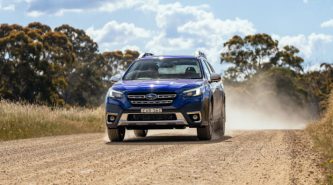
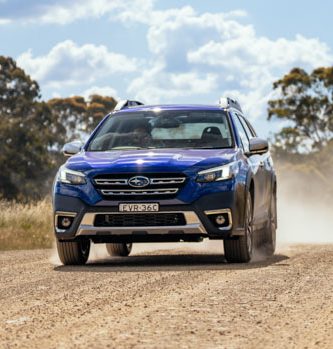
Australians like the Subaru Outback. It isn’t just the localised name: there’s something about the recipe that appeals to the pragmatic sensibilities of family car buyers on this continent.
Subaru can proudly point to stable sales stretching back decades to support the view it understands Outback customers. Even in turning the model into a boxier and more SUV-like vehicle — and less like a svelte wagon — the brand believes its customers will follow.
But that bond between brand and buyer doesn’t mean every change will be appreciated. While the new Outback is in some ways a better-driving and more capable car than before, there are some misses that need more work.
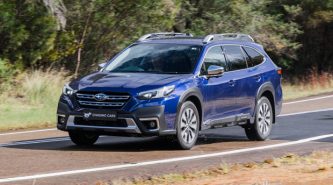
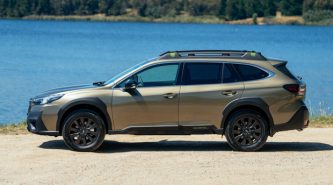
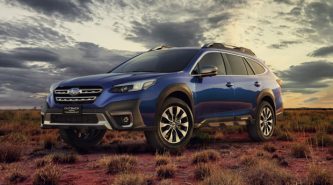
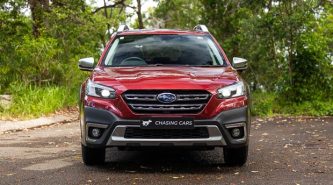
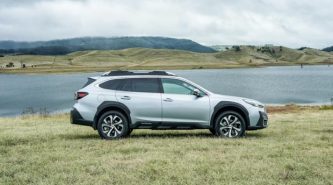
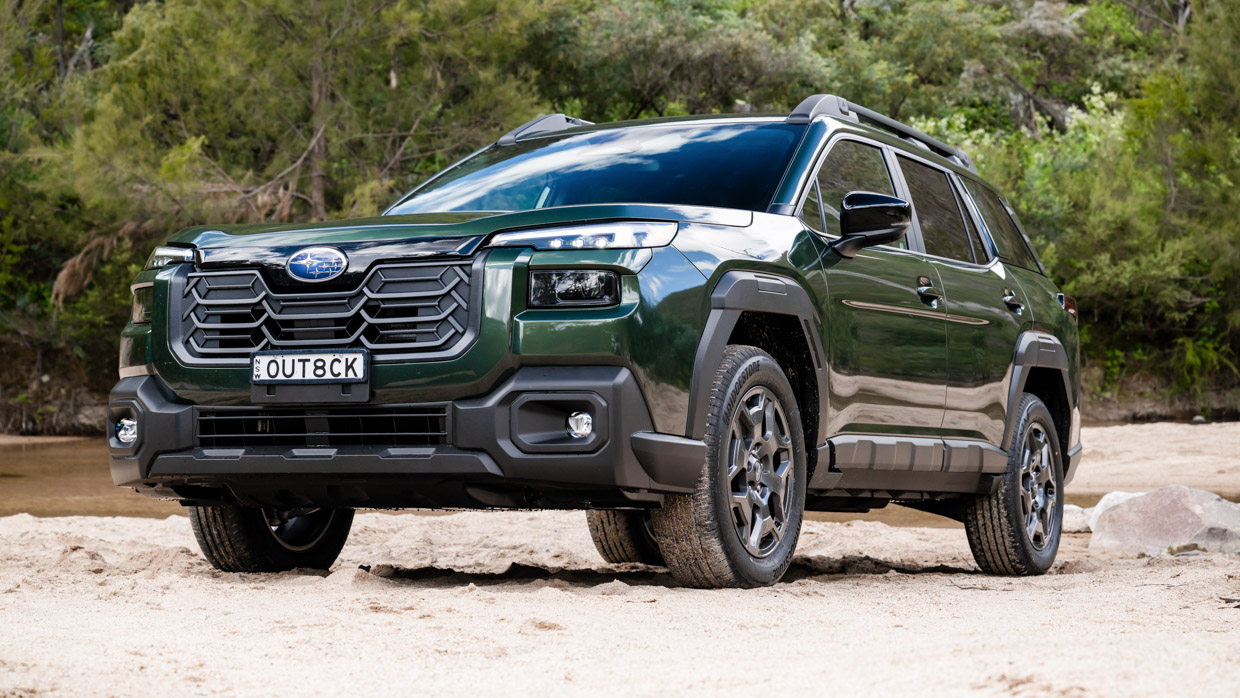
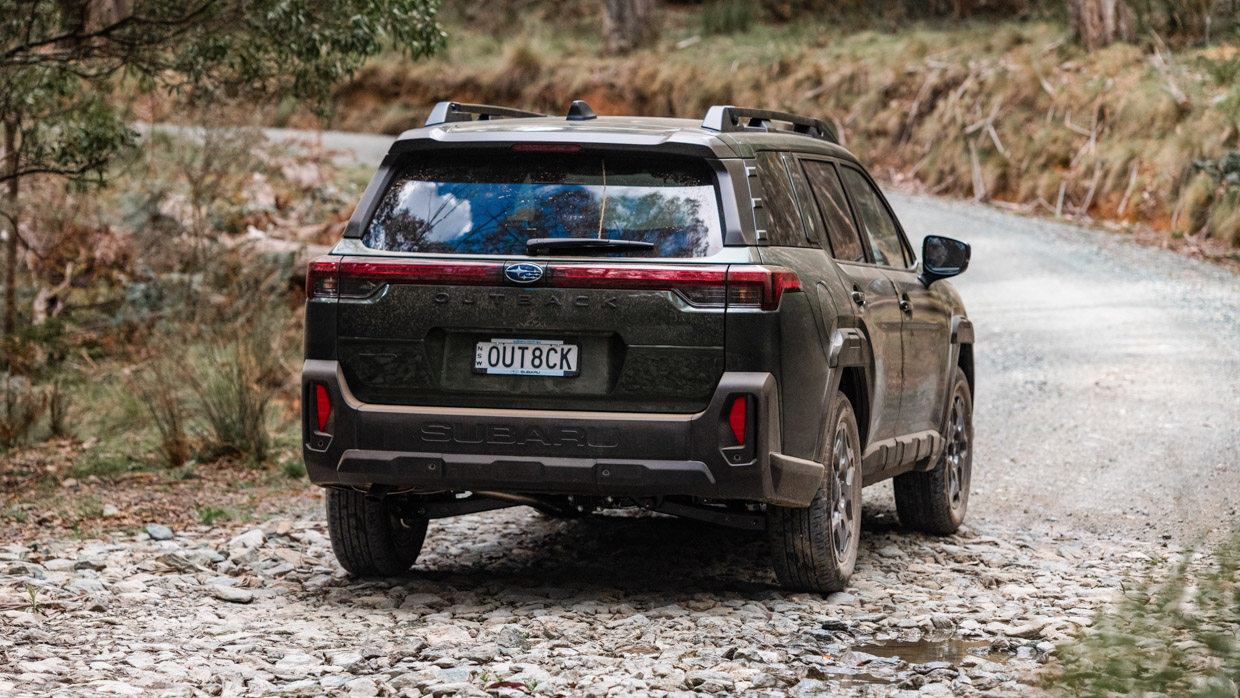
With dimensions only marginally lengthened, most of the visual change is in the roofline height — which is up 40mm, further increasing headroom and cargo space in the 530-litre boot that still houses a practical, full-size spare for country touring.
And while the shape might give ‘Griswold Family Truckster in the wrong light, or family estate futurism in the right one, there are neat details including plastic ski/snowboard resting points on the tailgate to prevent scratching the duco.
The styling isn’t a major problem for us. More at issue are some oddities in how Subaru Australia has specified the Outback, leaving the range without a sweet spot.
Five grades make up the range with a clear dividing line down the centre, separating the standard 2.5-litre four-cylinder (137kW/245Nm) models from two Wilderness trims with a turbocharged 2.4-litre turbo making 194kW/382Nm.
Subaru wants sales growth from the new Outback despite a 10 percent bump to the entry price — now $48,990 plus on-roads for the plainly-named AWD that picks up new equipment in black vinyl (questionably replacing cloth) plus beefy twin 12-inch infotainment.
Other standard items carry over, including leather steering wheel and shifter, 18-inch alloys, auto wipers and LED headlights, roof rails (now without crossbars, mind), 10-way power driver’s seat, wireless CarPlay/Android Auto, DAB radio, six speakers, X-Mode AWD and a power tailgate.
Safety-wise, nine airbags, AEB (including in reverse gear), lane-keeping, tyre pressure monitoring and traffic sign recognition all remain standard but Subaru has added a wide-angle monocular camera for better EyeSight performance, plus new driver monitoring.
A now-permanent Outback Premium grade ($53,490 + ORCs) asks $4500 to add front seat heating, an eight-way power passenger seat, integrated sat nav, a sunroof and a 360-degree camera — all things we think you might use.
Luxo-spec Touring commands $56,990 + ORCs (+$4500) while upping plushness: nappa leather (black or brown), cooled front pews and heated outboard rears, memory and four-way lumbar for the driver, 12-speaker Harman-Kardon stereo (replacing a mid-sounding six-speaker unit) and machined-finish alloys.
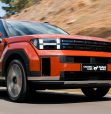
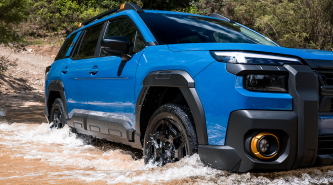
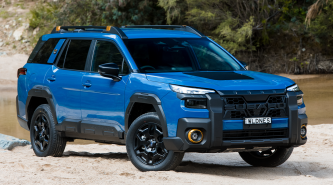
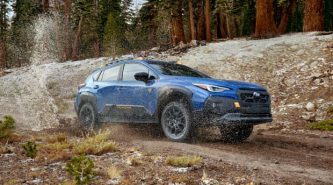
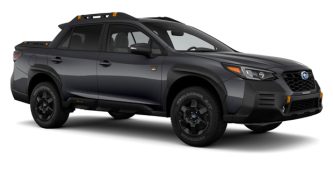
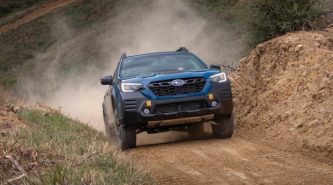
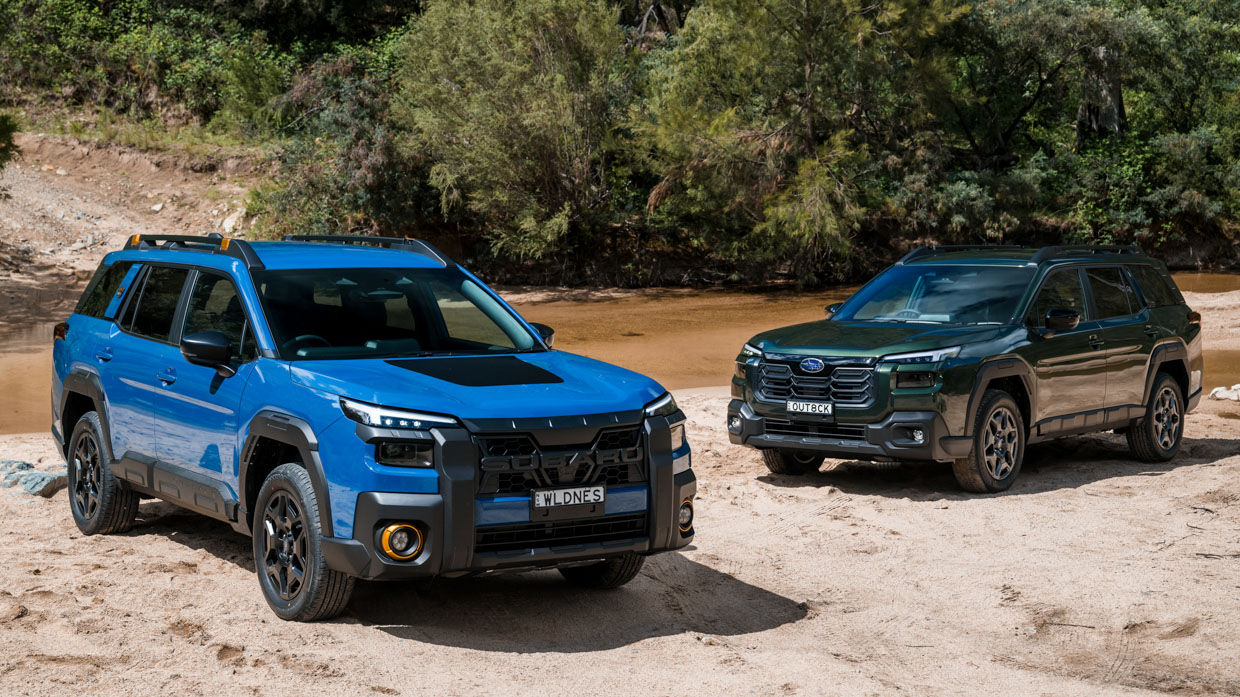
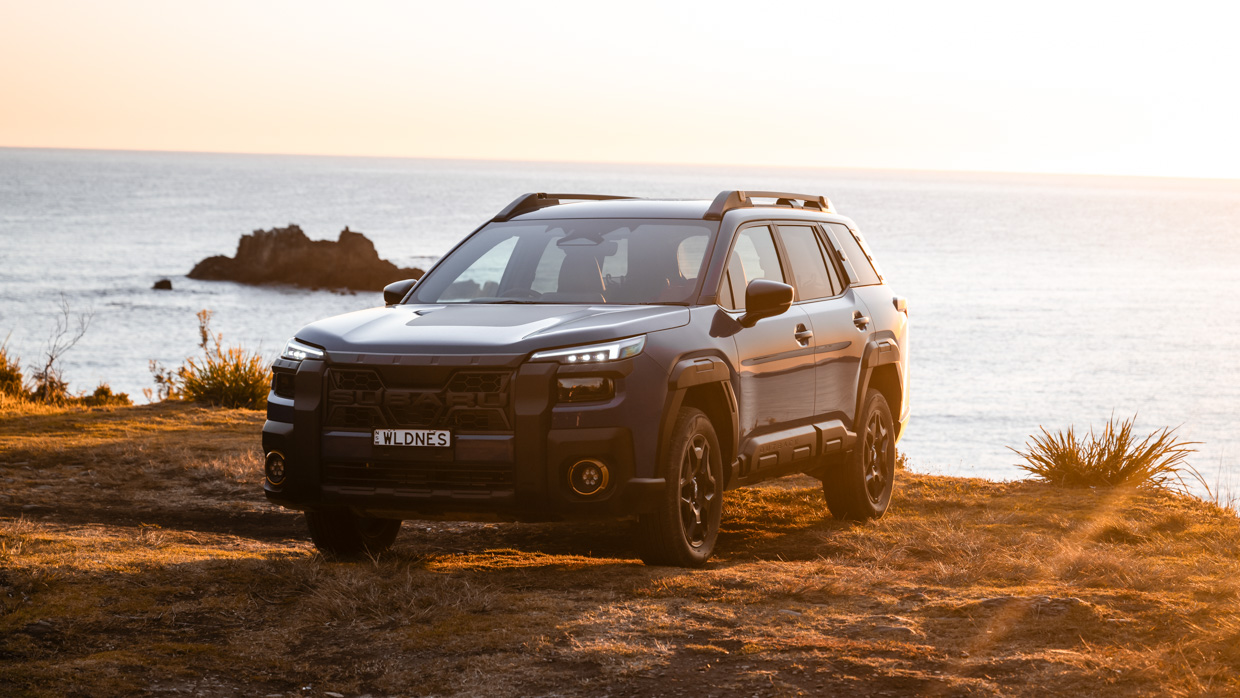
Then the range weaves into Wilderness terrain from $59,690 + ORCs, as it builds on the base AWD spec – not the Touring. Wilderness is turbocharged and lifted 20mm (to 240mm) and identifiable with almost-garish exterior detailing in orange.
Compared to the regular Outback, Wilderness adds electronically-controlled dampers, water-repellant vinyl inside, heated front and rear seats (and steering wheel), wireless device charging and an auto-dim rear mirror.
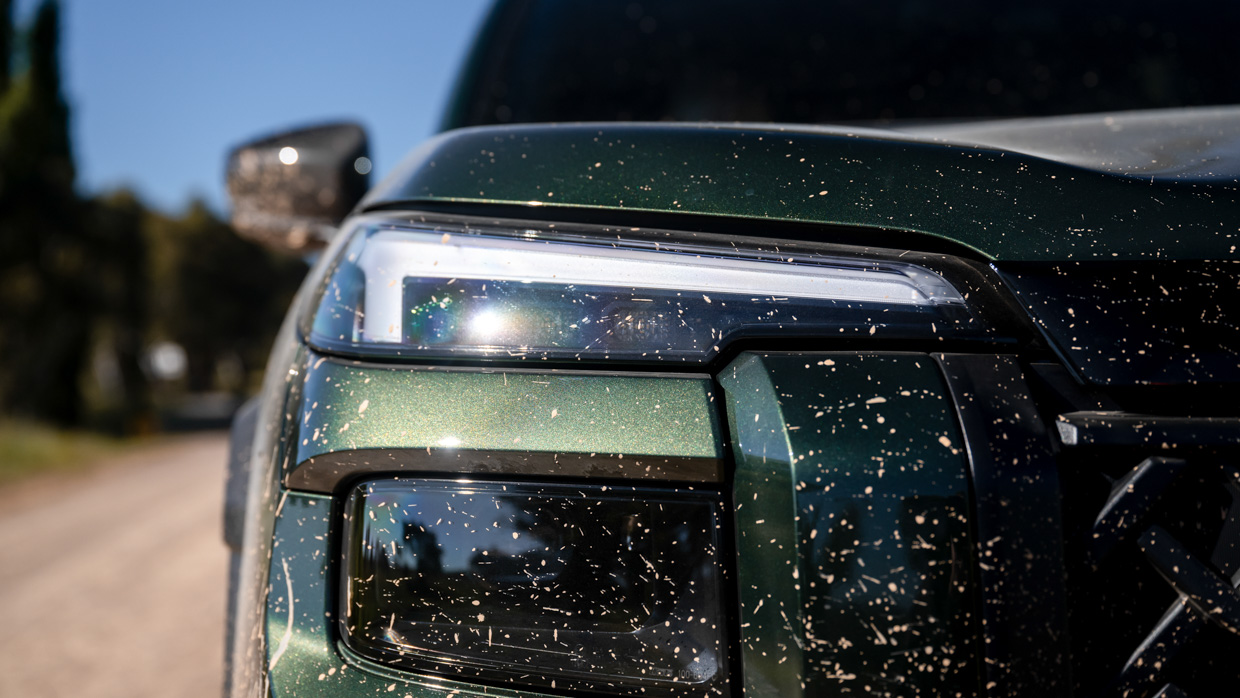
Splashing a final $3000 more on the top-end Outback Wilderness Apex sprinkles some, but not all, of the Touring’s magic in the form of a 360-degree camera, navigation, Harman-Kardon stereo and sunroof.
But that’s it, which feels rich considering a Wilderness Apex is $5200 dearer than the old Outback Touring XT which gave you all the luxury features plus the 2.4-litre turbo engine that massively outclasses the regular, non-turbo engine.
The fact that neither the Outback Premium nor the luxury-tier Outback Touring can be had with the turbo engine is a big problem.
While the turbo engine is quite adequate — it should at least be an option for the Premium and Touring grades — Subaru has rested on its laurels when it comes to the non-turbo entry powertrain.
Three of the Outback grades are exclusively paired to the underpowered 2.5-litre. The ‘Boxer’ four-cylinder with 137kW of power and a strained 245Nm of torque has to lug over 1700kg around and it’s well off the pace.
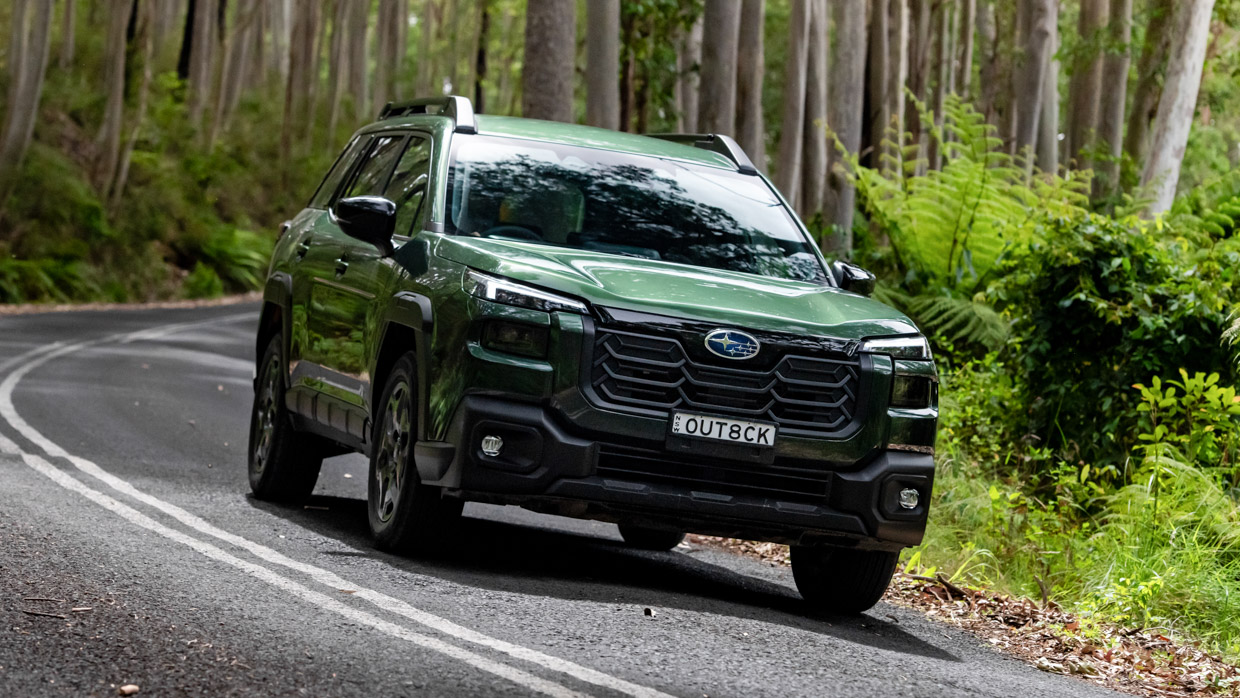
Acceleration is glacial and laggardly from the 2.5 AWD, especially uphill. The launch route took in the steep Victoria Pass and the naturally aspirated engine was embarrassingly sluggish.
With Chinese manufacturers selling affordable plug-in hybrid SUVs for less money than the Outback and with instant-on electric torque, there is an issue here.
This engine was marginal in the last-generation Outback but it’s now simply not good enough.
Subaru says it will add hybrid powertrains across the range and it follows that the Outback will benefit from this at some point.
Which leaves us with the Outback Wilderness and the 2.4-litre turbo ‘Boxer’ that is 42 percent more powerful (194Nm) and 56 percent torquier (382Nm).
The additional muscle makes an immediate difference. There is simply far more acceleration available at any time. While the gruff 2.4T is not a superstar in its own right, against the 2.5-litre it is the only way to go.
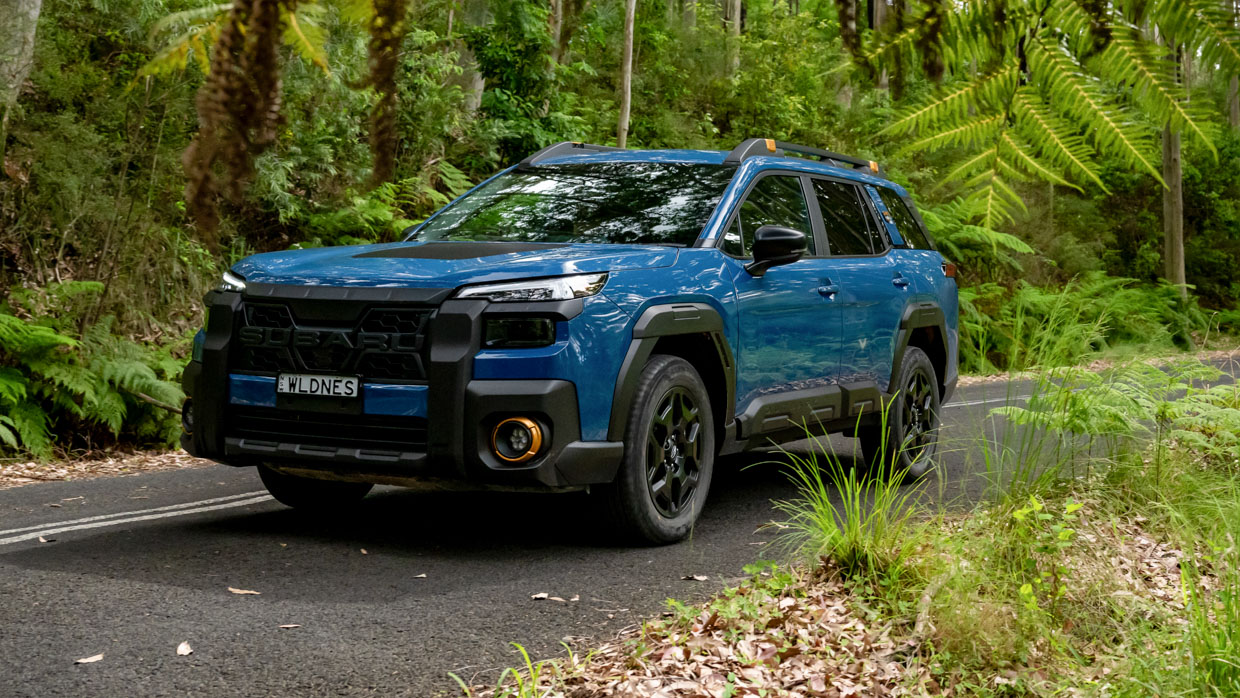
One way Subaru could improve the silkiness of the 2.4-litre turbo experience would be to adopt a good eight-speed torque converter automatic transmission.
While Subaru’s CVT automatic isn’t among the worst of its type, it does tend to hunt around the rev range to find the perfect ratio at any given moment.
On a launch loop taking in town and country roads, we found both engines used about 10L/100km.
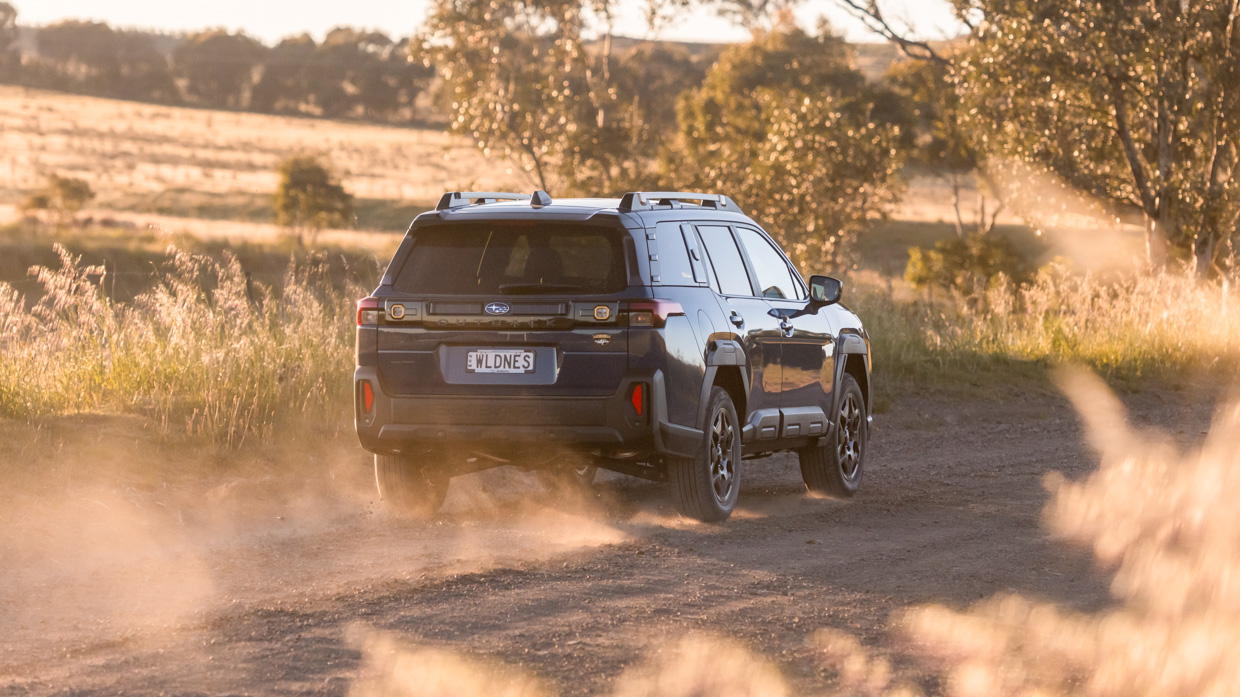
The suspension of the Outback has received a worthwhile upgrade.
The difference is most noticeable in the Wilderness grades, which have the same 18-inch wheels and tyres as the rest of the line but gain electronically-controlled dampers that are expertly matched to Australian country roads.
Owners cannot alter the firmness of these dampers but the tune is basically perfect for this genre of car and the demands of lumpy B-roads in this country.
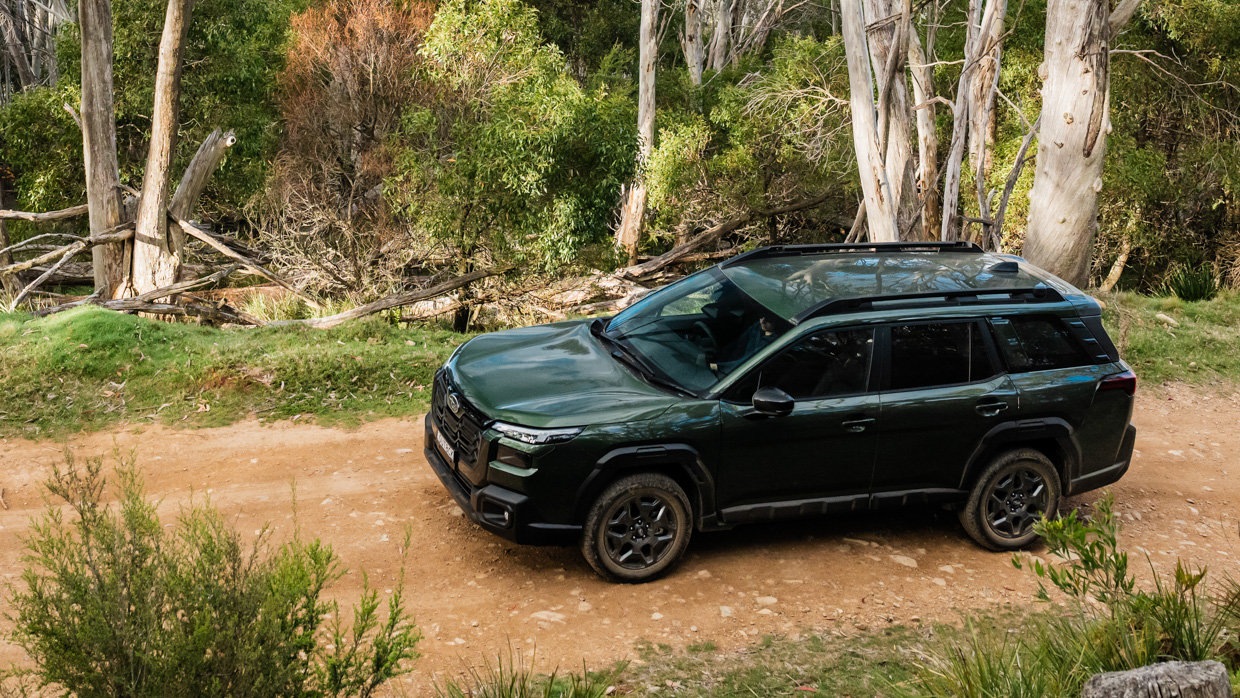
Even the regular Outback’s retuned passive dampers are up to the job. You notice a touch more fidget from the regular car’s suspension but it is level and compliant.
A further dynamic upgrade is to the handling, courtesy of a dual-pinion electric power steering system that debuted on the WRX sports sedan/wagon.
More direct off-centre and mid-weighted, the Outback turns in naturally and is a reasonable partner for more dynamic driving — let down only by modest grip from the Bridgestone Alenza tyres that measure 225/60 R18 all-round.
All-terrain tyres are being studied for the options list for the Wilderness and they should, not least because Australia is an aberration. Overseas Wilderness models get beefier trail tyres and 17-inch wheels.
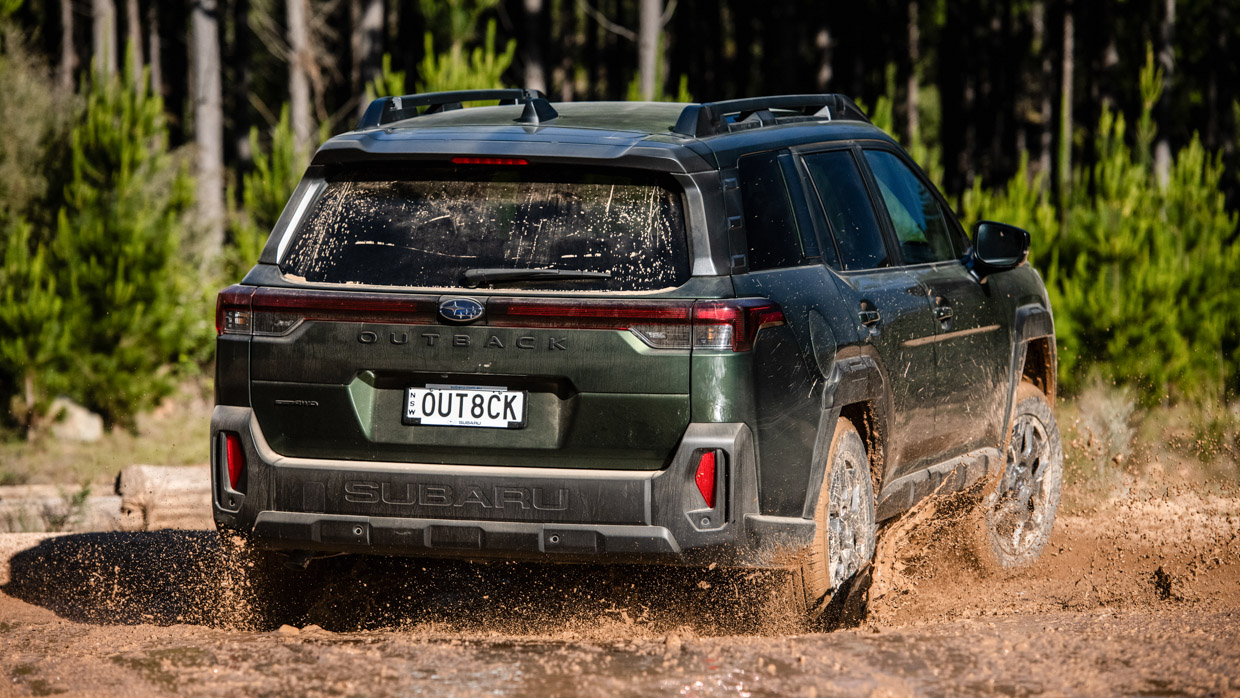
That said, even with the on-road tyres selected deliberately for the local-spec version, both standard and Wilderness flavours of the new Outback impressed on a selection of moderate fire trails.
Updated X-Mode AWD regulated traction very quickly on uphill ascents after recent rainfall and in the absence of locking diffs, the control systems get the job done remarkably well.
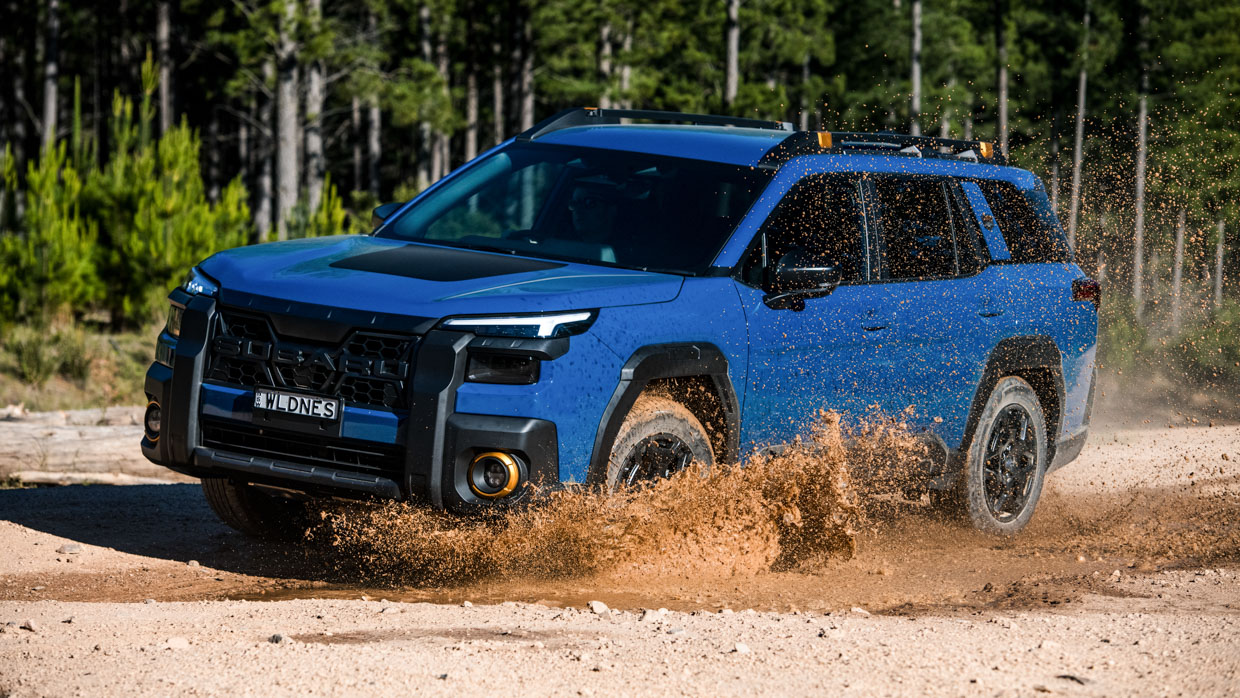
You get further in the Wilderness courtesy of clearance (240mm vs 220mm) and a ladder-frame wagon like a Ford Everest will tackle harder stuff, requiring more articulation but the Subaru can go further than you’d think.
There’s also no doubt that the tarmac ride quality is superior in the Outback to any of the common ladder-frame wagons like the Everest or Prado.
If most of your driving will be on sealed roads, the Outback is a better-handling, better-riding car than a traditional four-wheel drive.
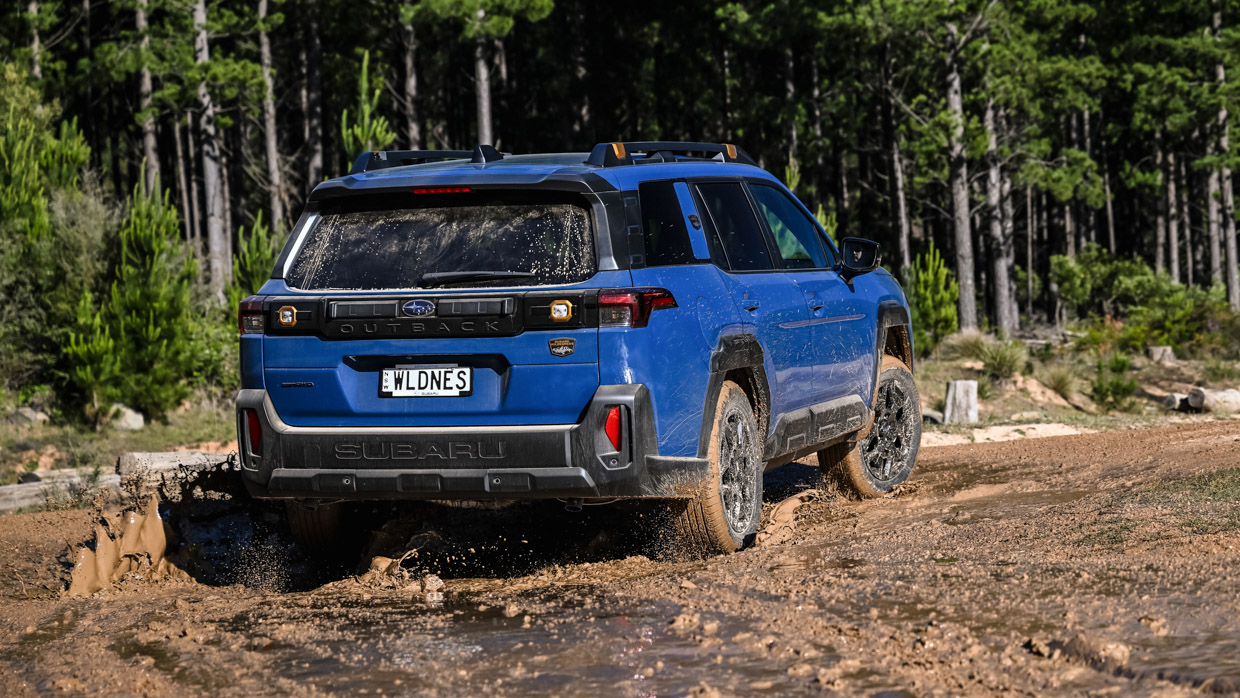
Decent seat comfort, acceptable interior noise levels and mostly well-tuned adaptive safety systems also make it a relatively relaxing car to pilot, but the hypersensitive attention monitoring can get annoying.
Existing customers beware: braked towing capacity has been cut from 2400kg (previous XT) to 2100kg (Wilderness) or 2000kg (standard Outback).
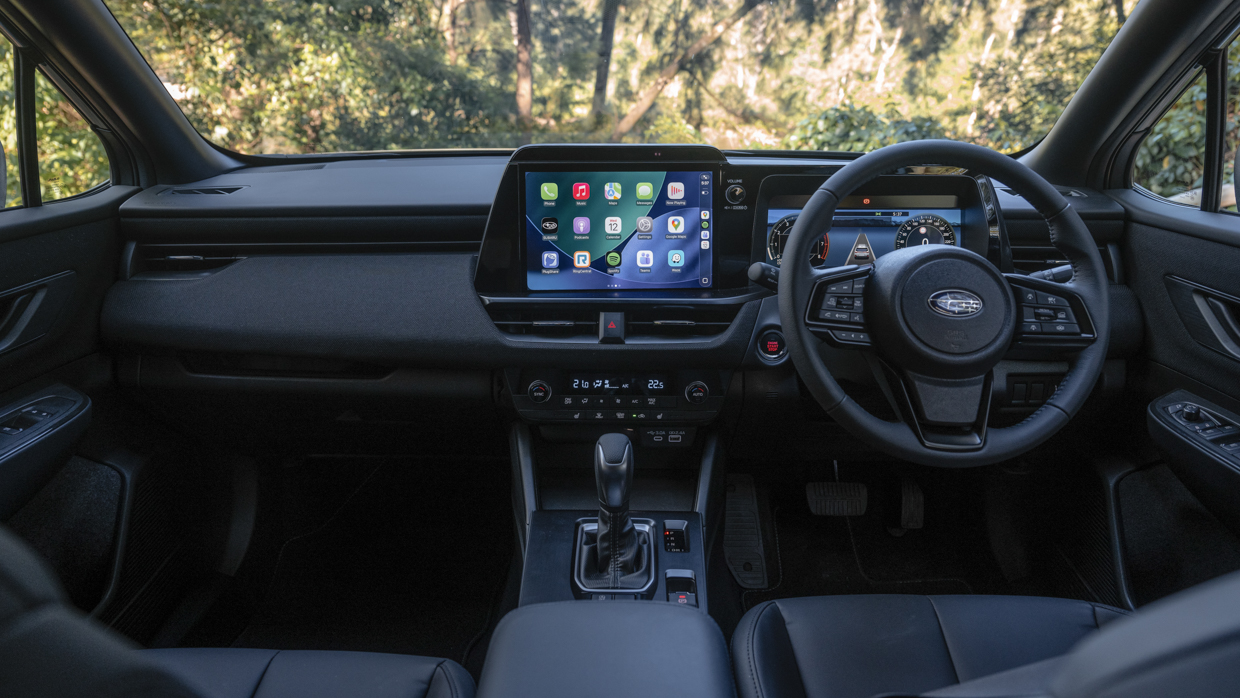
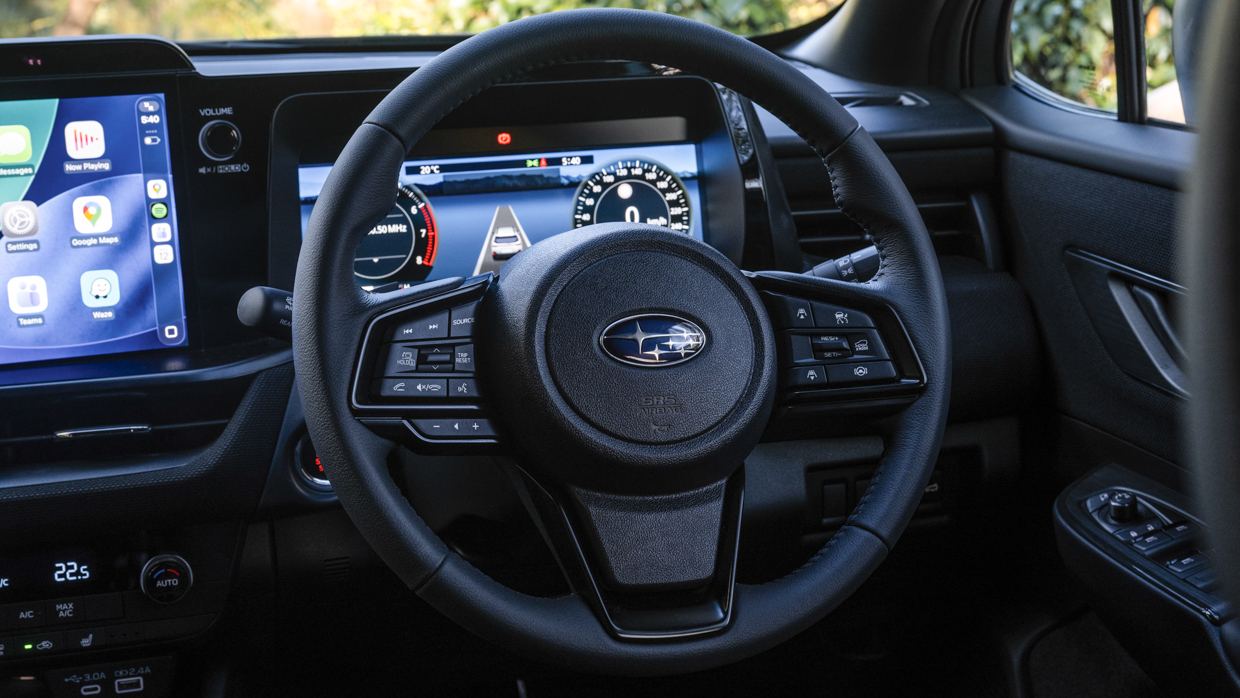
The new Outback is one of the best examples yet of the snap-back away from screens and towards physical buttons for key functions.
In the wake of changes to European and Australian vehicle safety testing, Subaru has pulled climate controls out of the old model’s touchscreen and into a discrete hard control panel.
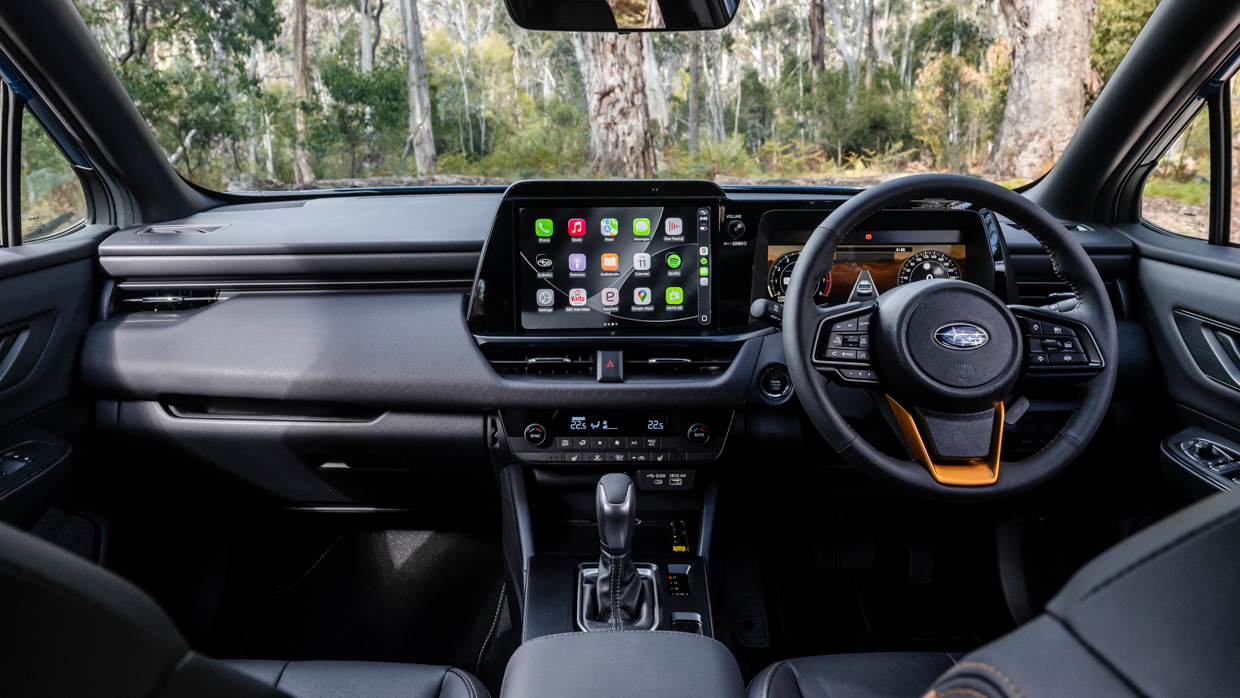
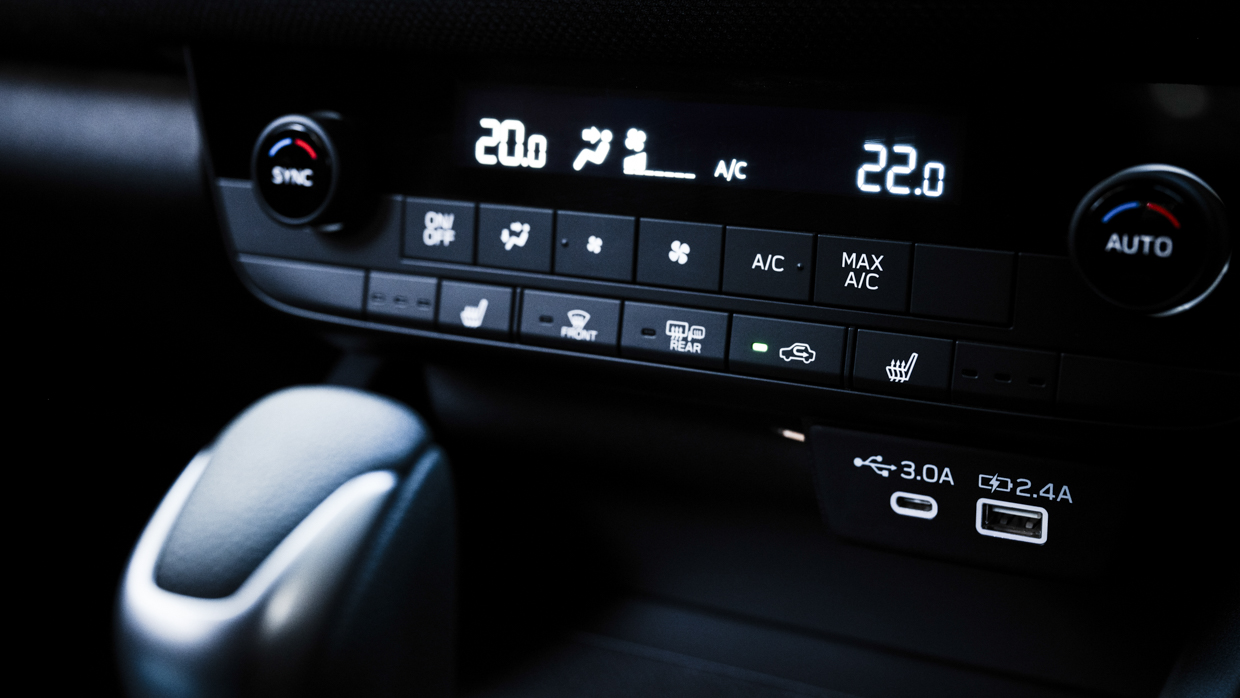
That has resulted in an interior concept for the new Outback that better blends modern tech with generally the right number of real buttons. You can memorise the location of knobs and buttons and deploy them without looking away from the road.
In some areas, the button count can be busy (such as the steering wheel spokes) but when it’s your own car, you will learn where things are. There’s also a satisfying, clicky tactility to the on-wheel shortcuts.
The old vertical touchscreen has been binned in favour of a more conventional, horizontal 12.0-inch display running a refreshed operating system that is both snappy and graphically mature.
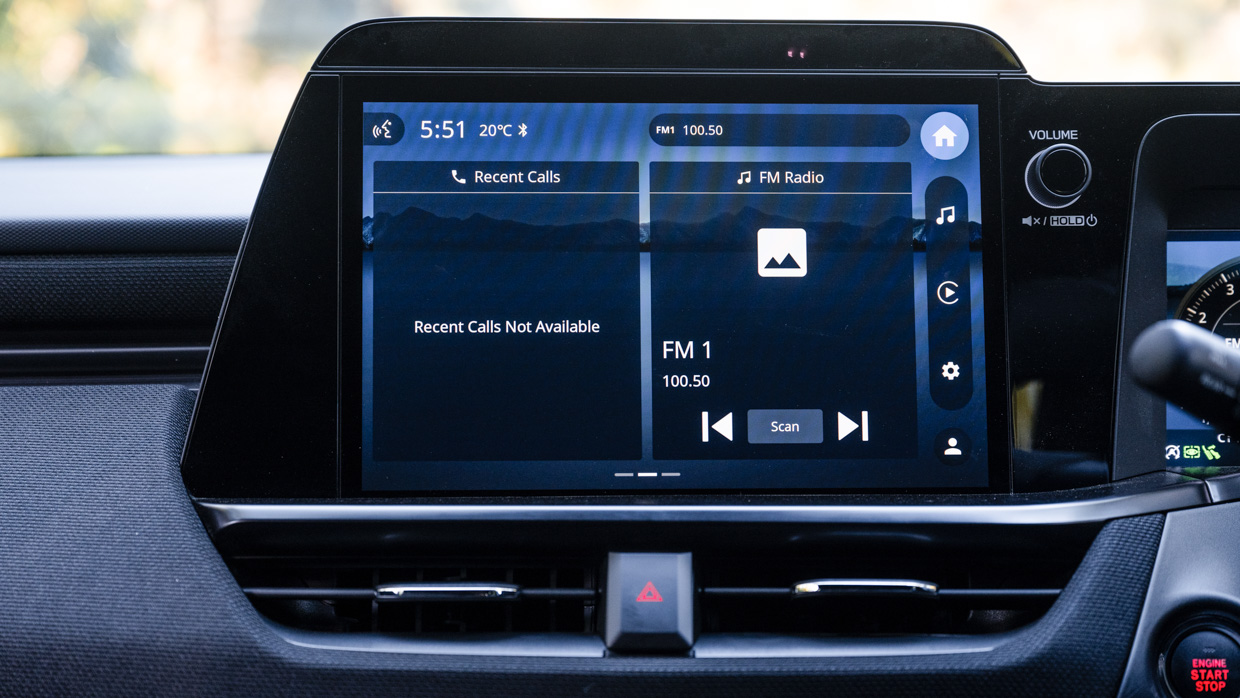
Wireless Apple CarPlay worked flawlessly on our test, which is a good sign for this new setup that could follow through to other models.
Pulling the Outback into the 2020s is a new full-width 12-inch digital instrument cluster that is legible and allows full maps to be viewed on trim grades with navigation.
In a nod to family preferences for easy-clean surfaces, all Outback grades now have either vinyl or real leather seating. Cloth is harder to remove stains from, but its temperate nature will be missed.
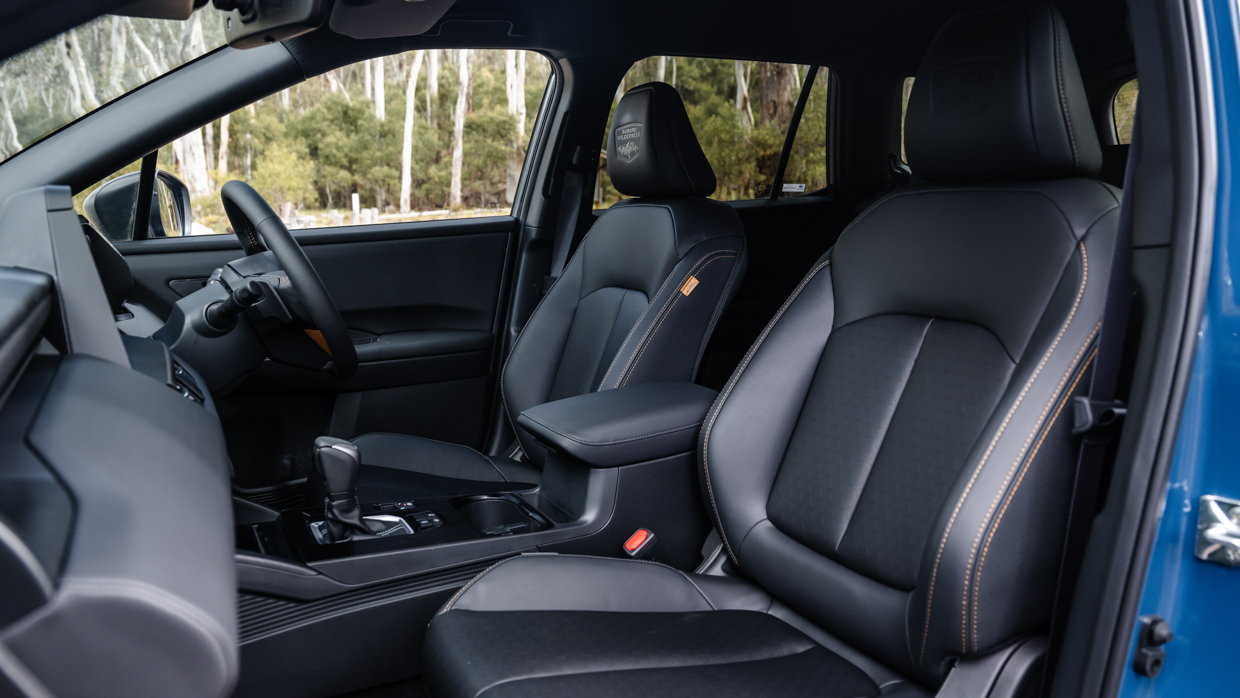
Our two-day launch drive coincided with generally warm late summer weather and the vinyl-clad pews of the Outback AWD and Outback Wilderness were sticky.
That shouldn’t be a problem in the Touring grade, which exclusively deploys ventilated (cooled) leather.
At least the seats themselves are comfortable — though you really notice how high they are mounted these days, with the Outback offering a commanding, SUV-style driving position.
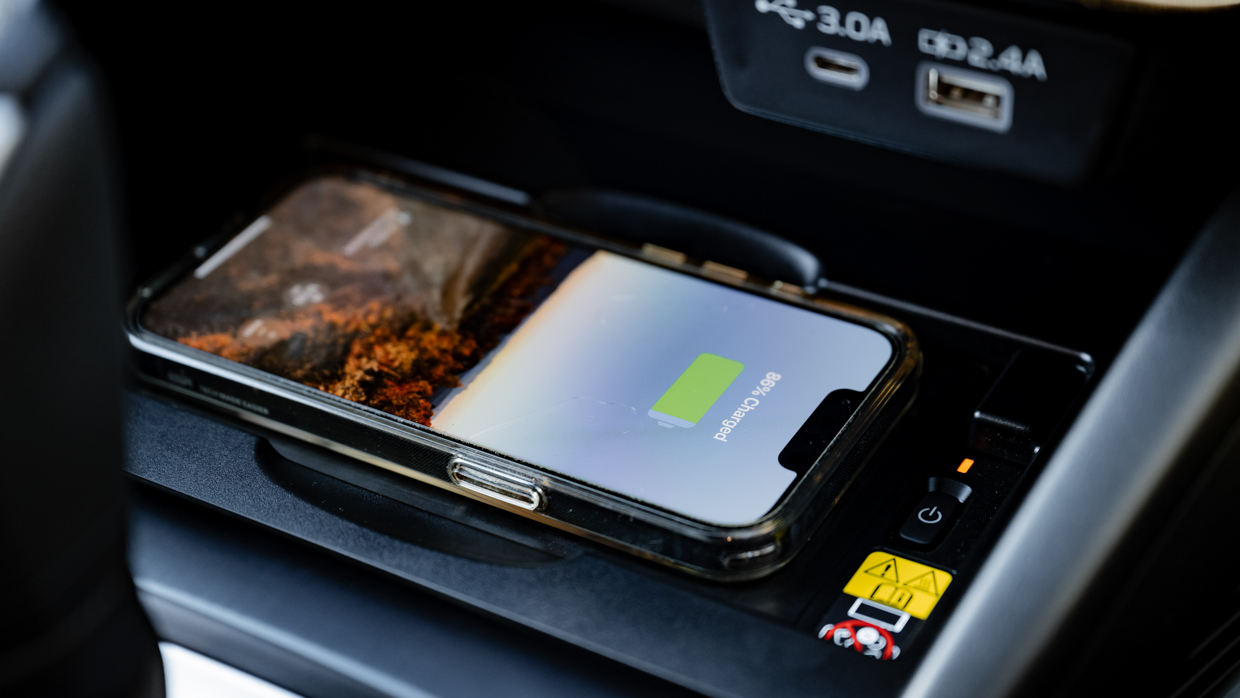
Storage space is plentiful and Subaru has lined the door bins in hard-wearing flock.
Back seat room is impressive, at least for two adults, with superior legroom and headroom to many shorter midsize SUVs. Here’s one area where the Outback’s wagon roots still shine through: it’s a long vehicle at 4880mm.
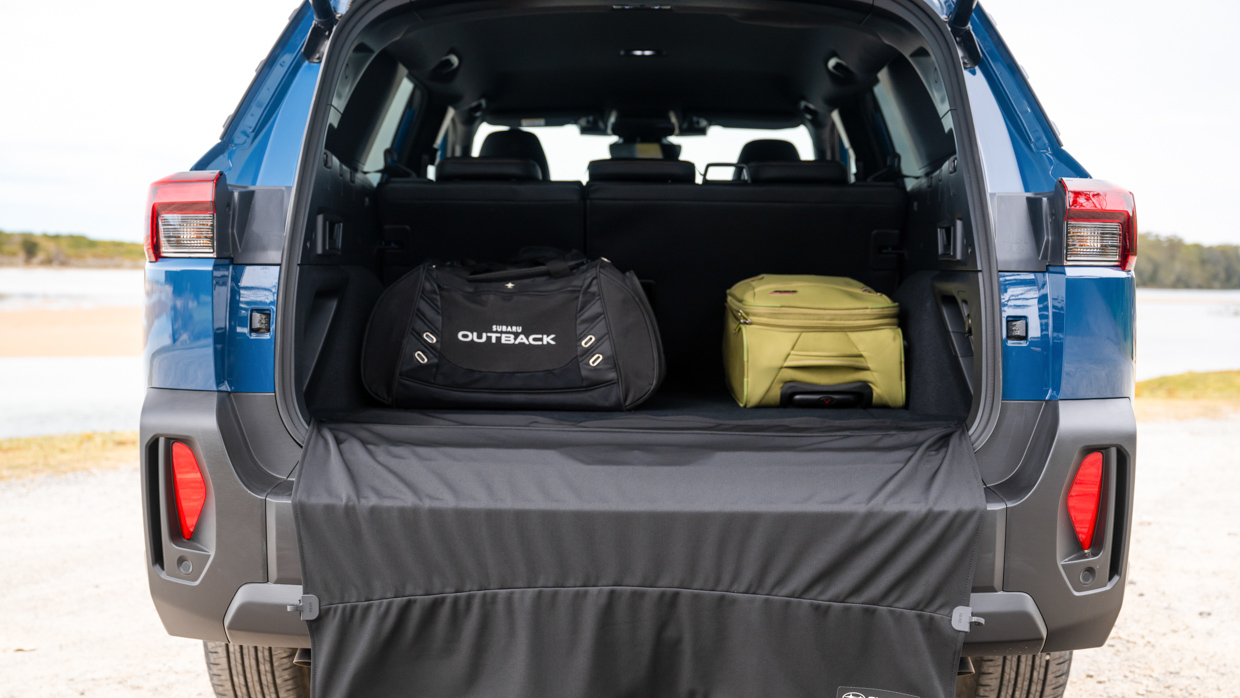
In the 530L boot behind a standard power door is an interesting new cargo blind concept.
It’s not a sturdy hard piece; instead, buyers are given a malleable soft bit of cloth that can be fixed at different positions to be a traditional blind, tailgate seat cover, or hammock for groceries.
We hope to see Subaru add the option of the 2.4-litre turbocharged engine to more Outback grades — especially the Touring, which deserves the power and punch of the turbo alongside its luxurious specification list.
At present, the entry-level 2.5-litre engine is a distraction from the genuine talents of the new Outback.
The seventh-gen’ Subaru estate rides and handles with more distinction than the car it replaces, while also pushing off-road capability further than ever before. Achieving both goals simultaneously is difficult and speaks to the thought that has gone into the chassis engineering.
We also like the changes to the interior technology and usability that genuinely make the Outback easier to live with.
The long-time-coming addition of the Wilderness trim grades to the local Subaru lineup gives the Outback even better chops off the beaten track and that will appeal to many. But buyers who don’t explicitly want or need a Wilderness deserve an adequate motor, too.
Until the 2.5-litre is replaced by a gutsier alternative — perhaps a hybrid — the new Outback does not convince us as strongly as it should.
About Chasing cars
Chasing Cars reviews are 100% independent.
Because we are powered by Budget Direct Insurance, we don’t receive advertising or sales revenue from car manufacturers.
We’re truly independent – giving you Australia’s best car reviews.
The estimate provided does not take into account your personal circumstances but is intended to give a general indication of the cost of insurance, in order to obtain a complete quote, please visit www.budgetdirect.com.au. Estimate includes 15%^ online discount.
^Conditions Apply
Budget Direct Insurance arranged by Auto & General Services Pty Ltd ACN 003 617 909(AGS) AFSL 241 411, for and on behalf of the insurer, Auto & General Insurance Company Limited(ABN 42 111 586 353, AFSL 285 571).Because we don’t know your financial needs, we can’t advise you if this insurance will suit you. You should consider your needs and the Product Disclosure Statement before making a decision to buy insurance. Terms and conditions apply.
Indicative quote based on assumptions including postcode , 40 year old male with no offences, licence suspensions or claims in the last 5 years, a NCD Rating 1 and no younger drivers listed. White car, driven up to 10,000kms a year, unfinanced, with no modifications, factory options and/or non-standard accessories, private use only and garaged at night.
^Online Discounts Terms & Conditions
1. Discounts apply to the premium paid for a new Budget Direct Gold Comprehensive Car Insurance, Third Party Property Only or Third Party Property, Fire & Theft Insurance policy initiated online on or after 29 March 2017. Discounts do not apply to optional Roadside Assistance.
2. Discounts do not apply to any renewal offer of insurance.
3. Discounts only apply to the insurance portion of the premium. Discounts are applied before government charges, taxes, levies and fees, including instalment processing fees (as applicable). The full extent of discounts may therefore be impacted.
4. We reserve the right to change the offer without notice.