Powered by

-
Car Reviews
Latest reviews
-
Car News
Latest news
-
Car Comparisons
Latest comparisons
- Chasing Deals
Latest reviews
Latest news
Latest comparisons
Ageing yet impressive electric figurehead’s facelift improves the breed even if it mightn’t boost modest popularity
It’s been five years since Kia first lobbed its electric ‘statement of intent’ in EV6, at a time in EV-dom’s fast-arcing evolution when a premium model with a premium price tag offered by a mainstream marque seemed a winning strategy.
Five years – and four added EV-branded models later for Kia – perhaps not so much. In 2025, the critically acclaimed, Korean-made 800-volt EV6 electric was outsold (at 348 units) by its newer, cheaper, Chinese-sourced, critically unloved, 400-volt EV5 (4787 units) nearly 14 to one.
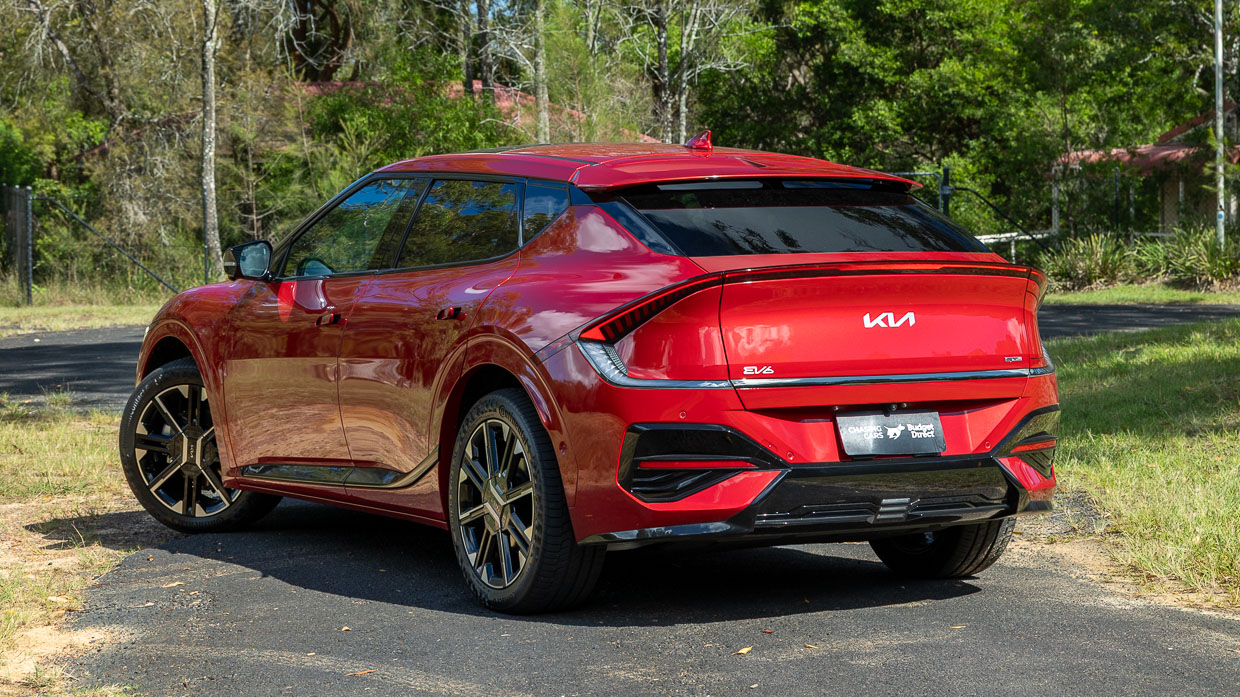
As a late-2024 release, the EV5 proved oh-so quickly that Aussie EV buyer tastes favoured metal-for-money over execution and – dare we say – excellence, regardless of the quality on offer. Because, in review, the Chinese-built EV (6.0/10) has proven not nearly as good, across broad criteria, as its pricier, more established Korean-baked (8.0/10) sibling.
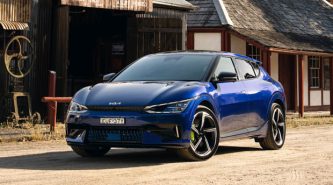
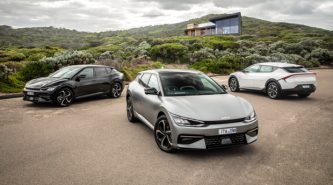
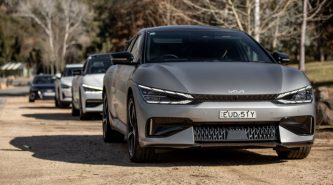
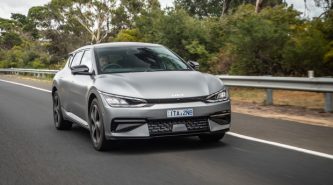
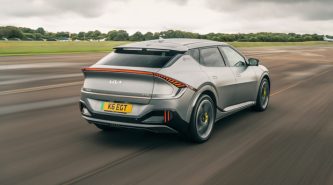
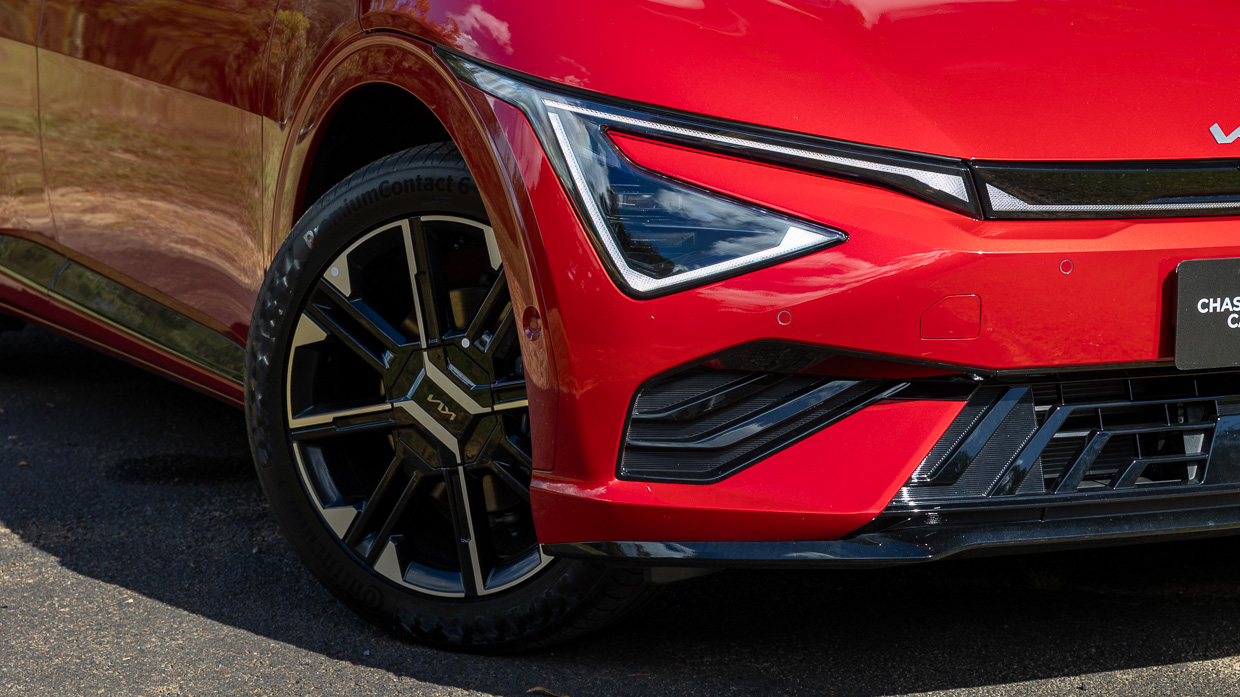
For MY26, the EV6 has been revamped. A ‘Star Map’ facelift, new wheel designs, a revised ‘horizontal’ interior design theme with new wheel and console look, and updated tech.
Underneath, the old 77.4kWh battery has been upgraded – in line with the technically related Hyundai Ioniq 5 – to a healthier ‘long-range’ 84kWh gross (80kWh usable) unit across all variants, boosting rated driving range to as much as 582km (WLTP).
Locally developed ride, handling and steering – traditionally an edge the EV6 enjoyed over past Ioniq 5s – has also been treated to a round two of revisions to polish up the electric crossover’s already accomplished, locally tuned road manners.
Perhaps wisely, Kia Australia has barely bumped up pricing for the MY26 updates – just $70 up on every one of the four available variants. This puts our mid-grade GT-Line RWD version at $79,660 list, or a little under $86K driveaway, with our Runway Red paint at no added cost.
Despite fitting the same 168kW/350Nm rear-motor powertrain and ceding just 10kg (2065kg kerb) to the base Air RWD ($72,660 list), the GT-Line RWD’s range is 22km shorter: a still very decent 560km. Much of the blame lies on the GT-Line’s 20-inch alloys wrapped in 255mm wide tyres. The Air fits less roll-resistant 235mm wide 19s.
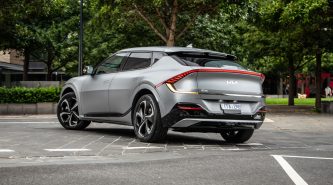
GT-Line spec also adds subtly sportier styling, a glass roof, heated/ventilated fake leather/suede ‘relaxation’ seats, a HUD, Meridian sound, and some added tech such as Blind Spot View and 360-degree parking cameras.
It’s another $8000 for the dual-motor GT-Line ($87,660 list), bringing 239kW/605Nm total outputs, a 2.4sec drop in 0-100km/h performance (5.3sec) and 38 fewer kilometres of range (522km).
A full-fat GT variant returns with 478kW, 0-100km/h in 3.5sec, three-stage adaptive dampers and simulated gear ratios for $99,660.
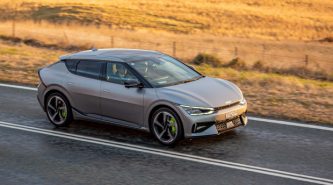
Kia calls EV6 a ‘performance SUV’ and it nestles itself between medium EV5 and upper-large EV9 despite being nothing like a Sorento – an actual large SUV – in form. Rather, it’s realistically a five-door liftback sports crossover, what with its squat stance and not-very-SUV-like low-slung roofline.
This model always had, and still has, grand tourer vibes. And it’s especially evident in the GT-Line package, even in the lower-output rear-drive version.
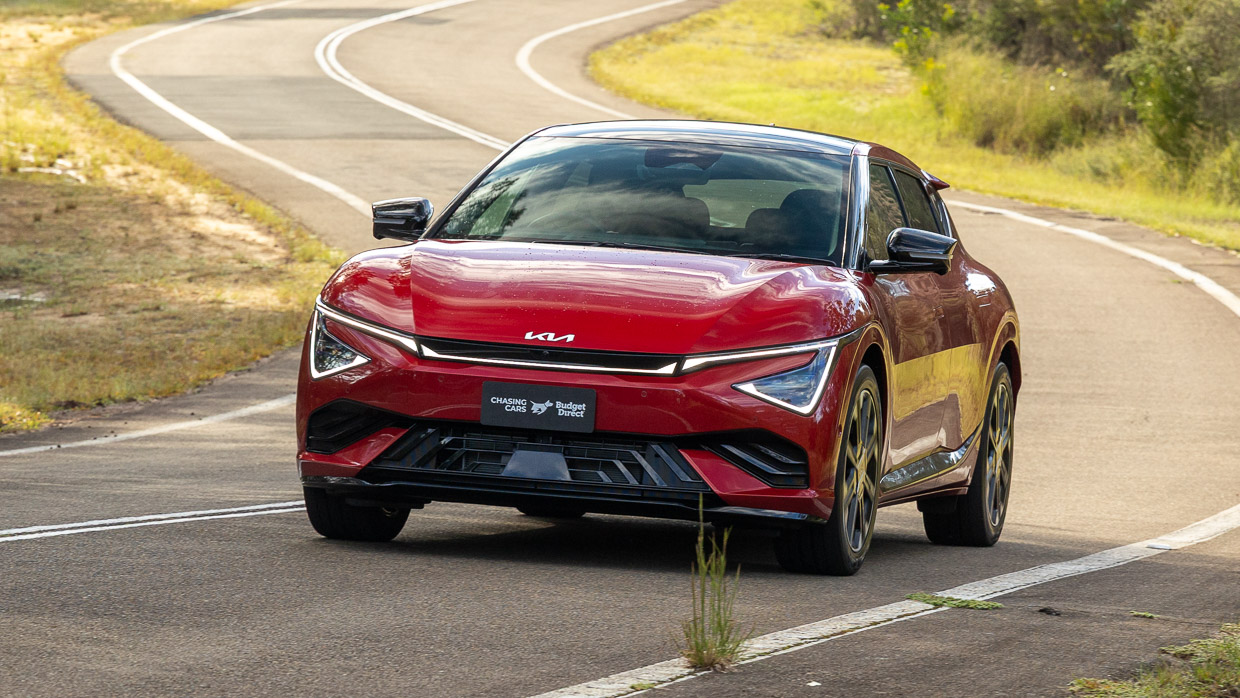
At 7.7sec claimed for the 0-100km/h sprint, it’s nowhere near the sharp-end of BEV acceleration prowess. But within its even and measured manner, it’s functionally quick – overtaking, plugging gaps, entering on-ramps – when it needs to be.
As a default, the throttle take-up swells – rather than dumps – into full acceleration, making for easy modulation around town. Activating Sport, via the wheel-mounted button, heightens response noticeably and the EV6 feels more potent under foot than output figures suggest.
Despite only plying 350Nm, the fat 255mm rear tyres will scrabble a touch, the tail will squirm, and traction control will pull the fun out of rapid forward progress. You can loosen traction control, too, without relinquishing stability control.
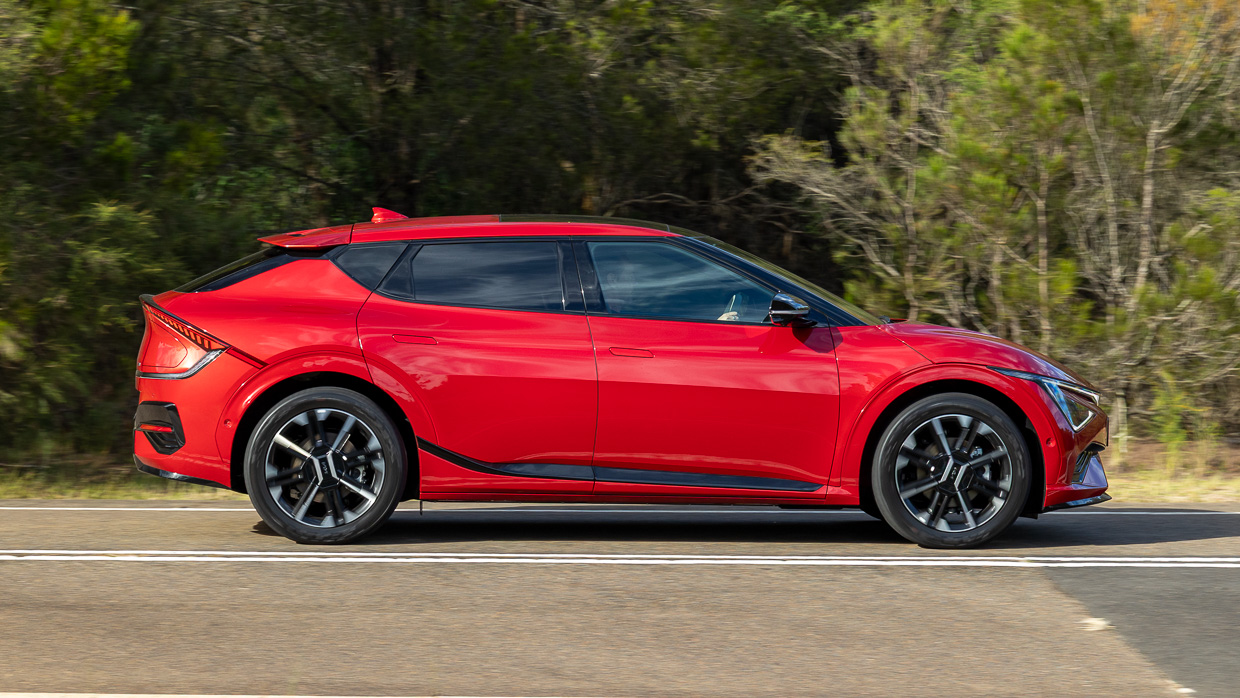
It feels a considerable car, one that doesn’t quite magically mask its kerb weight as much as some EVs can. But its broad, flat nature, and firm yet measured suspension damping, bring nice confident muscle to its body control. (All of those pleasing qualities, it should be noted, you won’t find in any local EV5.)
What the broad rubber loses on rolling resistance (and range milking capability) it gains in lateral grip. The GT-Line is a proper corner carver.
The nominally even steering – again, retuned for MY26 – is fluid and direct, and the chassis has its dynamic back all the way.
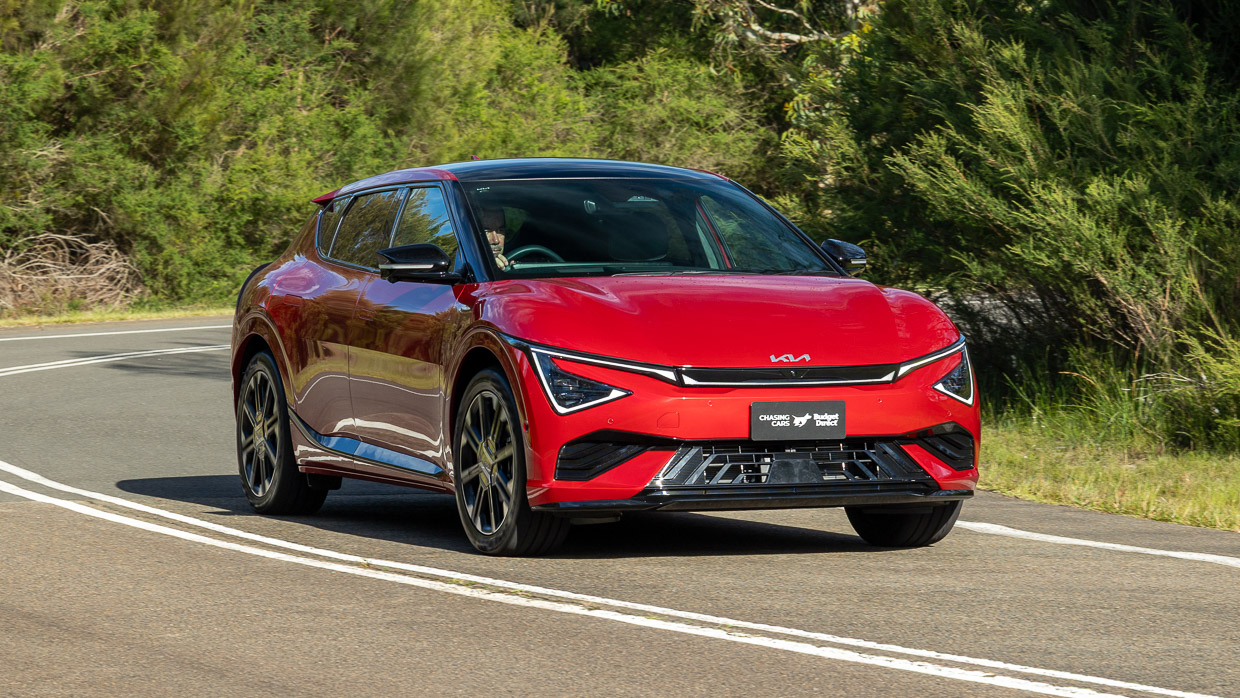
The long wheelbase and flat cornering stance makes for a supremely stable and confident handler, though the EV6 still rotates keenly in the midcorner. Sure, AWD might add potency and traction, but the rear-driver is sweet and swift enough to offer driver satisfaction on its own terms.
Bar some minor tyre slapping across road joints, the passively-damped EV6 is a quiet, peaceful and fuss free at urban or highway speeds which, when combined with its confident dynamics and flexible muscle, really fits the grand tourer mould.
Safety is typical for Kia (and Hyundai) vehicles: well calibrated in effect, if annoyingly demanding various switch-offs after each start-up. More convenient shortcuts update frequently with time, it seems, but overspeed and lane keeping smarts must be defeated each trip for sanity’s sake.
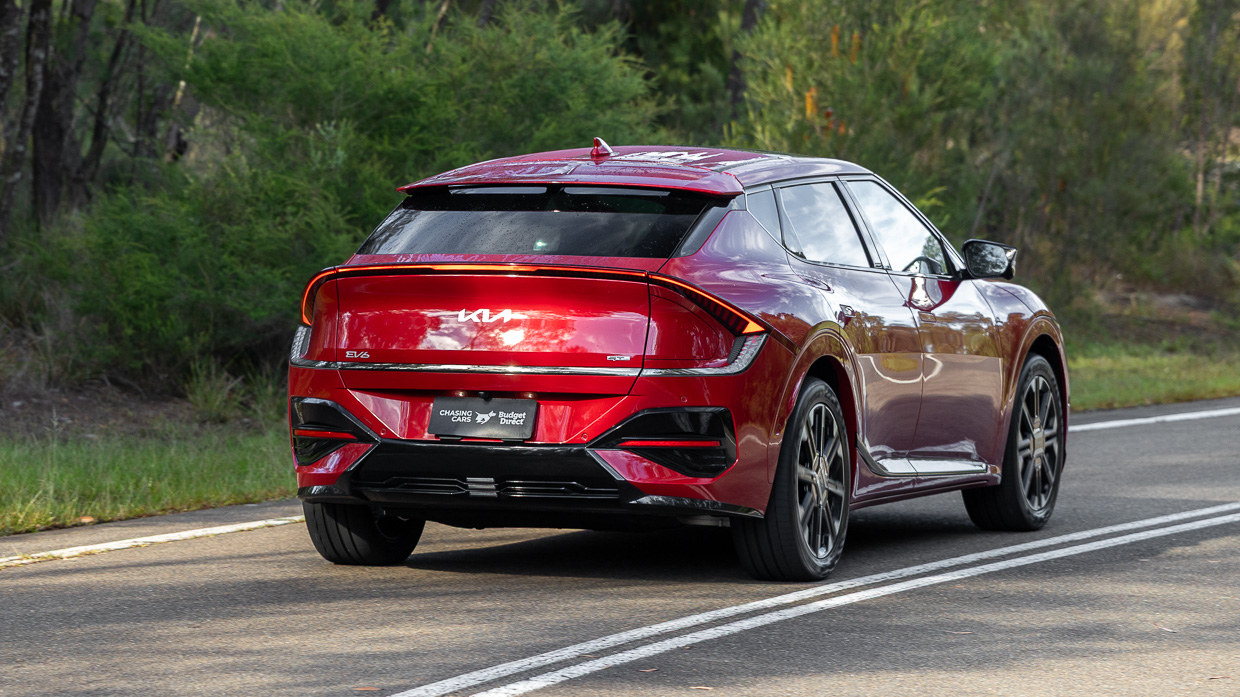
One thing you can’t switch off is the thick A-pillar and wing mirror assembly, which creates a blind-spot when exiting T-junctions that the EV6’s otherwise fulsome camera coverage can’t easily counter.
Where the ‘SUV’ fallacy becomes apparent is in the interior format, which is excellent if more comparable to a well-packaged liftback sedan than a genuine wagon-shaped family hauler. There’s a fair argument you’d logically cross shop EV6 with a five-door Audi A5 Sedan (nee, ‘Sportback’) rather than a Q5, for instance.
Adding confusion to ‘what it is’ is that ‘large SUV’ long-bow draw is at odds with its technical twin, the Ioniq 5, being classed by carmaker and industry alike as a ‘medium SUV’. In fact, the Hyundai has a longer (3.0m) wheelbase than the Kia (2.9m).
Realistically, they’re functionally interchangeable for passengers and luggage space, it’s just the Kia boasts longer overhangs and a sleeker form.
None of this has changed much in the past years. But when EV6 launched, its cabin design was more cautious in its approach to electro-futuristic styling than its Hyundai cousin. Result? I simply aged quicker as both marques ICE-based models adopted this newer ‘BEV look’.
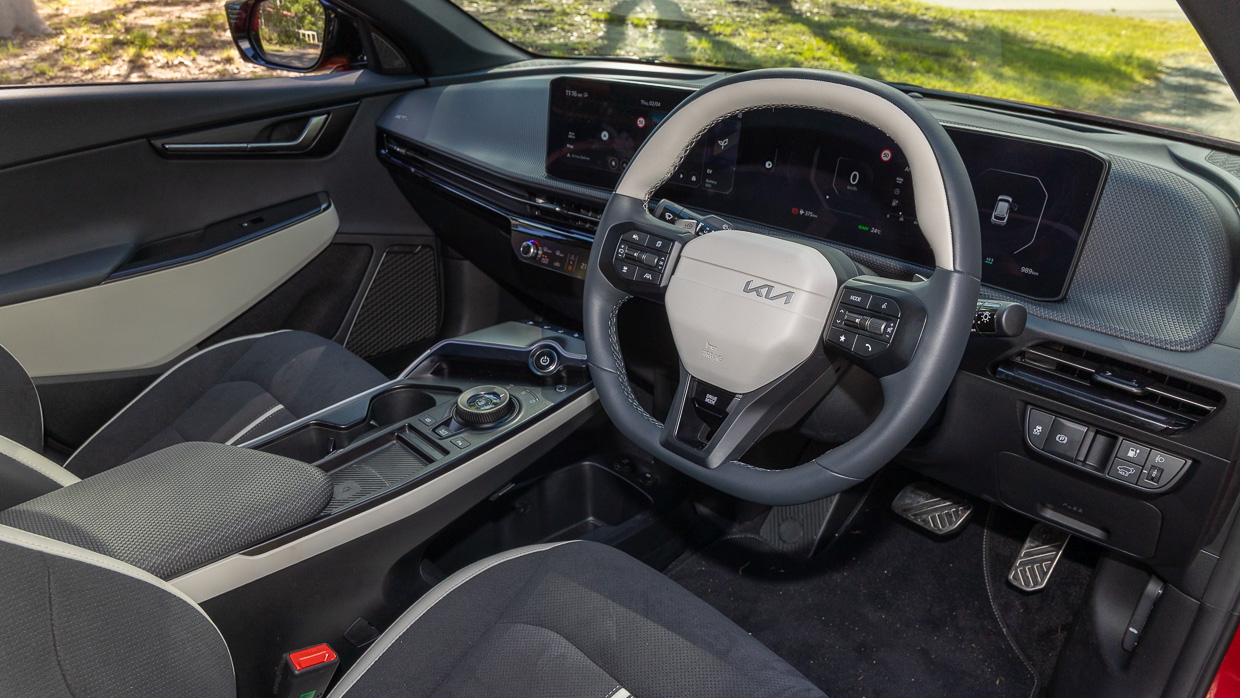
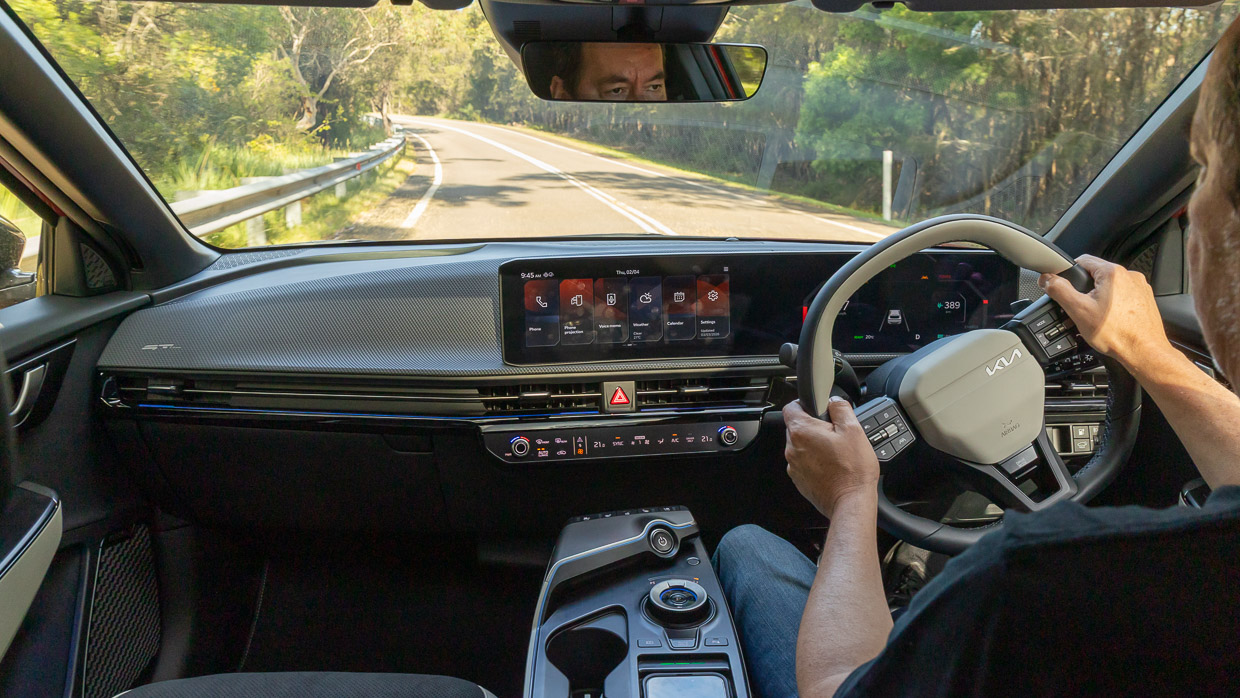
The MY26 cabin revamp – which is hardly wholesale – with its stronger ‘horizontal’ dash theme, nonetheless does quite a lot in modernizing the EV6’s vibe. It’s richer, darker and less clinical than an Ioniq 5, yet slicker and cleaner and somehow feeling more accessible because of it.
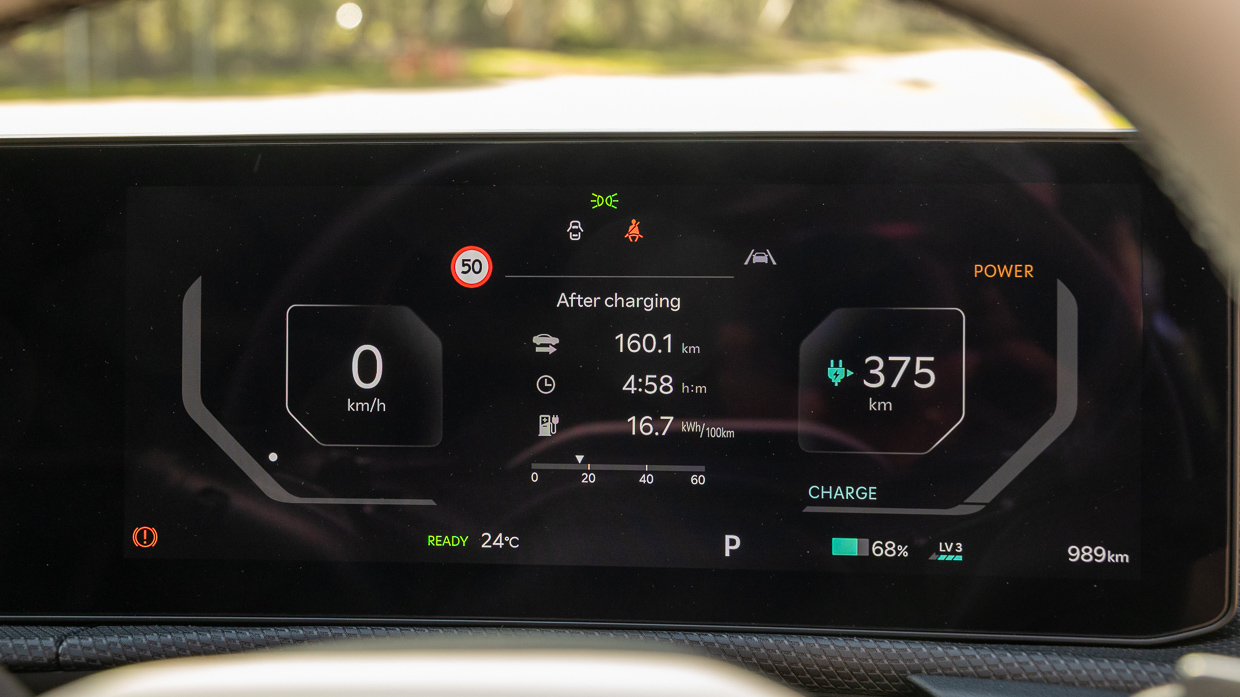
The EV9-inspired wheel goes some way to the effect, and the textured curves of the dash fascia and more neatly integrated dual 12.3-inch screen panel leaves EV6 looking less like yesteryear’s Sportage (as pre-facelift did).
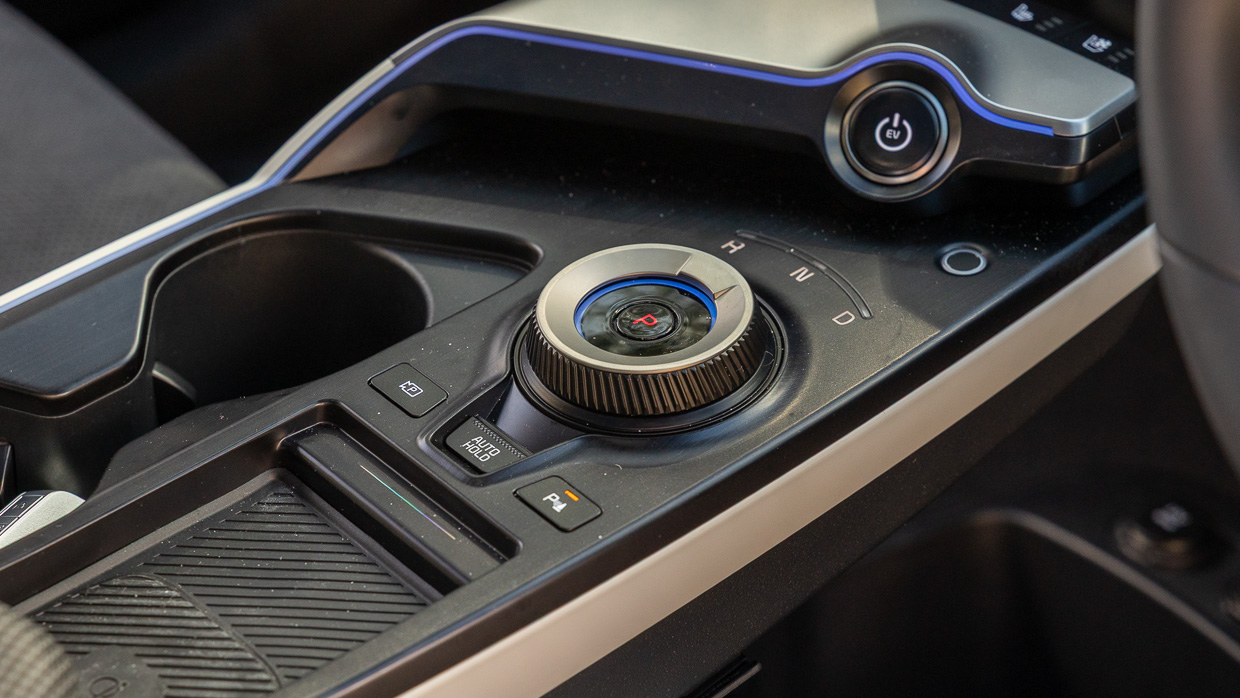
The rotary drive selector and angled start button design is carried over but the whole design seems cleaner and leaner. And the Kia Connect media format (complete with over-the-air updating) dragged the look and feel of the tech into 2026, if without added flourish beyond its ICE stablemates.
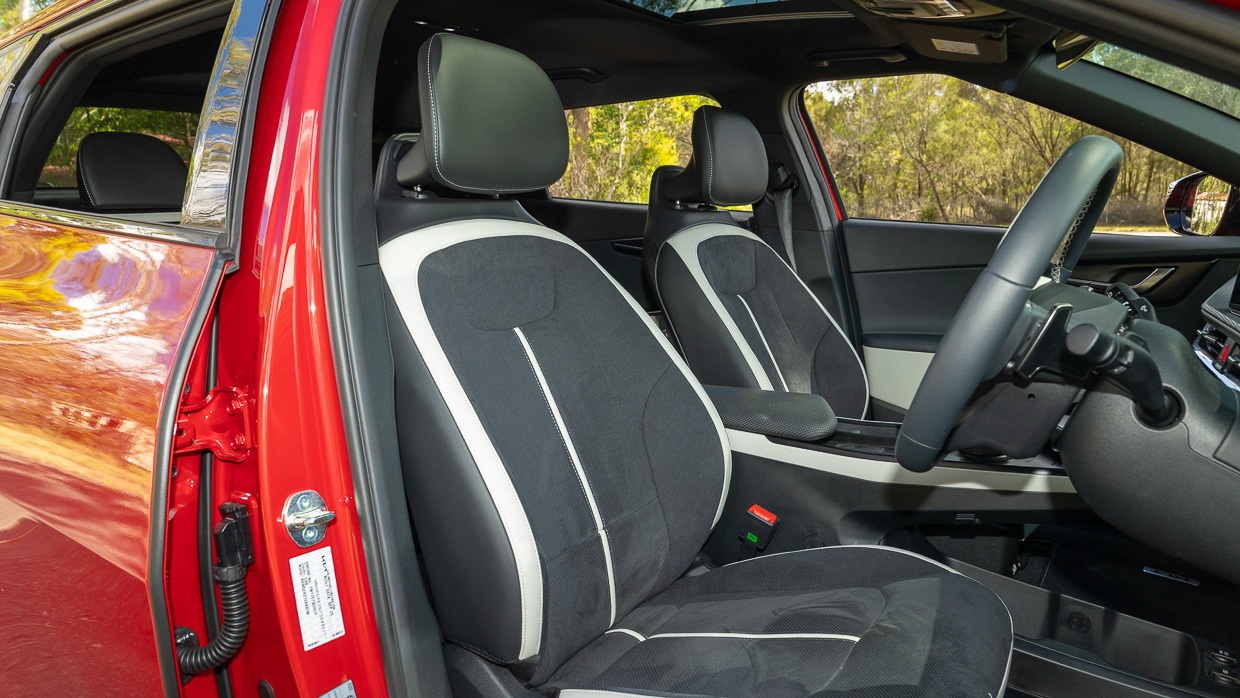
The black and grey artificial leather and suede theme is your only choice of interior fitout, which mightn’t suit all pundits tastes but makes the current GT-Line feel lighter inside. A small glass sunroof sits above front occupants.
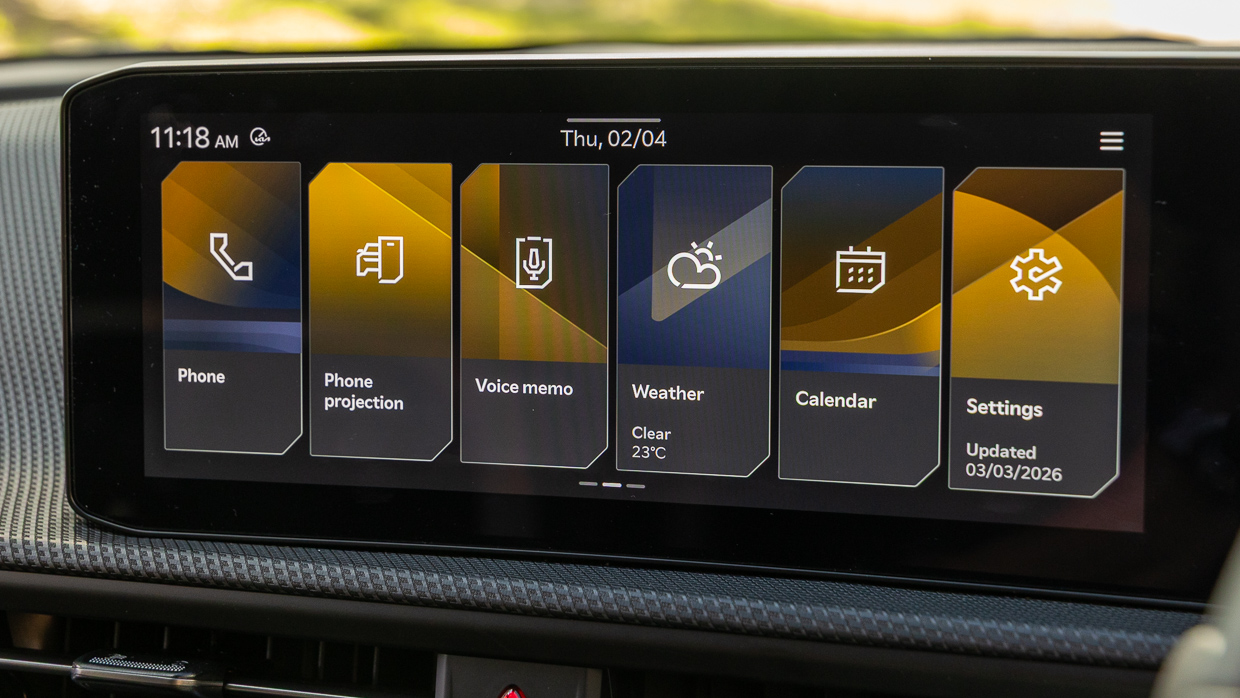
Seat heating and ventilation are expected inclusions at this price point for the decent if not entirely raveworthy chairs – for the EV6’s cornering prowess some extra lateral support would be ideal.
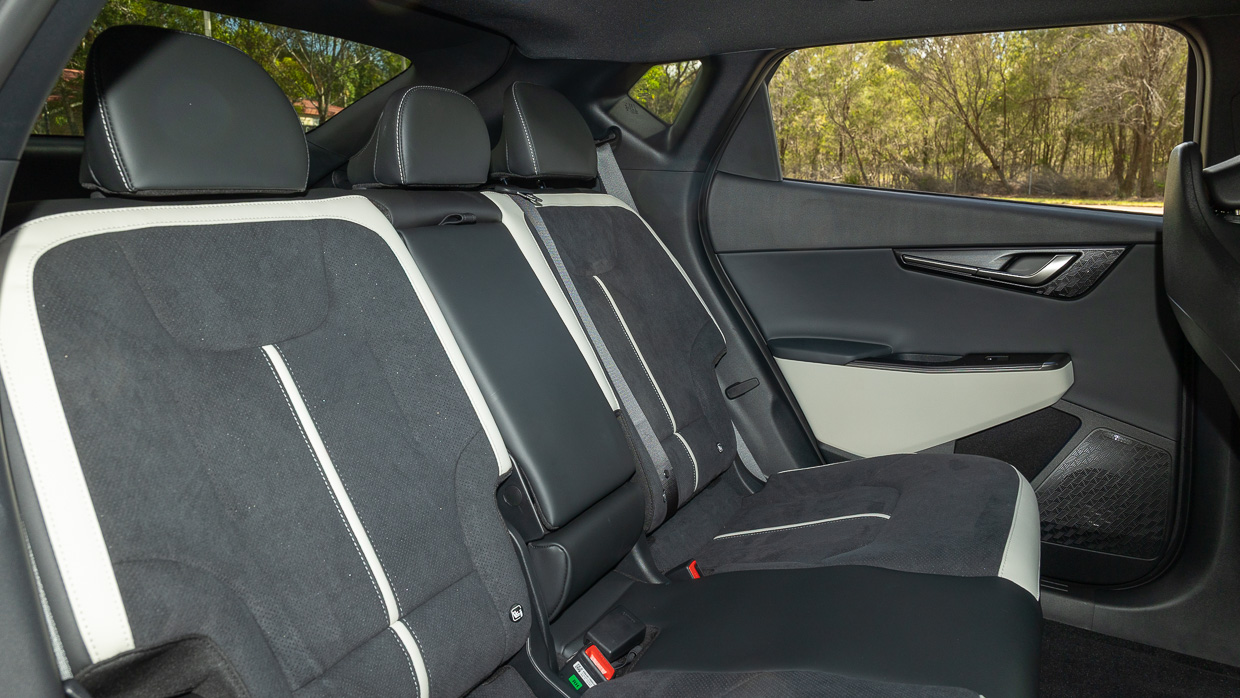
Row two offers generous legroom though the high floor (to facilitate the underfloor battery) and low-slung ceiling leaves it feeling cramped. Seatback tilt adjustment is a nice inclusion, though the climbing window line also inhibits outward visibility for smaller occupants.
Amenities wise, it’s air vent in the B-pillar trim, USB-C ports in the inner edge of the front seat backs and cup holders in the folddown arms rests. But row two does feel a bit cost conscious as there’s so much hard shiny plastic, especially across the front seat backs.
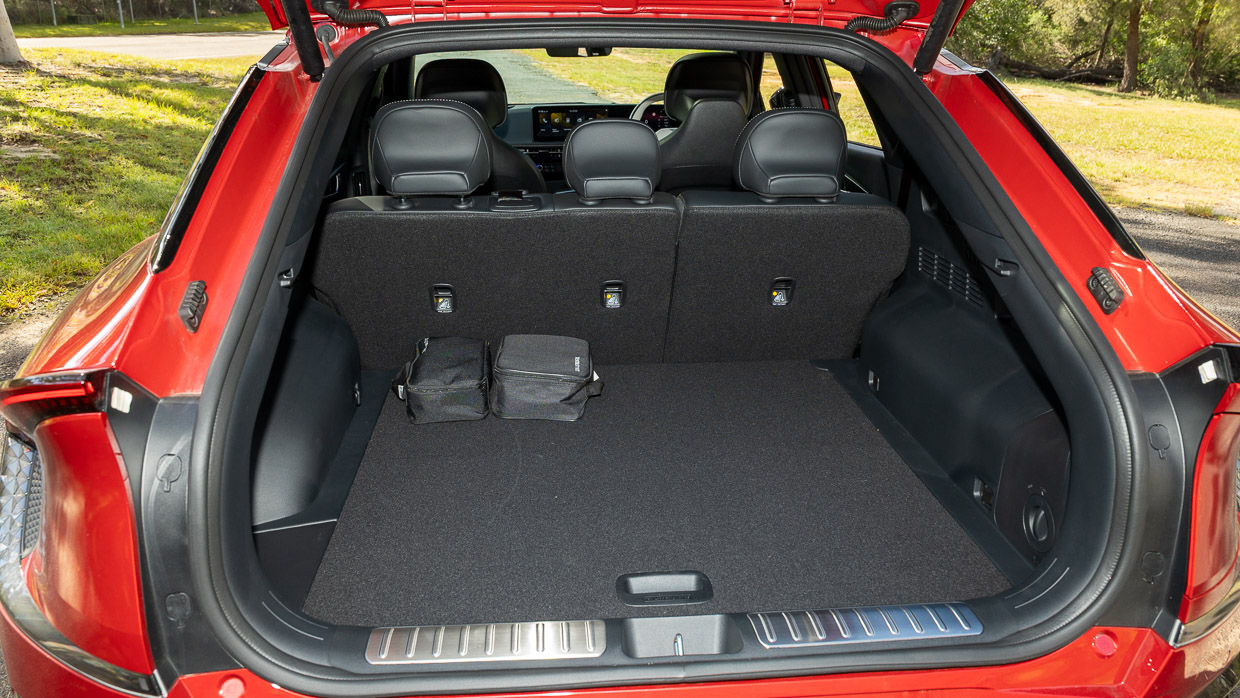
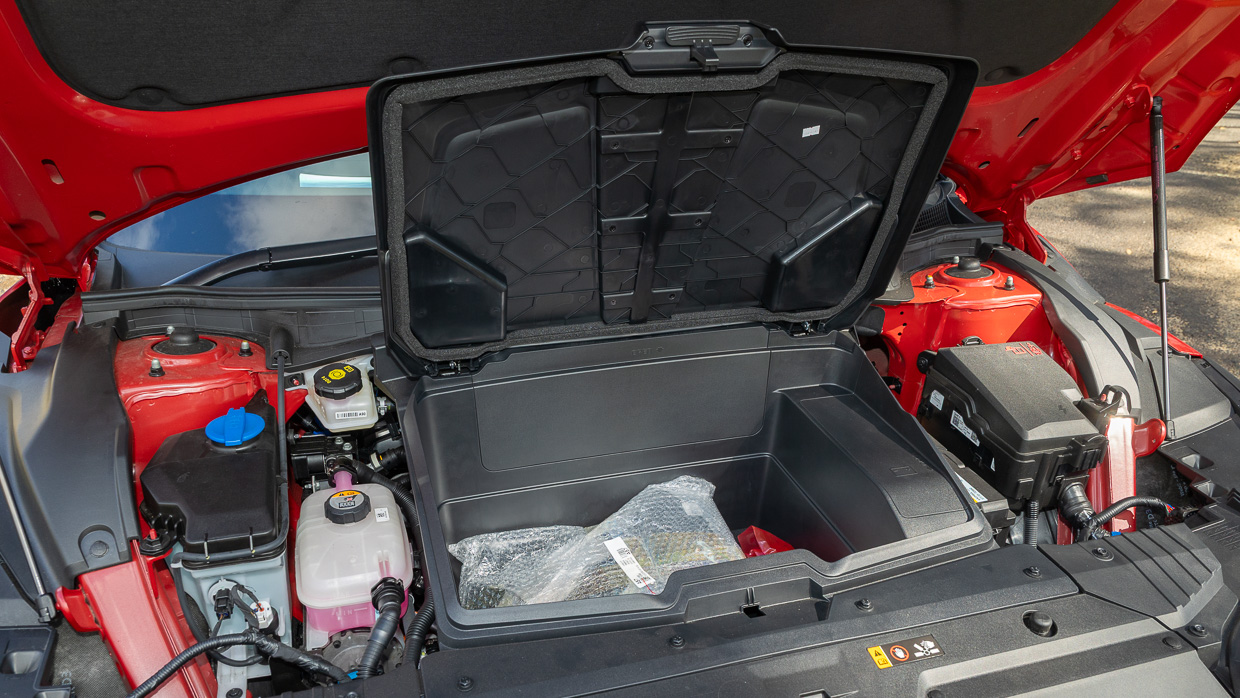
Boot wise, the EV6 is certifiably more hatchback than wagon in usable space, which Kia quotes as 480 litres (interestingly, 10 litres down on the rear-drive Air). There’s also a 52 litre frunk that plummets to 20 litres should you opt for dual-motor variants.
Kia Australia’s warranty for private ownership of the EV6 is seven years of unlimited-kilometre coverage, with seven years and 150,000km on the high-voltage battery.
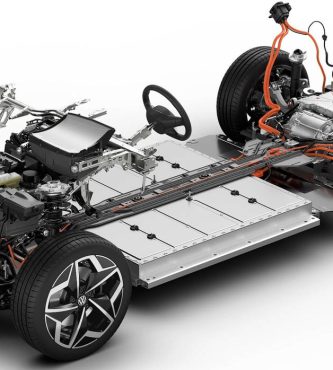
Whichever variant you choose, the 800V E-GMP architecture allows DC charging at speeds up to 350kW, which equates to a 10-80 percent battery rejuvenation in 18 minutes.
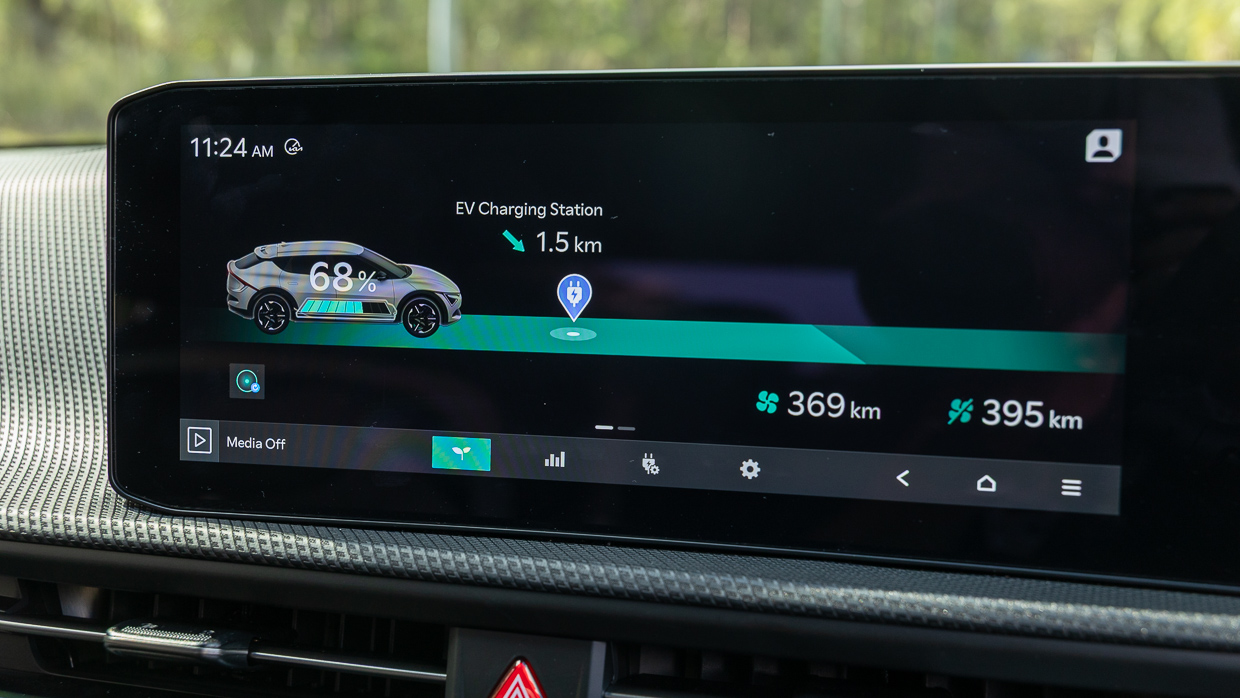
Range? Given its 15.8kWh/100km consumption during our week of mixed-conditions testing you can expect a real-world range of around 510km. A little shorter than the rating but still very usable. It’s also not as good as the battery-twinned MY26 Ioniq 5 RWD, which saw 13.5kWh/100km on test.
A five-year prepaid servicing packaging for an EV6 GT-Line is $1391, strangely around a thousand dollars cheaper in total than a five-year bundle for EV5 GT-Line ($2389). Intervals are every 12 months or 15,000km, or shorter than some EVs’ bi-annual schedules.
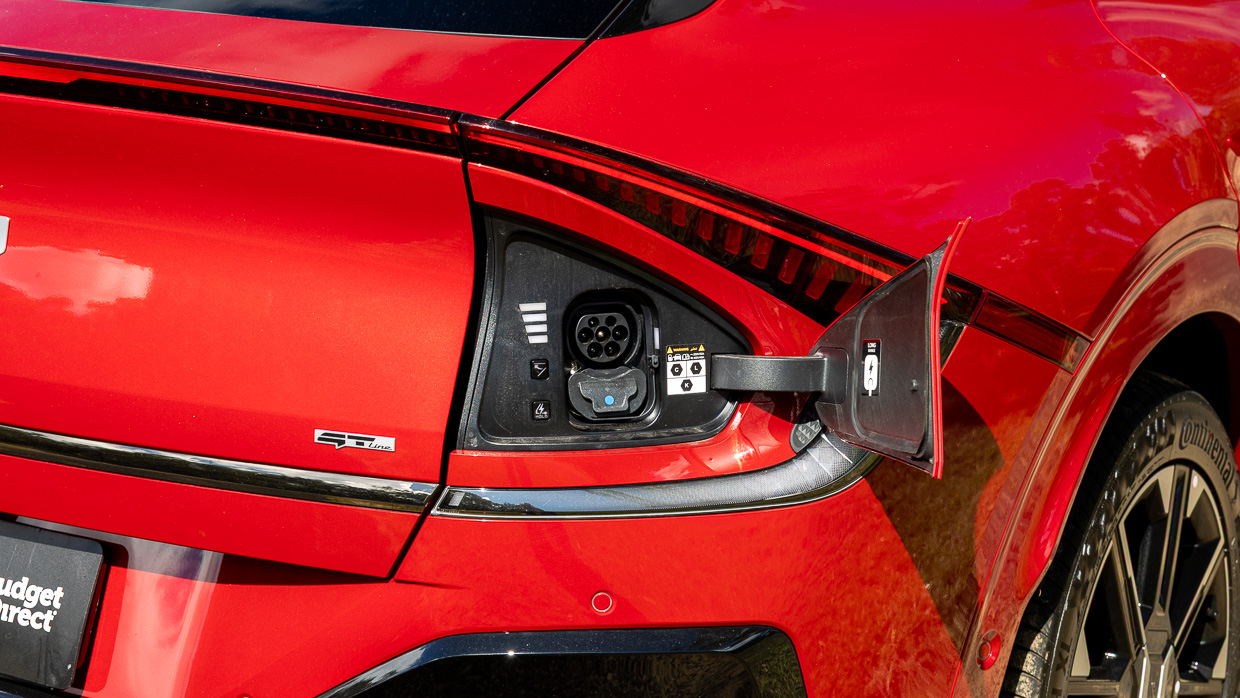
Budget Direct told us the median annual premium purchased for the first time between 1/3/25 and 1/3/26 to comprehensively insure a new Kia EV6 was $1245. Individual circumstances and policy terms may vary.
Of course, everybody’s situation is different, and the premium will vary according to make and model, and other things insurers take into account, such as your postcode, driving history, who drives the car, where you garage the car and more.
Please quote for yourself. Subject to meeting underwriting criteria. Insurance issued by Auto & General Insurance Company Limited. See PDS & TMD at budgetdirect.com.au.
A mild spruce up and a bigger battery is ostensibly an aging EV6 keeping pace with EV times without really extending itself in new territory. However, this belies the notion that the MY26 updates make an already great electric even better.
Its 800-volt architecture remains high-brow, its fast-charging remains quick, and Aussie-revised chassis honed atop an already fine original tune maintains EV6’s status as one the best driving electrics out there.
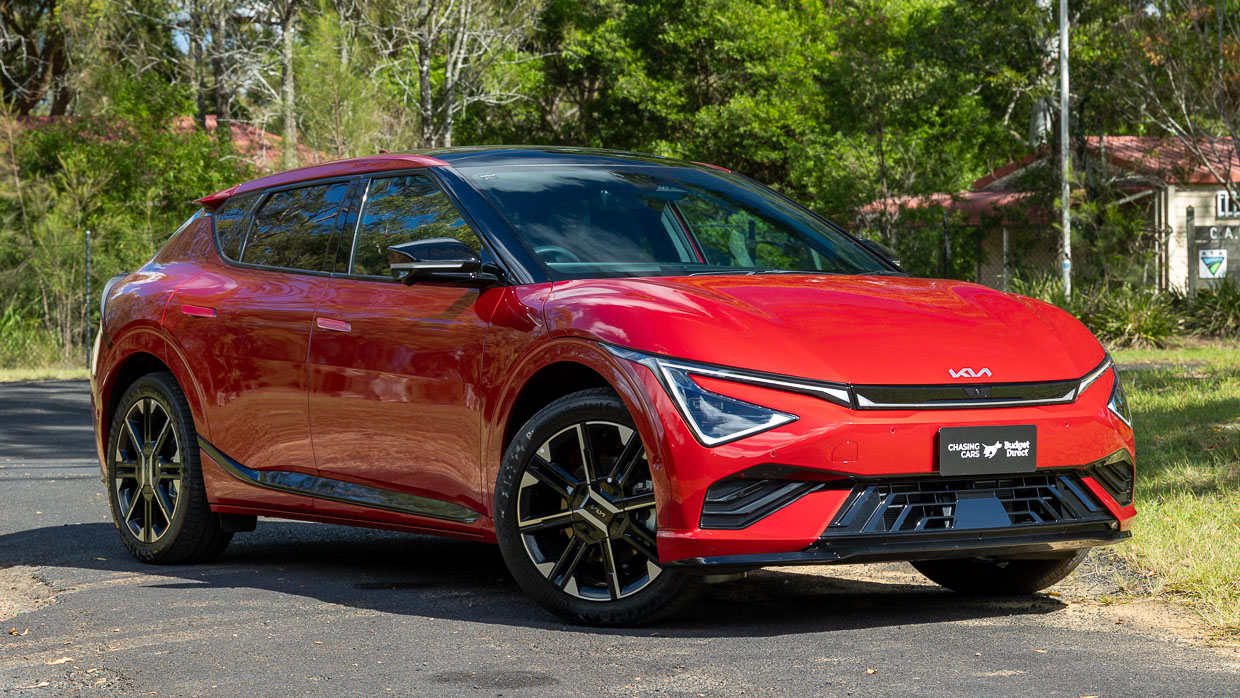
And while genuinely heart-pumping performance arrives a tier above in the dual-motor version, the single-motor is, at its core, more a driver’s car than bold-faced stats might otherwise suggest.
The EV6 remains an excellent EV that shouldn’t be overlooked. However, the significantly cheaper, SUV-packaged EV5 is Hoovering up Aussie buyers much more ferociously even though it’s a vastly inferior electric choice in many areas.
Key specs (as tested)
About Chasing cars
Chasing Cars reviews are 100% independent.
Because we are powered by Budget Direct Insurance, we don’t receive advertising or sales revenue from car manufacturers.
We’re truly independent – giving you Australia’s best car reviews.
The estimate provided does not take into account your personal circumstances but is intended to give a general indication of the cost of insurance, in order to obtain a complete quote, please visit www.budgetdirect.com.au. Estimate includes 15%^ online discount.
^Conditions Apply
Budget Direct Insurance arranged by Auto & General Services Pty Ltd ACN 003 617 909(AGS) AFSL 241 411, for and on behalf of the insurer, Auto & General Insurance Company Limited(ABN 42 111 586 353, AFSL 285 571).Because we don’t know your financial needs, we can’t advise you if this insurance will suit you. You should consider your needs and the Product Disclosure Statement before making a decision to buy insurance. Terms and conditions apply.
Indicative quote based on assumptions including postcode , 40 year old male with no offences, licence suspensions or claims in the last 5 years, a NCD Rating 1 and no younger drivers listed. White car, driven up to 10,000kms a year, unfinanced, with no modifications, factory options and/or non-standard accessories, private use only and garaged at night.
^Online Discounts Terms & Conditions
1. Discounts apply to the premium paid for a new Budget Direct Gold Comprehensive Car Insurance, Third Party Property Only or Third Party Property, Fire & Theft Insurance policy initiated online on or after 29 March 2017. Discounts do not apply to optional Roadside Assistance.
2. Discounts do not apply to any renewal offer of insurance.
3. Discounts only apply to the insurance portion of the premium. Discounts are applied before government charges, taxes, levies and fees, including instalment processing fees (as applicable). The full extent of discounts may therefore be impacted.
4. We reserve the right to change the offer without notice.