Powered by

-
Car Reviews
Latest reviews
-
Car News
Latest news
-
Car Comparisons
Latest comparisons
- Chasing Deals
Latest reviews
Latest news
Latest comparisons
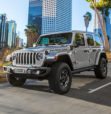
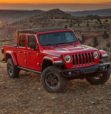
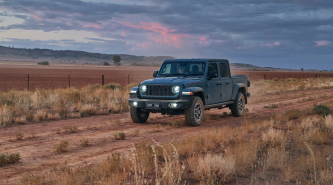
With its recent turbo-four transplant, Jeep’s 4×4 wagon icon has already proven off-road certified. What are the 2-Door and 4-Door versions like as all-rounders?
Freedom! Sounds beaut. Sign us up! Or so was the sentiment of two Chasing Cars staffers – production chief Tom Place and yours truly – who opted for what Jeep Australia calls its “famous for freedom” specialist, the iconic 4×4 Wrangler wagon, for the two-week festive break across Christmas and New Year holiday period.
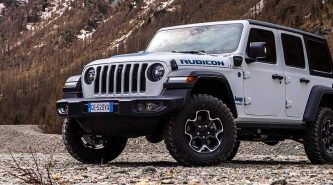
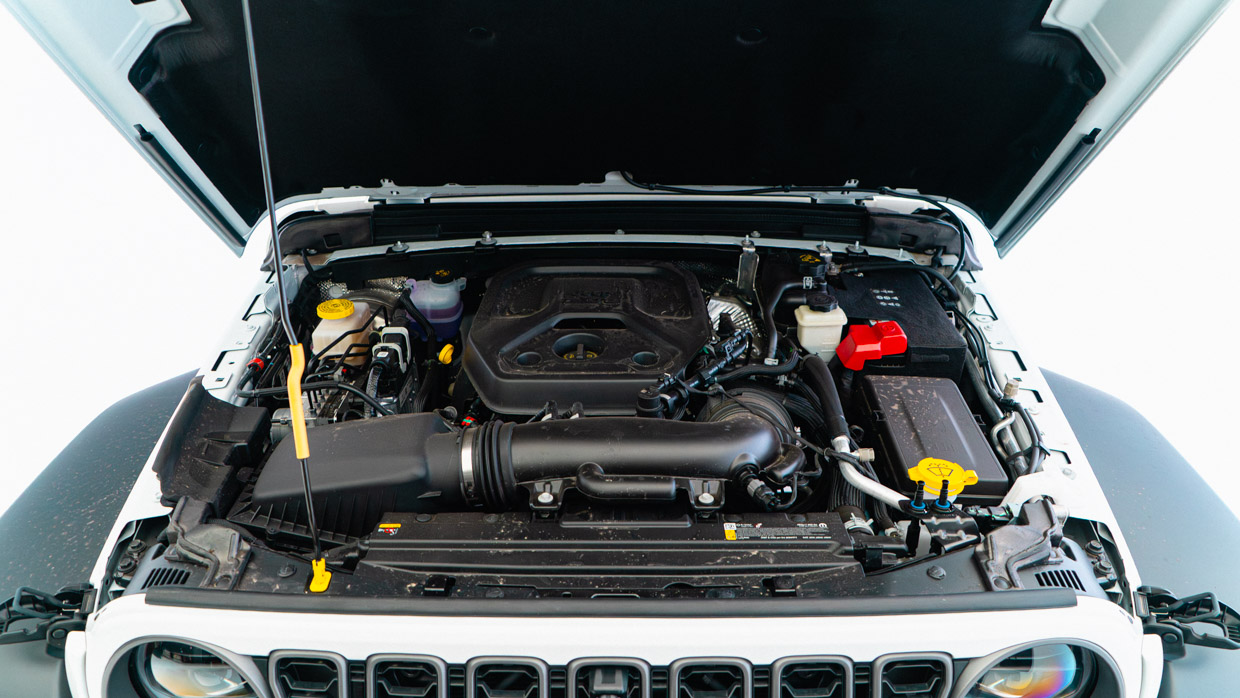
Both are Rubicons…because that’s all you can get now. The softer guises were axed. And both fit the somewhat controversial and relatively new 200kW/400Nm 2.0-litre turbo petrol four engine, because the thirsty and archaic if allegedly bombproof Pentastar naturally aspirated V6 is now, commercially, a boat anchor.
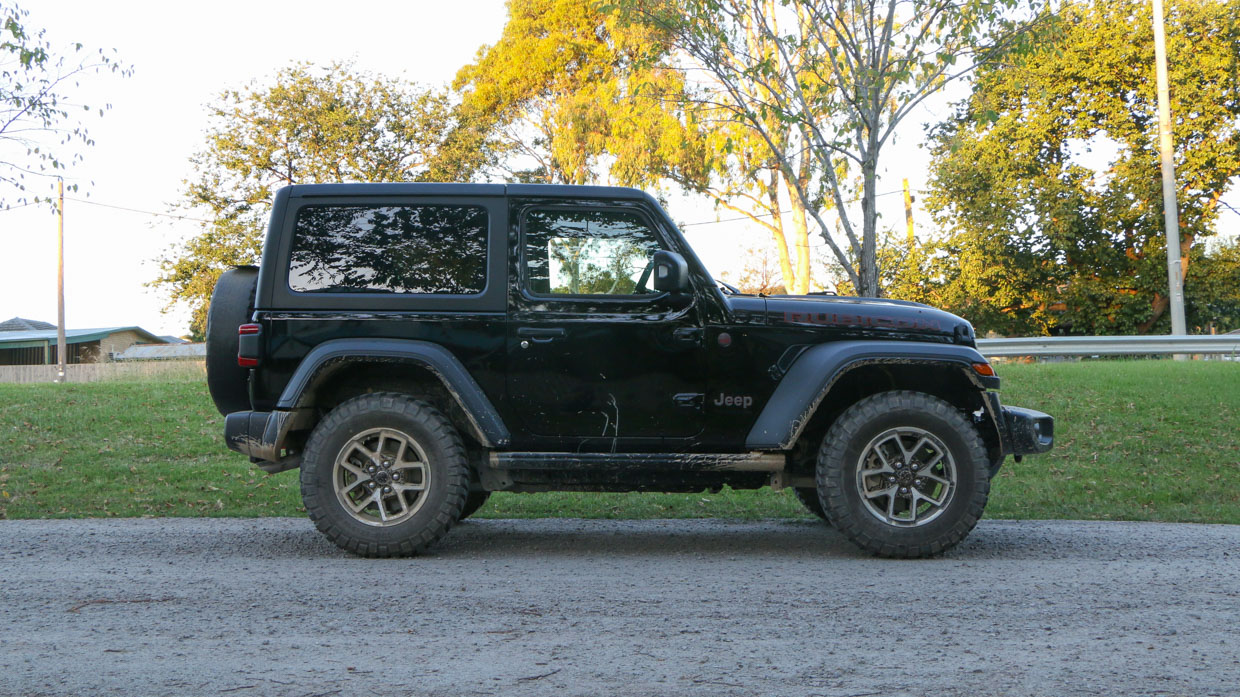
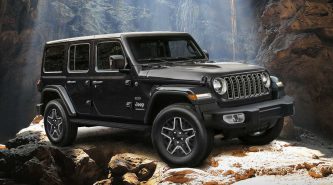
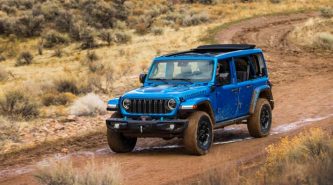
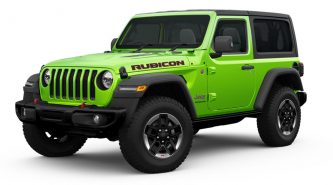
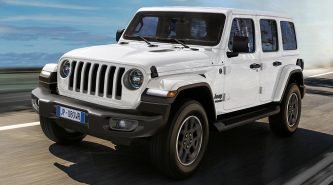
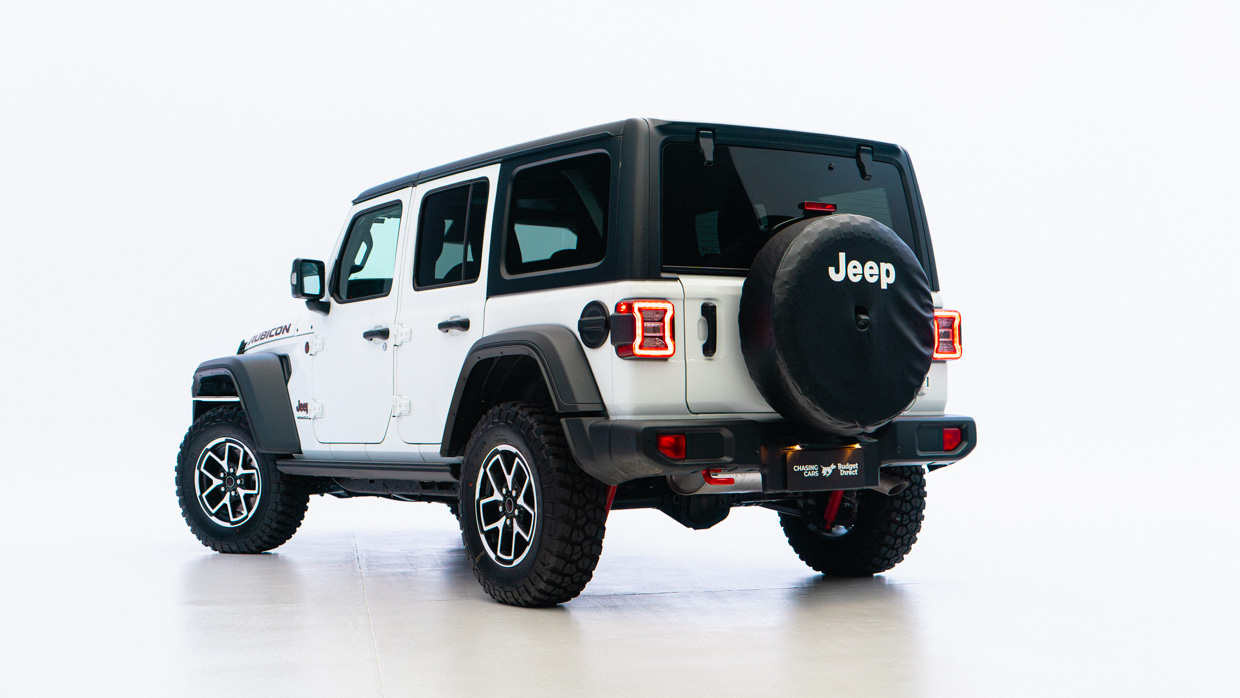
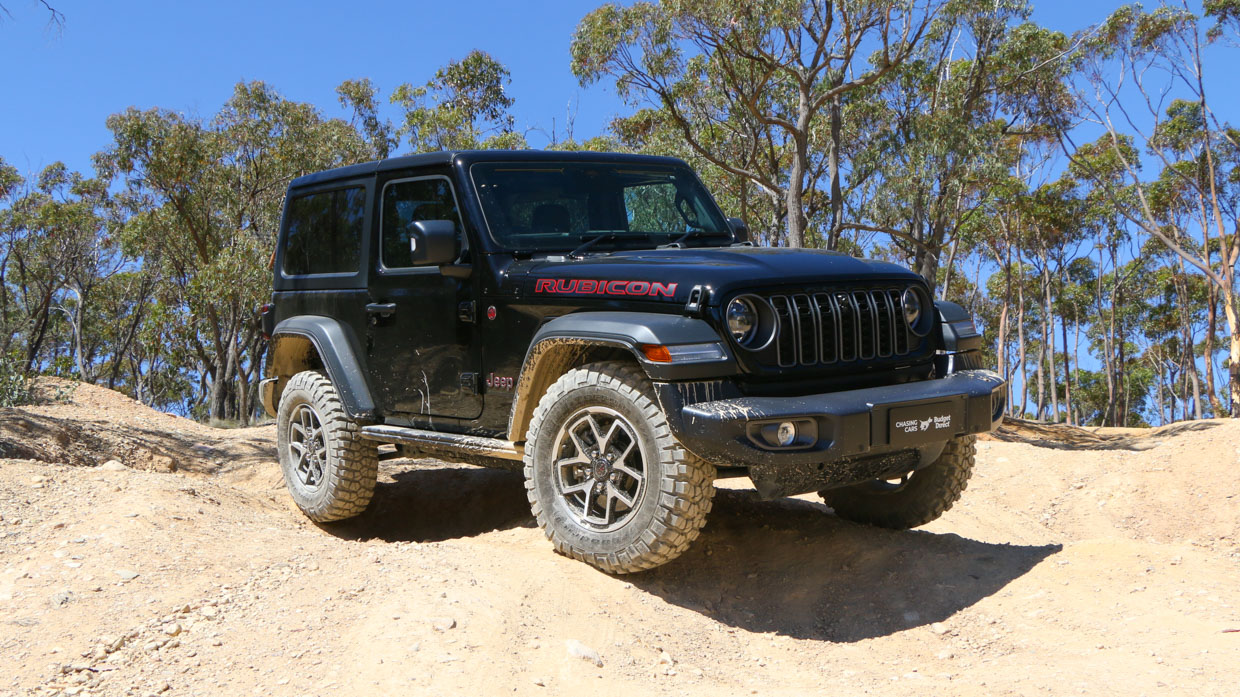
But they’re different. His is the 2-Door (which actually has three doors, academically) and mine is the 4-Door (which is really a fiver, if we’re keeping score). Tom tackled the off-roading in Victoria, while I’d planned a 2000km interstate road trip…that derailed for various boring reasons, leaving me ‘free’ for as much ‘adventure’ as Sydney suburbia could muster.
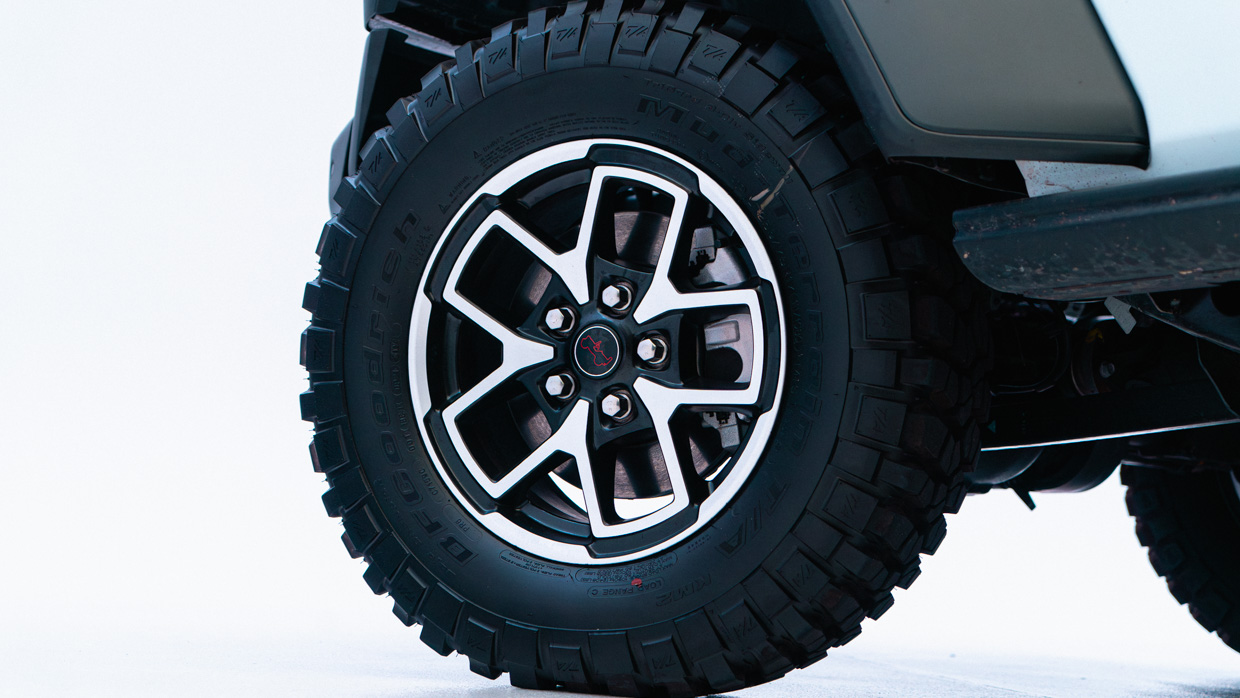
Rock-Trac Active 4×4, 77.2:1 crawl ratio, Tru-Lock front and rear diffs, front sway bar disconnect, heavy-duty live axles, rock sliders, 32-inch mud-kicking tyres…none of these once-optional Rubicon off-road indulgences are strictly necessary for my holiday needs. But as Rubicon is now the only Wrangler available, it’s the spec adventurers and urbanites are solely served.
So while messers Place can cover off how Jeep’s iconic wagon fares stuck through the thick of the Victoria mulga (outlined below) I’m keener to assess what trials and tribulations await in old familiar Sydney town to see whether the sole Wrangler spec on offer is at all suitable – tolerable, even – for the good many city slickers who buy them as urban runabouts.
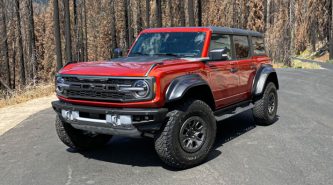
Disclosure time: I’ve always been seduced by the harder-core Wranglers’ rustic, go anywhere charisma, and those of its ilk, such as the (US market) Ford Bronco Raptor. It’s a focussed breed that yanks at the heartstrings with a force that the likes of a Toyota Prado can’t.
Variety is the spice of motoring life and it’s one of the spiciest in showrooms. It’s built for purpose over pandering, steeped in off-roading providence, less comfort leaning than your average dual-cab ute, and the mighty Rubicon’s unapologetic nature has always charmed the heck out of me.
But, even after the recent price cuts, starting at $81,990 (circa-$86,888 driveaway) for the 2-Door and $84,990 for the 4-Door (from $90,216 on-road) for the Hard Top – the fancier canvas Power Top adds around $6500 – it’d want to swoon like Frank Sinatra.
The fourth-generation JL Wrangler is, at eight years old, not getting younger, while its Rubicon guise, measured broadly across its stretching lifecycle, really isn’t getting much more value-laden.
In theory, though, it’s not pricey to run: $399 per annual 12-month visit with a 12,000km interval cap. Not bad for a hard-core 4×4 performer. Slog the urban hot-mix, though, and you eat through those BF Goodrich Mud Terrain tyres in short order, so budget for that.
They’re thirsty, too: a 9.7L/100km claim for either body style on a 95RON minimum, but the stinger for the 2-Door is its meagre 66L fuel tank, greatly impacting touring range between fills against the 4-Door (with its 81L tank).
The warranty is unlikely to woo fence-sitting buyers, cautious of the Jeep brand’s reputation. Five years of coverage ain’t bad but the 100,000km distance limit won’t be enough for many adventurers. Once lowly three-star prospects, current MY26 versions are unrated by ANCAP…
While relatively new to Australia, the ‘GMET4’ 2.0L turbo four has served duty in JL in other markets since 2018. It has less power (200kW) but more torque (400Nm) than its V6 predecessor and paired with an eight-speed conventional auto, you’d expect stellar refinement…and you’d be wrong.
Give it berries and there’s enough oomph to get 2.2 tonnes (4-Door) of jacked-up wagon punting along with ahead of steam, but it’s really the slurry nature of the TorqueFlite auto and the engine’s high torque peak (from 3000rpm) that pokes drivability holes in forward progress on road.
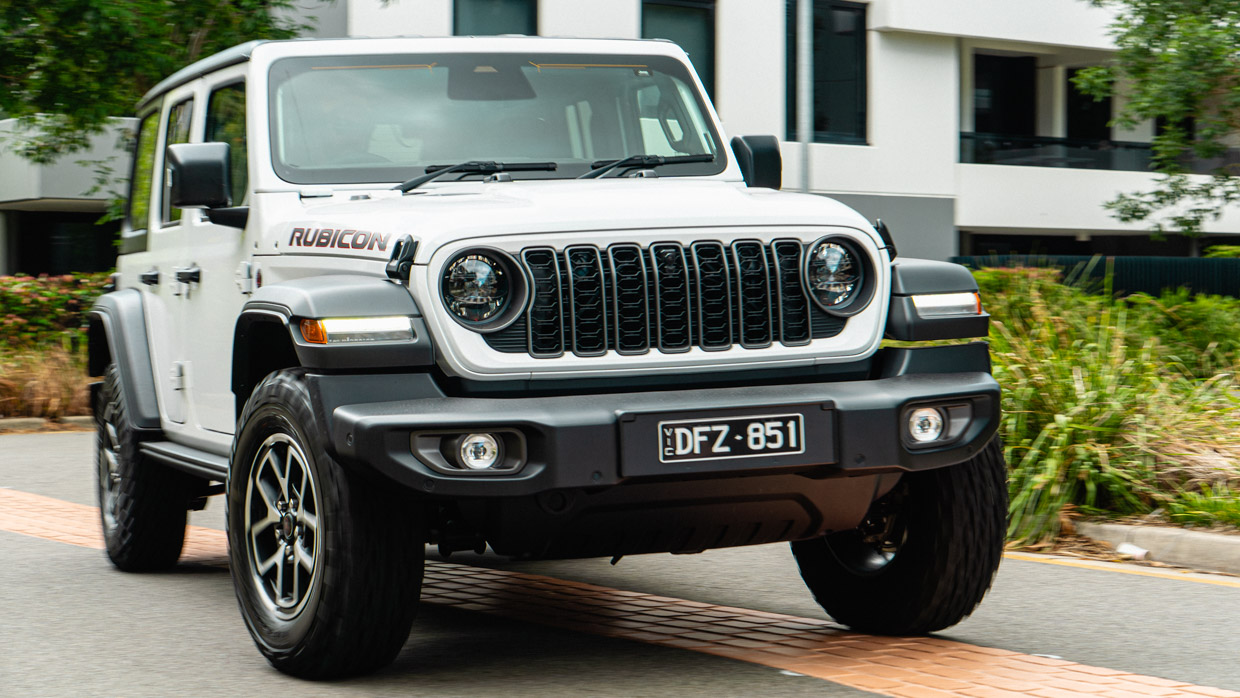
Some off the mark hesitation, some clunky upshifts: it’s doing its best diesel impersonations, at least some of the time.
This powertrain’s slightly more polished if still agricultural nature does fit the Rubicon’s rugged 4×4 persona, though. It’s part of the charm, much in the same manner as the tyres, which patter along the hot-mix noticeably at low speed and can drum up a howl on a motorway. Serene it is not.
Up to speed, the 4-Door has faint wander in its manner, no doubt pinned to the physical nature of the huge rubber on small 17-inch rims bolted to solid axles front and rear.
But you don’t have to chase the steering nearly as much as the short wheelbase 2-Door, which demands sawing away at the wheel to counter the formidable chassis yaw.
The Wrangler sticks to old-school guns by retaining a recirculating ball steering rack (necessary due to the solid front axle format) where almost all other 4x4s have moved on to rack and pinion – again, a tonne of vibe but not a lot of refinement or precision at play. At least tooling about town or on the motorway with other traffic.
But the 4-Door, for its part, is friendly enough in suburbia to match most utes on the daily driver front and better a good many.
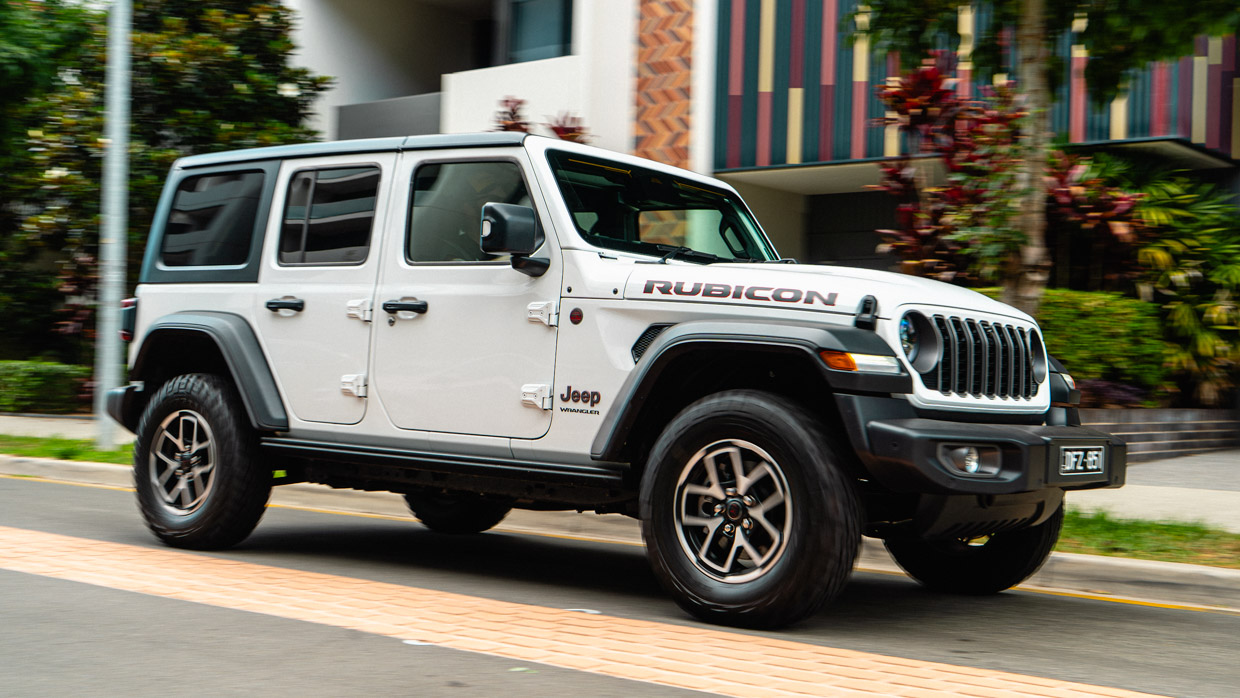
The ride is impressively compliant for the most part, if prone to some fizzy vertical movement at times, and the cushioning power of that big rubber smothers potholes and renders small, high-lipped, backstreet roundabouts inconsequential if you drive right over them…or so I’ve been told.
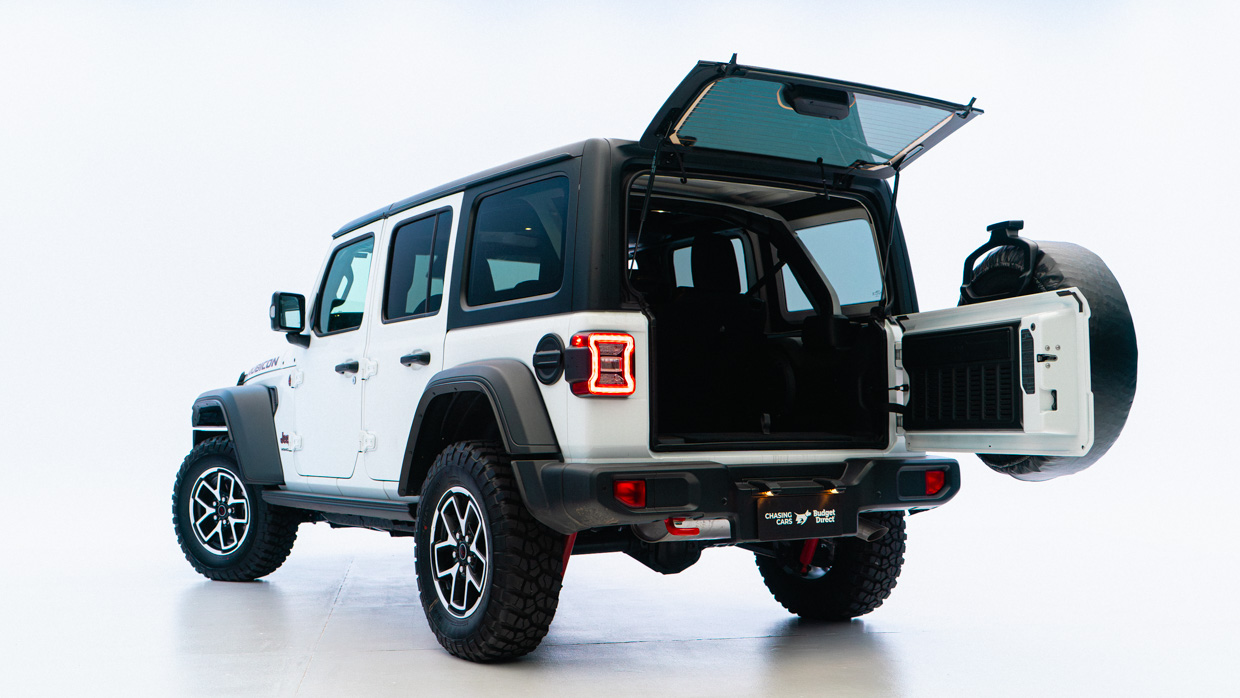
The five-seater isn’t that big either: at 4882mm, it’s shorter than many large SUVs and, bar being mindful of the swing of the rear (and formally uncounted) side-hinged boot door, it’s a doddle to reverse park in tight parking spaces.
Bar the deafening (switchable) binging when approaching speed cameras, the safety nannies are impressively unobtrusive too.
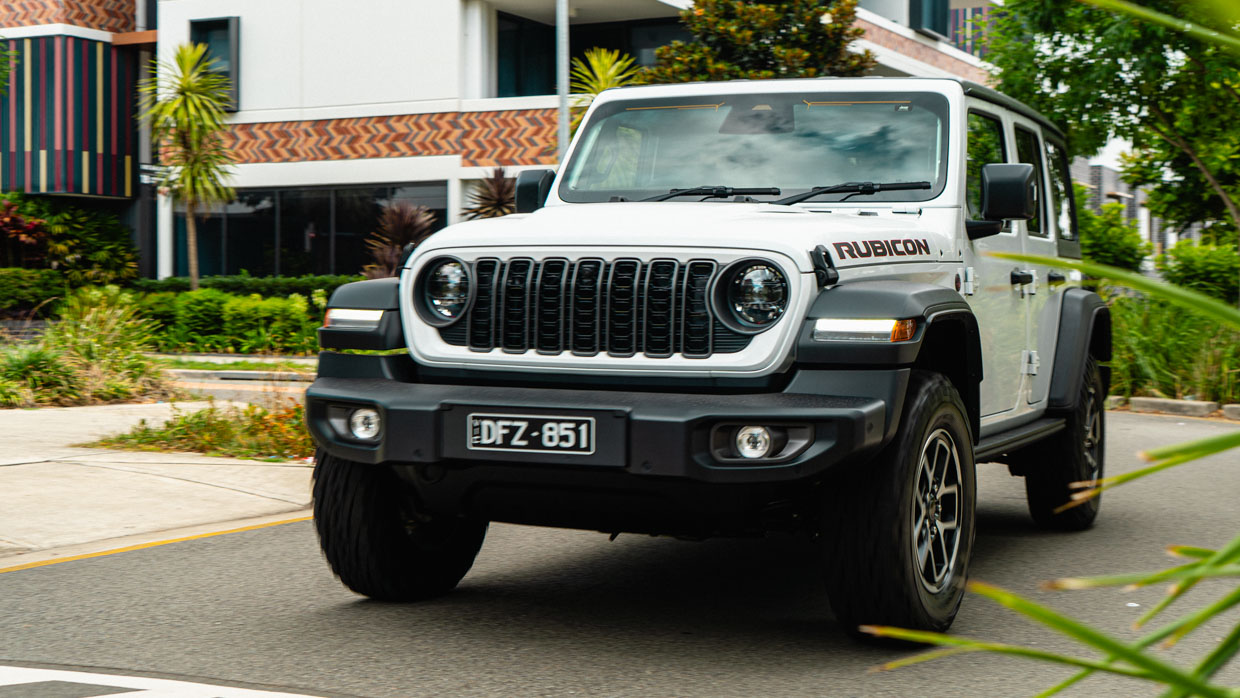
But if there is a concern on the safety front, it’s that it doesn’t take much provocation in a corner to get those rear mud tyres sliding on a sealed road during greasy first rain.
The plan was simple, a quick overnight daddy-daughter camping trip away at Tallarook State Forest, Victoria, just 30 minutes off the Hume, just far enough away that we lose sight of people but not phone signal.
Once off the highway and onto the dirt, we shifted our loaded Wrangler Rubicon 2-Door from its on-demand 4×4 mode into ‘true’ four-high and collected some speed.
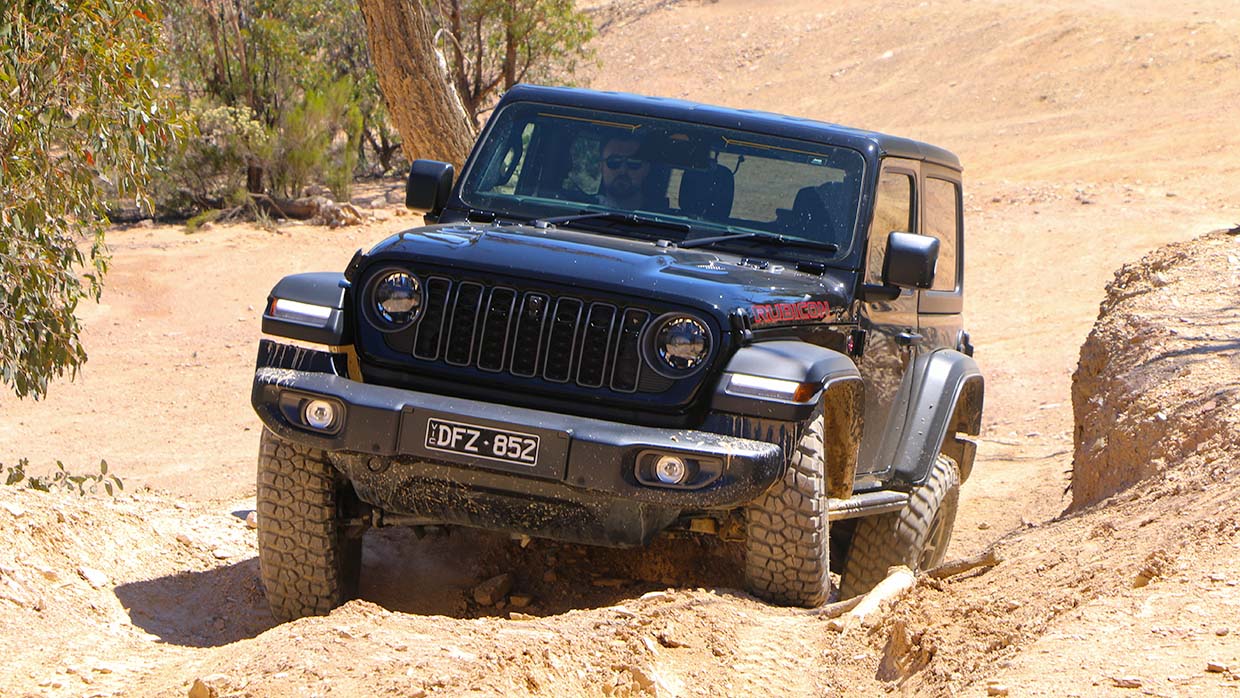
Quickly, we found the fun maneuverability of the 2-Door in town became unnerving on dirt, with oversteering frequent and requiring delicate inputs to catch – don’t forget there’s no steering feel to help you out here, either.
Having spent significant seat time in the relatively stable 4-Door previously, the instability of the 549mm shorter, 2459mm wheelbase was more pronounced than expected. Thankfully, switching the drivetrain back into four-auto dampened the chaos somewhat, but it was a surprisingly slow going trip to the campsite.
With my daughter none the wiser in the backseat, it was at least comforting to know Jeep has finally stepped into the 21st century by fitting side airbags to the second row with its MY25 update.
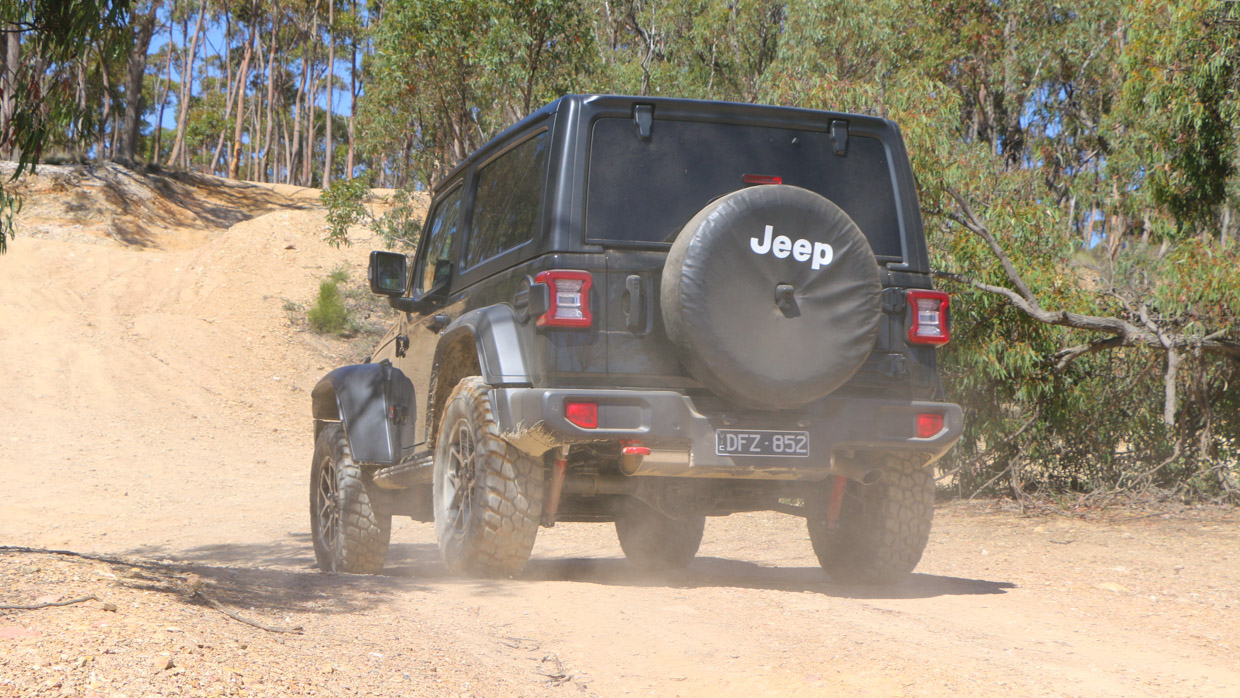
The short wheelbase option exists for a reason, of course, which becomes obvious once you engage the astonishingly short 77:2:1 low-range gearing and tackle some moguls. The breakover angle reduces from 22.6 to 27.8 degrees, and there are slight clearance improvements in other areas, too.
During our camping trip and follow-up testing at Lerderderg State Park, one fact stands out: many 4x4s could do what we asked of the Wrangler, but none have done it so easily.
As mentioned above, the depth of standard off-road equipment fitted to the Wrangler, along with smaller modifications such as the high-mounted breather lines, speaks to decades of lessons learned. It’s also the sort of equipment punters regularly spend thousands on, after already fronting up for the cost of a brand-new 4×4.
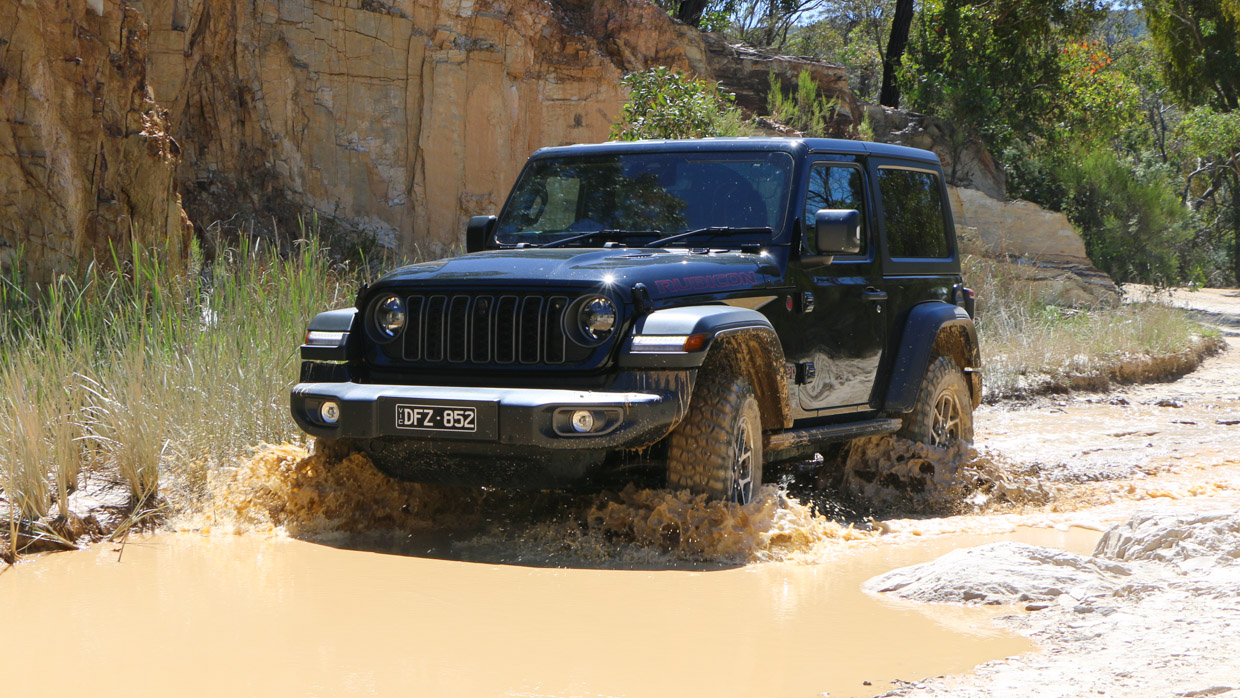
Collectively, the capability speaks for itself. With sway bars unlocked, it’s difficult to even lift a wheel with the range of articulation available, and while the locking differentials were nice, they were rarely needed due to the snappy traction control.
But for most Aussies, off-roading is about more than just rock-hopping, as became immediately obvious as we drove out of the campsite the next day to find a tree fallen across our way out. We’ll touch on that more in the interior section.
You climb in and shut the (removable) doors to that curated, signature clang, revealing a cabin space that’s cosy and upright, with a commanding and surprisingly unfettered outward viewpoint. With its upright windscreen and bluff, vertical surfaces, it feels the part.
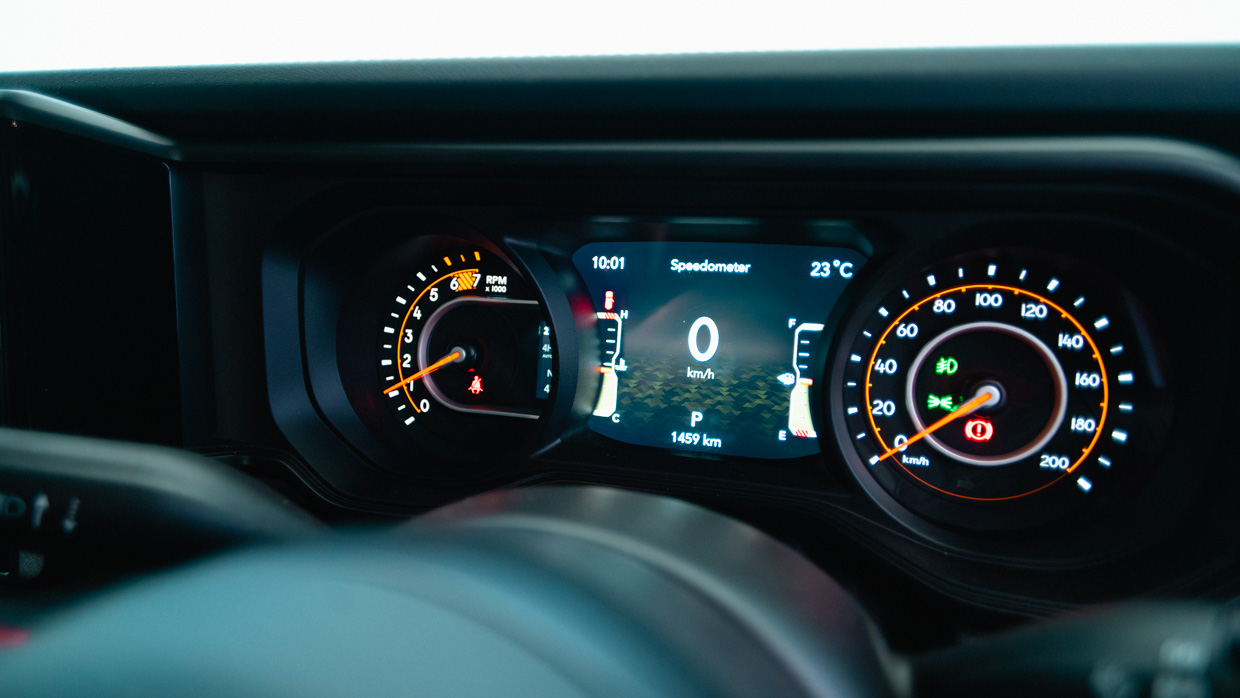
The cabin vibe is chunky and analogue, from the thick drive selector shifter right down to quaint old school analogue driver’s instrumentation, albeit with a big, clear 7.0-inch TFT speedo display. Most of the surfaces are minted in nice, solid and tactile vinyl and plastics rather than the sort of cheapy, hard, shiny dual-cab stuff, bringing some quality vibes.
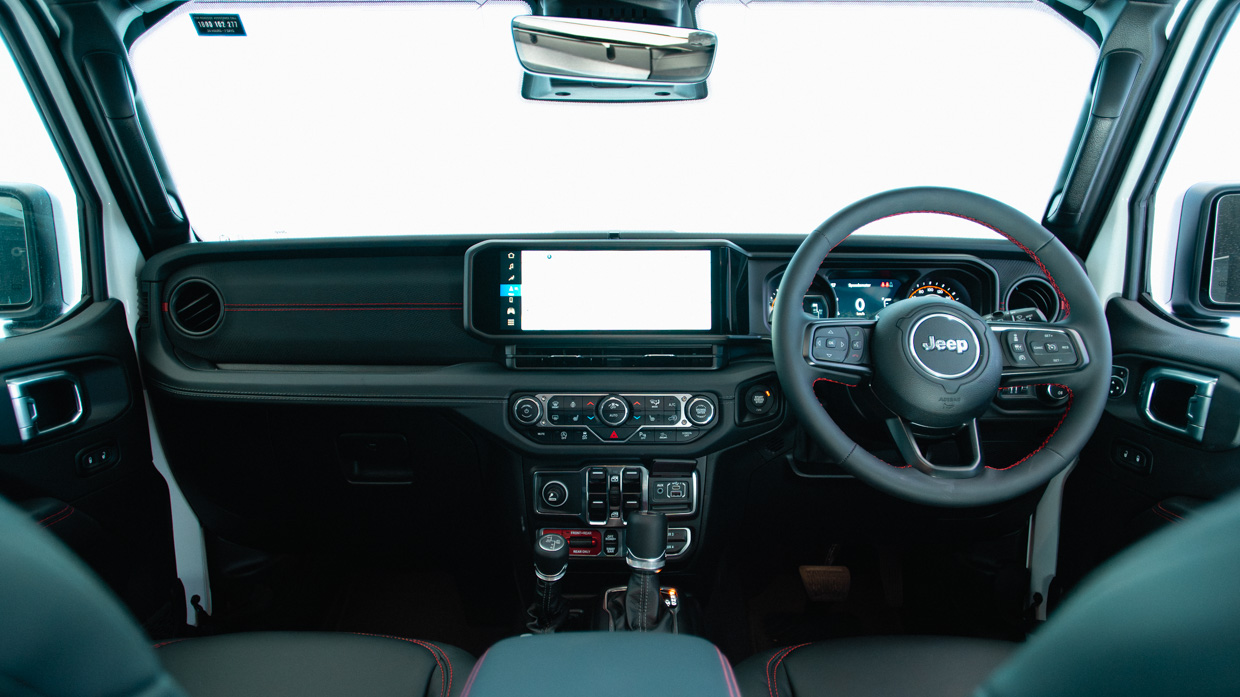
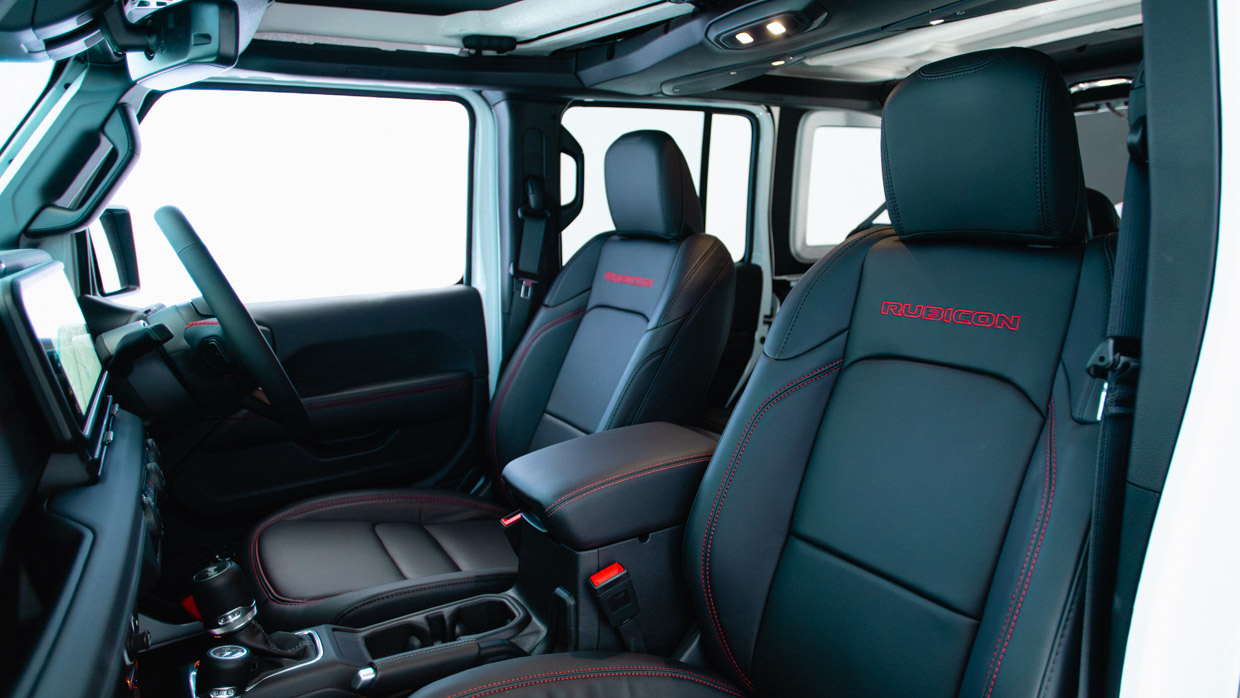
For all the stick Jeep gets for its lack of reliability, everything on the inside of the Wrangler feels sturdy and well put together.
The nappa leather seats are quite comfy if lacking in genuine form fitment, electrically adjustable and heated but lacking ventilation. If you really need air, you can pop the roof off with handy quick-release fasteners. There are plenty of sturdy grab handles for occupants once the motion gets rocky.
Not great is foot room. On the driver’s side, the transmission tunnel encroaches into the footwell – exhaust and gearbox clearance, perhaps – to a point where long hauls might cause leg discomfort. It’s the one area where the driver lacks a proper anchor point in the heat of the action.
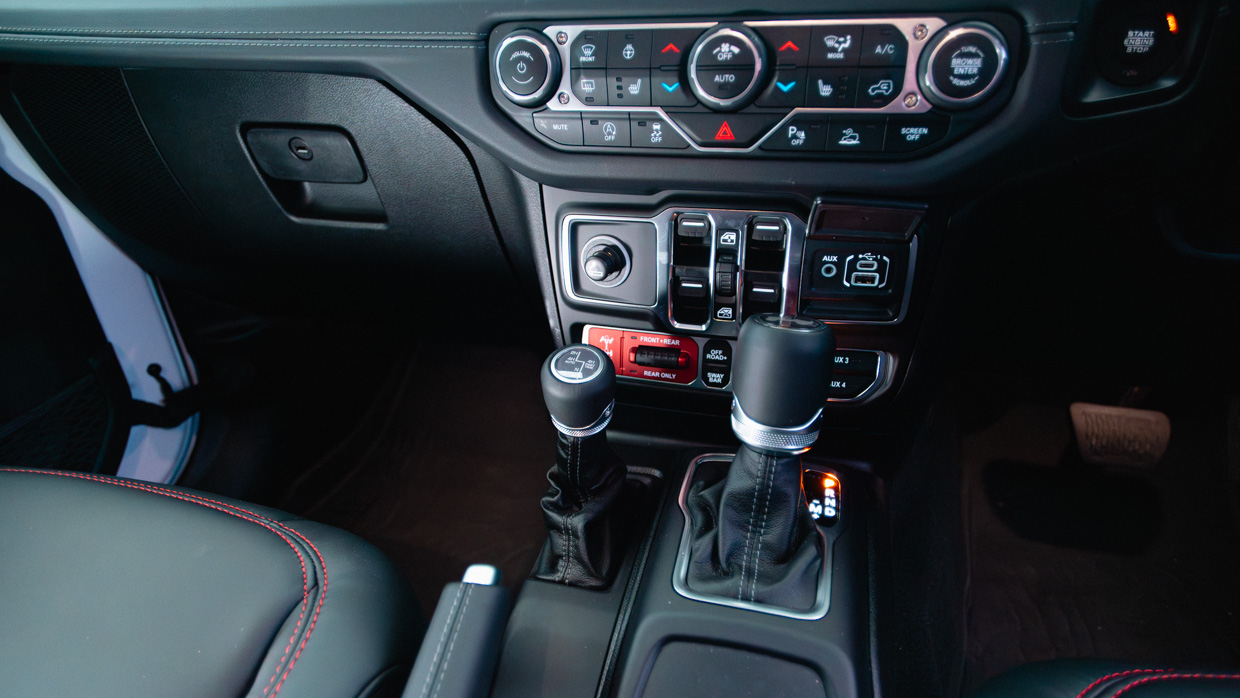
The media system is average. Proprietary sat-nav – ideal when venturing beyond mobile coverage – is a neat inclusion but the Alpine-branded audio is merely okay and the wide-screen format of the 12.3in touchscreen leaves apps such as Apple CarPlay with a shrunken perspective. Its Uconnect 5 software, too, is a clunky and uninviting.
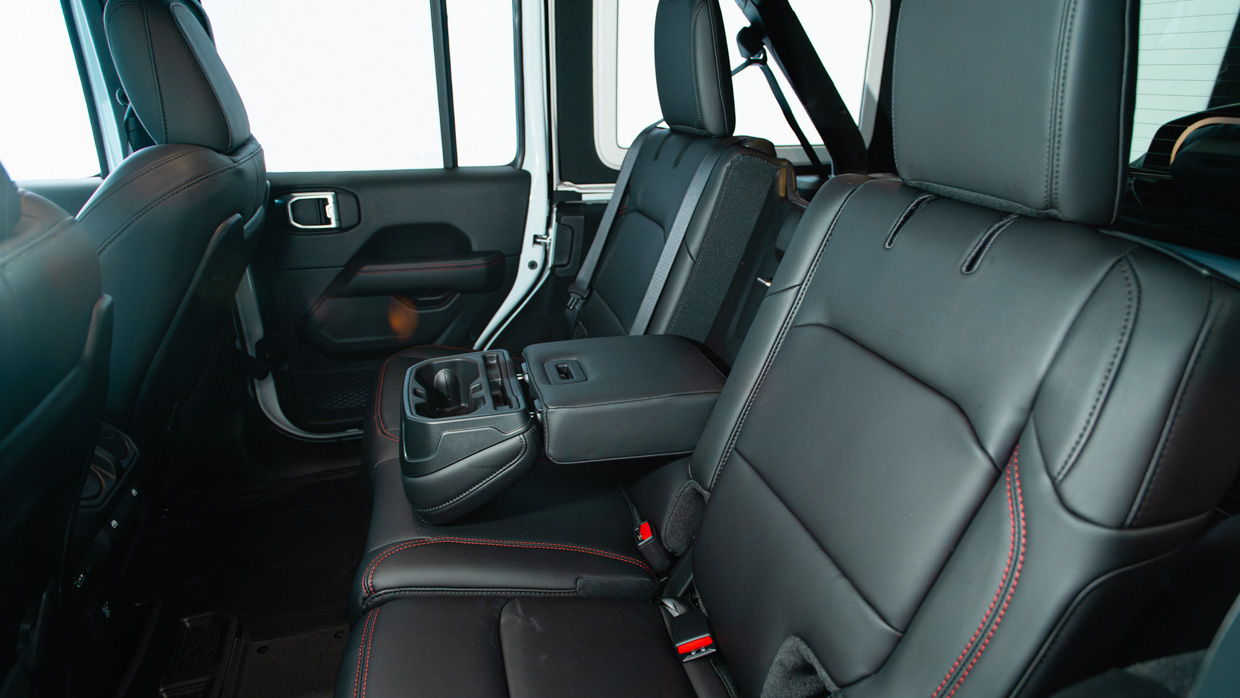
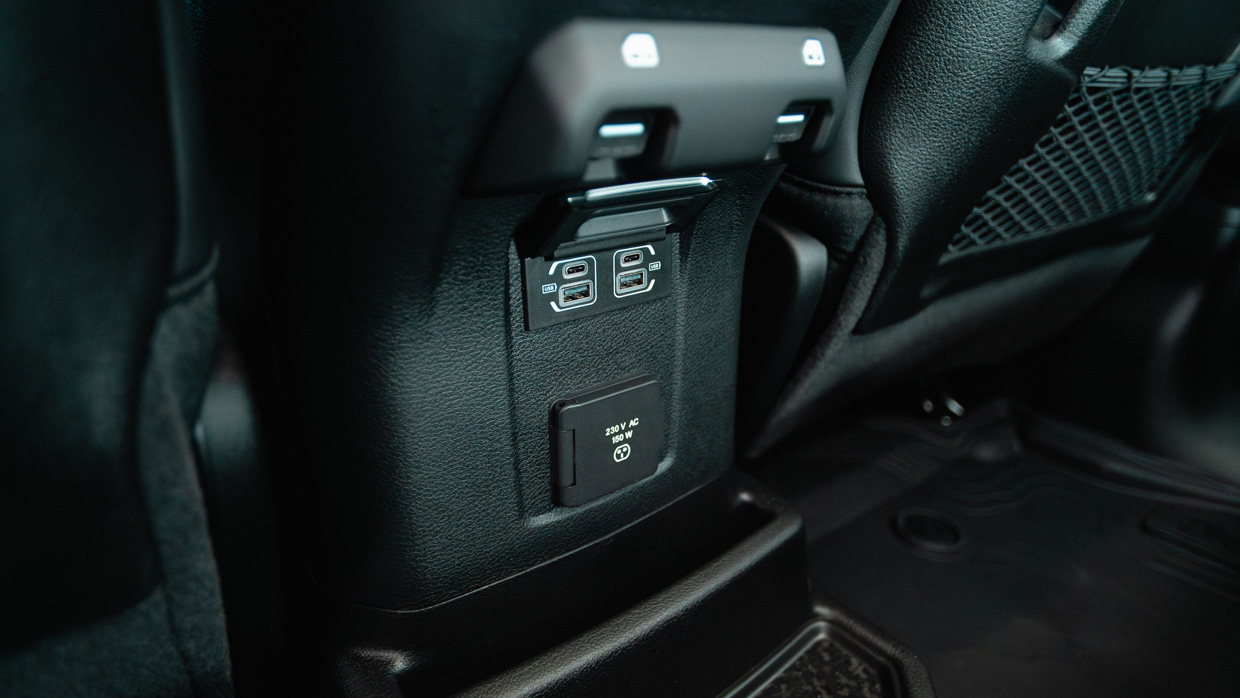
Despite the Wrangler’s unusually narrow cabin width, second-row room is decent, at least in the 4-Door version. Quad USB outlets – two As, two Cs – as well as a three-pin 230v outlet and rear air vents are par for the course.
Bar sheer space, the advantage of the 4-Door’s extra half-metre (3008mm plays 2459mm) of wheelbase is that the longer version is five-seater, whereas the shorty only caters for four occupants.
Neat elastic retainers in the doors (instead of door bins) do a great job of capturing your oddment, stopping your stuff from rattling around, whether you’re on a trail or just heading to the supermarket.
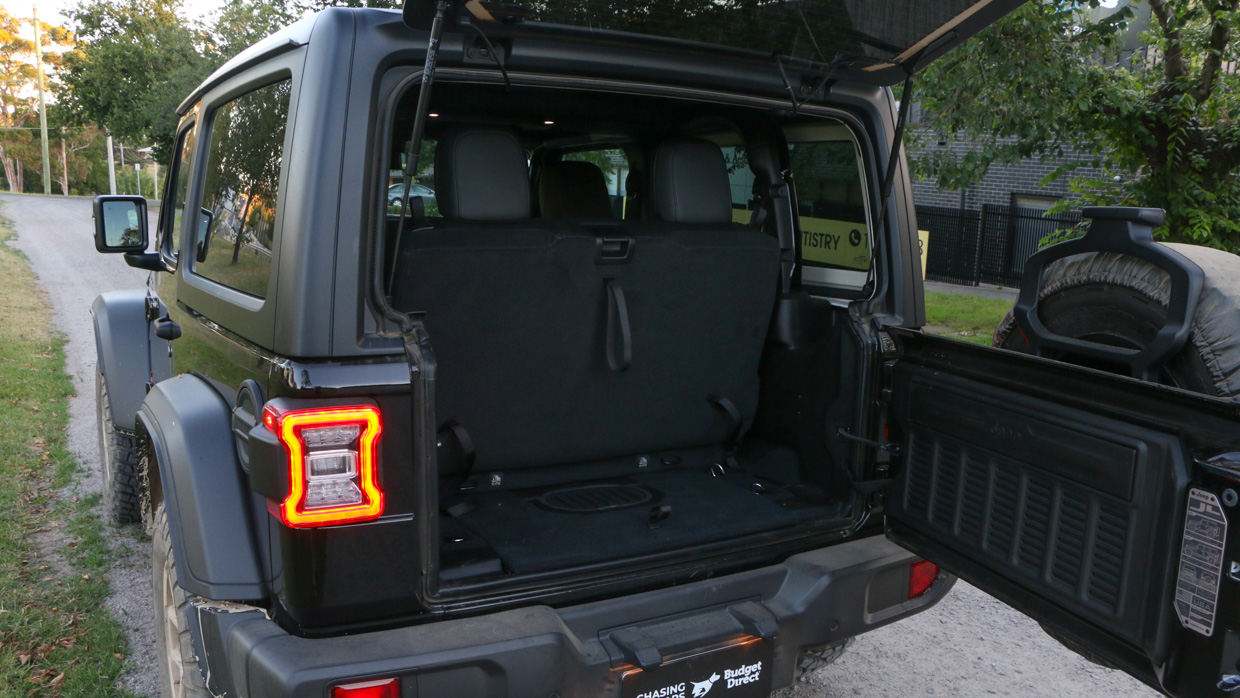
The 4-Door gets almost 900 advertised litres of boot space that’s accessible, like the 2-Door, via either the side-hinged door, which hangs the full-size spare wheel, or via the top-hinged rear tailgate section. It’s vastly more practical, especially for adventure types lugging camping and recovery gear storage, than the paltry 365L of the 2-Door.
Packing the tight boot of the 2-Door for our trip away was always going to require some ingenuity and sacrifice. Clearly, the SWB is a single or couple’s car at most, but the Jeep isn’t as flexible as it could be.
Aussie law requires young kids to be strapped into child seats in the second row if available, and the bench itself doesn’t split-fold, so if you catch yourself with a third person to carry and a big item, you’re out of luck.
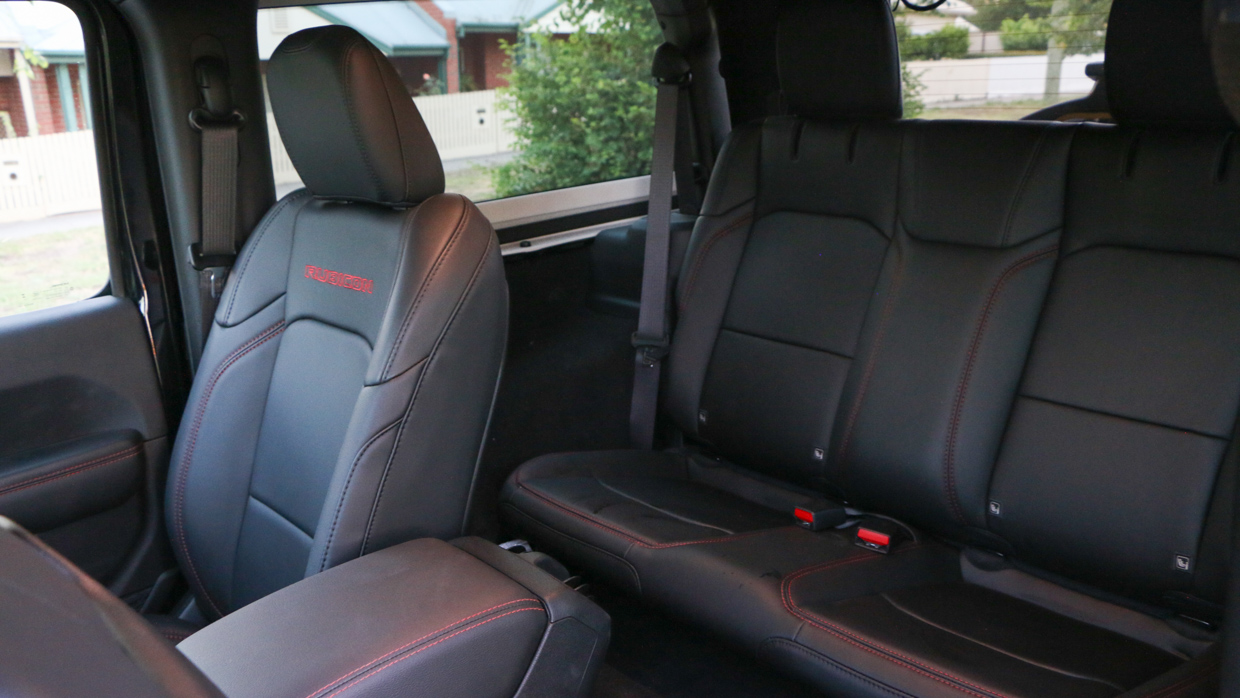
Once the rear bench is folded and rolled forward, a remarkable amount of space opens up, but with both rows of seating in play…well, I’ve worn trousers with more storage capacity.
This meant that upon finding a tree blocking our way out of the campground, there was no extra room for a chainsaw packed away just in case, extra water to stay hydrated while we waited and, foolishly, I’d left my tow rope at home.
With the assistance of some enthusiastic young lads passing by, the tree was soon removed by hand. Clearly, a roof platform or other load-assisting accessories would be a wise addition, but owners need to be cautious here.
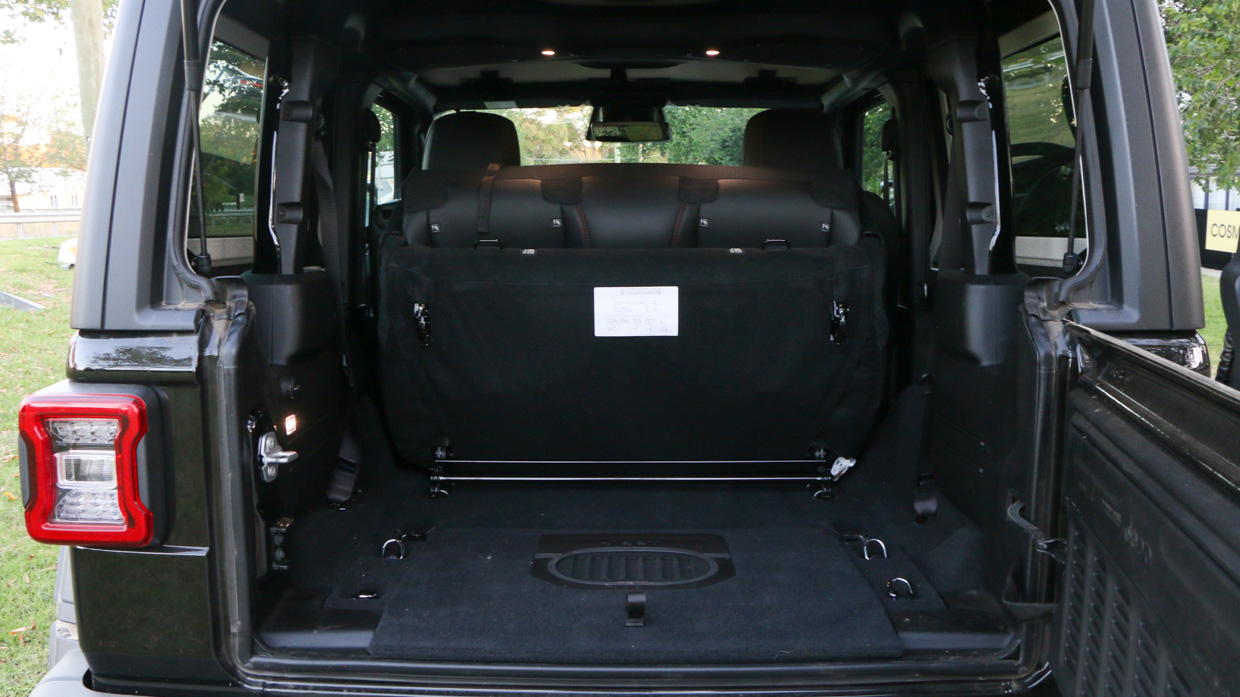
Why the need for caution? Jeep quotes a 1977kg tare weight (so no driver or fuel included) for the 2-Door, with maximum payload at 427kg before you hit the 2404kg GVM. The 2139kg 4-Door is slightly better with 435kg available, but not by much.
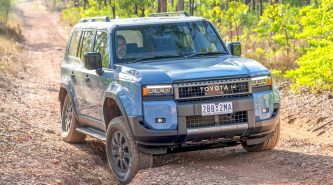
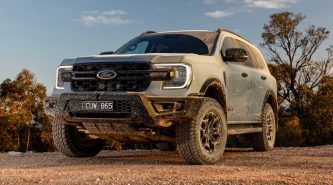
While the likes of Toyota Prado Altitude (from $92,700) and Ford Everest Tremor (from $78,440) wagons, or even Ford Ranger Raptor ute (from $90,690), represent arguably more contemporary and pragmatic comfort-leaning and performance-oriented choices, the Wrangler Rubicon still allures with its conventional, nails tough, go-anywhere charm.
Whether you choose to use and abuse it or not.
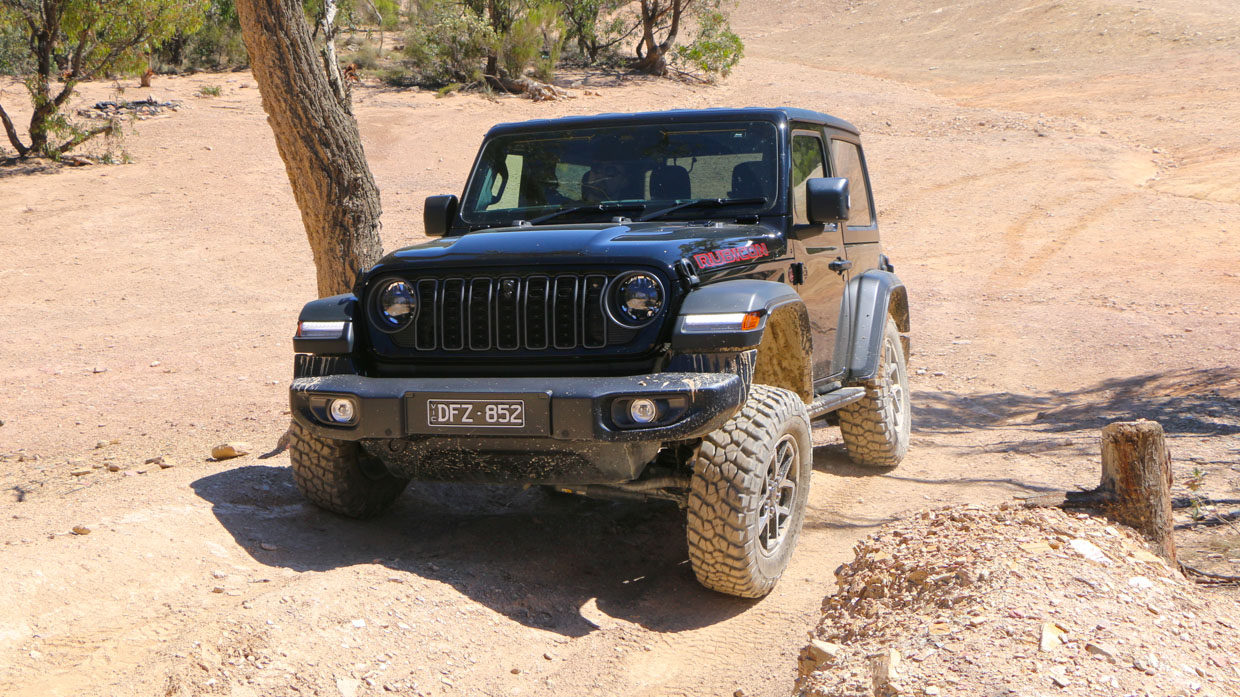
For off-road adventure? You bet. A turnkey showroom device with such hard-core underpinnings, with (somewhat limited) warranty assurance, this Jeep is a tough 4×4 wagon to beat.
So an urban jungle runabout? It makes less sense but that doesn’t necessarily make it a bad choice. We did expect to tire of our Rubicon pair’s rough and tumble nature – to become fed up with the noise and compromised comfort – but after two weeks of tame and mundane holiday driving, our enthusiasm remained.
But over the longer term, and primary daily driver, we’re not so sure…
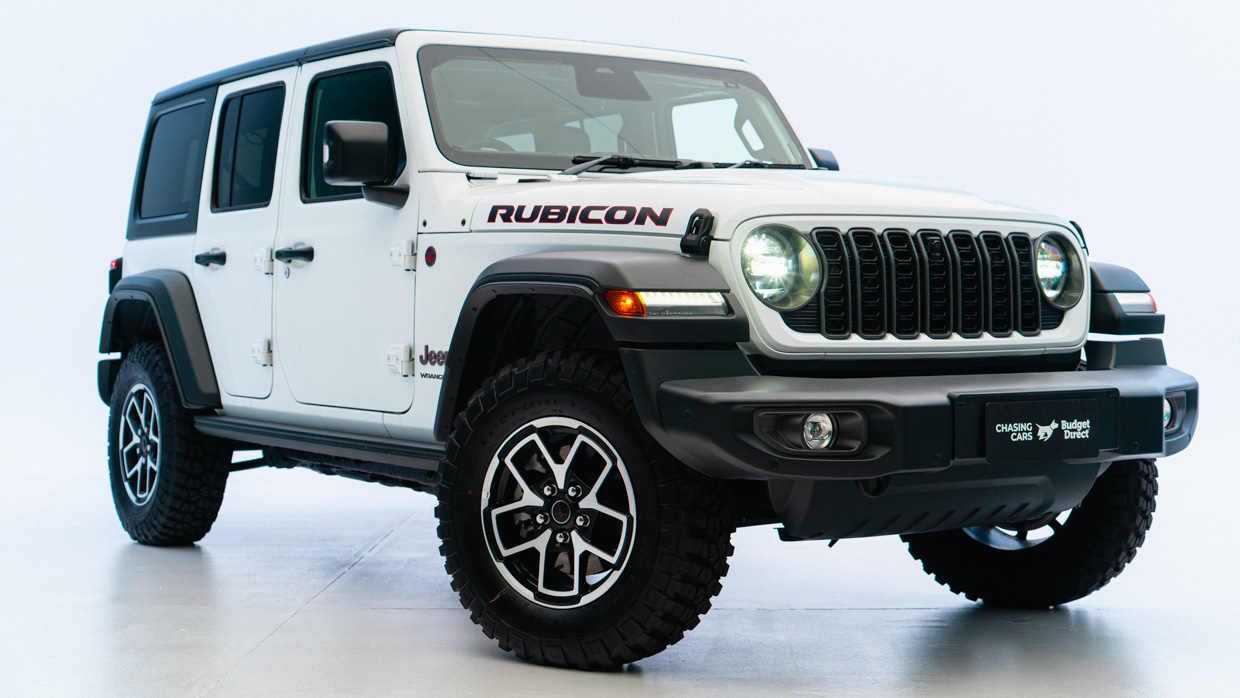
The 4-Door version is our clear preference. Why? It’s vastly roomier and more practical than the 2-Door, most stable and planted to drive on the open road, no less capable off-road and it’s only marginally more expensive. Its larger tank offers a more realistic Aussie touring range and, at 2.5 tonnes braked it’s 1000kg more capable than the shortie for towing.
Whatever body style, the Jeep Wrangler Rubicon breed isn’t for everyone. But that’s not to say it’s not a viable and enticing option for those it specifically targets, or those simply in it for their toy truck vibes.
Key specs (as tested)
About Chasing cars
Chasing Cars reviews are 100% independent.
Because we are powered by Budget Direct Insurance, we don’t receive advertising or sales revenue from car manufacturers.
We’re truly independent – giving you Australia’s best car reviews.
The estimate provided does not take into account your personal circumstances but is intended to give a general indication of the cost of insurance, in order to obtain a complete quote, please visit www.budgetdirect.com.au. Estimate includes 15%^ online discount.
^Conditions Apply
Budget Direct Insurance arranged by Auto & General Services Pty Ltd ACN 003 617 909(AGS) AFSL 241 411, for and on behalf of the insurer, Auto & General Insurance Company Limited(ABN 42 111 586 353, AFSL 285 571).Because we don’t know your financial needs, we can’t advise you if this insurance will suit you. You should consider your needs and the Product Disclosure Statement before making a decision to buy insurance. Terms and conditions apply.
Indicative quote based on assumptions including postcode , 40 year old male with no offences, licence suspensions or claims in the last 5 years, a NCD Rating 1 and no younger drivers listed. White car, driven up to 10,000kms a year, unfinanced, with no modifications, factory options and/or non-standard accessories, private use only and garaged at night.
^Online Discounts Terms & Conditions
1. Discounts apply to the premium paid for a new Budget Direct Gold Comprehensive Car Insurance, Third Party Property Only or Third Party Property, Fire & Theft Insurance policy initiated online on or after 29 March 2017. Discounts do not apply to optional Roadside Assistance.
2. Discounts do not apply to any renewal offer of insurance.
3. Discounts only apply to the insurance portion of the premium. Discounts are applied before government charges, taxes, levies and fees, including instalment processing fees (as applicable). The full extent of discounts may therefore be impacted.
4. We reserve the right to change the offer without notice.