Powered by

- Car Reviews
-
Car News
Latest news
-
Car Comparisons
Latest comparisons
- Chasing Deals
Latest news
Latest comparisons
The most affordable Zeekr 7X is an impressively plush family SUV that is easy to like, but the $6000-dearer Long Range RWD appears to be the sweeter spot
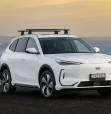
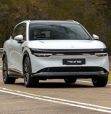
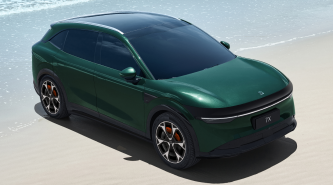
The Zeekr 7X might have been one of the very last new vehicles to launch in 2025 in Australia, but it’s already shaping up to be quite the contender.
Chasing Cars awarded the Performance AWD variant of the 7X a relatively rare 8.0/10 result, with the top-tier version having been the first 7X example to be subjected to our testing.
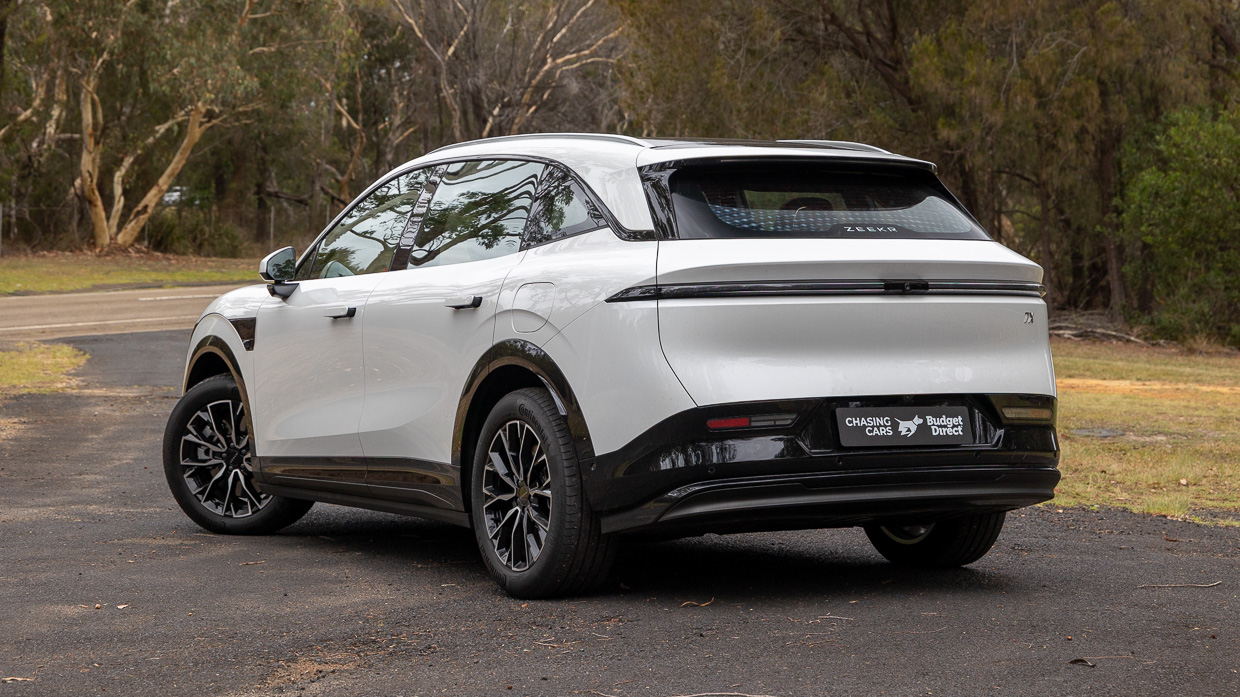
Based on a newer derivative of the SEA platform used by the Polestar 4, the 7X is a midsize, battery electric SUV that hails from the Geely conglomerate’s luxury Chinese marque, Zeekr — the brand launched in 2024 with the X small SUV and 009 people mover, but the 4787mm-long, midsize 7X is its most relevant model yet.
The 7X has been a breath of fresh air in the Chasing Cars testing garage. Beyond demonstrating surprisingly plush and premium execution despite relatively attainable pricing, it’s an EV that feels pleasantly conventional to drive — like a big, rear-drive wagon.
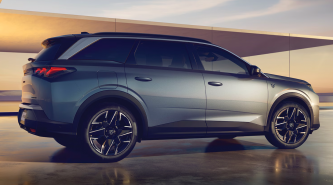
Aesthetically — inside and out — the 7X is vaguely contemporary yet inoffensive, arguably taking cab-rearward, long-roofed cues from European estate cars rather than trying to ape the aero-forward styling of its key rival, the best-selling Tesla Model Y.
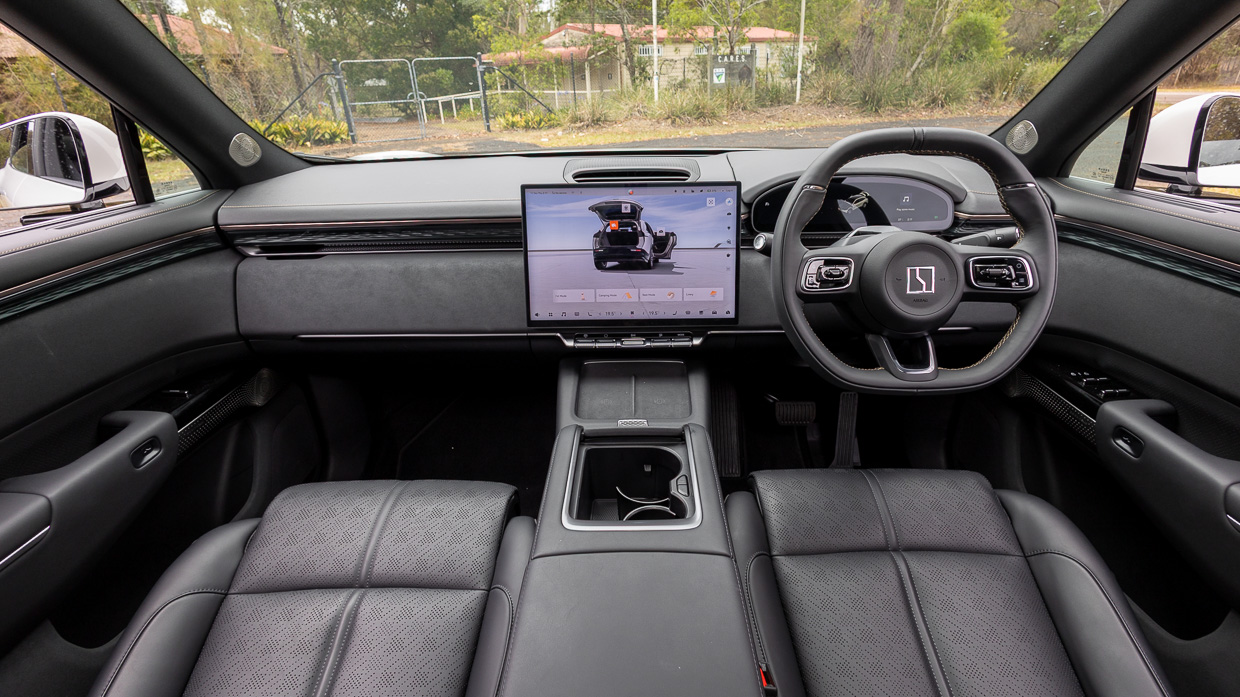
Behind its leather-wrapped wheel and sinking into soft, plush armchairs up front, the 7X’s road manners match its laidback looks. The Zeekr is smooth and languid; it does have reasonable handling capability, but its ride quality is tuned for comfort.
But whereas the dual-motor 475kW/710Nm Performance grade we tested first has an astonishing turn of speed despite soft suspension, feeling like an old-school luxe V8 wagon, the RWD models — which have ‘just’ 310kW/440Nm on tap — are even calmer.
The base model 7X RWD on test costs $57,900 plus on-road costs (or about $65K driveaway at the time of writing), making it lineball with an entry-level Tesla Model Y. Spec levels are similar between the archrivals, but the execution and road feel couldn’t be more different.
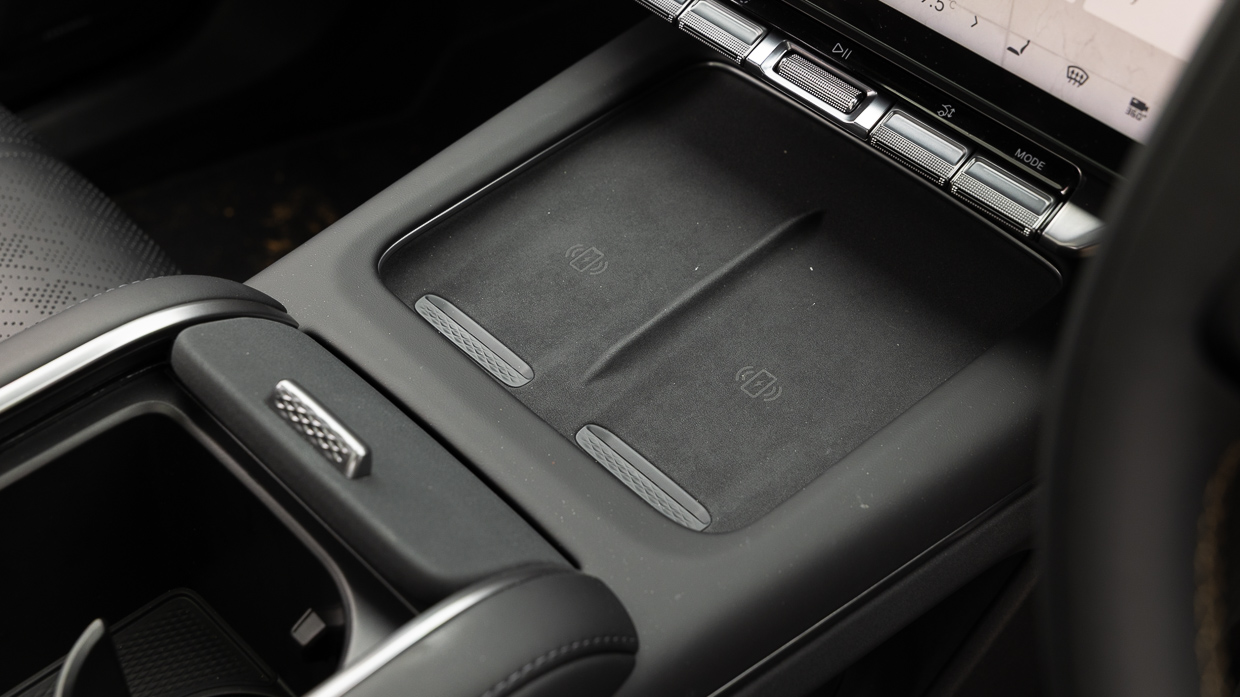
By early 2026 standards, we think the 7X is reasonably priced for premium midsize SUV and standard equipment runs long. Heated, massaging front seats, 16-inch 3.5K touchscreen (with wireless Apple CarPlay/Android Auto), 13-inch instrument panel, glass roof with power sunshade, 10-speaker stereo and 50-watt wireless charging are standard.
The RWD also throws in LED headlights, heated rear seats, ambient lighting, power tailgate, heated steering wheel, three-zone climate control, 360-degree parking camera, sentry-mode monitoring, autonomous parking and a companion smartphone app with five years of data.
If there’s a catch to the cheapest 7X, it might be the fact it has a relatively small 71kWh battery for a heavy (2395kg!) SUV with middling efficiency, making for 480km claimed range (WLTP). We saw about 470km in town (decent) but around 400km highway (just okay).
That means spending $6K more on the Long Range RWD could be smart. The ‘LR’ has identical power but nabs a bigger 94kWh battery (615km claimed range), plus extra spec’: massaging, cooled front seats, a 36-inch HUD, 21-speaker ‘pro’ stereo, power-adjustable steering wheel and rear privacy glass.
We’d even understanding spending another $9K on the fast Performance AWD which also scores meaningful upgrades in the form of adaptive air suspension, forged 21-inch wheels, orange brake callipers, nappa leather, rear sunshades and (polarising) fully electric doors.
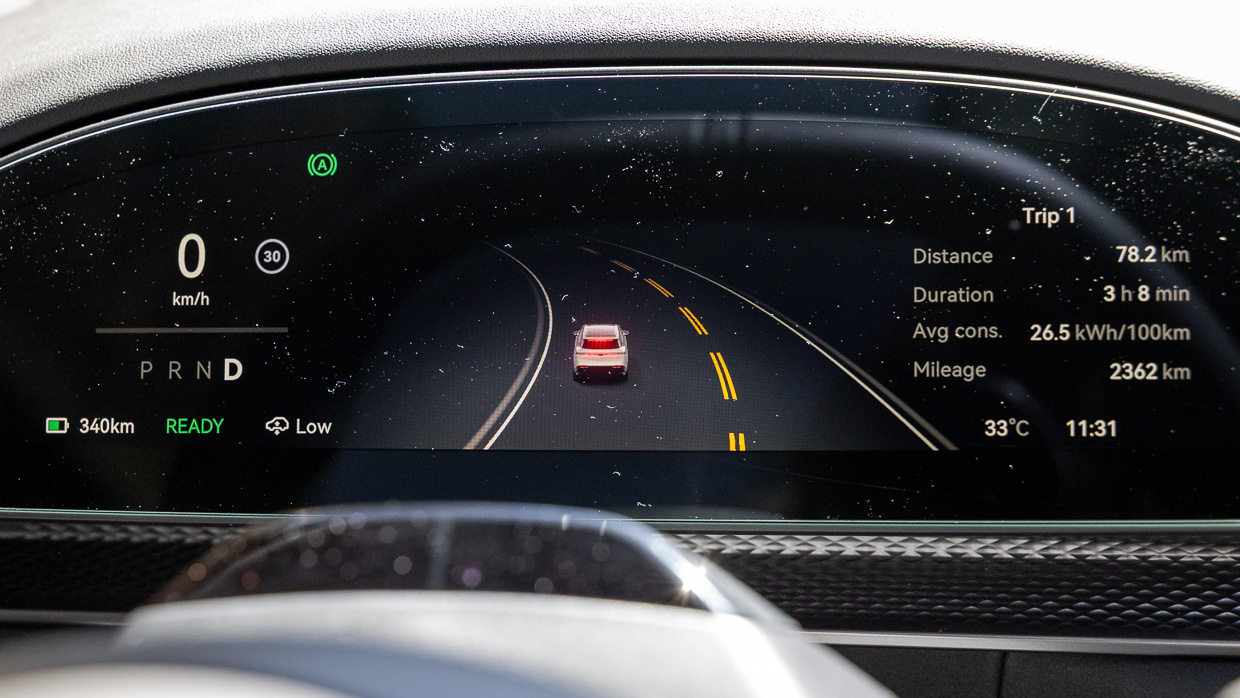
Impressively, the 7X is an 800-volt EV, making it capable of genuinely fast DC charging at the best public chargers: 13 minutes from 10-80 percent is theoretically possible.
Warranty arrangements are fine but nothing special: five years/unlimited kilometres for the vehicle and eight years/160,000km for the battery. Service intervals are every 24 months/40,000km with optional annual health checks.
We test plenty of new cars that — despite seeming expensive on the inside — clearly have corners cut where buyers can’t see.
That doesn’t appear to be the case with the 7X. Zeekr has spent money under the skin: the suspension has hydraulic bushings all around and is double wishbone at the front, the rear motor has a silicon carbide inverter, and a 22kW onboard AC charger is standard despite being optional (or unavailable) on most rivals.
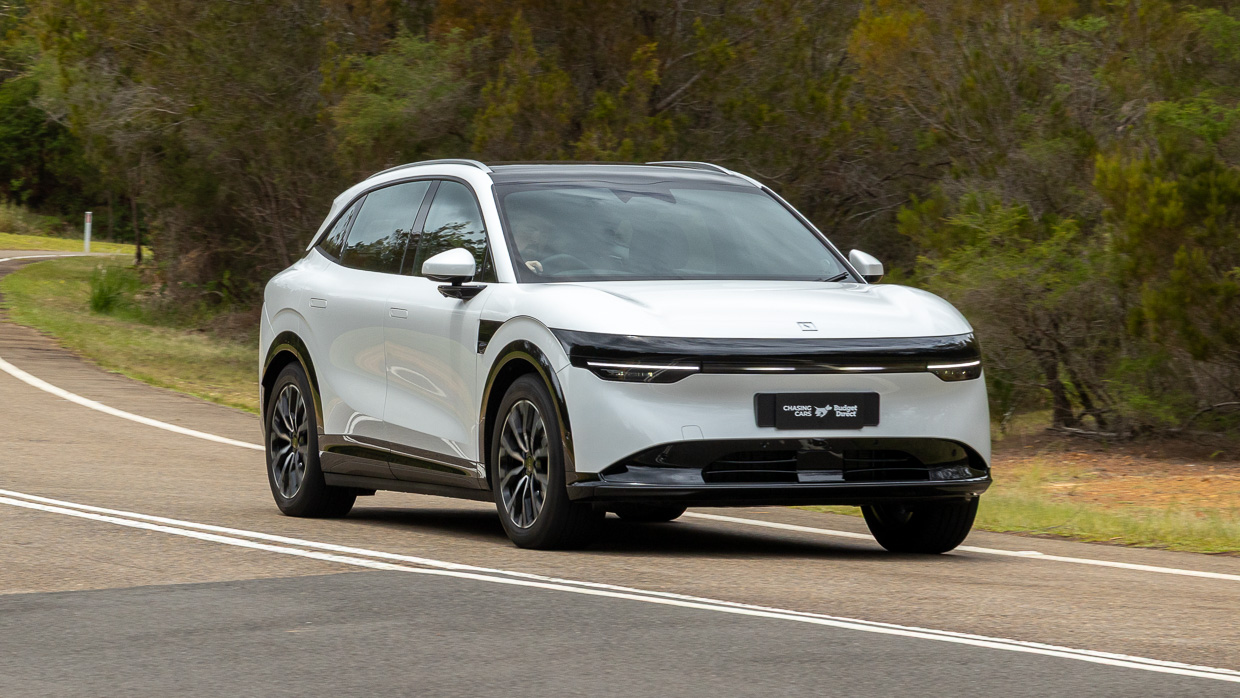
Lavishing the platform with high-end mechanicals is good start, though as usual, the devil is in the tuning. It’s in that final polish where keen drivers can identify a few areas where the 7X could be improved, but at its current pricing, a few rough edges can be forgiven.
The 7X’s solid core suspension setup, which has passive dampers on both RWD variants, gives this SUV a pleasant, soft, and controlled ride. On 19-inch wheels and high-profile tyres, the Zeekr bobs along calmly and exhibits good compliance on country roads.
Room for improvement still exists in the suspension tuning department, however, as square-edged bumps, deeper potholes and expansion joints crash through into the cabin more than they should. Greater isolation would be appreciated.
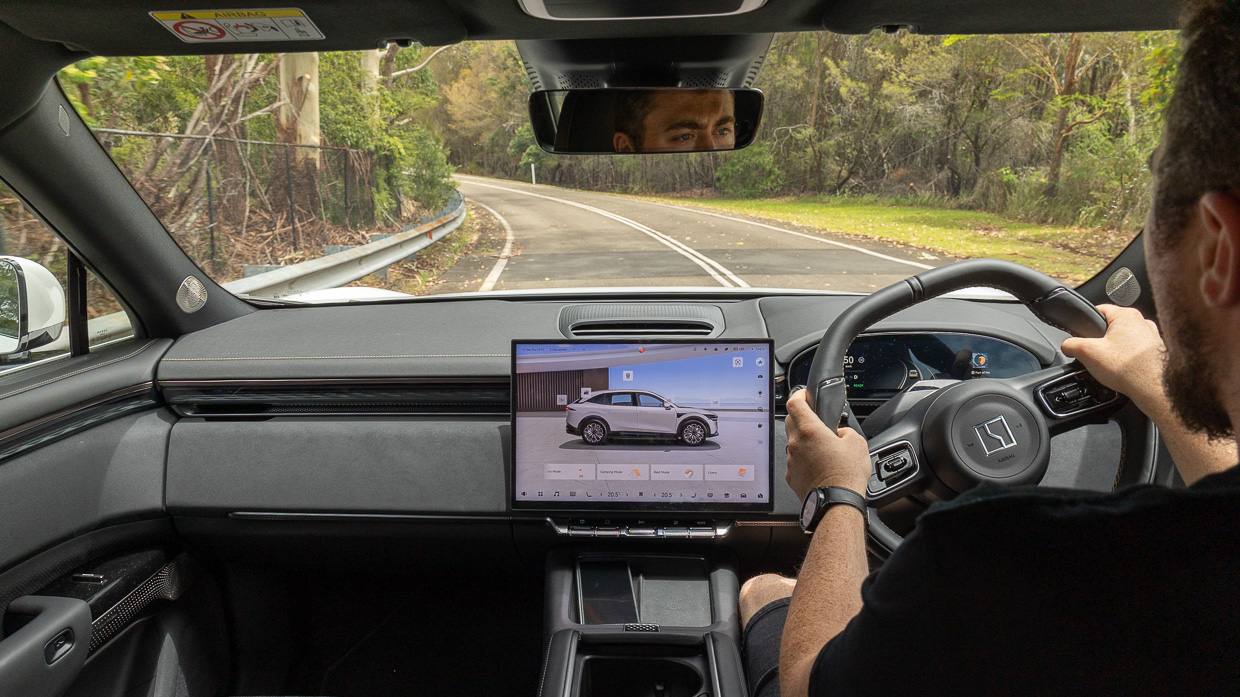
An easy answer might be to make the Performance AWD trim’s adaptive air suspension an optional extra for the 7X RWD models as the air-ride has more bandwidth for dealing with these sorts of bumps.
We like the steering of the 7X. Like most cars we test, there isn’t a great deal of road feel but the electric power steering ratio — which is slower than rivals, especially the relatively frenetic Tesla — is naturally suited to the Zeekr’s serene demeanour.
While the 7X is impressively plush (most of the time) in normal driving situations like commuting, a surprise is that the chassis is up for a bit of fun when driven harder on a twisty country road.
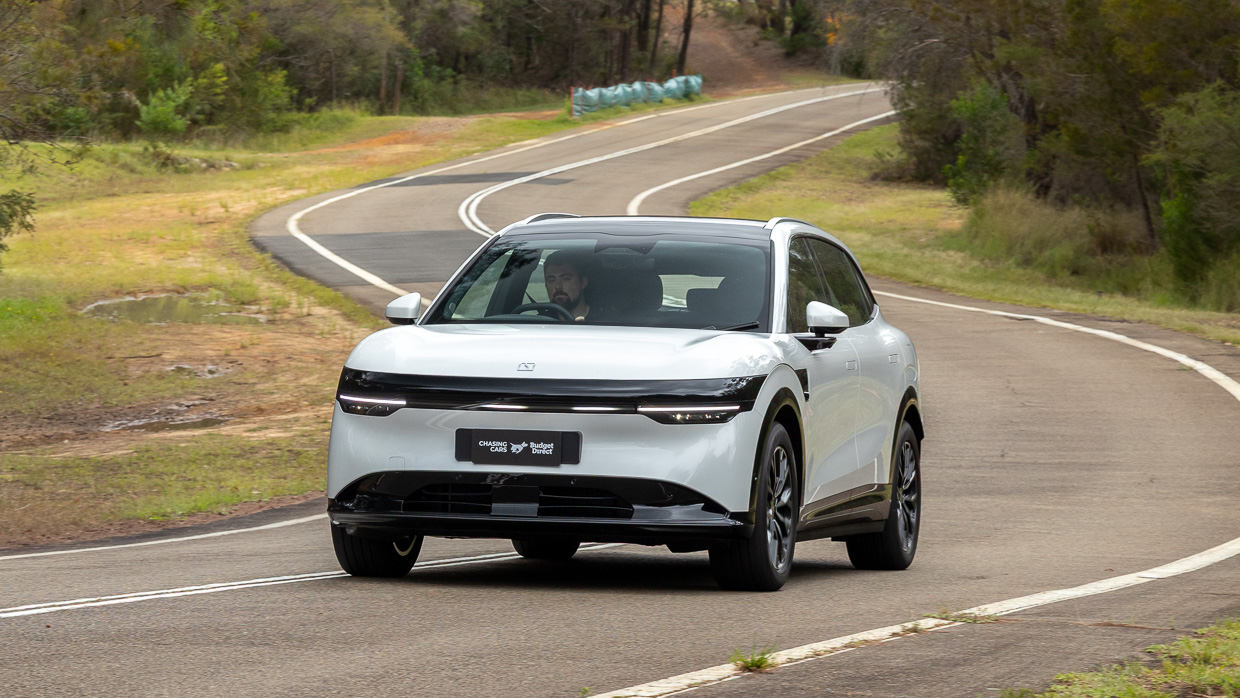
There’s no hiding the considerable weight of the 7X (it’s a hefty 2395kg even as a base model) but it is easy to place in the corners, and despite its mass, it dances willingly around its axis with the multi-link independent rear suspension pivoting to help point the nose.
Careful tuning of the rear motor matches the rest of the graceful dynamics. Despite having decent torque (440Nm), the 7X winds up the power linearly rather than immediately. The motor feels slick and while it works hard when driving fast, it is unstressed at town speeds.
Brake feel is acceptable, and drivers can select normal or sport settings for the regenerative strength (neither are especially strong).
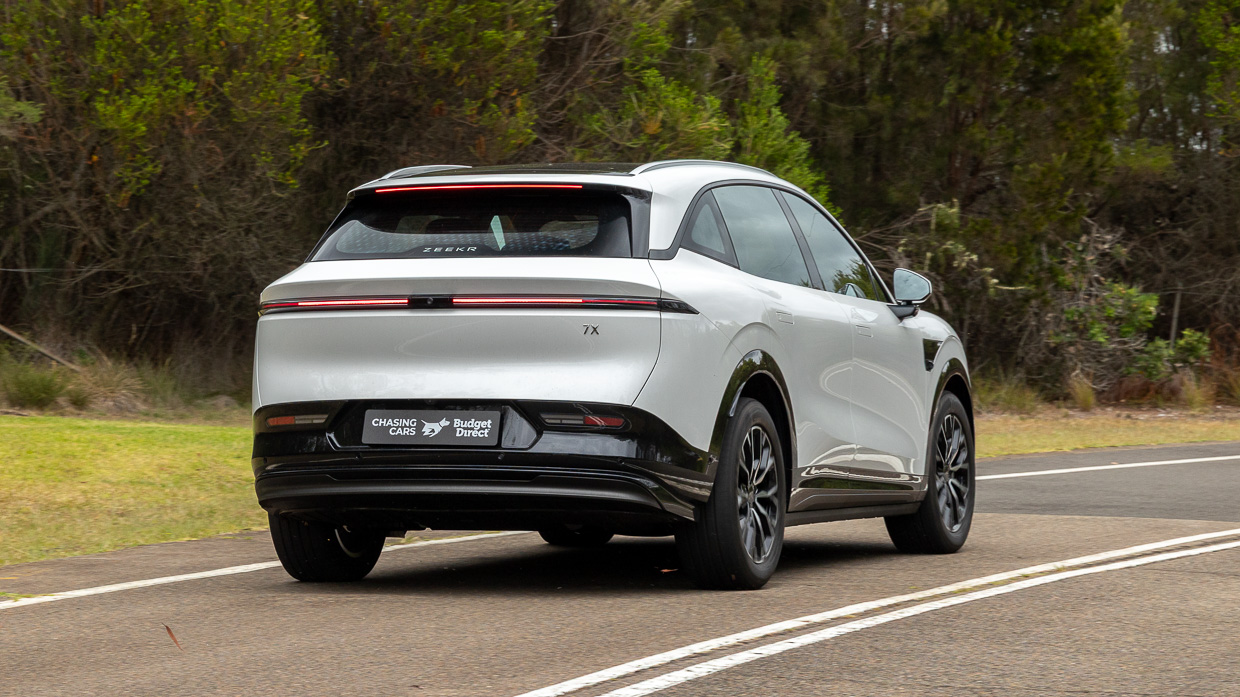
If there’s one element of the driving experience that doesn’t live up to the relaxed nature of the 7X, it is the amount of road noise, especially on coarse chip. Perhaps Zeekr has saved a few yuan in the insulation department as it’s rowdier than most rivals inside.
While we’re picky about things like suspension tuning, we think we should be — because the 7X has some of the best dynamics we’ve tested in any Chinese-brand car, and it appears the appetite is there to refine the recipe even further.
Those improvements should also include further attention to the adaptive safety systems. Overall, they are tuned quite well, with decent-enough adaptive cruise control and lane-departure assistance.
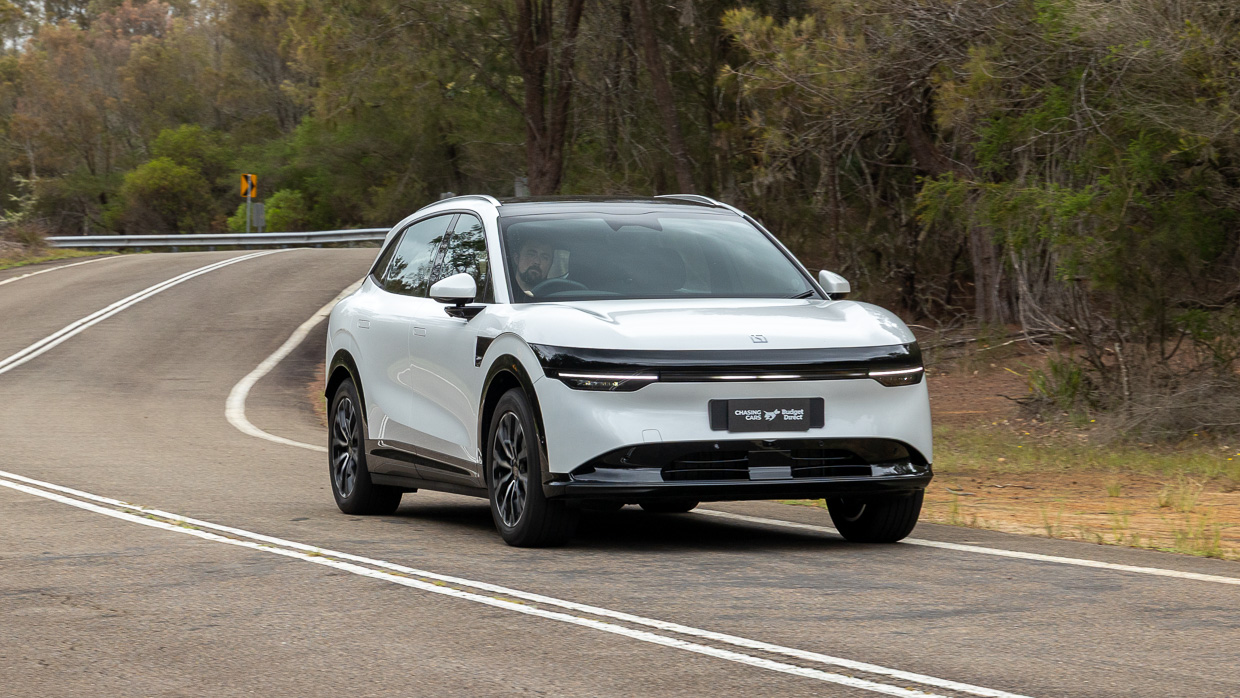
But two 7X test cars were recalcitrant to enter Zeekr’s highway driving assist mode. We occasionally made it work but the 7X is far off the fluency and sophistication of the Tesla Model Y’s Autopilot mode, let alone that car’s optional Full Self Driving (Supervised) feature.
Braked towing capacity for the 7X is 2000kg.
We like the direction Zeekr is taking its interiors in. Inside, the 7X looks and feels straightforward with conventional ergonomics and an easier learning curve than some rivals.
The cabin of the 7X is faintly techy, but it is not overwhelming. All variants get the same basic items inside (including the 16-inch touchscreen and 13-inch low-profile digital instrument panel) and the displays are quite easy to interact with.
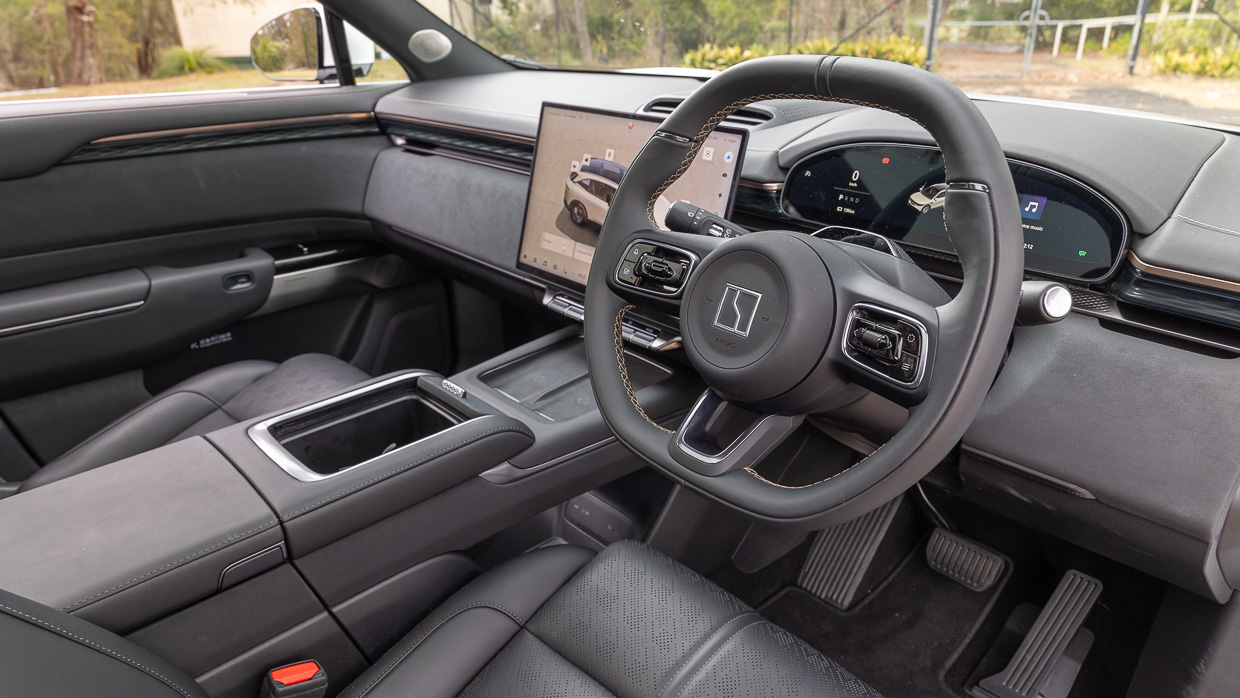
That starts with how you get in — not normally an issue for discussion, but the Zeekr 7X has unusual doors. The Performance has fully electric opening/closing doors that occasionally, frustratingly, misjudge distances. While the RWD variants unlatch electrically when a hand is detected on the handle, you open and close the doors manually. That works better!
Inside, you find attractive presentation of the cabin software. A beefy Qualcomm chip means graphics render promptly. There’s a lot of content on the main screen, but the menu structures are easy enough to understand, and there are fixed panels for shortcuts and climate control.
Most owners will pair their smartphone for wireless Apple CarPlay/Android Auto, both of which ran crisply in our testing, while the driver’s display (something you don’t get on a Model Y) can cycle through trip, media and nav info via hard keys on the steering wheel.
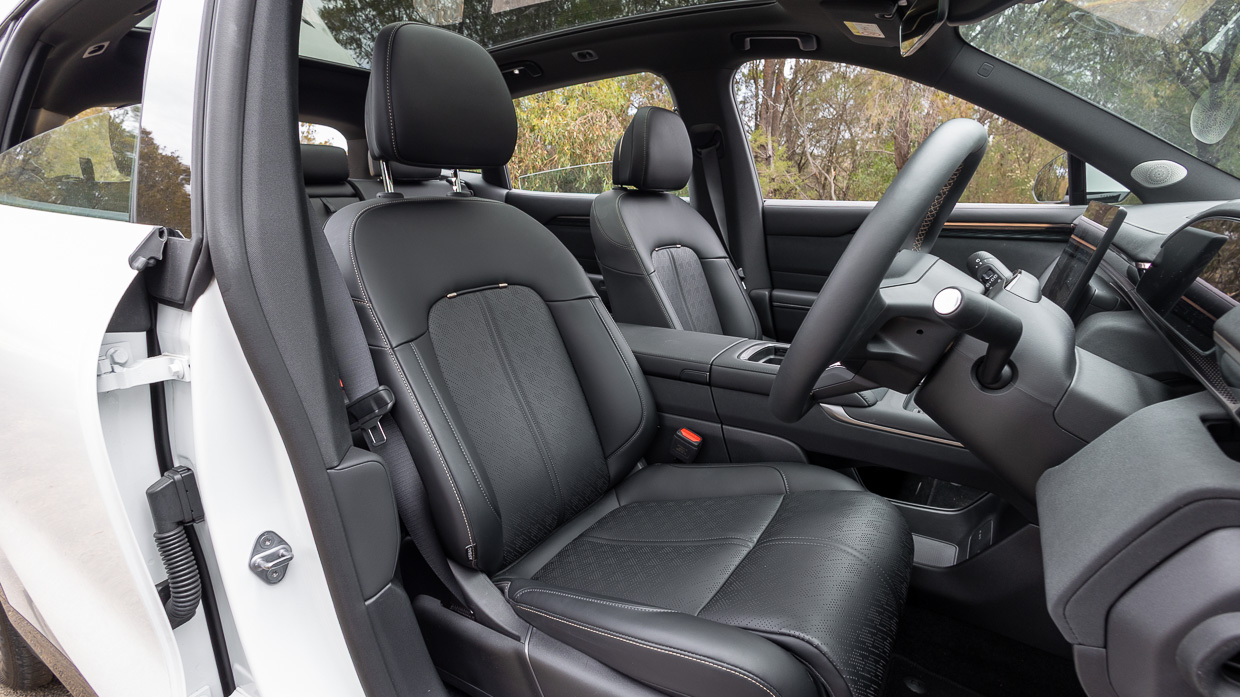
All 7X models (including, surprisingly, the Performance) have the same front seats: you really sink into the pews and truthfully, they are probably too soft, as we found they lacked adequate back support for longer drives and side bolstering is almost non-existent.
Perhaps the biggest issue with the base model 7X is that the vinyl (PU) seat upholstery gets hot in summer, an issue magnified by the fact the entry-level car can only be ordered with black seats and — unlike the Long Range — seat cooling isn’t available.
Adding insult to injury is the fact that the 7X has one of the weakest and most underpowered air conditioning systems we have tested in years. This needs attention from Zeekr at the earliest opportunity.
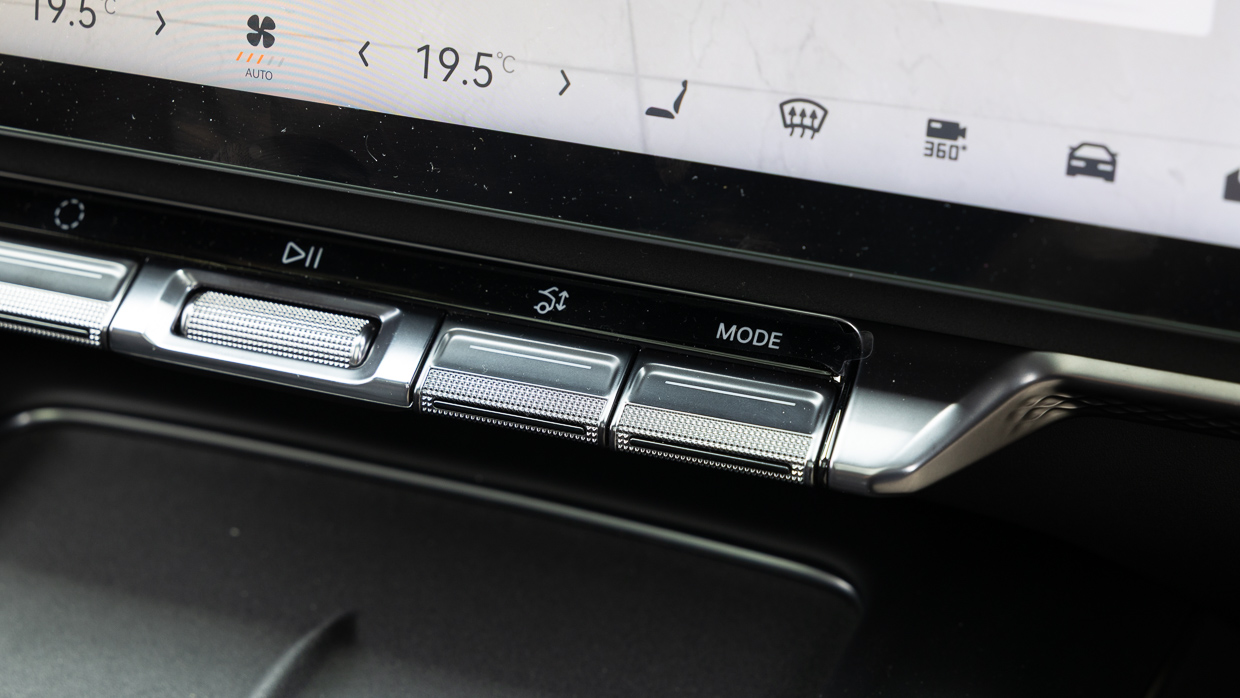
Having tested the 7X in the height of summer, our recommendation would be to splash for the Long Range, which at least has seat cooling (it helps). That variant can also be ordered with lighter grey seats which reflect some heat rather than absorbing all of it.
While we’re at it, we’d also like to see Zeekr add a few more physical shortcut buttons throughout the cabin for things like drive modes, fan speed, temperature and track skip.
Otherwise, we like the cabin. Like many Chinese cars we test, there’s a sense that the materials aren’t naturally-sourced per se — instead, virtually all surfaces are covered in wetsuit/neoprene-like soft…stuff…but it still gives the 7X a semi-premium ambience.
There is something likeable about the Zeekr’s relatively low (again, wagon-like) seating position combined with the high beltline. It isn’t so dramatic as to affect visibility, but you do feel deeply ensconced within this SUV.
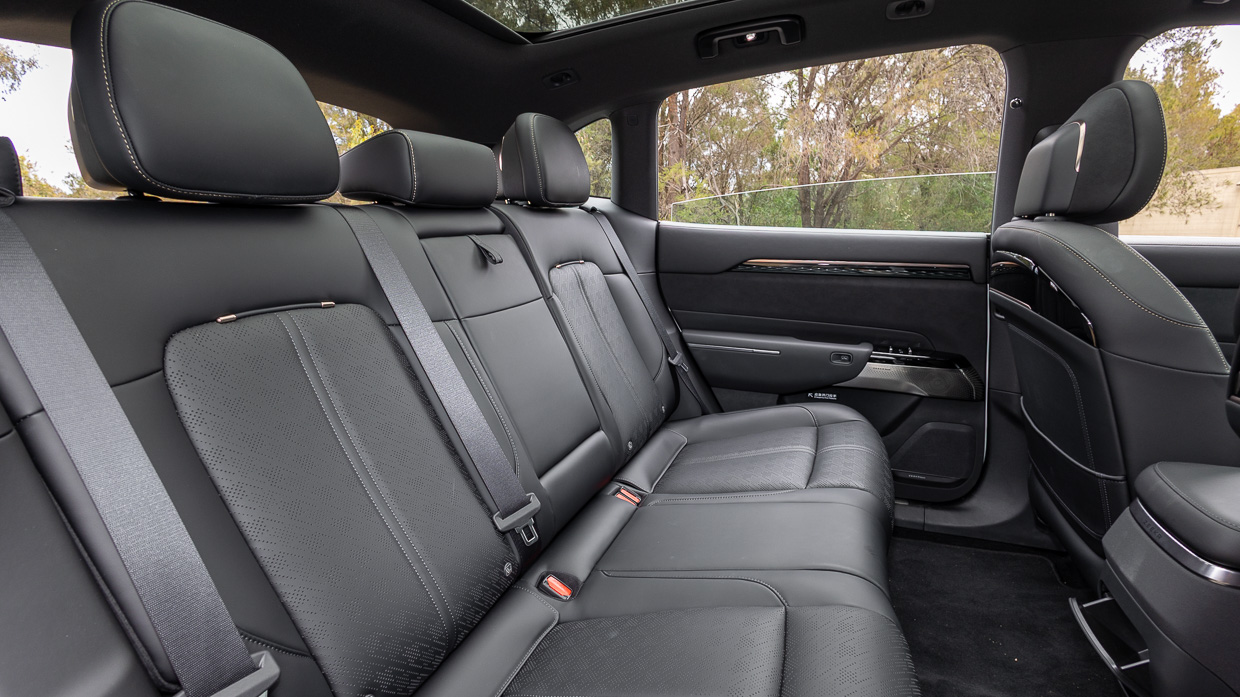
But inside, the 7X saves its best impression for the back seat, which is incredible for the class. The second row is supremely comfortable with a lushly deep cushion combining with excellent legroom and headroom.
Kids (or adults) travelling in the second row are lavished with a heated bench, soft materials, USB charging and even a power-recline function standard from the base model upward.
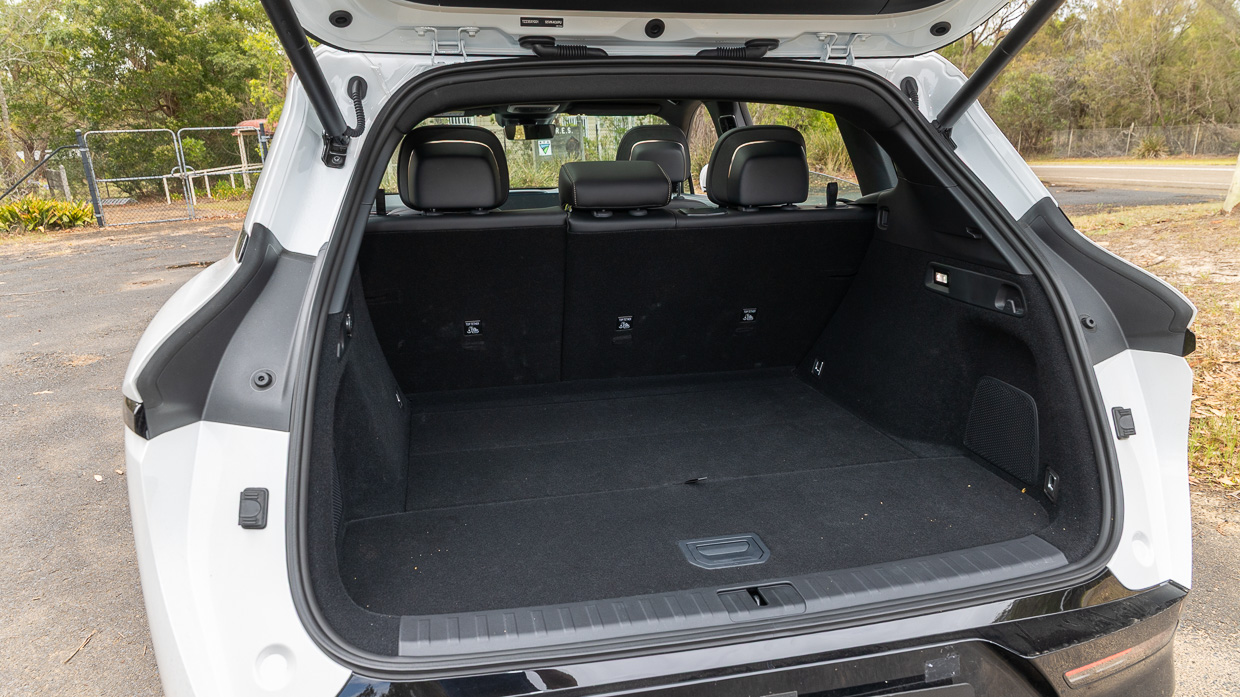
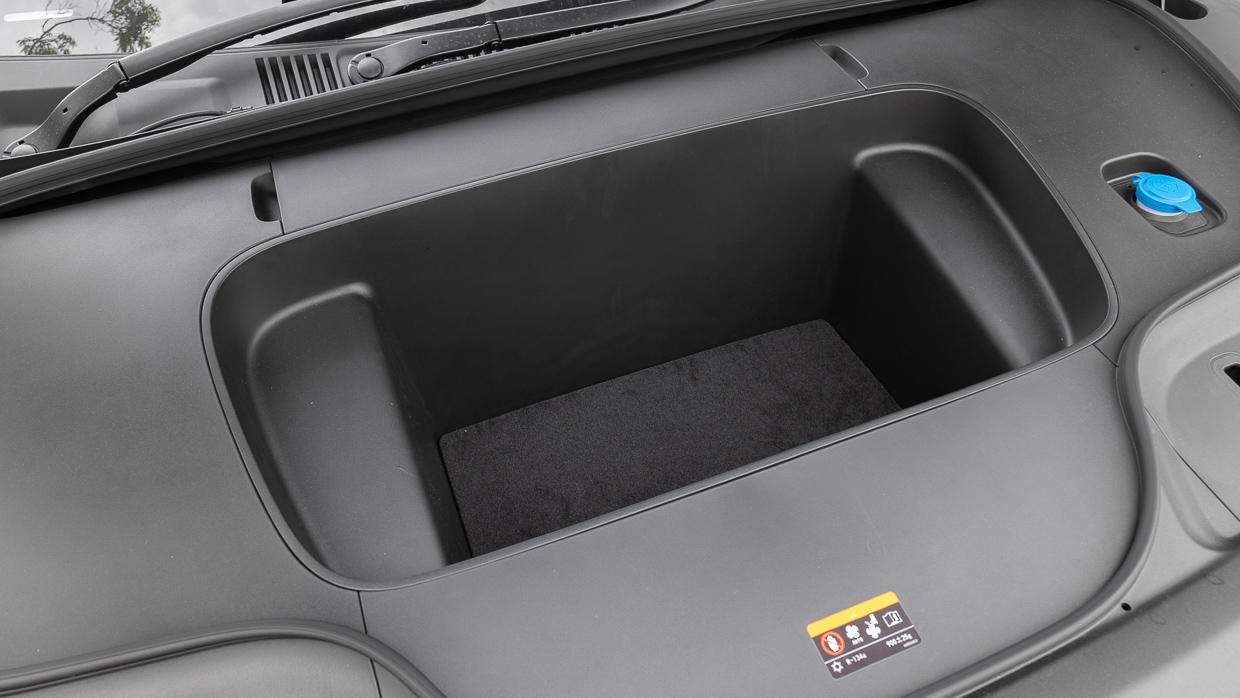
A power tailgate is also included. Rear cargo room is listed at 539 litres, expanding to 1978L with the rear seats folded. A 66-litre frunk makes useful storage for charging cables.
The 7X represents great value for money. Zeekr has recalibrated its approach to the Australian market with this midsize SUV’s seriously sharp pricing. It is a strategy that will introduce many more people to this new brand — and we think that’s a good thing.
We would not have been surprised if the 7X had cost $10,000 more (though we are glad it doesn’t). This is a seriously plush SUV for the cash, and we like its laidback nature. While this isn’t a luxury car, the Zeekr 7X feels at least semi-premium everywhere you look.
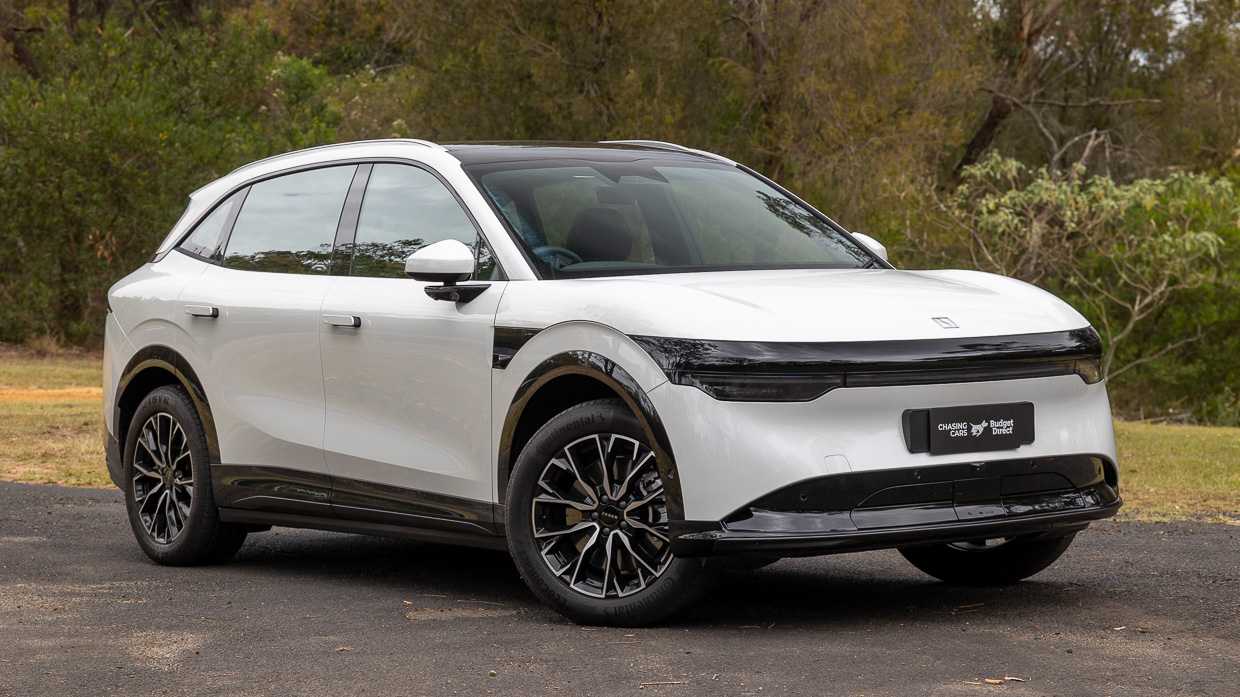
Ultimately, there is no such thing as a free lunch, and digging deeply into the 7X reveals a few flaws — some big, some small — that Zeekr should address. These mainly include weak air conditioning, finnicky highway-assist tech and space to improve the urban ride quality.
You might think we’re nitpicky, but Zeekr is on the cusp of having a great car on its hands here. If Zeekr can apply a bit more polish on these ‘last 10 percent’ items while keeping pricing affordable, the 7X would feel unstoppable in Australia’s hotly contested midsize SUV market.
As it sits, we still think the 7X is an easy car to recommend, though the sweet spot appears to be the mid-tier Long Range RWD thanks mainly to its more pragmatic range, but also its worthwhile additional inclusions.
Key specs (as tested)
About Chasing cars
Chasing Cars reviews are 100% independent.
Because we are powered by Budget Direct Insurance, we don’t receive advertising or sales revenue from car manufacturers.
We’re truly independent – giving you Australia’s best car reviews.
The estimate provided does not take into account your personal circumstances but is intended to give a general indication of the cost of insurance, in order to obtain a complete quote, please visit www.budgetdirect.com.au. Estimate includes 15%^ online discount.
^Conditions Apply
Budget Direct Insurance arranged by Auto & General Services Pty Ltd ACN 003 617 909(AGS) AFSL 241 411, for and on behalf of the insurer, Auto & General Insurance Company Limited(ABN 42 111 586 353, AFSL 285 571).Because we don’t know your financial needs, we can’t advise you if this insurance will suit you. You should consider your needs and the Product Disclosure Statement before making a decision to buy insurance. Terms and conditions apply.
Indicative quote based on assumptions including postcode , 40 year old male with no offences, licence suspensions or claims in the last 5 years, a NCD Rating 1 and no younger drivers listed. White car, driven up to 10,000kms a year, unfinanced, with no modifications, factory options and/or non-standard accessories, private use only and garaged at night.
^Online Discounts Terms & Conditions
1. Discounts apply to the premium paid for a new Budget Direct Gold Comprehensive Car Insurance, Third Party Property Only or Third Party Property, Fire & Theft Insurance policy initiated online on or after 29 March 2017. Discounts do not apply to optional Roadside Assistance.
2. Discounts do not apply to any renewal offer of insurance.
3. Discounts only apply to the insurance portion of the premium. Discounts are applied before government charges, taxes, levies and fees, including instalment processing fees (as applicable). The full extent of discounts may therefore be impacted.
4. We reserve the right to change the offer without notice.