Powered by

-
Car Reviews
Latest reviews
-
Car News
Latest news
-
Car Comparisons
Latest comparisons
- Chasing Deals
Latest reviews
Latest news
Latest comparisons
Long-awaited Nissan electric’s big-battery, front-driver appears to be the pick of its range. But can it keep up with the rest of the EV pack?
The drawn-out and well-documented five-year gestation of Nissan Australia’s all-important Ariya model might’ve dampened this EV crossover’s impact on the local electric SUV landscape.
As we discovered at its recent Aussie launch, largely unchanged EV credentials that cut the right edges back in 2021 don’t shine as brightly in a fast-evolving segment viewed through a 2026 lens.
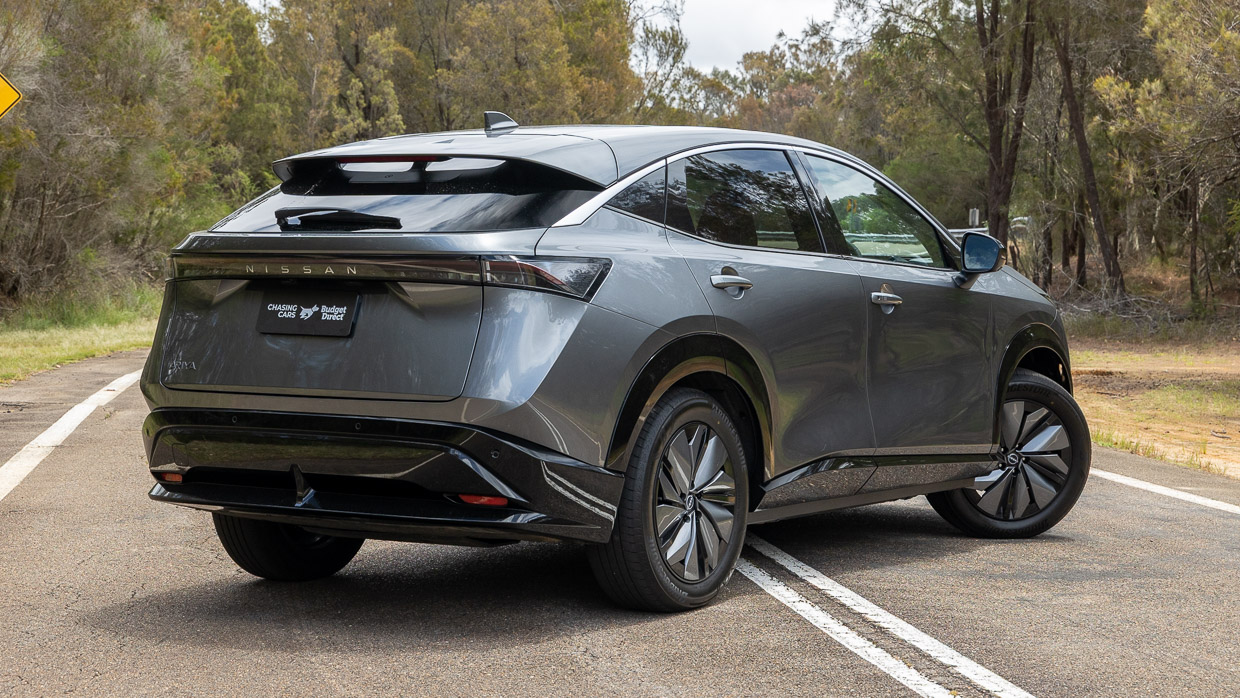
Still, the Ariya appears to be a fairly solid proposition, at least three rungs up in its four-variant lineup in the penultimate Advance+ (which sounds a little like laundry liquid branding).
The Advance+ is the big (87kWh useable) battery, boosted (178kW) single-motor, FWD version with the longest range (504km WLTP) claim and fulsome feature set if, at $63,840 list, priced precisely midway between the entry (160kW, $55,840) Engage and the dual-motor, AWD Evolve e-4ORCE (320kW, $71,840) tree-topper.
On paper, at least, our test subject appears to be Ariya’s sweet spot. Drop below it and the circa-385km range available on the two lower grades looks well short of today’s EV mark.
Above it, the e-4ORCE version – presumably pronounced “e-four-orce” – guise appears expensive against logical competitors, chiefly the cheaper (from $68,900 list), more-powerful (378kW), longer-range (511km) Tesla Model Y Long Range AWD.
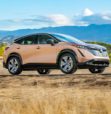
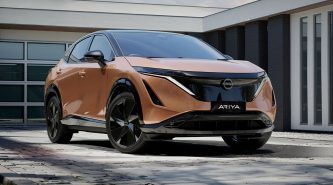
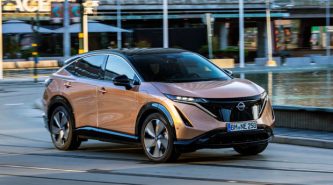
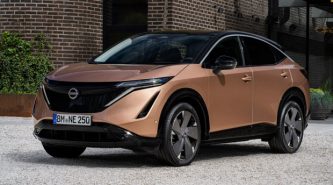
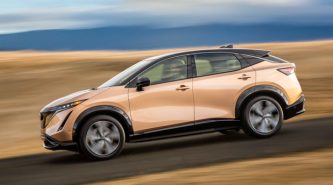
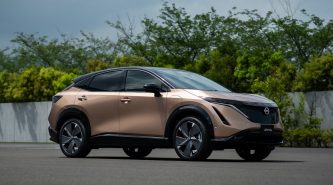
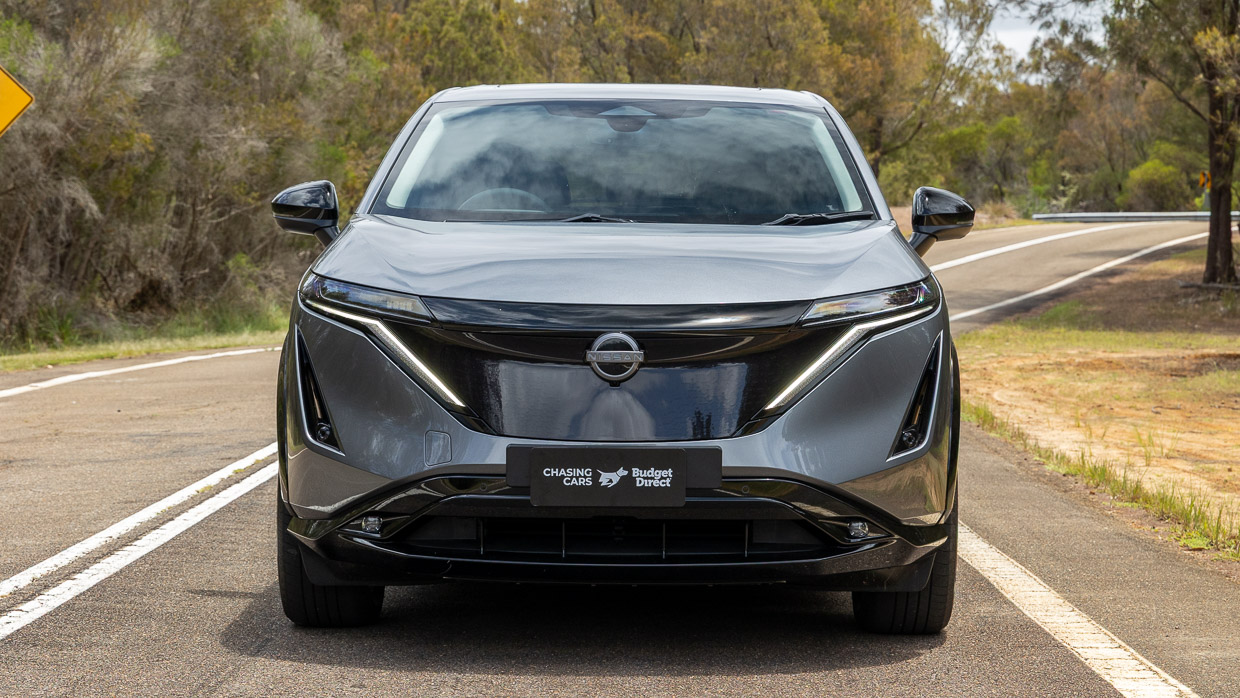
The slabby exterior and neatly minimal and austere interior styling, which recently nabbed Ariya a 2025 Australian Good Design Awards gold gong, still looks contemporary despite its age, an indicatively Japanese – and Nissan – spin amongst the growing glut of sometimes weird(er) burger Chinese offerings that will appeal to some EV crossover buyers.
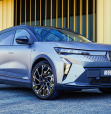
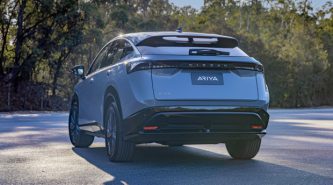
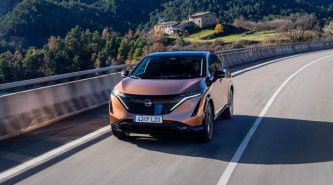
Ours is finished in Gun Metallic paintwork ($1000!).
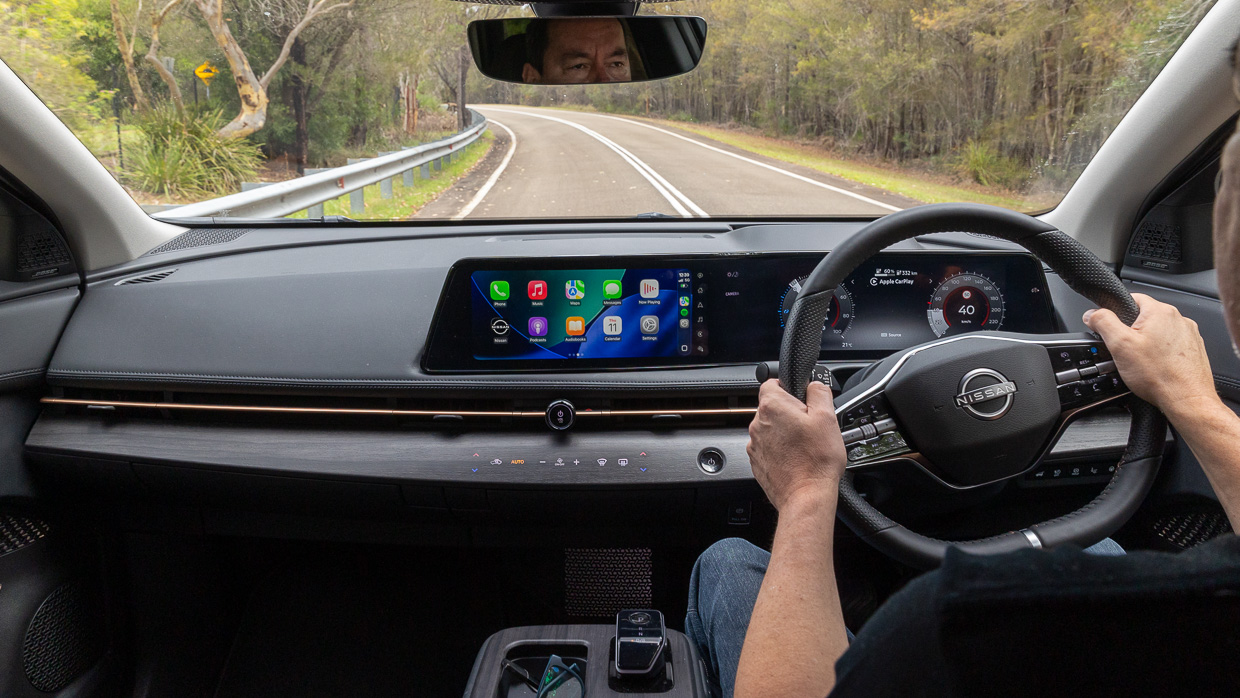
Features wise, the Advance+ adds niceties such as Ultrasuede seat trim, an in-screen head-up display, a panoramic glass roof and (eight-way driver/four-way passenger) electric heated and ventilated front seating above the ‘non-plus’ Advance.
Carryovers from the lower grade include the dual (TFT and digital) 12.3-inch displays, faux leather, Bose 10-speaker sound and a long raft of safety and assistance tech.
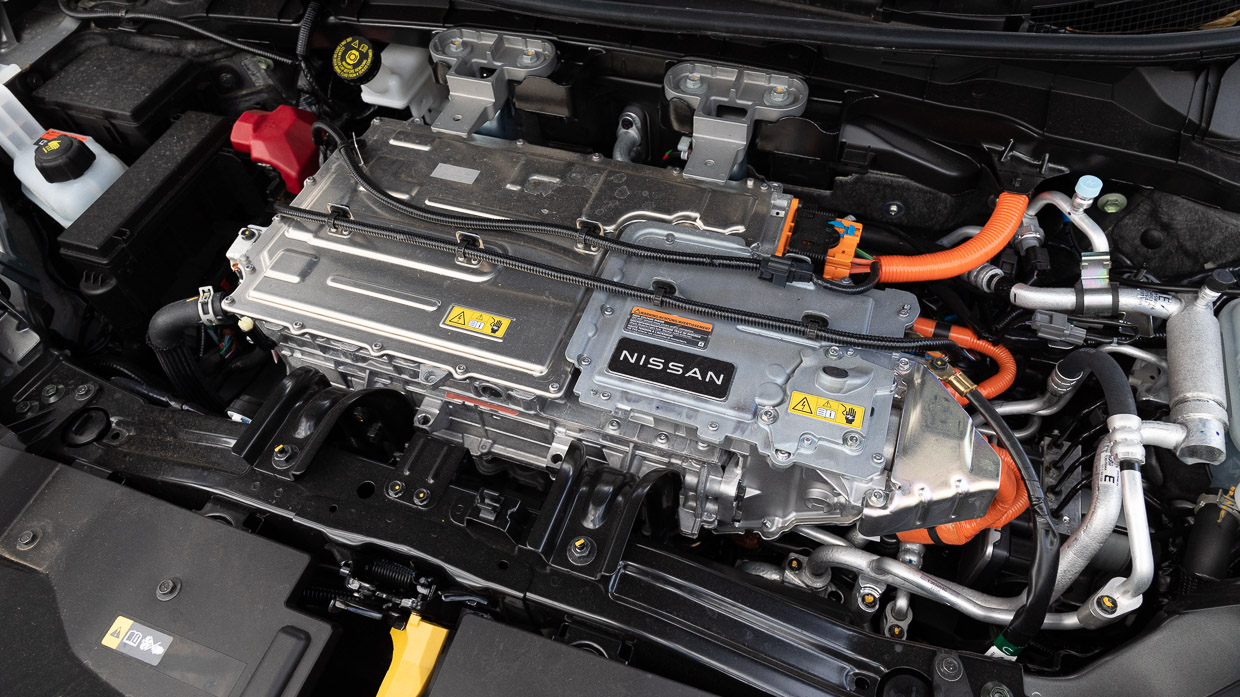
But a performance benchmark it is not: the two-tonne electric SUV takes 8.1 seconds to hit 100km from a standstill, while the 10-80 percent DC charge is a slovenly 40 minutes (best case) given its 130kW charging peak.
Warranty? Nissan offers 10 years of coverage up to 300,000km if the vehicle is serviced at an authorised dealership through perpetuity… otherwise it’s five years of unlimited-kilometre coverage as a minimum. Battery coverage is eight years with distance capped at 160,000kms. A five-year servicing pack is a thrifty $1495.
After giving the Advance+ some pasting at launch over its relatively lethargic acceleration (for an EV), its real-world responses prove far from terrible. It demands more throttle input than expected and sheer thrust is (ahem) measured, but it’s perfectly acceptable around town and will suit many owners most of the time.
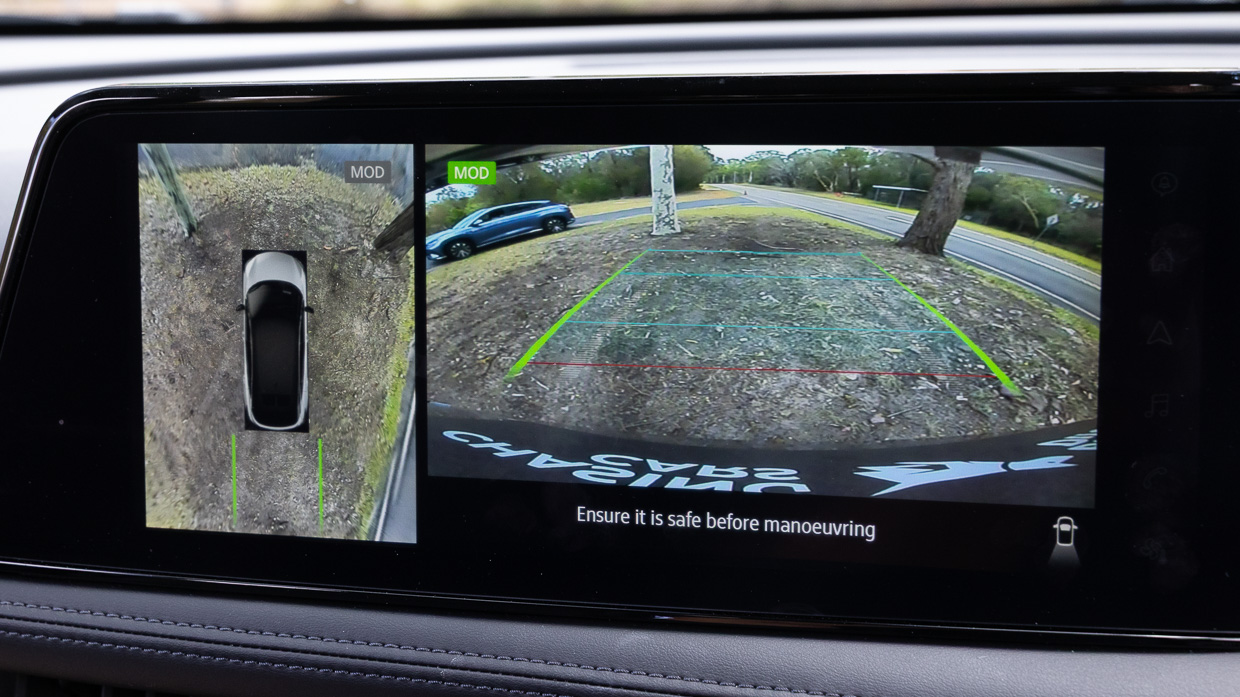
It is, however, characteristically old hat. It features older switchable regen rather than more contemporary paddle-tap progressive adjustment – though its default ‘motor braking’ is quite natural – and the whole ‘power-o-meter’ in the driver’s display harks back to EV’s Stone Age, guilting the driver into submission.
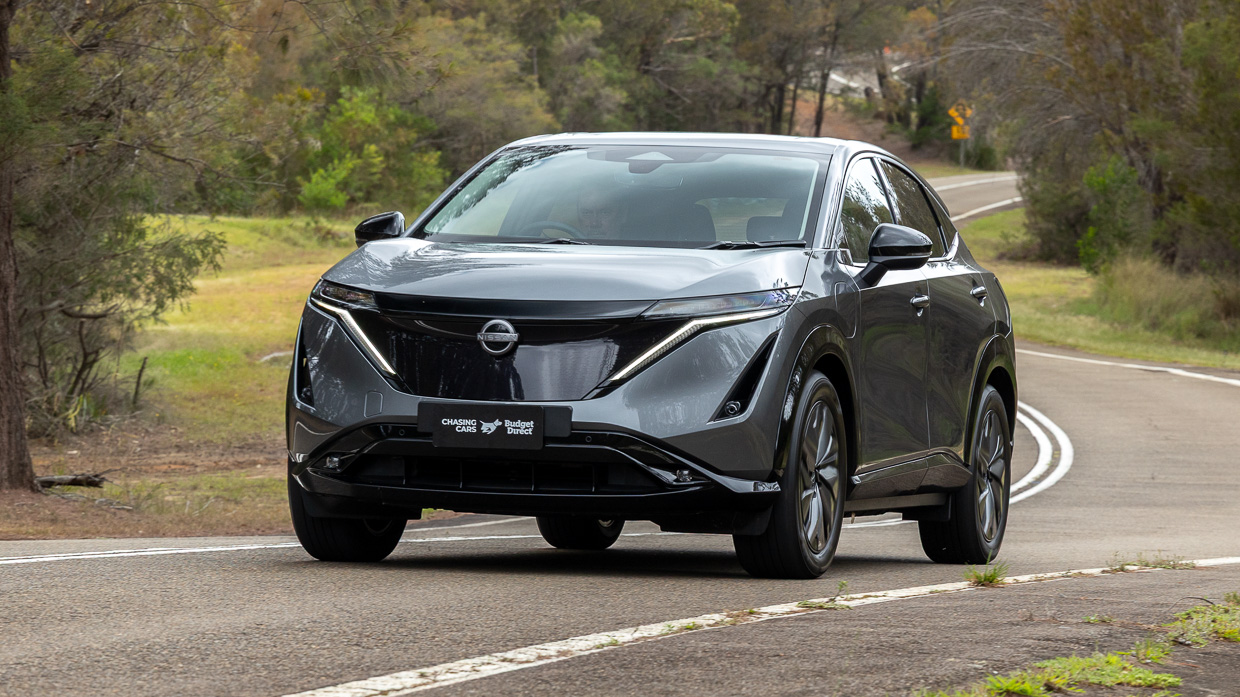
The meter flares away constantly, because 300Nm isn’t much to propel Ariya’s near-2.1 tonnes, so it seems – and displays in-screen – that it’s constantly working hard. Result? Its mid-17kWh/100km around town consumption doesn’t look terribly tardy…until you consider exactly how modest this electric SUV’s outputs are.
Range? With best case situations and driving style, it’ll surely hit its 504 kilometres claimed (WLTP). For many buyers, the four-grand upcharge over the regular 385km-capable (63kWh) Advance will be a justifiable investment on range-per-charge alone.
The SUV’s sheer heft numbing any sense of lightness and leaving the Nissan feeling a little blunt in dynamic responses and detached from the road. It’s no sportscar, so this is, arguably, not too much of a foul.
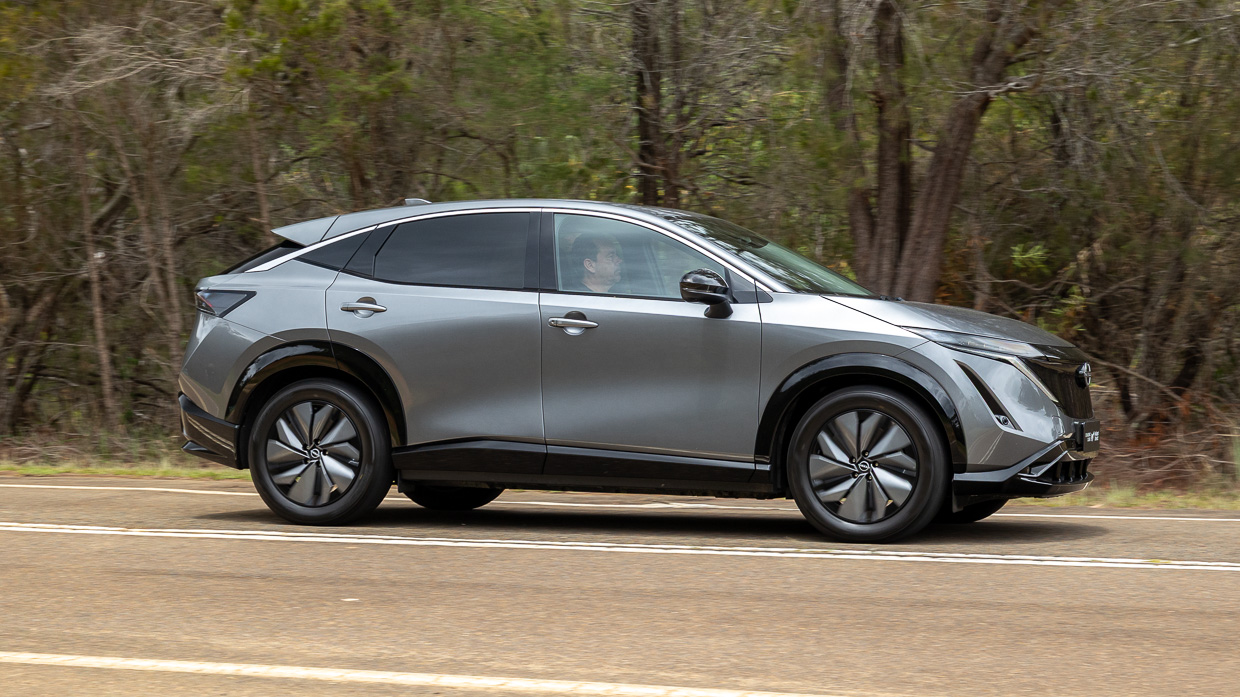
In fact, the Ariya corners quite well, has reasonably direct steering and front end clarity, and there’s little malaise in its body control. It feels solid and taut on the road.
However, the main reason for its surefooted nature is that the suspension is quite firm – if not necessarily brittle – and especially across the rear axle. The lack of low-speed compliance means that the SUV is prone to fidgety movement across small bumps. It never truly settles down, at least around town, in situations its segment’s better offerings certainly do.
It’s quiet, solid, innocuous nature makes for a fine highway cruiser, where the fidgety ride is tamed quite nicely.
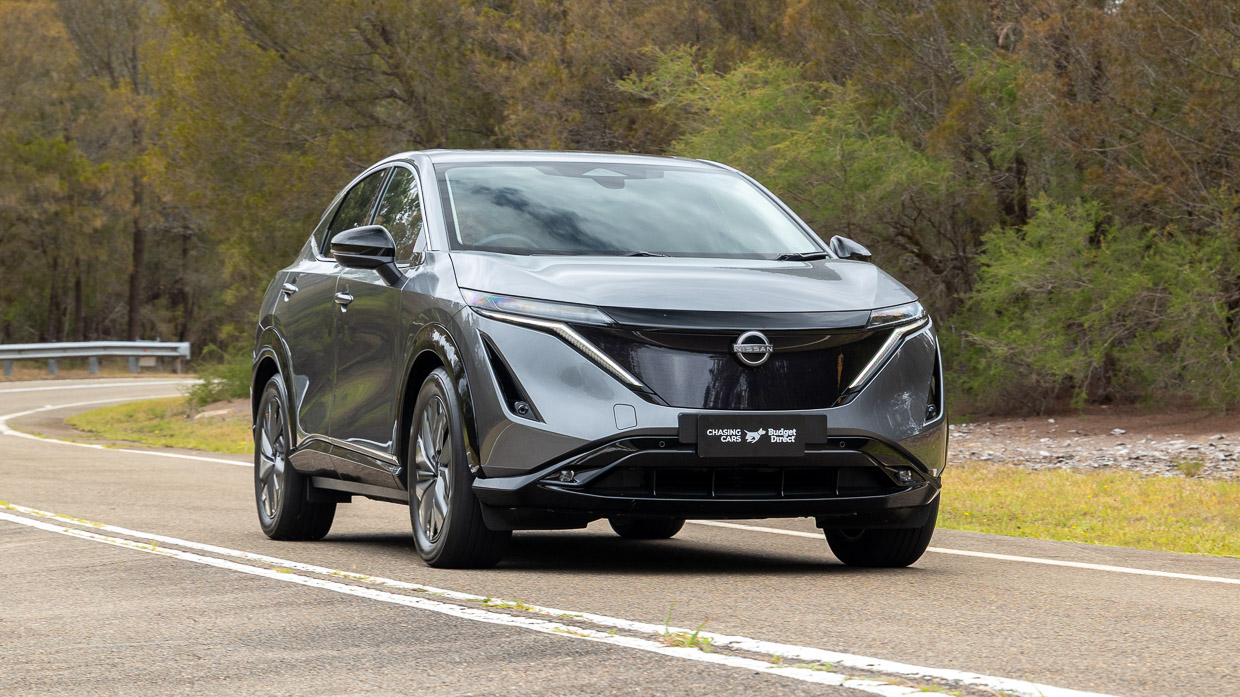
Generally speaking, the Nissan is an easy and relaxing drive, we only wish some of the stuff on the periphery was better sorted. The aforementioned ‘power-o-meter’ is distracting, as is the hugely inaccurate speed limit advisory display in the head-up system, and the tiny rear glass aperture impinges on rear vision.
The Ariya is absolutely loaded with active driver assistance and safety systems, and almost all of them seem well calibrated and free of annoyance or intrusion…bar, perhaps, the active lane keeping that cuts drive should a tyre touch a lane marking line.
Initial impressions of the Advance+’s interior are good. It blends simplicity with a sense of richness and convention that many traditionist owners will be drawn to. But the more time you spend in it, the less impressively it stacks up. At least by 2026 expectations.
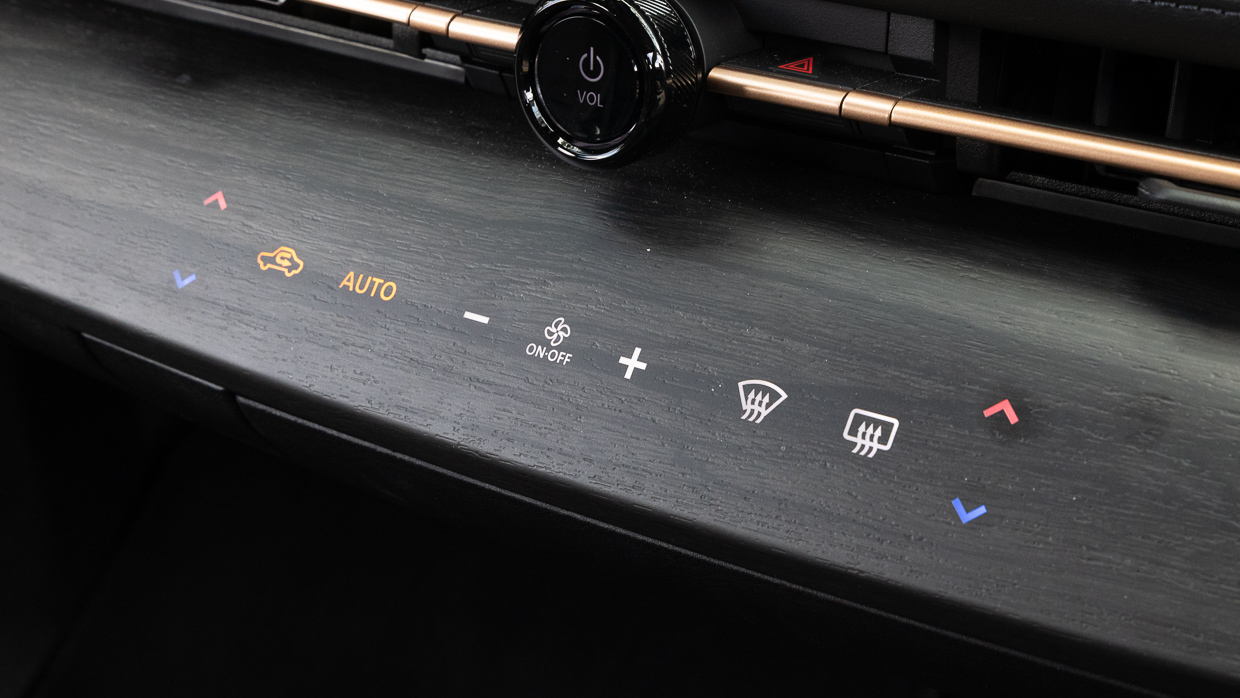
The cabin design was signed off over six years ago and it shows, mostly in its approach to the user interface. It’s apparent in the vintage of the software behind its digital window dressing – complete the ye-olde disclaimer screen on start-up – as well as everything from the twee haptic touch HVAC control in the faux wood dash fascia trim to the handbrake switchgear.
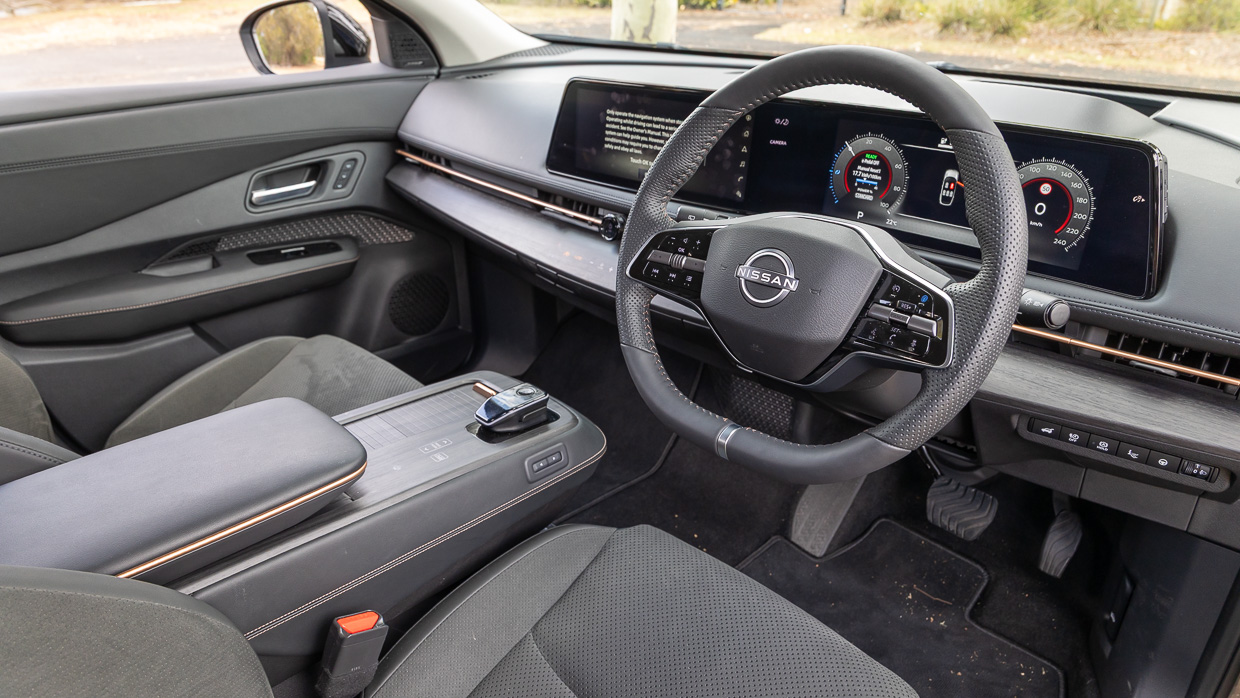
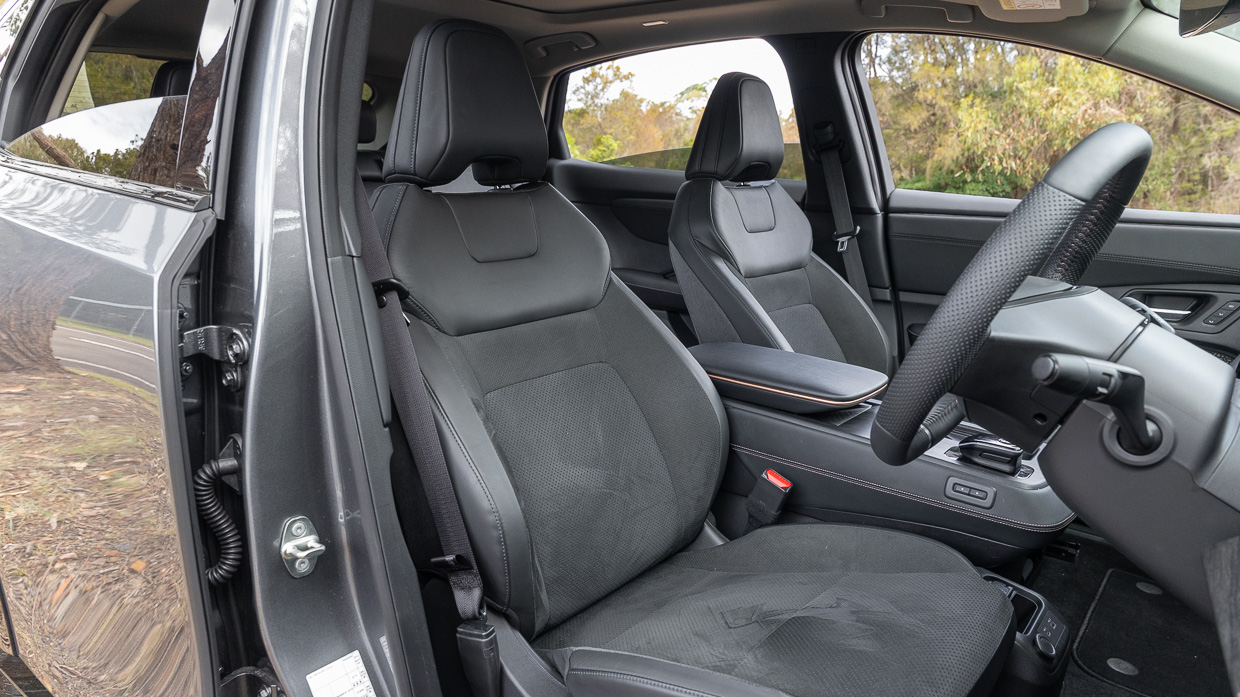
The format is somewhat charming and likeable to taste, but it feels behind the times in look and feel to virtually every other midsize electric SUV competition out there. Cutting-edge this is certainly not.
It’s not without novelty. The centre console slides electrically – if that’s your thing – and the hidden inductive charging pad and two-spoke wheel keep up with the electric Joneses to varying degrees. But from material choice to design language, this could be any other Nissan model, electric or not.
Navara-style hard plastics are conscious, especially on the door trim, and the Ultrasuede-trimmed seats are reasonably comfy, if not nearly as fancy as the top-spec, leather-dipped Evolve pews.
Row two seating is supportive and welcoming and the roominess in the rear is excellent. Particularly knee room. And there’s a real sense of airiness that helped (rather than hindered) by the glass roof.
The flat floor (in both rows) is set quite high, for underfloor battery clearance, though this doesn’t necessarily impact the sense of space and genuine adult comfort.
Boot space is a modest 466 litres, which is reasonably wide and deep but quite shallow in height to the parcel shelf. A couple of large travel might stretch the friendship here.
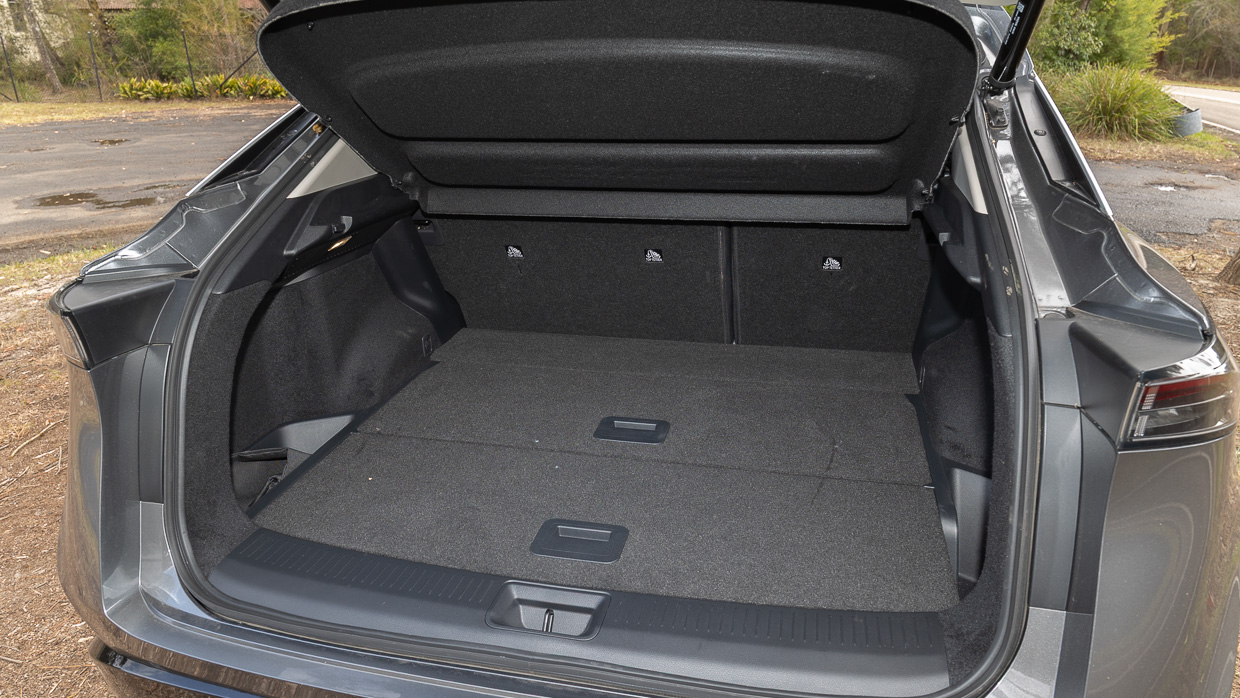
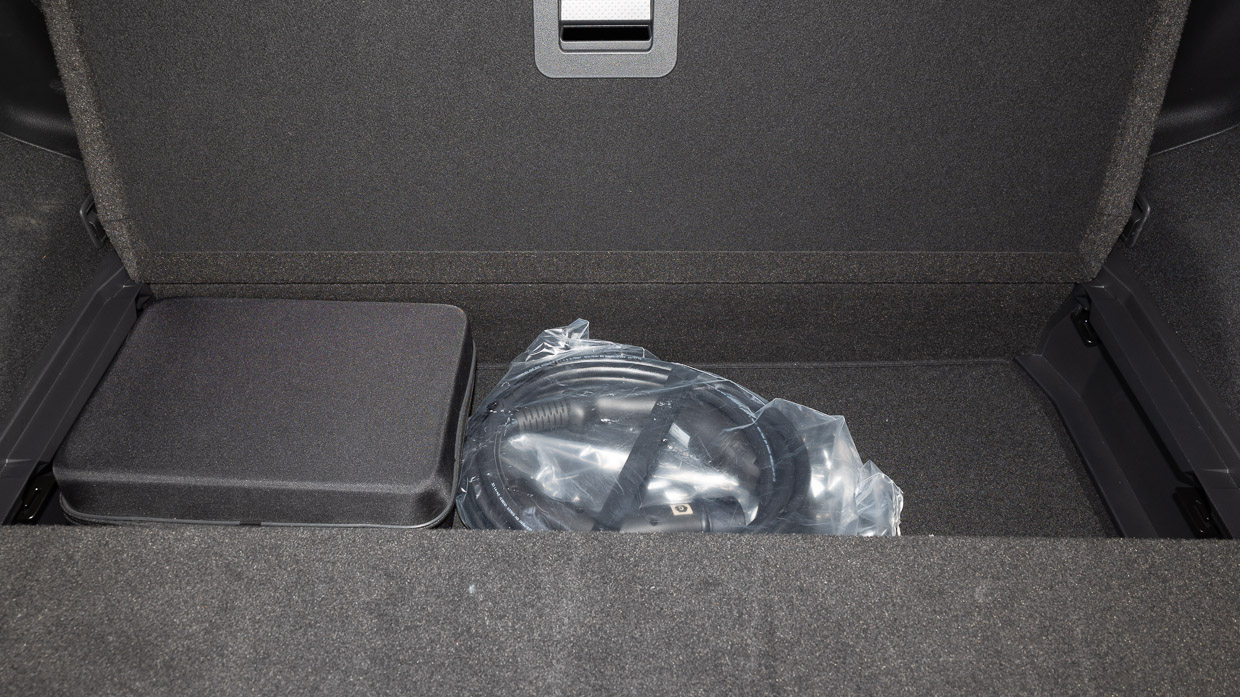
That said, you can reposition or even remove the cargo space floor, which usually exposes an underfloor charging cable cubby. But this can add extra load depth if and when you need it.
The Ariya’s credentials surely looked far more promising on the 2020 form guide than it does on 2026’s. That doesn’t make it a bad car, just one that feels somewhat mediocre today.
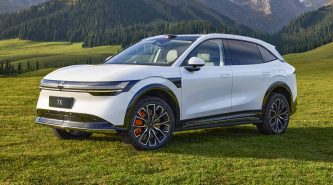
That its specification package hasn’t changed in the five years from promise to Aussie delivery doesn’t serve it well at all: Volkswagen’s ID stuff was delayed to allow high-voltage upgrades; Tesla Model Y’s fixed chronic flaws by moving with the times; newcomers such as the Zeekr 7X are increasingly leading lights for pricing/features balance for mainstream EVs.
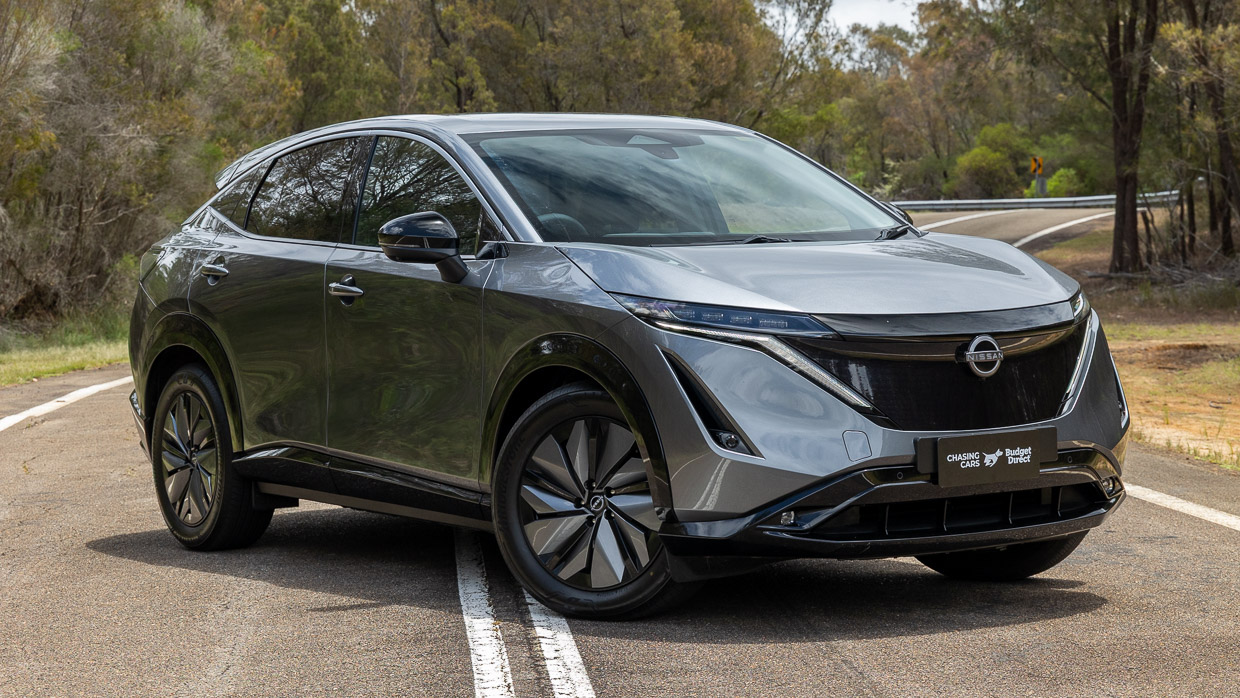
It’s the forward momentum of the competition that really makes the Ariya feel underbaked and, as a direct result, overpriced because of it. That’s regardless of the heritage of its revolutionary Leaf hatch, the brand strength of the Nissan badge, or that Ariya could well be Japan’s best mainstream EV right now.
And as a relatively new debut in Australia, the Ariya’s electric SUV competition – over 20 nameplates, at last guestimate – is only going to get tougher moving forward.
Key specs (as tested)
About Chasing cars
Chasing Cars reviews are 100% independent.
Because we are powered by Budget Direct Insurance, we don’t receive advertising or sales revenue from car manufacturers.
We’re truly independent – giving you Australia’s best car reviews.
The estimate provided does not take into account your personal circumstances but is intended to give a general indication of the cost of insurance, in order to obtain a complete quote, please visit www.budgetdirect.com.au. Estimate includes 15%^ online discount.
^Conditions Apply
Budget Direct Insurance arranged by Auto & General Services Pty Ltd ACN 003 617 909(AGS) AFSL 241 411, for and on behalf of the insurer, Auto & General Insurance Company Limited(ABN 42 111 586 353, AFSL 285 571).Because we don’t know your financial needs, we can’t advise you if this insurance will suit you. You should consider your needs and the Product Disclosure Statement before making a decision to buy insurance. Terms and conditions apply.
Indicative quote based on assumptions including postcode , 40 year old male with no offences, licence suspensions or claims in the last 5 years, a NCD Rating 1 and no younger drivers listed. White car, driven up to 10,000kms a year, unfinanced, with no modifications, factory options and/or non-standard accessories, private use only and garaged at night.
^Online Discounts Terms & Conditions
1. Discounts apply to the premium paid for a new Budget Direct Gold Comprehensive Car Insurance, Third Party Property Only or Third Party Property, Fire & Theft Insurance policy initiated online on or after 29 March 2017. Discounts do not apply to optional Roadside Assistance.
2. Discounts do not apply to any renewal offer of insurance.
3. Discounts only apply to the insurance portion of the premium. Discounts are applied before government charges, taxes, levies and fees, including instalment processing fees (as applicable). The full extent of discounts may therefore be impacted.
4. We reserve the right to change the offer without notice.