Powered by

-
Car Reviews
Latest reviews
-
Car News
Latest news
-
Car Comparisons
Latest comparisons
- Chasing Deals
Latest reviews
Latest news
Latest comparisons
Korean ‘4×4’ SUV looks appealing on paper but lacks finish and execution in a good number of areas
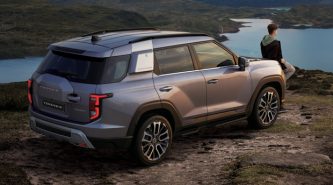
Rarely does a model redate the brand that makes it, but that’s the case with three-year-old Torres medium SUV brought you by KGM Australia, launched locally in July 2025. This murky brand providence was covered off in our Actyon review, itself a nameplate dating back to (now defunct) Ssangyong.
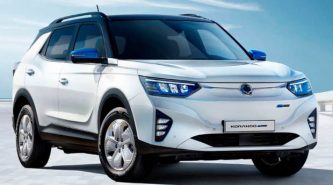
The Acyton and Torres are closely related, the former a longer, pricier, coupe-styled extrapolation of the latter. Add the less-stylised Korando and KGM Australia has no less than three midsize SUVs on offer in its six-model portfolio.
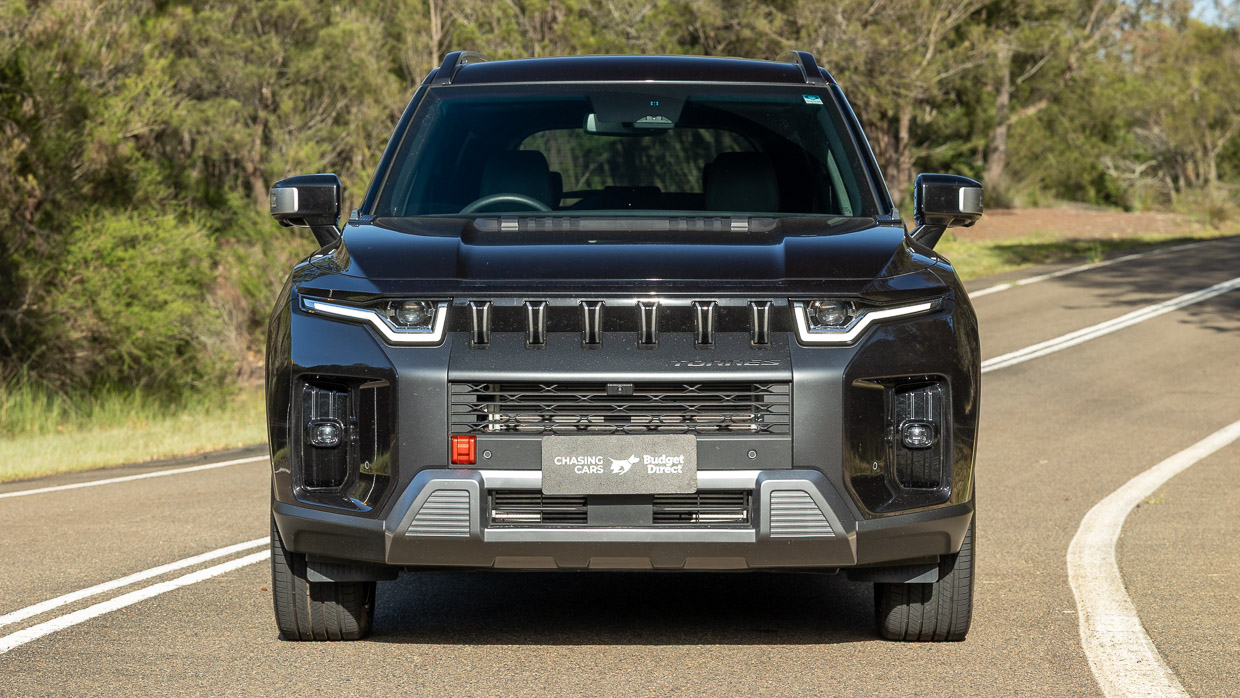
What separates the Torres from Acyton – beyond price and size – is that our test subject can be had in all-wheel-drive form in flagship Ultimate grade.
There’s a choice of turbo-petrol, hybrid and BEV powertrains, too, though all-paw traction is reserved purely for 100-percent internal combustion.
ICE versions start at $34,990 driveaway for the basic front-drive ELX, though our petrol MY25 Ultimate AWD sits at $41,990 parked in your driveway (plus $700 for as-tested Space Black paintwork). Hybrids start from $43,000 D/A while you have to stump up $58,000 for fully electric EVX on road.
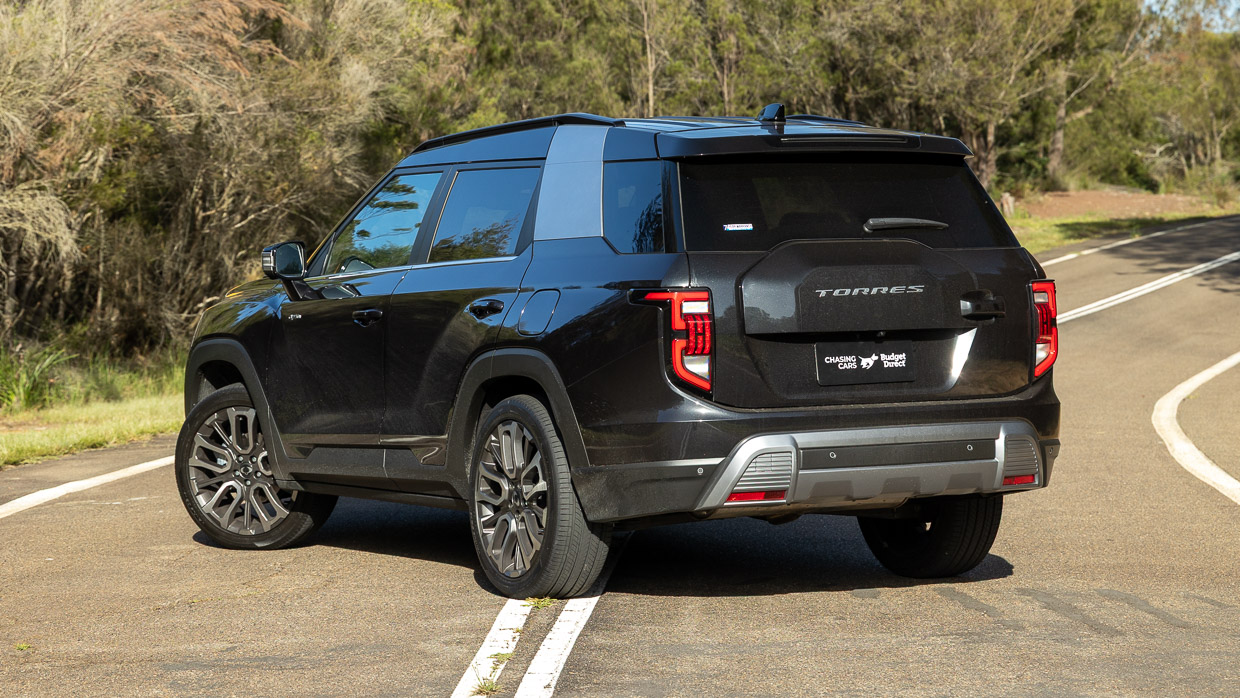
The 1.5-litre turbo fours output 120kW and 280Nm plied through a six-speed torque converter auto to all four wheels. At 1622kg kerb, it can tow almost its own weight braked (1500kg) and sits on strut front and multilink rear suspension.
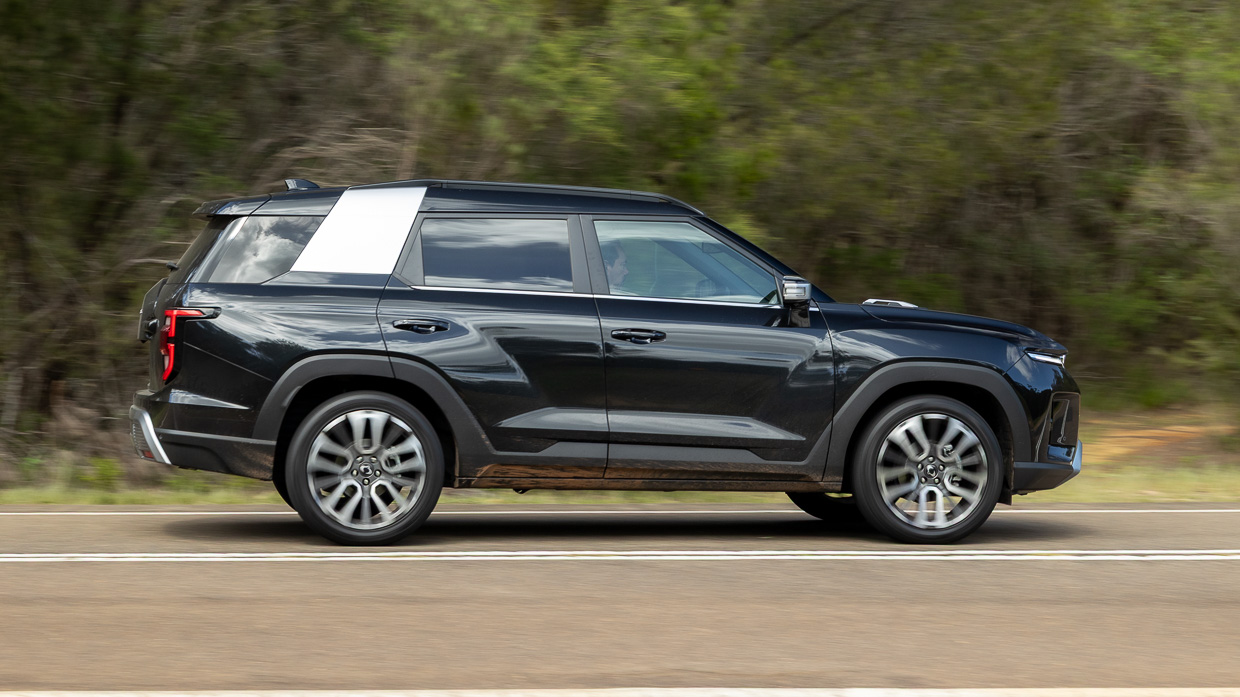
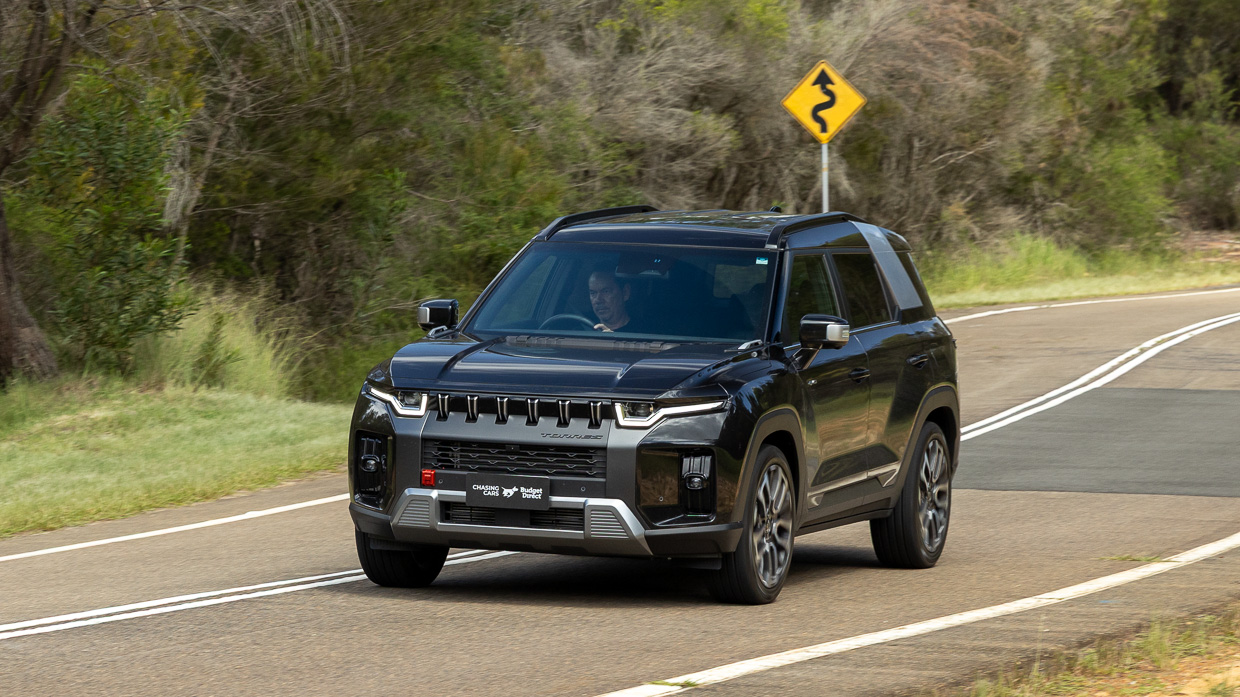
But while a sole ‘4×4’ badge is displayed triumphantly on its inky bodywork, its pretty 20-inch diamond-cut alloy wheel and distinct lack of ground clearance do suggest the Torres — named after mountains in Patagonia, apparently — is most in its element on sealed hot-mix.
Features? It’s well equipped for its price point. Real leather trim, heated and front seats with electric adjustment, dual 12.3-inch displays, sunroof, dual-zone climate control, a 360-degree camera system and ‘Walk-up welcome’ functionality befit the Ultimate’s flagship status.
Safety wise, this KGM fits most advanced active systems offered in mainstream motoring today, from forward AEB to adaptive cruise control, and from active lane centring to rear cross alert. It also fits eight airbags. That said, no KGM (or Ssangyong) model is rated by ANCAP at the time of review.
While relatively fresh faced in Australia – it was KGM’s (re)launch model in 2024 – the Torres launched globally (as a Ssangyong) in 2022. It’s four years old, and you can feel that age in its engineering. That alone is no foul, though the poor powertrain calibration most certainly is.
Response is lazy. Bury the right foot and the Torres attempts to slingshot after an uncomfortably long pause. There’s some shove at the little 1.5’s torque peak, but either side of the peak progress is slovenly. Result? It’s hard to conduct enthusiastic progress smoothly.
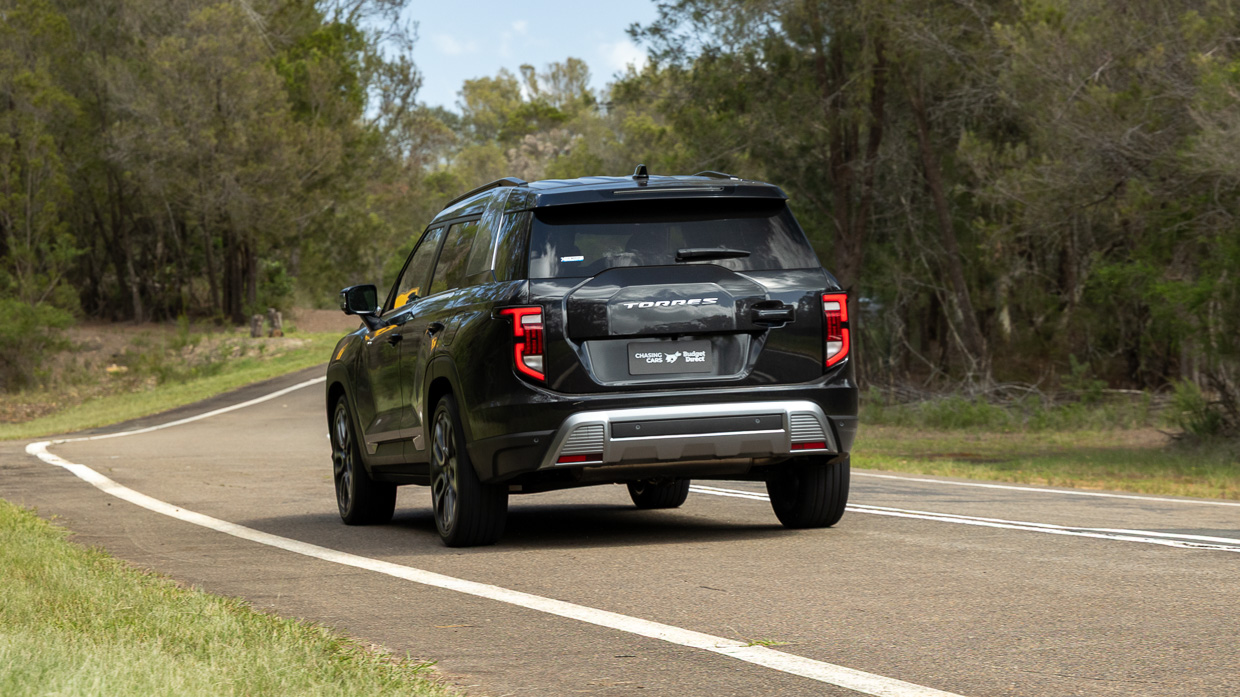
Around town and in traffic? Much of the same. The switchable stop-start is slow on the uptake and the automatic’s upshift patterns try and fail to harness the engine’s narrow sweet spot.
It’s frustrating to drive, even at cruising velocity on a motorway, when overtaking takes unnecessary forward planning and the driver finds themselves too often too heavy into the throttle. Downshot? Inconsistent driveability leads to excessive fuel consumption.
KGM Australia quotes 7.9L/100kms. Far from class leading but not terrible. Real-world figures, after hundreds of kilometres of mixed driving, sees the Korean family hauler nudging 10L per hundred, which is, put nicely, excessive.
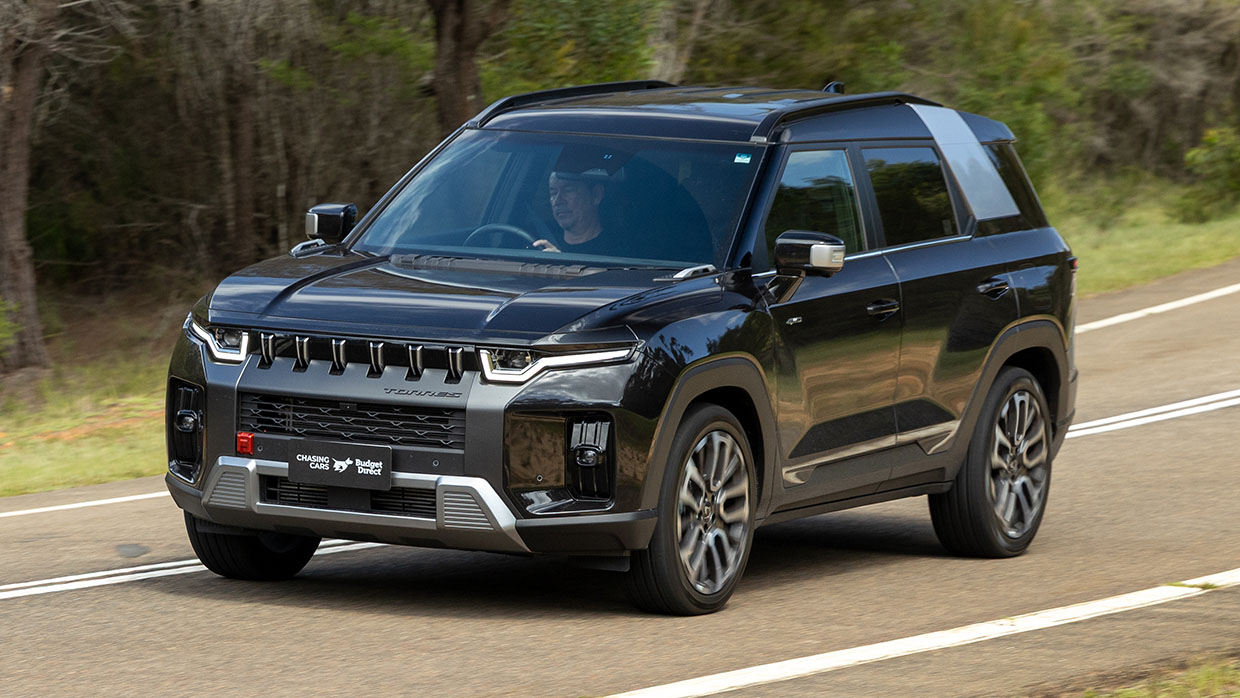
There’s worse still. The by-wire transmission selector demands double-taps to change direction of drive, from D to R or vice versa. A single tap, alarmingly and for seemingly little wisdom, returns neutral – only a hilly three-point-turn away from careening into a parked vehicle. Not ideal.
The ride quality isn’t terrible, though the Torres is prone to fizzy vertical movement across small bumps and at low speed, and never quite settles down. Through larger compression strokes, though, compliance is quite reasonable.
More glowingly, its firm nature makes for a surprisingly spirited handler. The steering is sharp off centre – if lacks some linearity with added input – and those sporty 20s, which do ride no favours, drum up an impressive amount of grip.
So Torres fires through a corner with confidence and enthusiasm, sitting nicely in its outside rear wheel. But it does feel ‘on stilts’ in that it doesn’t hunker down on its suspension with confidence, and the fluctuating surge of the powertrain simply robs the experience of much fun factor.
Safety wise, there’s little to criticise. There’s some unnecessary binging and bonging – seatbelt warning at a standstill a case in point – and the active lane keeping and centering is heavy handed (though can be defeated easily in a similar manner to other Korean marques’ tech).
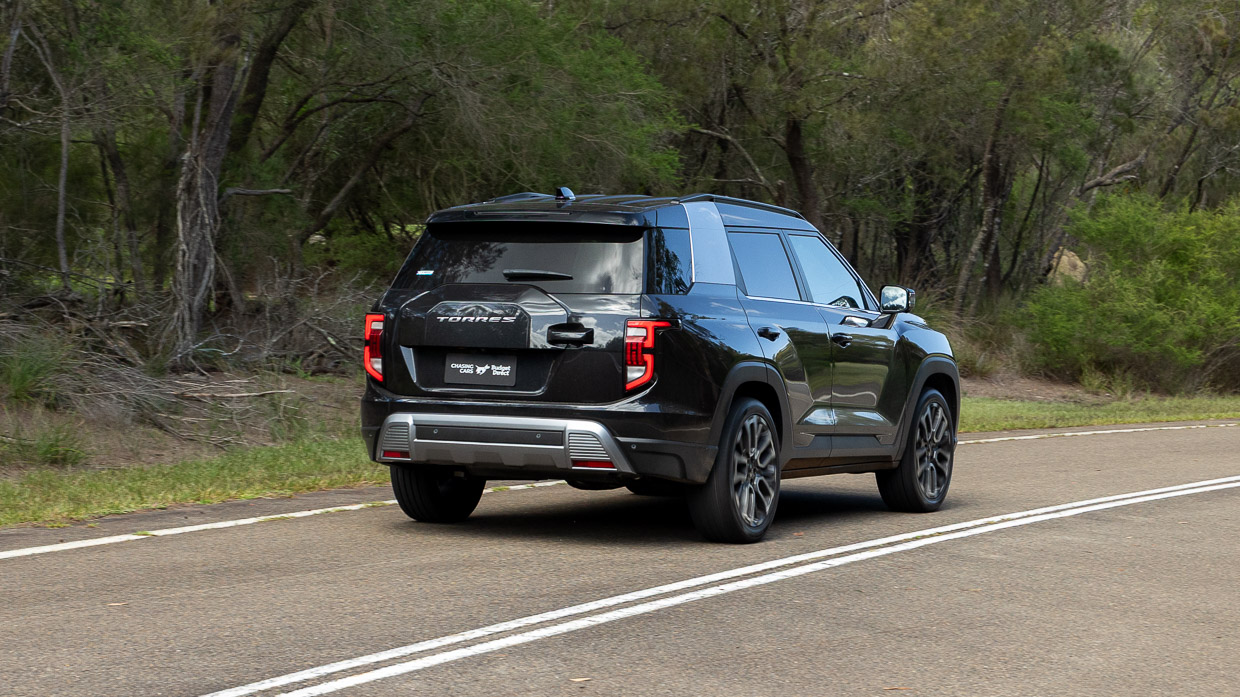
The nutshell synopsis is that, on road, the Torres lacks execution, calibration and resolution. It feels much like a vehicle that signed off too early in its development program. And for a four-year-old model, there’s surely been ample opportunity by now to polish out its rough edges on road.
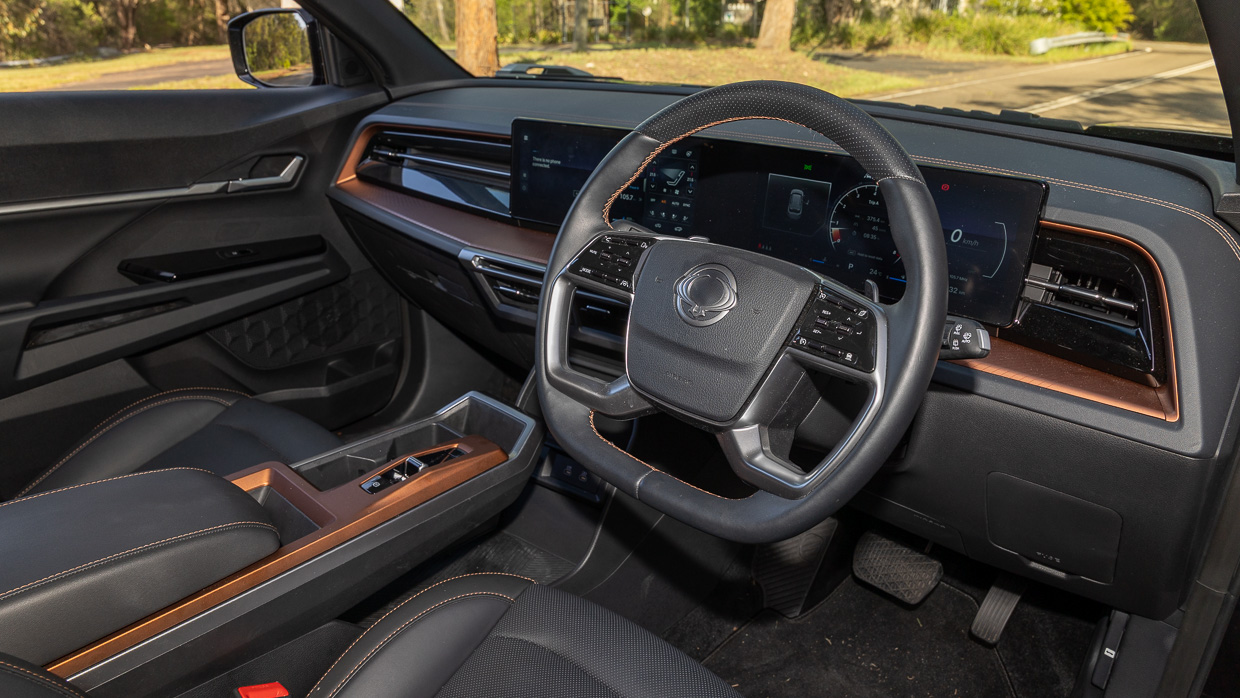
The flagship Torres cabin is, unsurprisingly, quite similar to that of the Actyon (K60), in that it borrows inspiration from Europe, Japan and other Korean marques, if a little less BMW-esque premium in theme, with a more mainstream look, vibe and execution.
While bronze accents, loads of double-stitching and a heap of satin brightwork bring some sense of celebration (and glare), the rudimentary material choices leave the Torres interior feeling fancy yet cheap. The leather seat trim is so hardy that it doesn’t really feel like real hide at all.
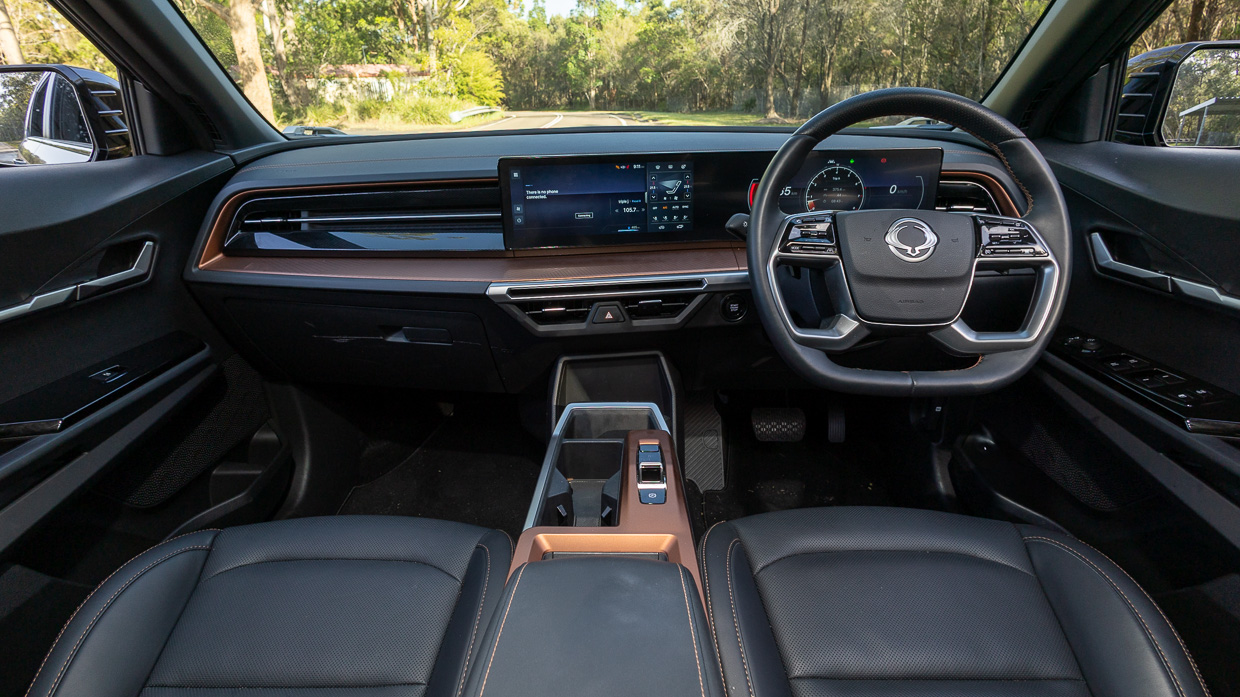
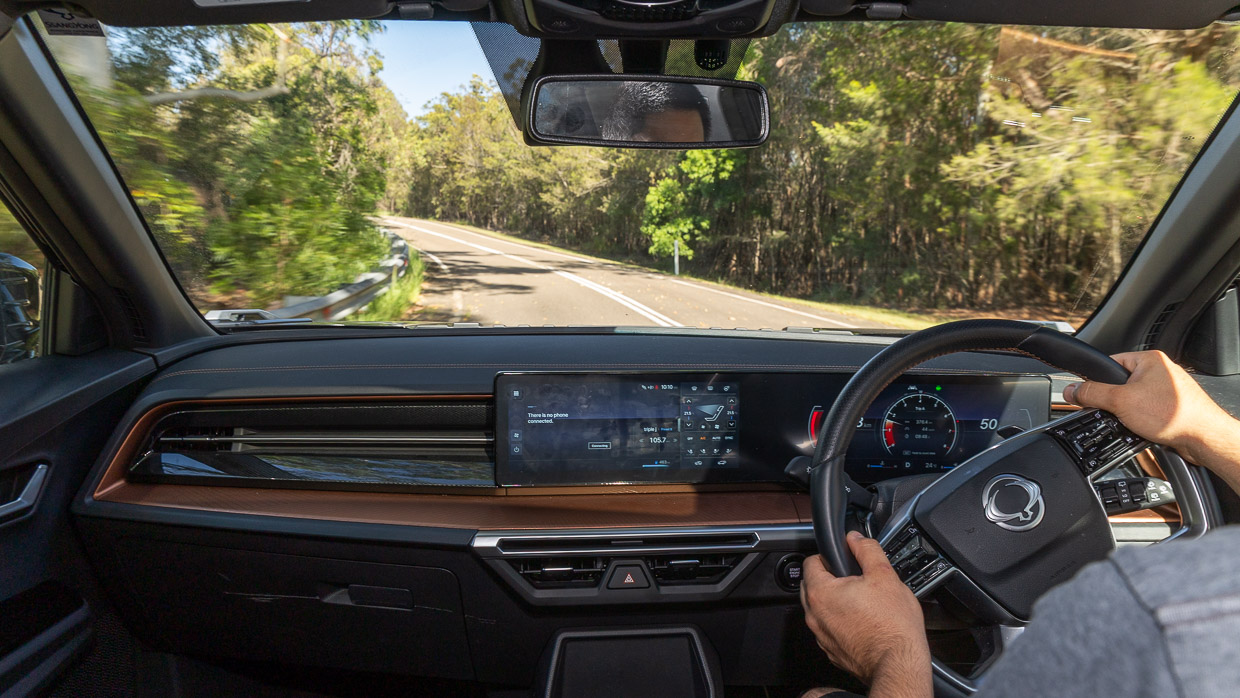
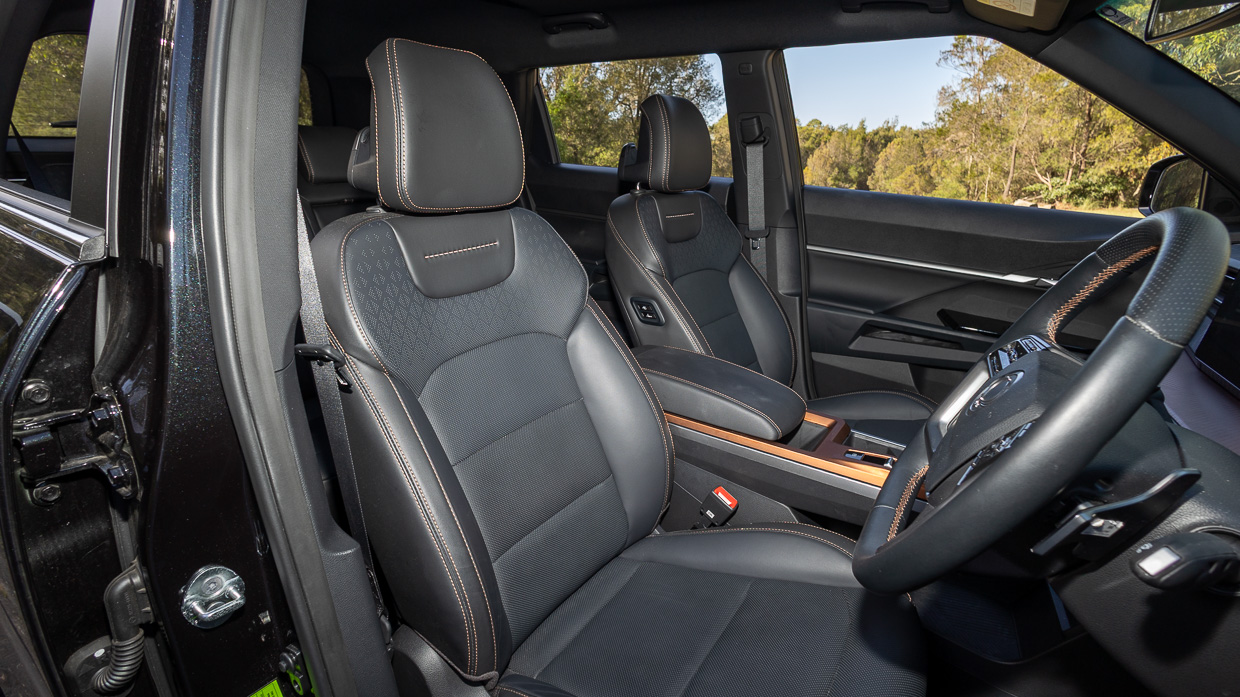
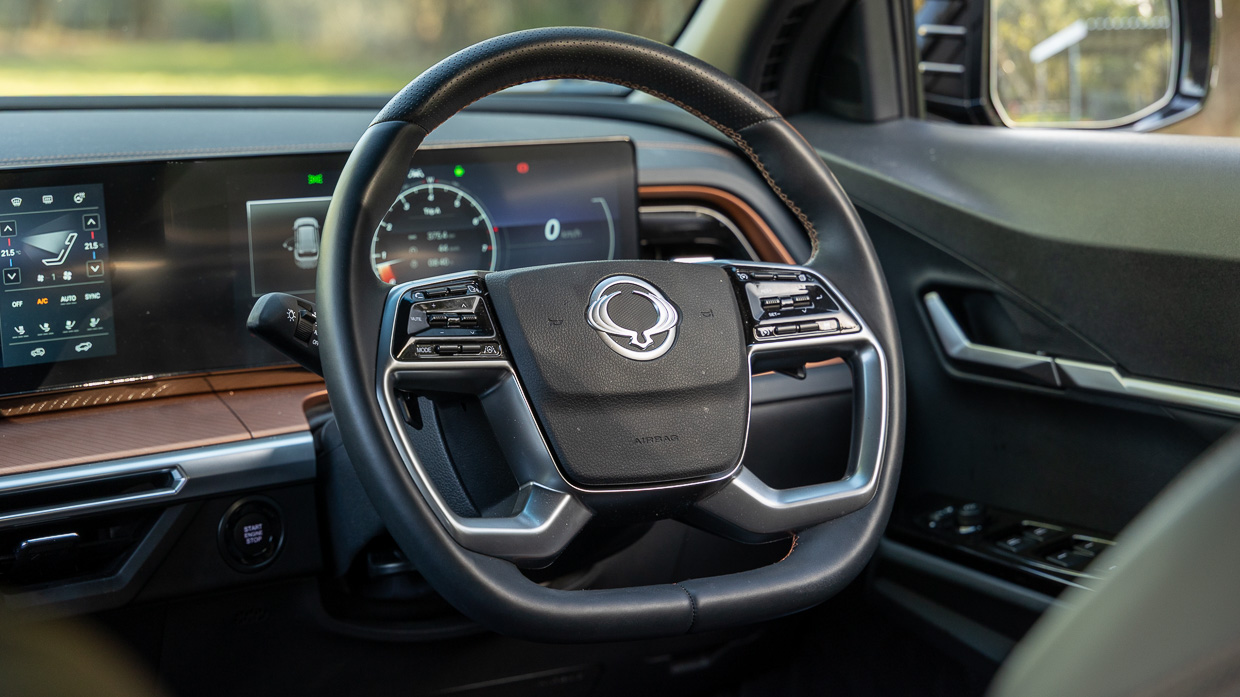
It’s tough to settle into because of awkward ergonomics: the front seats are perched high and pivot strangely in height adjustment, leaving the oddly oversized flat-bottom wheel never positioned neatly to hand. At least the propped-up nature affords good visibility.
The front buckets are also very flat-backed and stiffly padded, with little lateral support and minimal available lumbar adjustment. For an SUV that can corner quite well, drivers might find it a chore keeping themselves upright at the helm during even a casual punt.
The digital window dressing is also left wanting. Yes, it’s today’s de rigeur dual-12.3-inch format in floating frame, let down on the driver’s side by a lack of contrast and basic clarity due to the LCD screen’s fancy skin that’s simply too dark. Gets worse in direct sunlight, too.
But it’s the media touchscreen that really lets the team down. The hardware isn’t very responsive and the software user interface is clumsy and convoluted, with sliding menu tabs that mask over main menu icons. That the drive mode adjustment is accessed via the air-con control typifies how this system can confound the user.
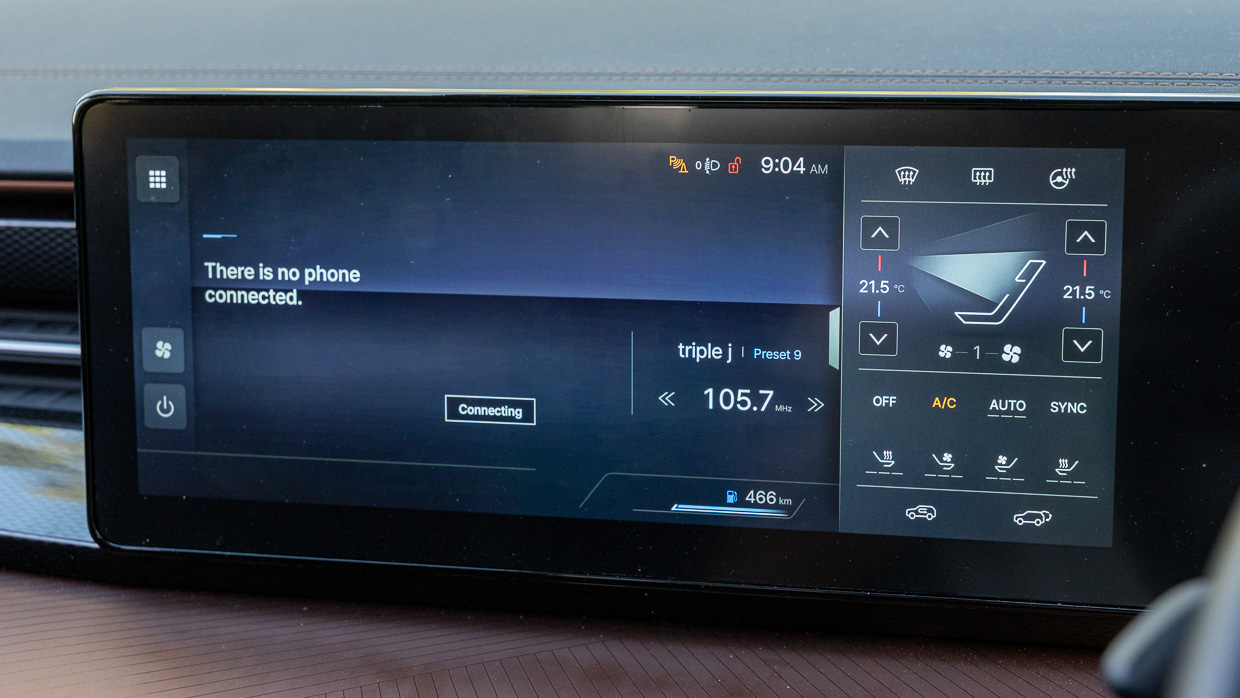
Wireless Apple CarPlay or Android Auto? Nope. But what frustrates is that, when the vehicle restarts, it activates the radio rather than rebooting a device that was Bluetooth streaming at the point of shutdown.
A tethered phone, strangely, also returns a ‘phone not connected’ message on screen, and demands device unlocking even when the phone remains tethered.
Row two is quite roomy, though the high-set floor leads to an equally high-set ‘stadium seat’ format for the bench, which is great for visibility for small kids but encroaches on outright space for taller occupants.
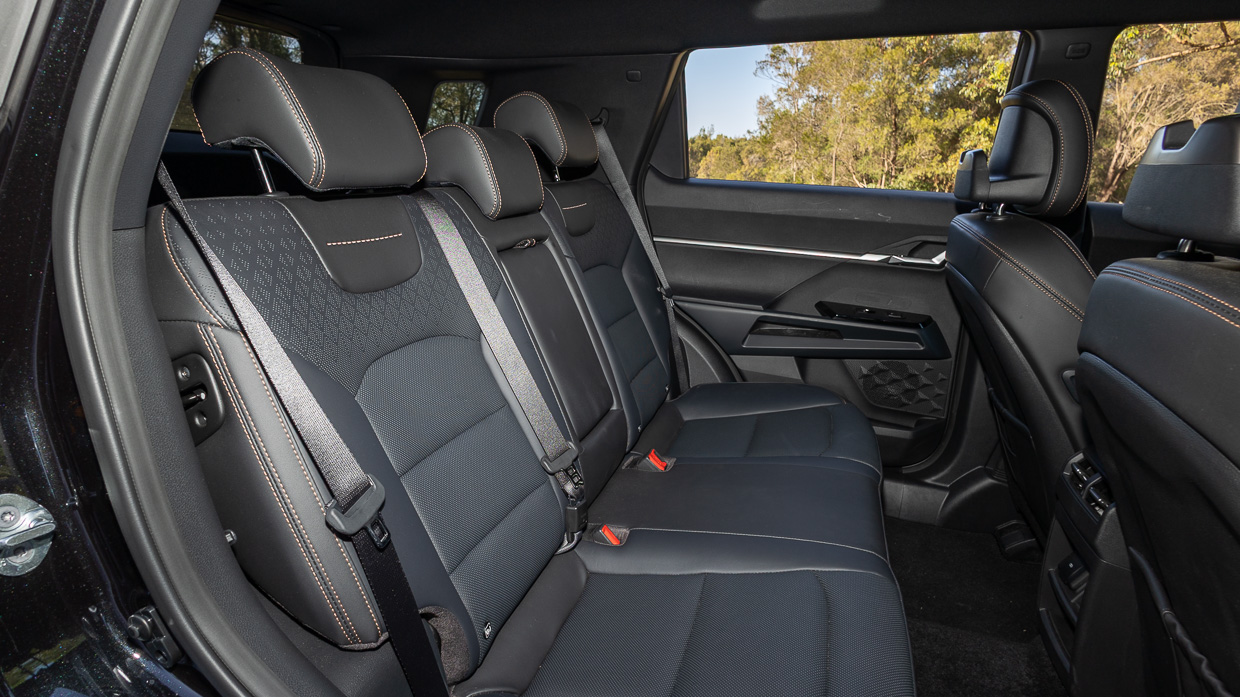
Nice, though, is that the 60:40-split rear seatback can recline at up to 32.5 degrees, says the Torres literature, and the outboard seatbacks offer heating, too.
However, it’s slim picking for rear passenger conveniences, bar the dual USB-C outlets to mirror the pairing up front, and much of the soft-touch door trim material found up front is replaced by hard, cheap plastic across the rear doors.
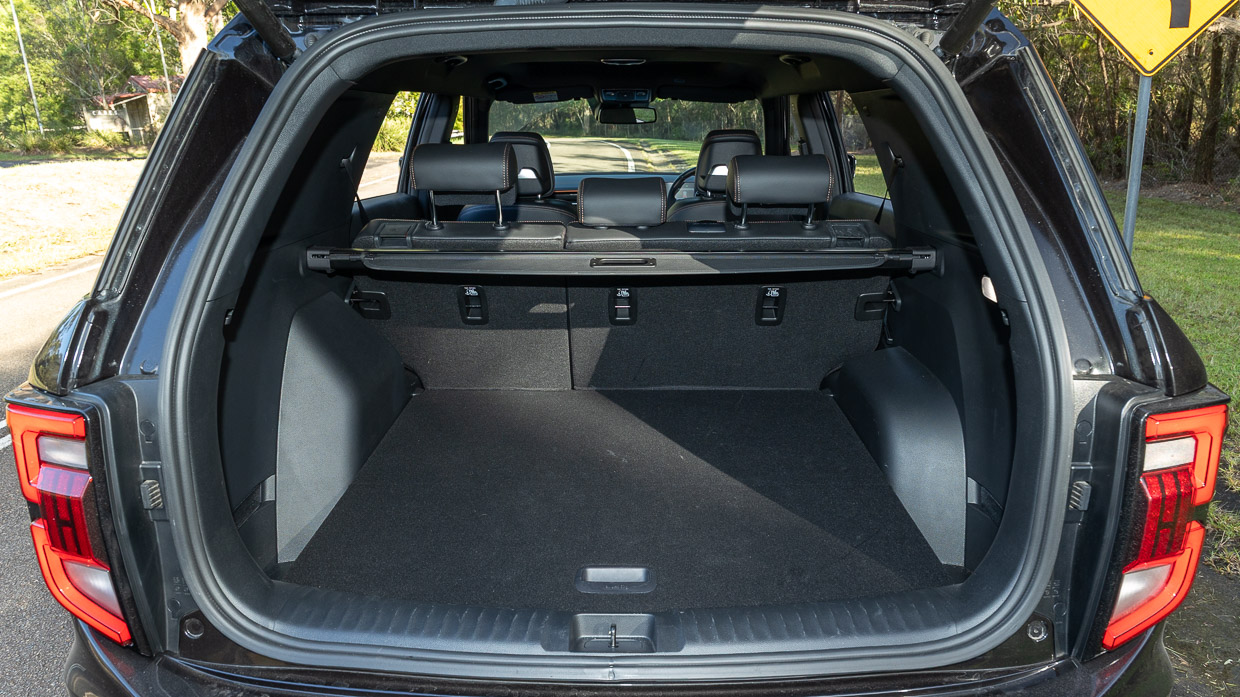
Boot space? It’s a middling 465 litres as a five-seat that expands to 1526L as a two-seater.
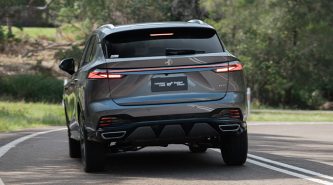
But it’s the tailgate that’s quite bizarre. It appears side-hinged thanks to the (fake) spare wheel carrier and odd off-centre rego plate location together with a handle set far off on the right hand side. But activate the handle and tailgate lifts conventionally as it’s hinged at the roof…
Ownership wise, warranty is seven years of unlimited-kilometre coverage, while servicing is a typical 12 months or 15,000km between visits that cost between $356 and $465, or an average of just under $400 per year: not excessive, nor all that cheap.
Nor is it cheap to run. The turbo 1.5 demands 95RON premium and, as we discovered in testing, it’s quite thirsty. Circa-10L/100kms from a 50-litre tank offers, of course, around 500km of range.
The Torres Ultimate is a typical example of an offering that looks compelling on paper and might impress on the showroom floor, but fall increasingly flat once it’s let loose in the real world.
So, why is it that this promising-looking Korean misses the mark?
In short, so much of it skipped finishing school. It’s the cohesion, calibration and execution that separates the average from the impressive, and the Torres feels as if KGM (or, specifically, the former Ssangyong) signed off on it while it was still undercooked.
Does Torres demonstrably need all-wheel drive? For regional and high country owners frequenting slippery conditions, maybe… Which leaves the lower-priced Torres variants, such as the cloth-trimmed front-drive ELX for $35K, somewhat more compelling.
However, burning down the price point doesn’t elevate the quality or aid much in puttying over the Torres myriad shortcomings.
What could change the Torres game significantly is the alternative hybrid or BEV powertrain options. Potentially, there could well be a fix for at least one area of Torres underperformance, albeit a possible improvement that comes at a heightened outlay.
We look forward to sampling the petrol-electric and fully electric versions of the Korean SUV in future.
Key specs (as tested)
About Chasing cars
Chasing Cars reviews are 100% independent.
Because we are powered by Budget Direct Insurance, we don’t receive advertising or sales revenue from car manufacturers.
We’re truly independent – giving you Australia’s best car reviews.
The estimate provided does not take into account your personal circumstances but is intended to give a general indication of the cost of insurance, in order to obtain a complete quote, please visit www.budgetdirect.com.au. Estimate includes 15%^ online discount.
^Conditions Apply
Budget Direct Insurance arranged by Auto & General Services Pty Ltd ACN 003 617 909(AGS) AFSL 241 411, for and on behalf of the insurer, Auto & General Insurance Company Limited(ABN 42 111 586 353, AFSL 285 571).Because we don’t know your financial needs, we can’t advise you if this insurance will suit you. You should consider your needs and the Product Disclosure Statement before making a decision to buy insurance. Terms and conditions apply.
Indicative quote based on assumptions including postcode , 40 year old male with no offences, licence suspensions or claims in the last 5 years, a NCD Rating 1 and no younger drivers listed. White car, driven up to 10,000kms a year, unfinanced, with no modifications, factory options and/or non-standard accessories, private use only and garaged at night.
^Online Discounts Terms & Conditions
1. Discounts apply to the premium paid for a new Budget Direct Gold Comprehensive Car Insurance, Third Party Property Only or Third Party Property, Fire & Theft Insurance policy initiated online on or after 29 March 2017. Discounts do not apply to optional Roadside Assistance.
2. Discounts do not apply to any renewal offer of insurance.
3. Discounts only apply to the insurance portion of the premium. Discounts are applied before government charges, taxes, levies and fees, including instalment processing fees (as applicable). The full extent of discounts may therefore be impacted.
4. We reserve the right to change the offer without notice.