Powered by
-
Car Reviews
Latest reviews
-
Car News
Latest news
-
Car Comparisons
Latest comparisons
- Chasing Deals
Latest reviews
Latest news
Latest comparisons
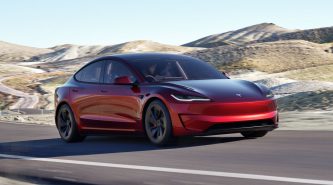
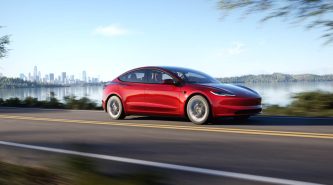
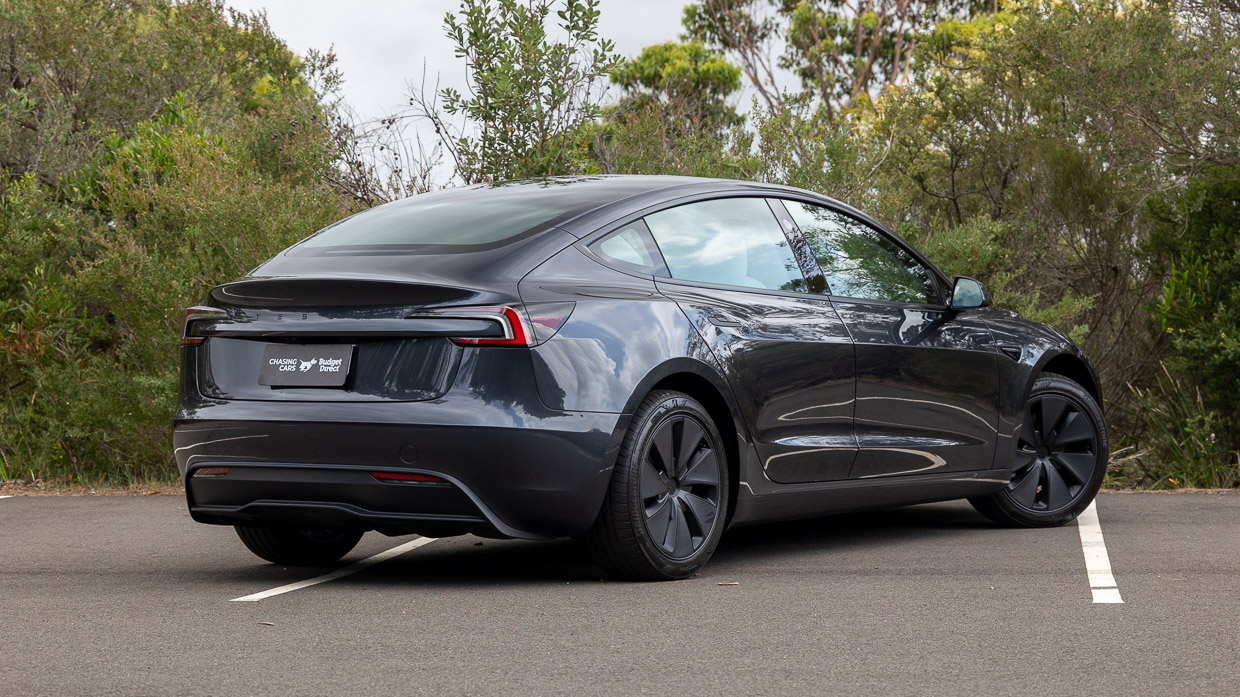
The Tesla Model 3 is the best-selling EV sedan in Australia, but what is it really like to live with every day?
The Tesla Model 3 is easily Australia’s most popular premium sedan.
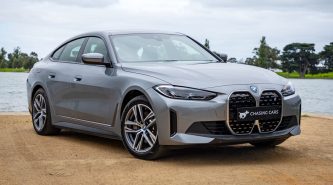
Last year, the Chinese-made, American-badged four-door outsold the BMW 3 Series/4 Series/i4 line by more than two-to-one — and for every Mercedes C-Class sold here, Tesla shifts four Model 3s.
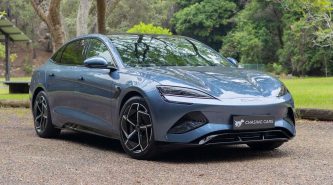
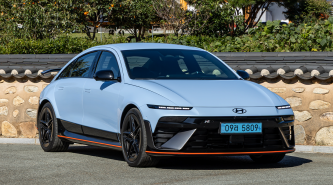
It also managed to beat similarly priced rivals, such as the BYD Seal sedan and Hyundai Ioniq 6.
And that’s how the Model 3 performs in a bad year: in 2025, Tesla sold 6617 examples of its sedan model compared to 17,094 the previous year — although 2024’s bump followed the arrival of the hugely-improved ‘Highland’ upgrade to the most affordable Tesla.
On top of the mid-life update, in late 2025 Tesla added two crucial upgrades to the Model 3 package, the availability of its Full Self-Driving (Supervised) tech and a new Long Range RWD variant boasting a 750km WLTP driving range.
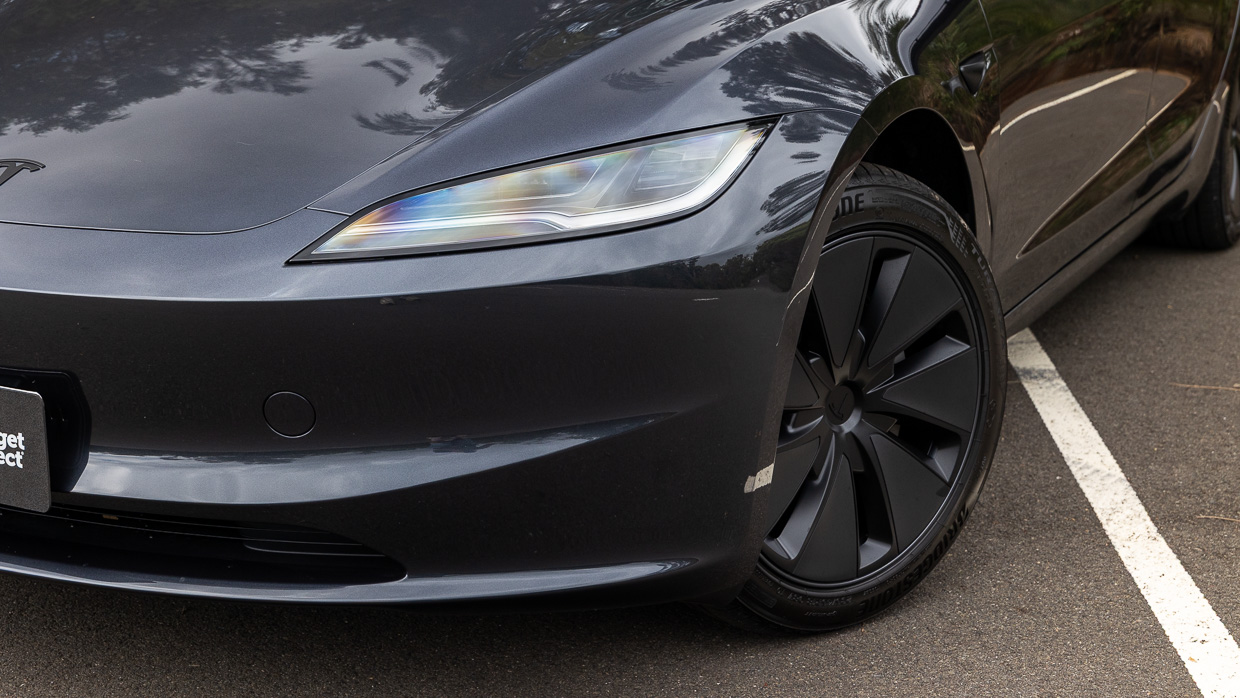
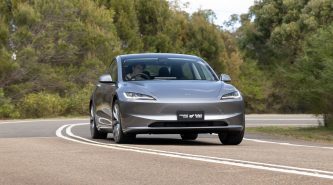
That’s the variant we have on test and over the next three months and 5000km, we’re going to see if the king of electric sedans deserves its crown.
The Model 3 Long Range Rear-Wheel Drive (LRRWD) — a new variant for 2026 — joins our long-term testing garage for three reasons.
First, does this eight-year-old design (under the skin) still deserve to be Australia’s premium sedan of choice? Is it that much better than the competition? We’ll be subjecting it to a group test to find out.
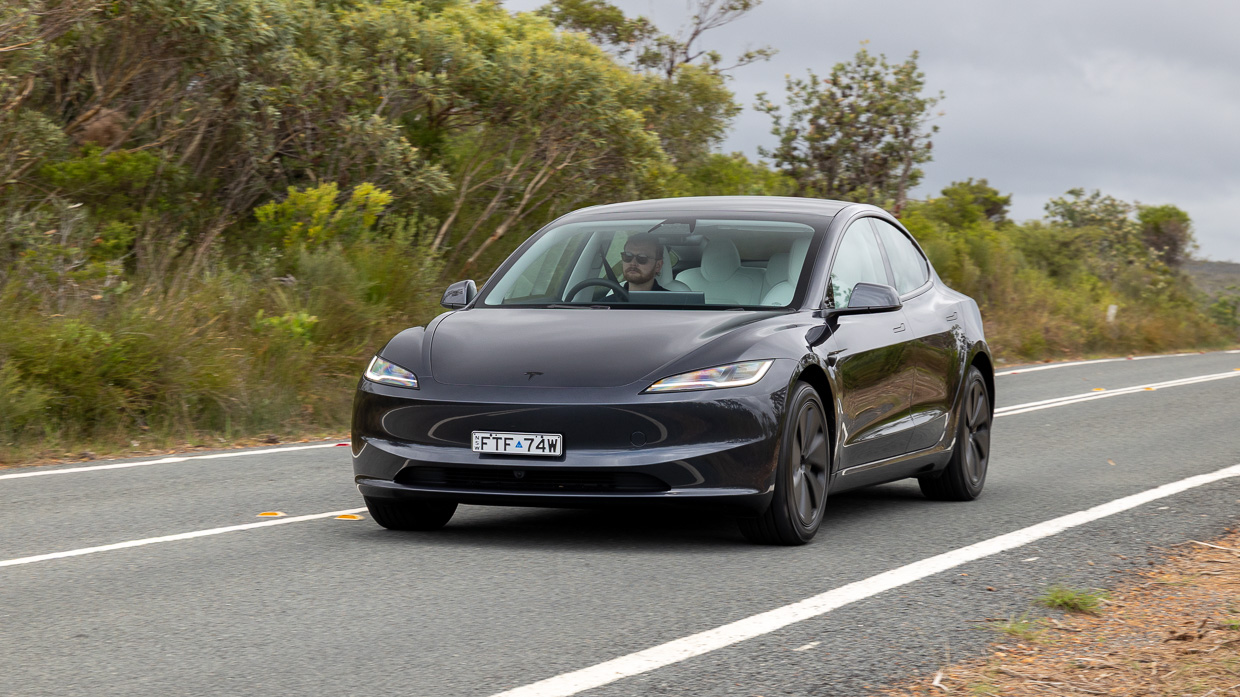
Secondly, as the current longest-range EV on the market (Tesla claims 750km of range WLTP), how far can the Model 3 really go? How cheap is it to run? Is this finally an EV that can do serious road trips with ease? We’ll be hitting the highway to find out.
Thirdly — and most crucially — is Tesla’s Full Self-Driving (Supervised) tech worth $10K as a one-time purchase — or $149 per month? With the autonomous driving tech recently released in Australia to much fanfare, an extended time spent with FSD engaged will reveal clear answers.
The new LRRWD represents a repositioning of the Long Range variant within the Tesla Model 3 lineup.
In the past, opting for Long Range (which means a bigger battery) meant an additional electric motor and all-wheel drive, plus some extra cabin tech, over the price-leading base model. All of that added cost.
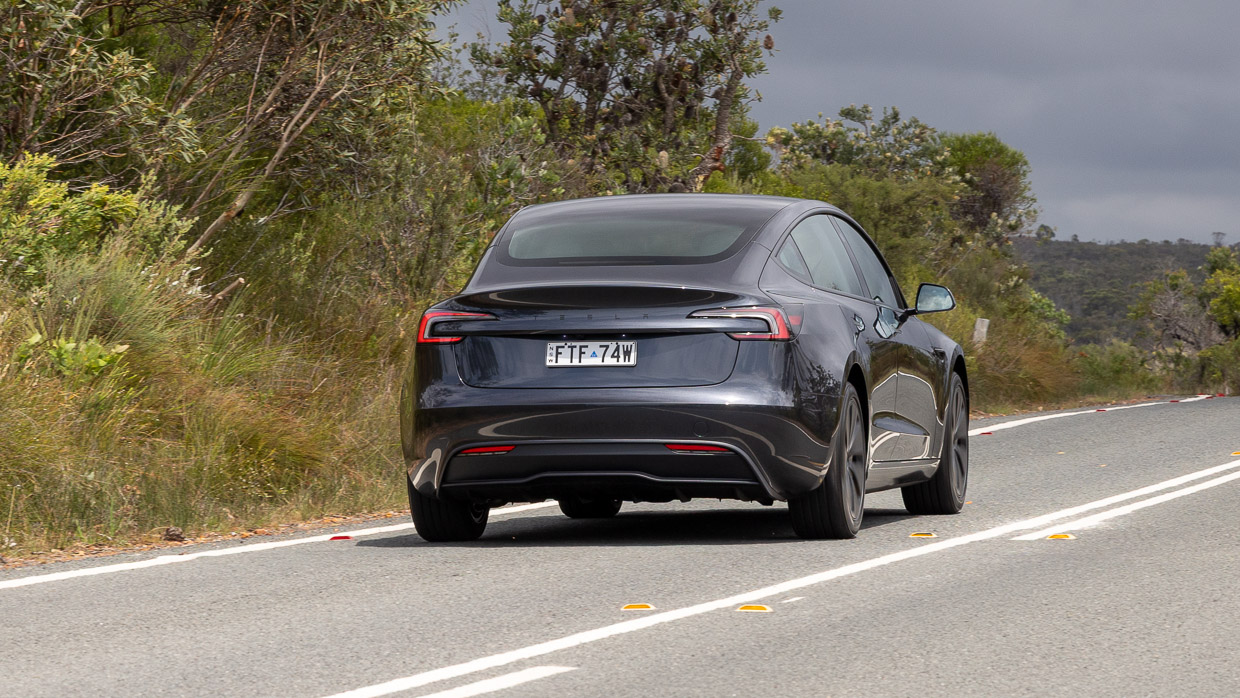
Now, the LRRWD is more or less a base-grade Model 3 with a larger 79kWh usable nickel manganese cobalt (NMC) battery. As a result, with a list price of $61,900, the LRRWD is the cheapest Model 3 Long Range ever.
What’s the spec of our car?
Opting for the Long Range still involves spending $7000 more than the base Model 3, with 520km range (WLTP). The up-spend buys you a 32 percent larger battery with 44 percent more range (750km), but also more motor power (235kW vs 208kW).
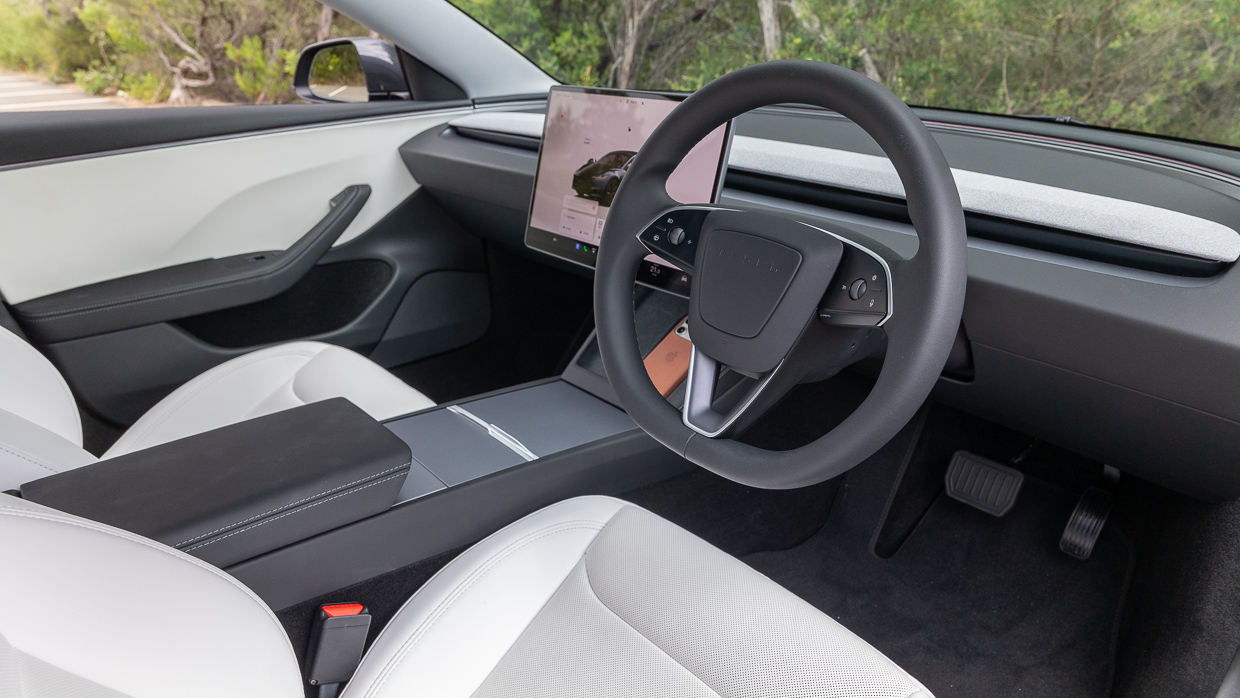
Other standard specification is common between the base Model 3 and our LRRWD, including:
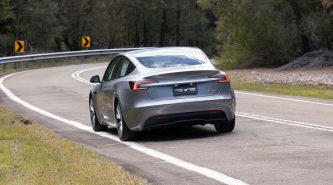
Our car is painted in the practical (but indistinct) shade of Stealth Grey ($1900), though our optional ‘black and white interior’ ($1500) — which has stark white seats — pops nicely against the dark exterior.
Importantly for this test, our car is fitted with Full Self-Driving (Supervised), which costs $10,100 (one-time purchase) or $149 per month (current pricing as of January 2026).
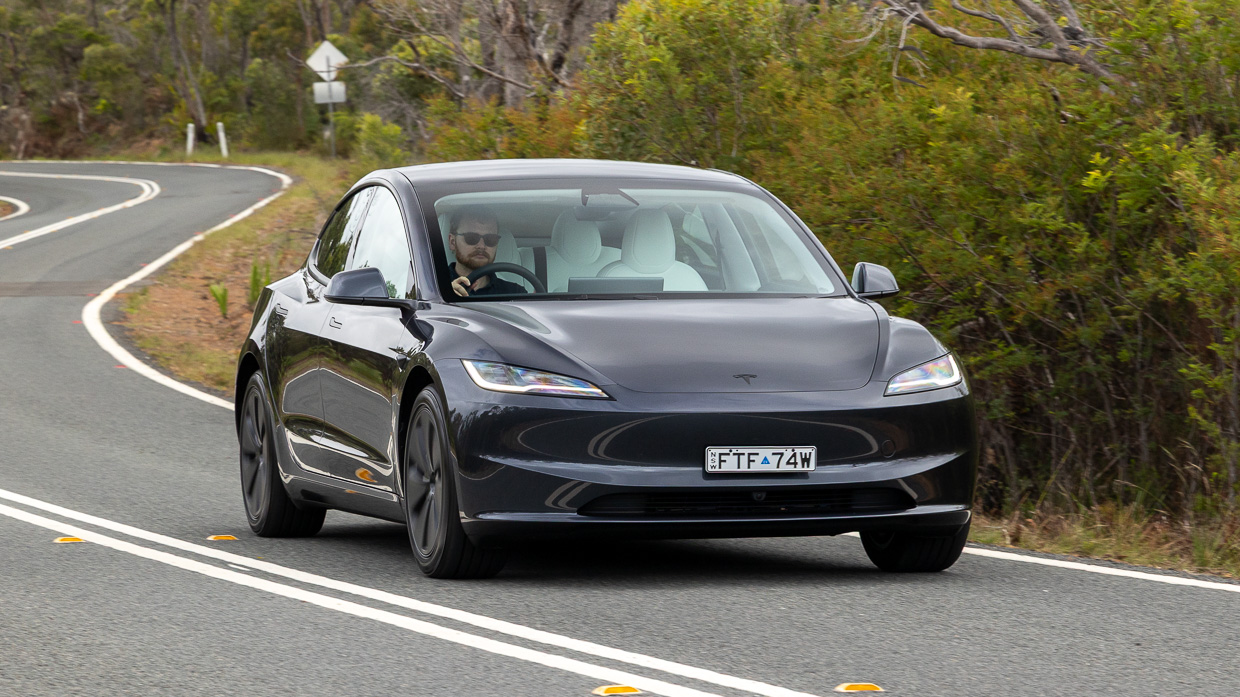
We’re running our Model 3 for three months, with the intention to drive much of the time using Full Self-Driving (Supervised) technology.
The car will be based out of our Sydney office.
As with all our long termers, we will be integrating the Model 3 into daily life. That means doing plenty of mundane stuff: commuting (75km daily) from the Northern Beaches to the CBD, running family errands, and the occasional regional trip on the weekends.
When we run fully-electric vehicles in our long-term fleet, we typically use them as most owners do, charging either at home or at the office — but we also do plenty of DC charging in Sydney and regional areas to get a feel for how charging infrastructure is working.
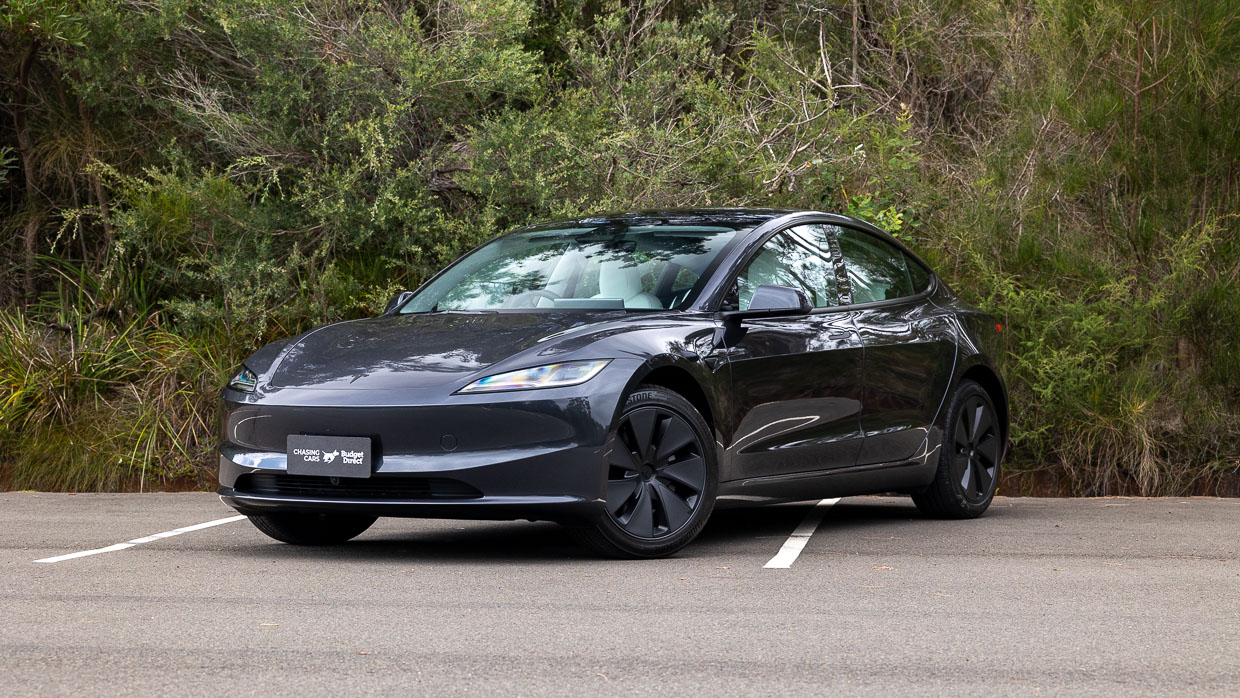
I am approaching my time with the Tesla Model 3 with the background of having run key rivals like the Mercedes-Benz C-Class and Polestar 2 as previous long-term test vehicles. I’ve also owned a BMW i4 — perhaps the most direct premium alternative to the Model 3 — for two years.
While I have a good understanding of EVs, including how to get the best from them, I am not a partisan supporter or detractor of any powertrain type. I own an electric car and a petrol-powered one.
Chasing Cars rates cars based on their fitness for purpose, and the Model 3 is no different.
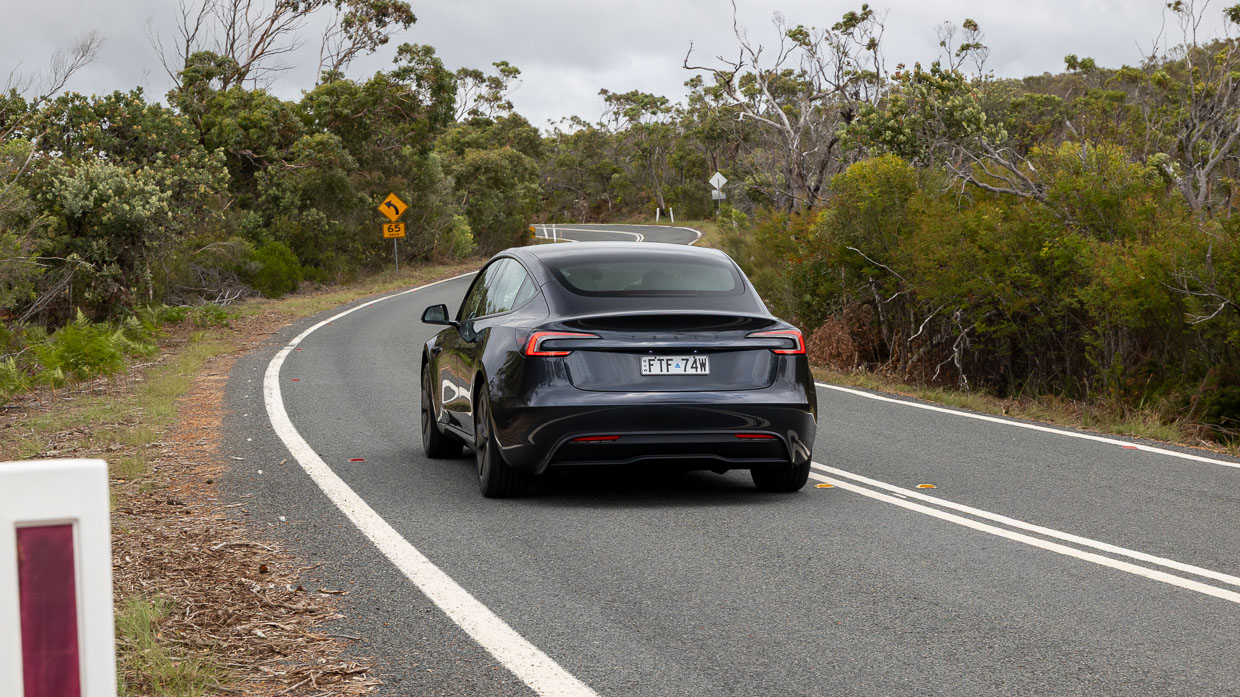
A twist in this long-term review is that the Model 3 LRRWD makes two big promises.
The first is in relation to its impressive driving range claim of 750km (WLTP). That’s the longest-range EV to ever be sold in Australia and in theory it means just a single 20 to 30 minute top-up would be necessary to get from Sydney to Melbourne with charge to spare. We’ll be testing that theory.
But of even more interest to us is evaluating the value and usefulness of Tesla’s Full-Self Driving (Supervised) tech. We’ve been very impressed by FSD on the back of short drives and loans from Tesla — but is it something we end up wanting to use every day?
We’ll find out.
We collected our Model 3 LRRWD as an almost brand-new car at the start of December and it was immediately thrust into the demands of the silly season.
Unlike some industries, the motoring journalism profession tends to get busier in December as brands squeeze last-minute launches and interview rounds into the fading calendar year.
That meant that the Model 3 was pressed into service all around the Sydney region to help me cover a frenetic round of pre-Christmas content — while also doing regular commuting duties, too.
As a result, the first 1250km of our test came up quickly — and all of that was urban or suburban driving.
Given I reside in one of the hilliest parts of Sydney, our first month’s economy of 12.3kWh/100km (equating to a real-world range of 642km) is impressive, even if it’s 17 percent worse than the 10.5kWh/100km WLTP rating.
We’ll see whether a more representative mix of driving gets us closer to the official numbers in the coming months.
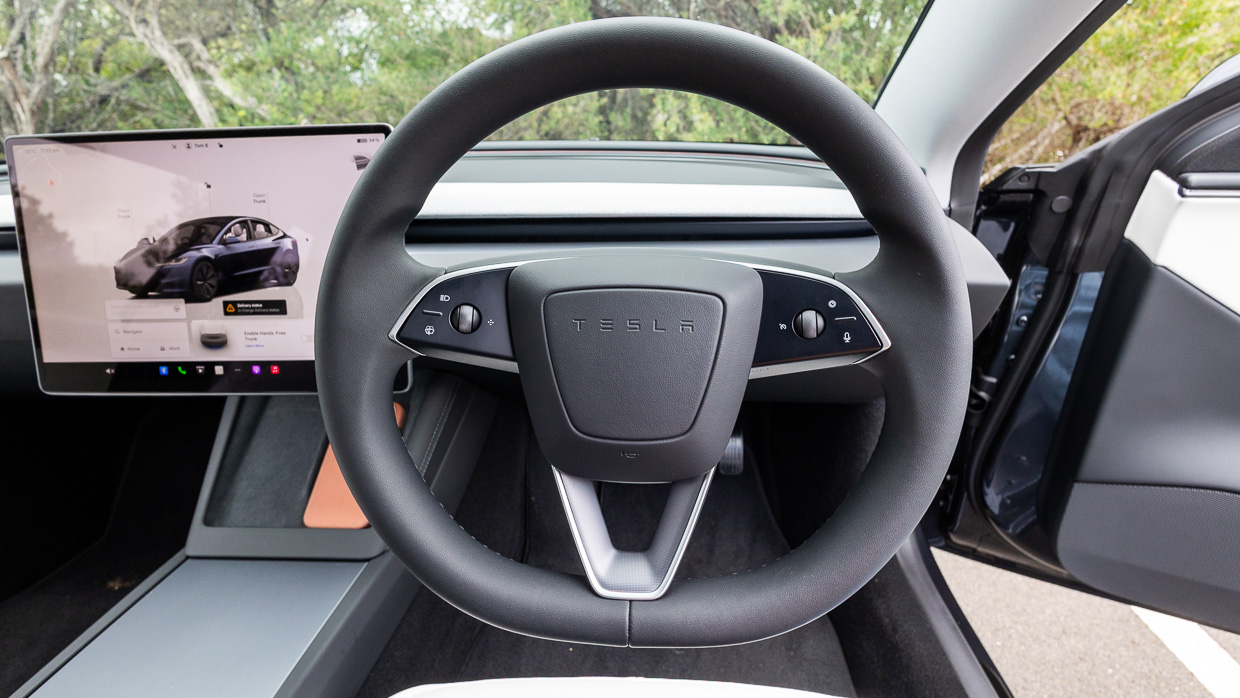
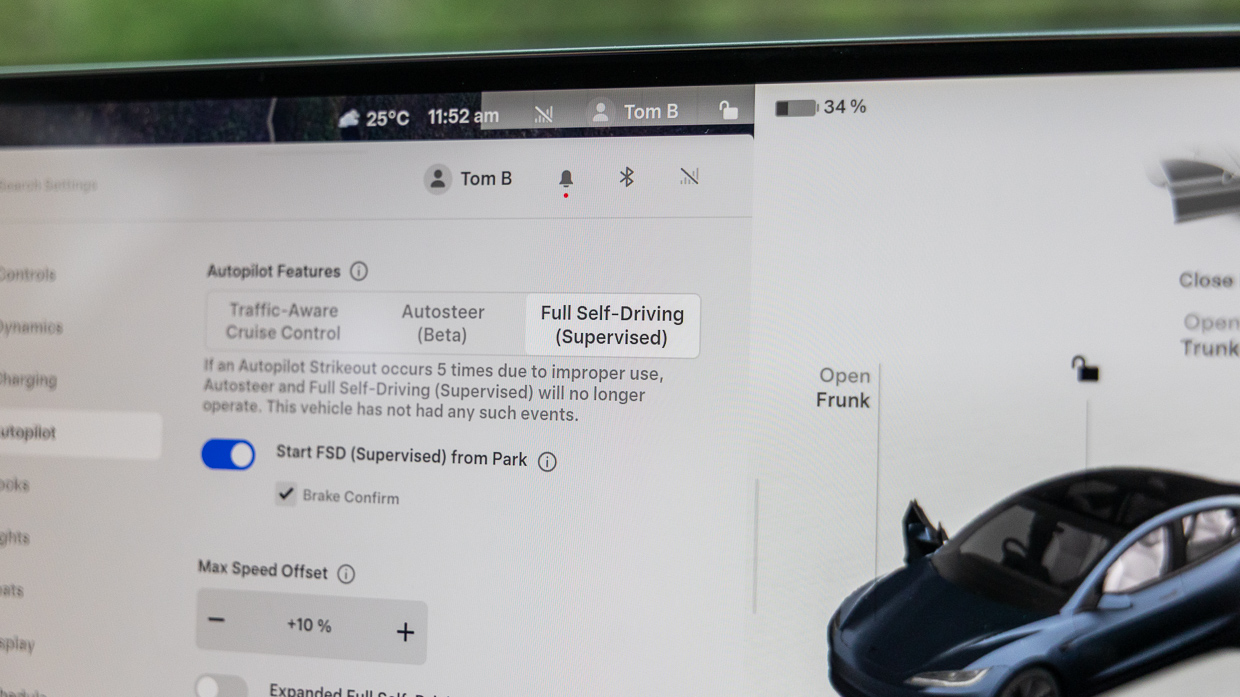
With the Tesla still new on our drive, Full Self-Driving (Supervised) remains something of a novelty that we’ve found ourselves wanting to show neighbours, family members…anybody that will listen, basically.
It’s mind-blowing tech that gets things right maybe 98 percent of the time, though supervising the software to be ready to take over in those ‘two percent’ moments is an important duty.
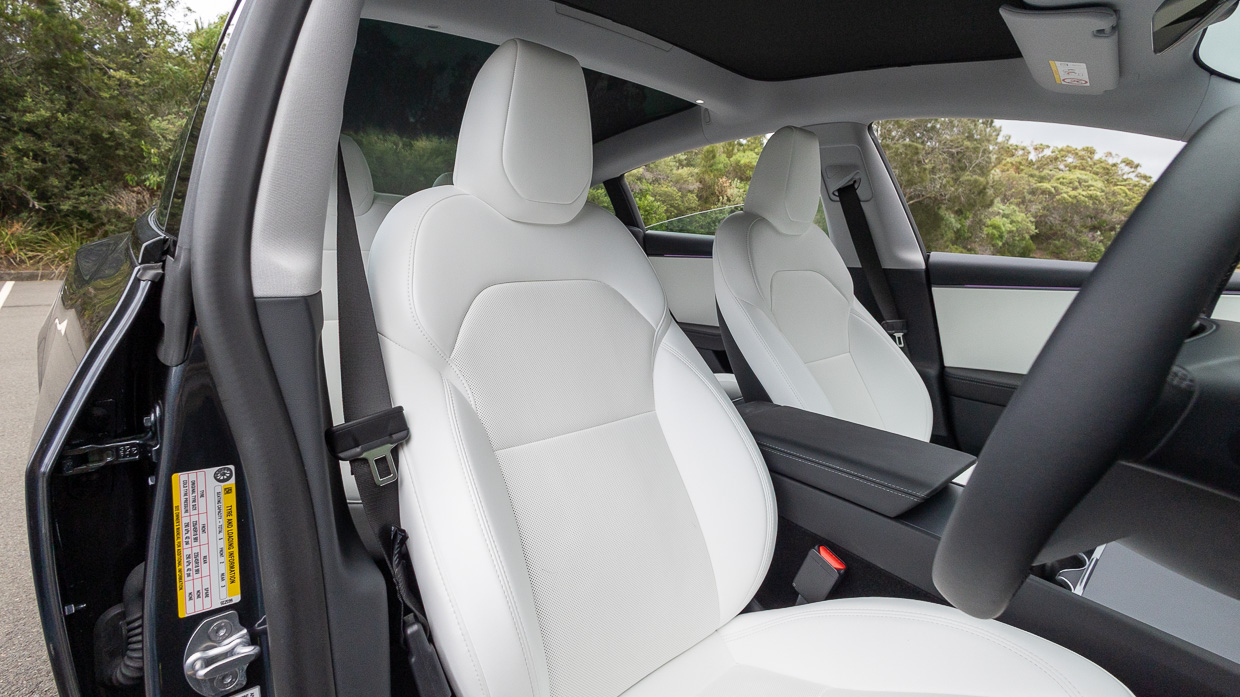
But we’re already enjoying the basic things the ‘Highland’ update to the Model 3 gets right. The ride is classic sports-sedan: firm but compliant, with a low centre of gravity imbuing the Tesla with crisp handling.
The front seats are comfortable and high summertime temps mean we’re both appreciating our selection of a white interior and running the active seat ventilation all the time.
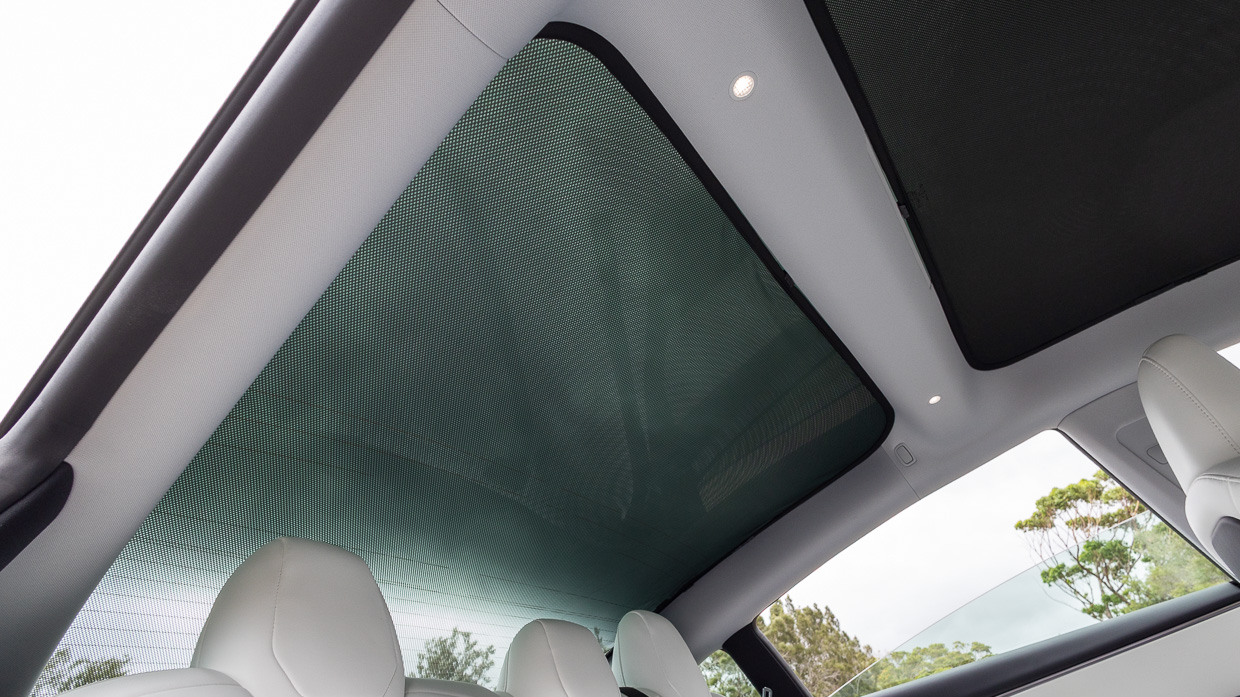
However, even though Tesla added much more tinting and infrared reflection to the glass roof of the Model 3 in 2024’s update, the baking Australian summer sun still makes the cabin too hot.
Tesla now sells accessory sunshades, and we’ve put an order in to see if this fixes the situation.
About Chasing cars
Chasing Cars reviews are 100% independent.
Because we are powered by Budget Direct Insurance, we don’t receive advertising or sales revenue from car manufacturers.
We’re truly independent – giving you Australia’s best car reviews.
The estimate provided does not take into account your personal circumstances but is intended to give a general indication of the cost of insurance, in order to obtain a complete quote, please visit www.budgetdirect.com.au. Estimate includes 15%^ online discount.
^Conditions Apply
Budget Direct Insurance arranged by Auto & General Services Pty Ltd ACN 003 617 909(AGS) AFSL 241 411, for and on behalf of the insurer, Auto & General Insurance Company Limited(ABN 42 111 586 353, AFSL 285 571).Because we don’t know your financial needs, we can’t advise you if this insurance will suit you. You should consider your needs and the Product Disclosure Statement before making a decision to buy insurance. Terms and conditions apply.
Indicative quote based on assumptions including postcode , 40 year old male with no offences, licence suspensions or claims in the last 5 years, a NCD Rating 1 and no younger drivers listed. White car, driven up to 10,000kms a year, unfinanced, with no modifications, factory options and/or non-standard accessories, private use only and garaged at night.
^Online Discounts Terms & Conditions
1. Discounts apply to the premium paid for a new Budget Direct Gold Comprehensive Car Insurance, Third Party Property Only or Third Party Property, Fire & Theft Insurance policy initiated online on or after 29 March 2017. Discounts do not apply to optional Roadside Assistance.
2. Discounts do not apply to any renewal offer of insurance.
3. Discounts only apply to the insurance portion of the premium. Discounts are applied before government charges, taxes, levies and fees, including instalment processing fees (as applicable). The full extent of discounts may therefore be impacted.
4. We reserve the right to change the offer without notice.