Powered by

-
Car Reviews
Latest reviews
-
Car News
Latest news
-
Car Comparisons
Latest comparisons
- Chasing Deals
Latest reviews
Latest news
Latest comparisons
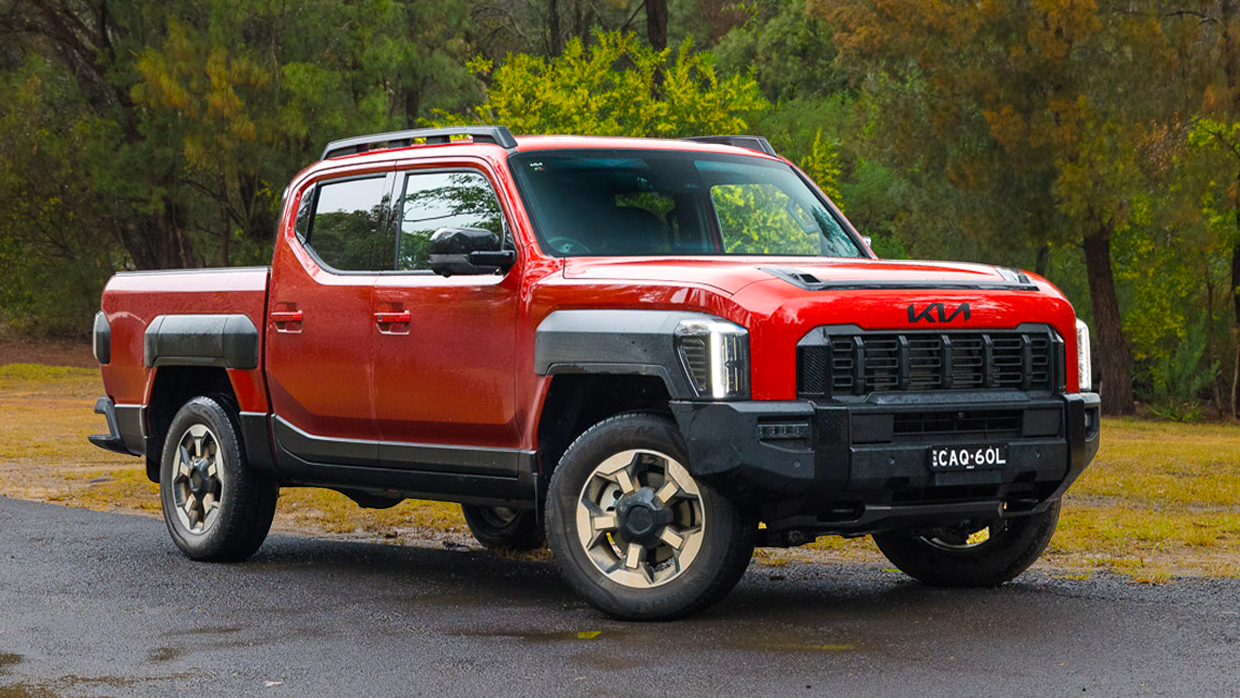
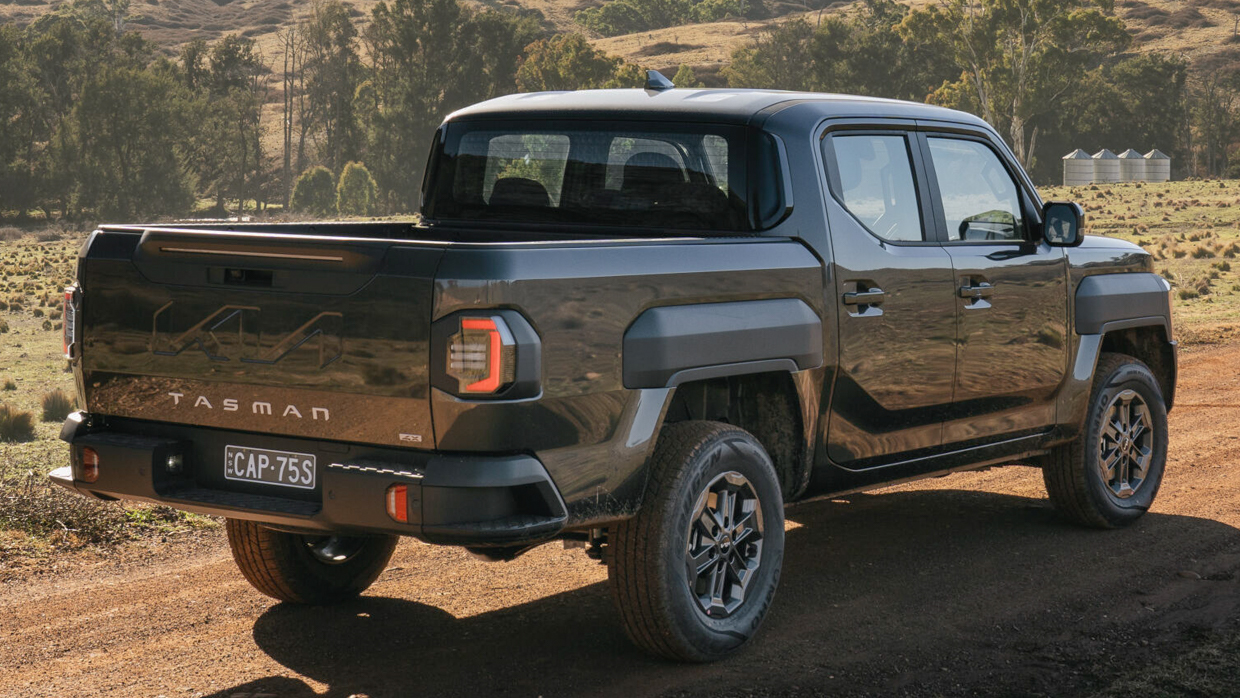
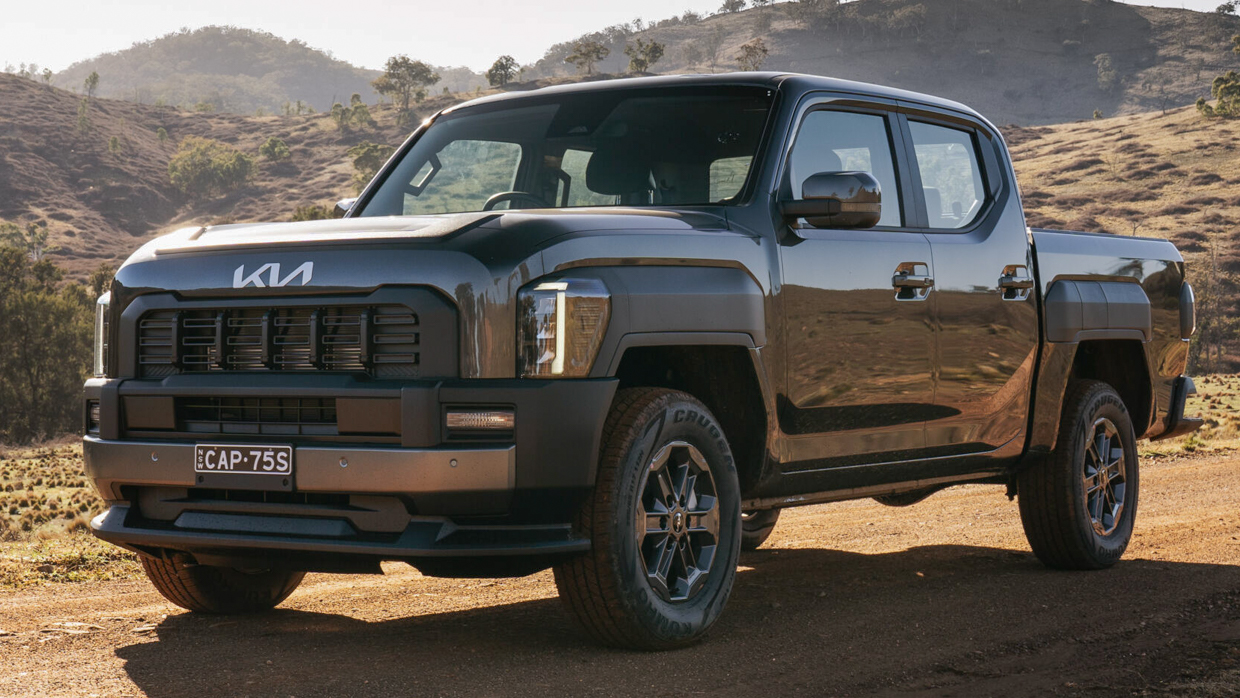
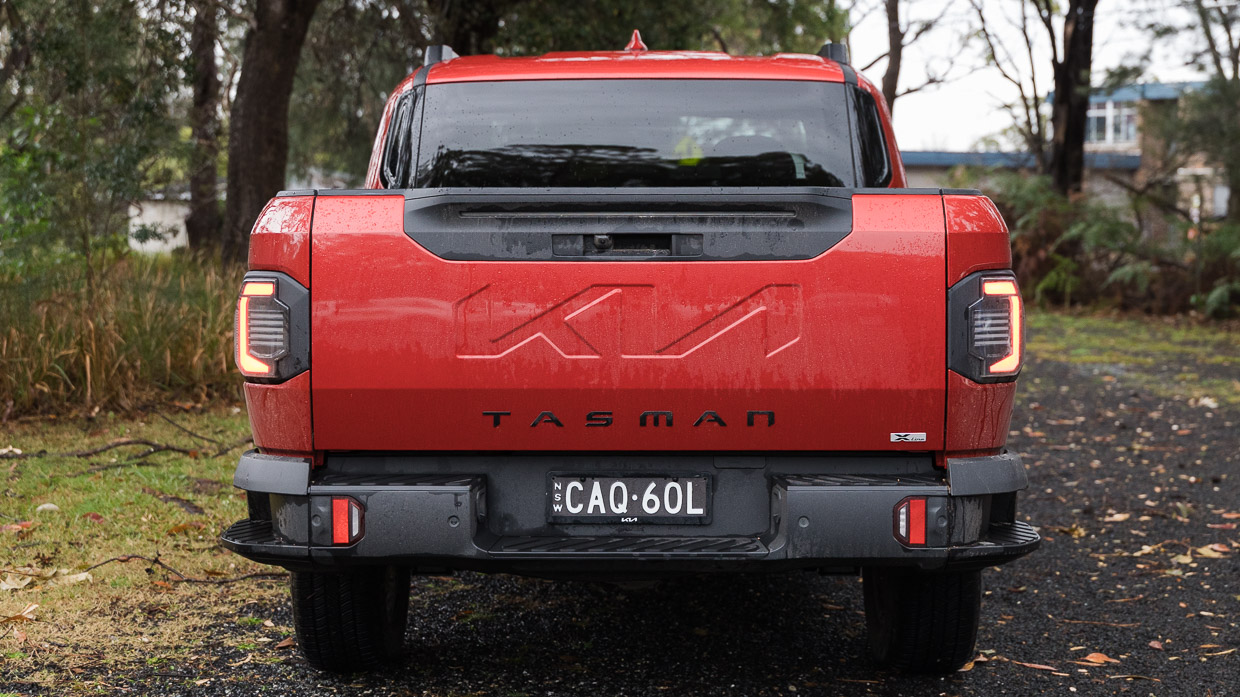
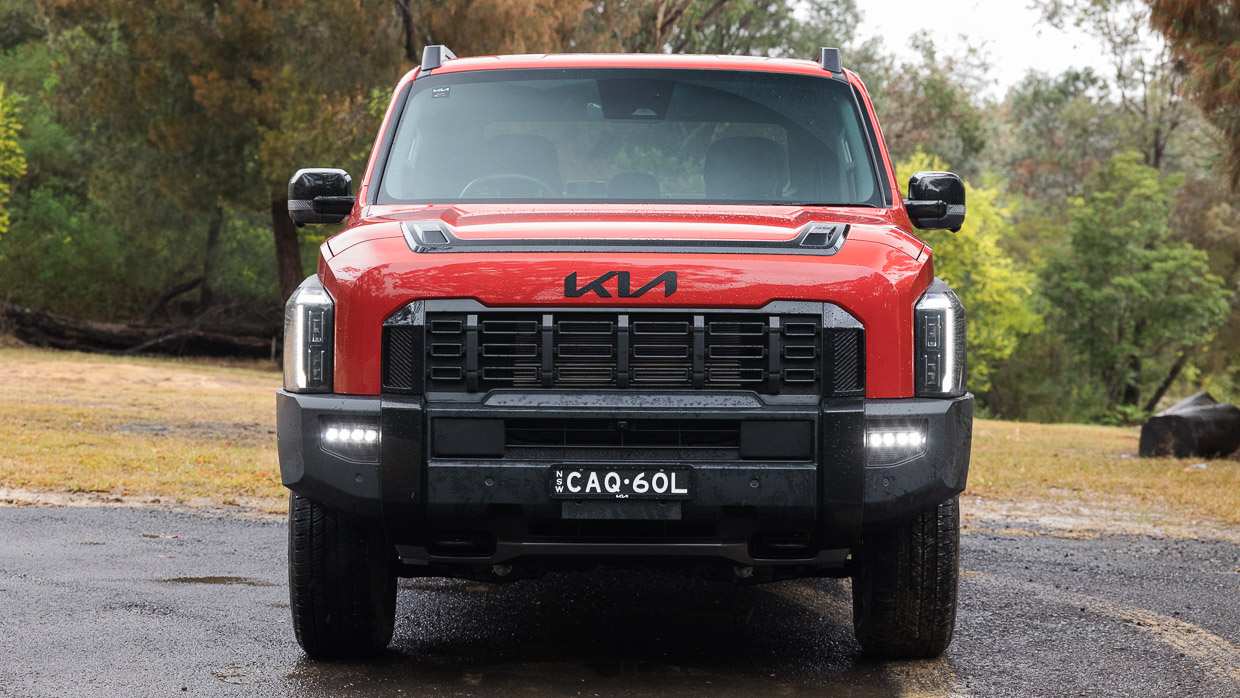
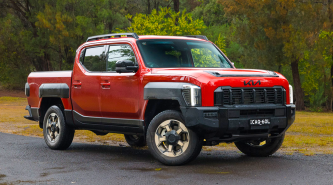
Fleet sales still aren’t on the boil for Tasman ute, with brand also chalking up slower than expected Tasman sales to severe competition in the segment
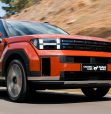
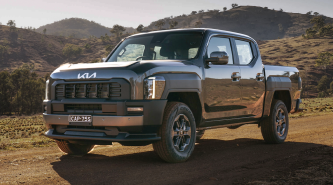
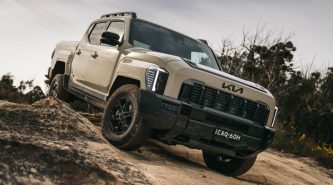
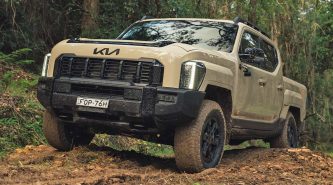
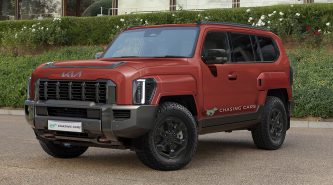
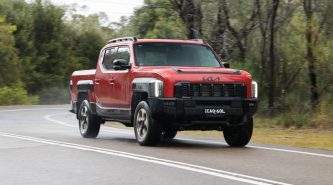
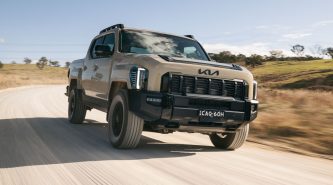
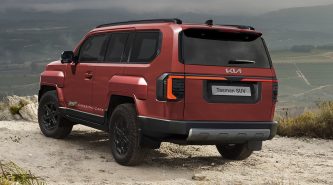
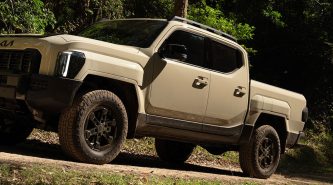
Kia Australia will almost certainly fall short of its self-imposed Tasman ute sales target of 20,000 deliveries in its first 12 months on sale, with a senior brand executive mainly chalking the shortfall up to aggressive discounting on other dual-cab utes.
At the national launch of the Tasman in July 2025, Kia Australia chief executive officer Damien Meredith was unequivocal that the South Korean brand would notch up 20,000 sales on the Tasman in its first year in the market — saying this simply had to be done.
“Whatever we have in 12 months’ time, when we are together, we will be announcing that we have sold 20,000 [Tasmans] because that is the number we have to get,” Meredith said.
Having launched mid-year, the Tasman ute range has notched up just 3716 deliveries to the end of November 2025 for a theoretical run-rate of 11,148 sales if the current performance is extended out to 12 months — or about 55 percent of Kia’s goal.
Chasing Cars understands that Kia Australia formally agreed to take an approximately one-third share of the 60,000 per annum manufacturing capacity of the Hwaseong, Korea factory that builds the Tasman ute.
Tellingly, Meredith did foreshadow at the Australian launch of the Tasman that — despite the rolled-gold sales goal — that Kia would not “do anything silly to get that 20,000 [sales].”
At a media event this month, Kia Australia chief operating officer Dennis Piccoli explained that it would currently take dramatic steps to force Tasman sales to the brand’s initial target — because other brands are being hyper-aggressive.
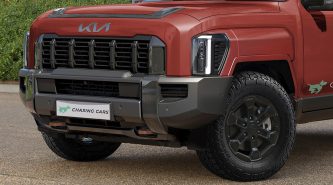
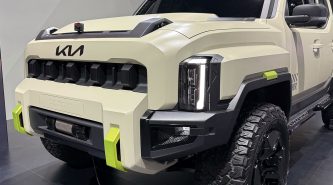
No blame has been assigned to the Tasman’s polarising styling, which the brand sees as challenging to some buyers and appealing to others — while fleets are largely unconcerned with cosmetics.
“On Tasman, our goals were always quite ambitious. The realities are that the [ute] segment has become far more fragmented in terms of powertrains — hybrid and diesel — and the number of brands that are in it,” he said.
“The brands that are in [the ute segment] that are so heavily reliant on their product [are pursuing lower] price points and ancillary offers with finance or price reductions.”
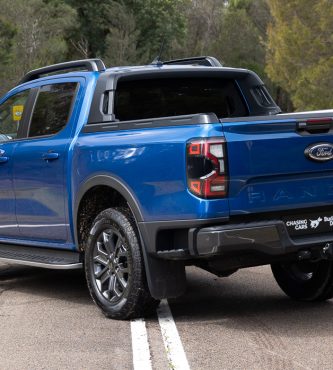
In a not-so-thinly veiled swipe at the Ford Ranger and Isuzu D-Max, Piccoli explained that temporarily walking away from the 20,000 sales target was not a “problem” for Kia Australia.
“We are working through where we want to be in 2026 in totality. We are not the Tasman car company, nor do we want to be the Carnival car company. We want a good split of cars. We need to find the right mix that makes good business sense,” said the Kia operations boss.
“Could we do 20,000? Without a shadow of a doubt, yes, we can — but do we want to enter the fray and do what needs to be done in order to do it? That is a big question mark.”
The evidence shows Kia has at least partially entered the discounting fray: the classifieds show significant discounting on undriven demos (up to $8000 off the flagship X-Pro) while Kia Australia is offering further deposit contributions of up to $4000 for Tasman buyers.
However, rival manufacturers including Ford, Isuzu and Mitsubishi — all of whom are more reliant on dual-cab sales as a proportion of total sales than Kia — have advertised even stronger discounts on their ute models in recent months.
While the Tasman offers a fairly typical four-cylinder diesel engine, the 184kW/600Nm Ford Ranger V6 XLT is currently being offered from $64,000 driveaway for ABN holders while Kia has maintained national pricing of $70,990 driveaway for the 154kW/440Nm Tasman X-Line.
Piccoli explained that internal Kia data showed that the up-spec Tasman X-Line and X-Pro variants are “going relatively well” but that Kia is “not getting our fair share” in the fleet-orientated part of the ute market where it has S, SX and SX+ variants.
Kia Australia expects Tasman sales to boom in 2026 as fleet transactions currently in the pipeline are progressively converted into hard orders and then deliveries.
“At the moment, we’re sitting on some orders with larger fleets and there are quite a few organisations, both corporate and government, that are trialling the [Tasman] and the feedback has been quite favourable.
“So, the expectation is that in the first half of [2026] you’re going to see some significant improvements, and that is where the S, SX and SX+ will enjoy some volume lifts,” said Piccoli.
Planners at Kia believe overall sales will remain strong for the brand in 2026 and haven’t ruled out the possibility that the Tasman will indeed find 20,000 buyers next year — and Piccoli said Tasman sales will “hockey stick” — or suddenly increase dramatically “through 2026.”
All prices listed are national driveaway prices.
Latest news
About Chasing cars
Chasing Cars reviews are 100% independent.
Because we are powered by Budget Direct Insurance, we don’t receive advertising or sales revenue from car manufacturers.
We’re truly independent – giving you Australia’s best car reviews.