Powered by

-
Car Reviews
Latest reviews
-
Car News
Latest news
-
Car Comparisons
Latest comparisons
- Chasing Deals
Latest reviews
Latest news
Latest comparisons
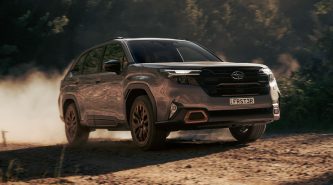
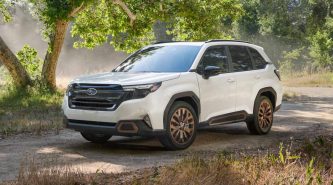
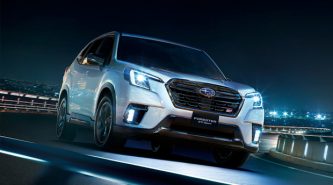
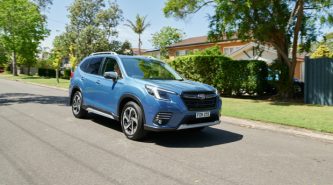
How fuel efficient is Subaru’s new-generation petrol-electric midsize SUV? The answer will come as we start ‘ownership’ life with the entry-level Forester Hybrid
Subaru has never struggled to sell the Forester, but it has found it a challenge to develop more frugal versions of its ‘boxer’-engined midsize SUV.
The first diesel model was manual only for five years, and when an auto finally arrived in 2015 the efficiency was nothing remarkable for the segment.
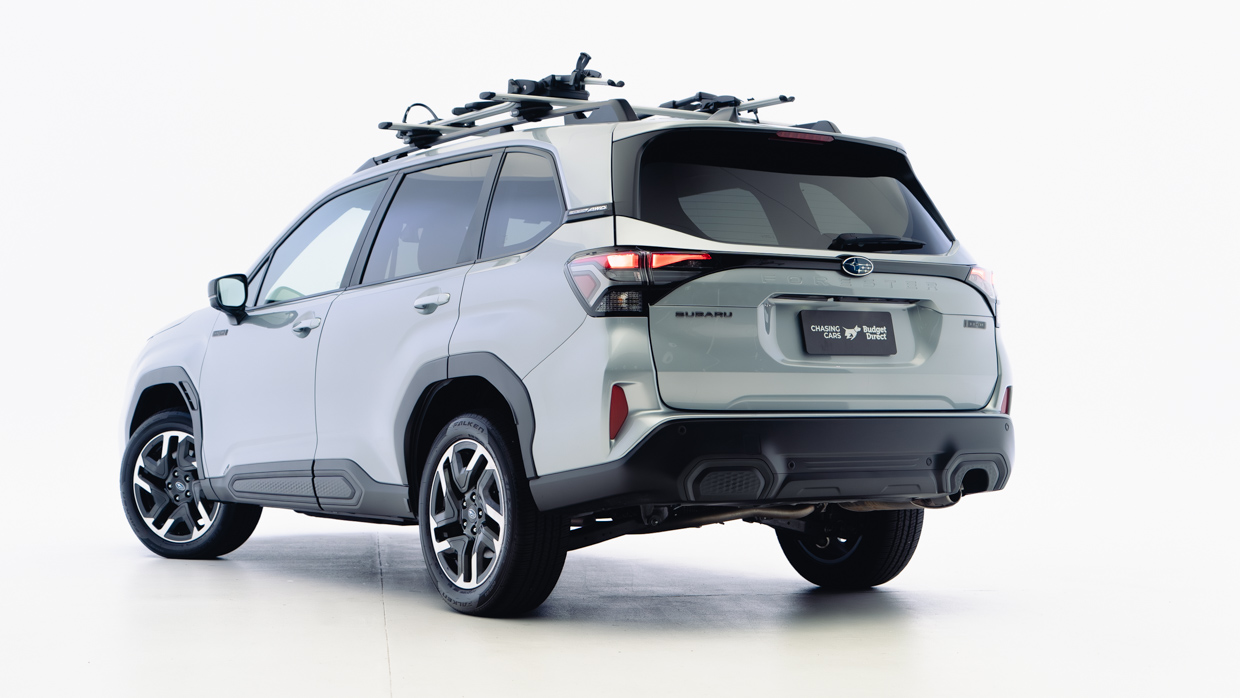
Another five years later came the first petrol-electric Forester – a variant that promised to be Subaru’s answer to the Toyota RAV4 Hybrid yet, in real-world testing, was barely any more economical with fuel than the petrol-only Forester.
It’s with much curiosity, then, that the Japanese brand’s second crack at a hybrid Forester arrives in the Chasing Cars garage for a few months of ‘long-termer’ testing.
Grab the Kleenex, it’s time to say farewell to our Subaru Forester Hybrid long-termer.
And we will miss it, even if the Japanese midsize SUV is far from perfect. We’ll summarise reasons to consider buying the Forester – as well as reasons you may not end up putting it on your shortlist – later on.
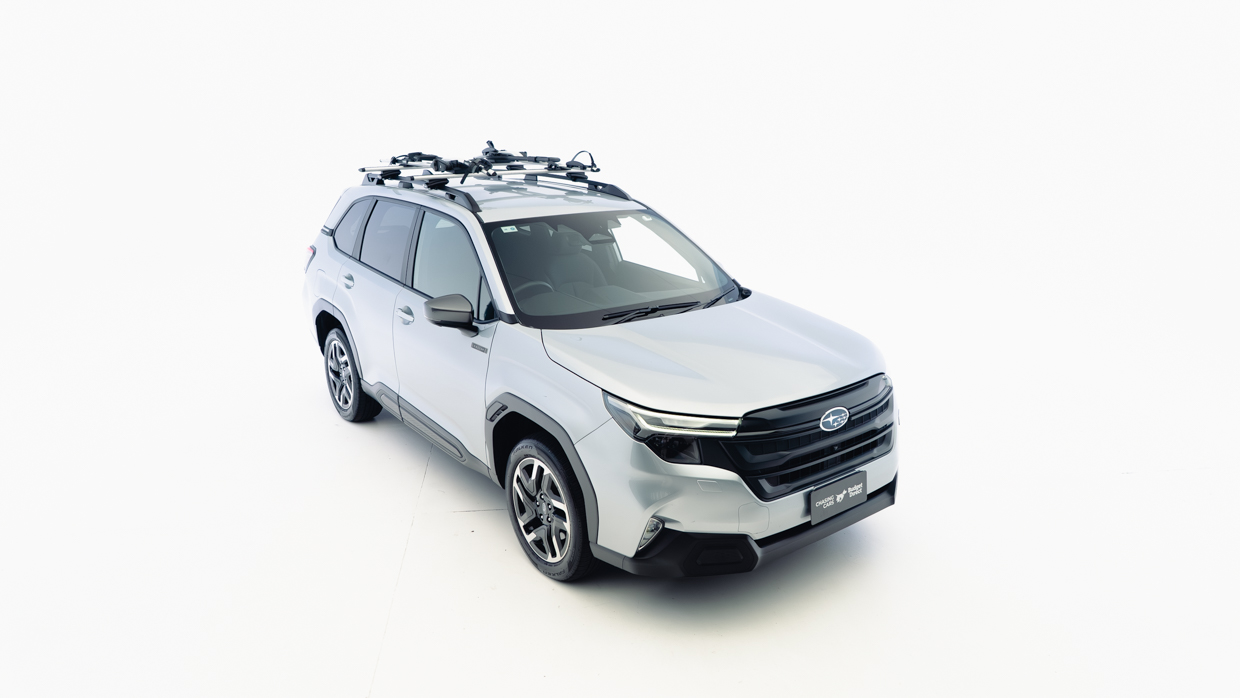
For now, we had promised to pay special attention to the Forester’s fuel efficiency, as well as the overall performance and driveability of the ‘Strong Hybrid’ powertrain.
Firstly, we can say that our testing clearly suggests the petrol-electric Forester will save fuel compared with the petrol version.
In our review of the petrol Forester Sport, tester Tom Place achieved disappointing indicative fuel economy of 10.5L/100km in mixed driving – against an official consumption figure of 7.9L/100km.
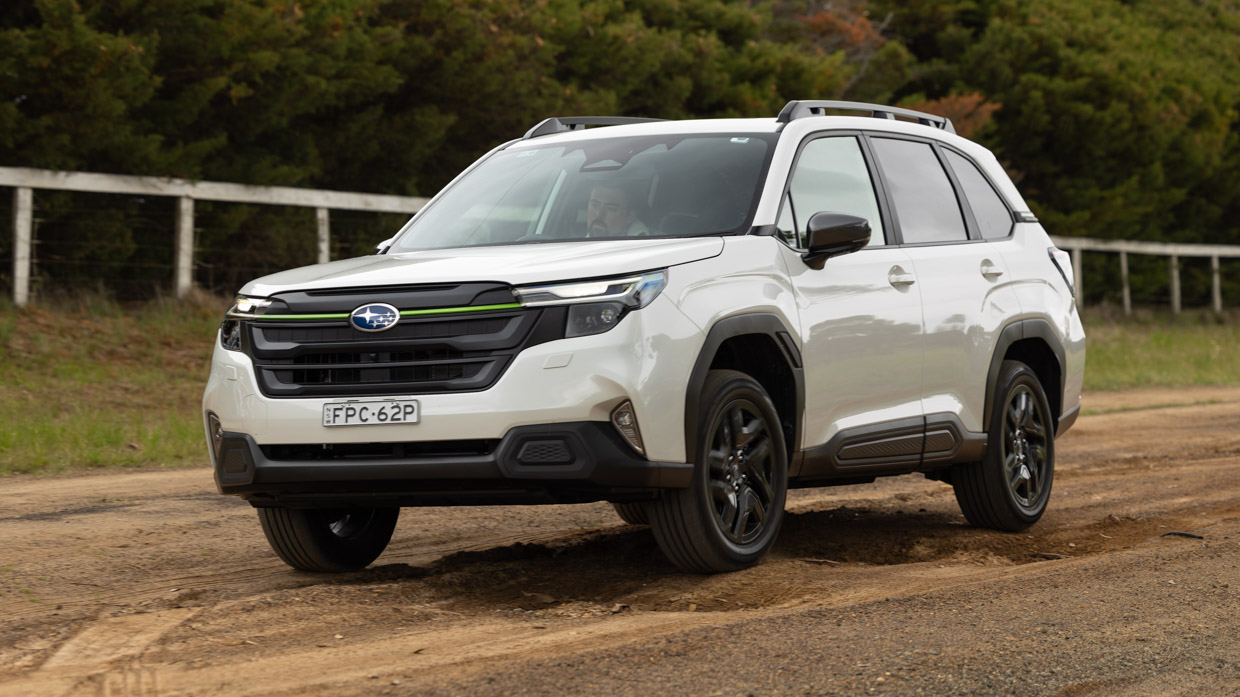
We had consistently seen sub-8.0L/100km figures on our Hybrid’s trip computer, but we also wanted to test proper real-world efficiency – brimming the tank and then recording the litres required to refill it every time we return to a petrol station.
And we have nearly three months’ worth of figures to see how close the Hybrid can get to its official consumption, rated at 6.2L/100km.
The early weeks weren’t encouraging, though did reveal a trend: the Subaru’s trip computer is pessimistic.
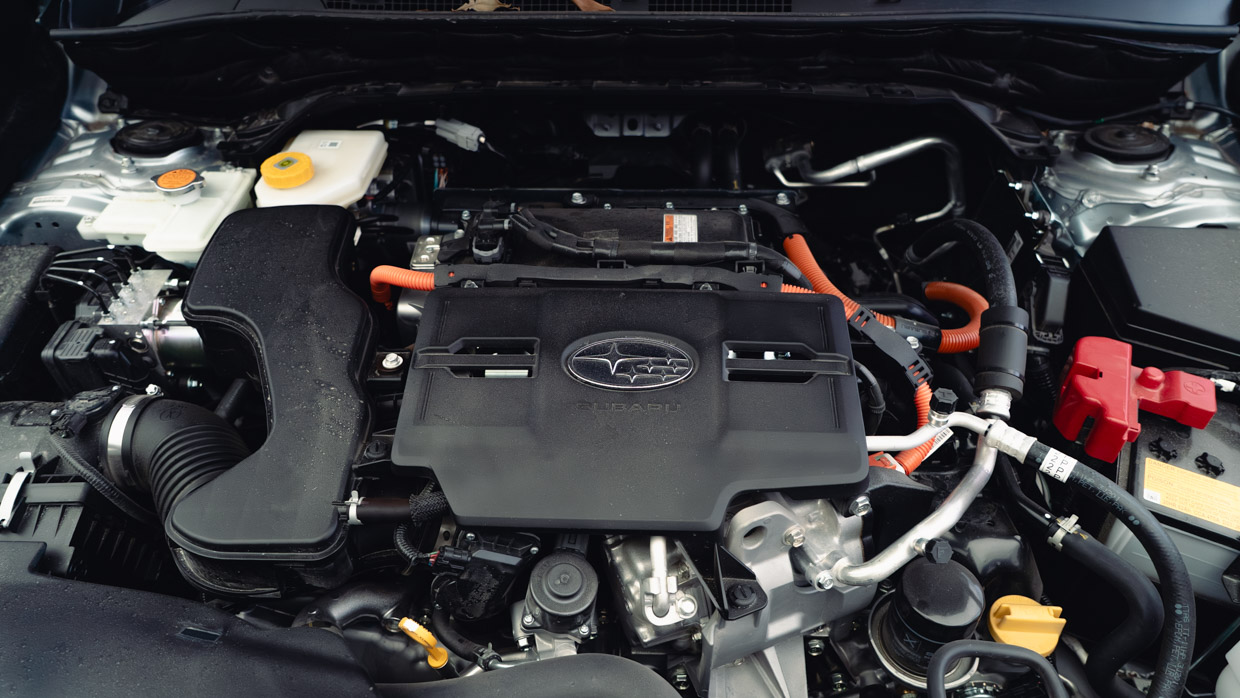
After a long, 636km run back from Jindabyne, the on-board computer suggested average consumption of 7.9L/100km. A refill of 48 litres instead meant an actual figure of 7.5L/100km.
The next three fills brought marginally improved figures of 7.4, 7.3 and 7.2, though still well short of sub-5.0L/100km figures we’ve become accustomed to in the Subaru’s chief rival, the Toyota RAV4. (And will the imminent next-generation model bring further improvements?)
Or maybe I’ve just got a leaden right foot… In the hands of deputy editor Curt Dupriez, the Forester achieved successive returns of 6.7L/100km and 6.3L/100km.
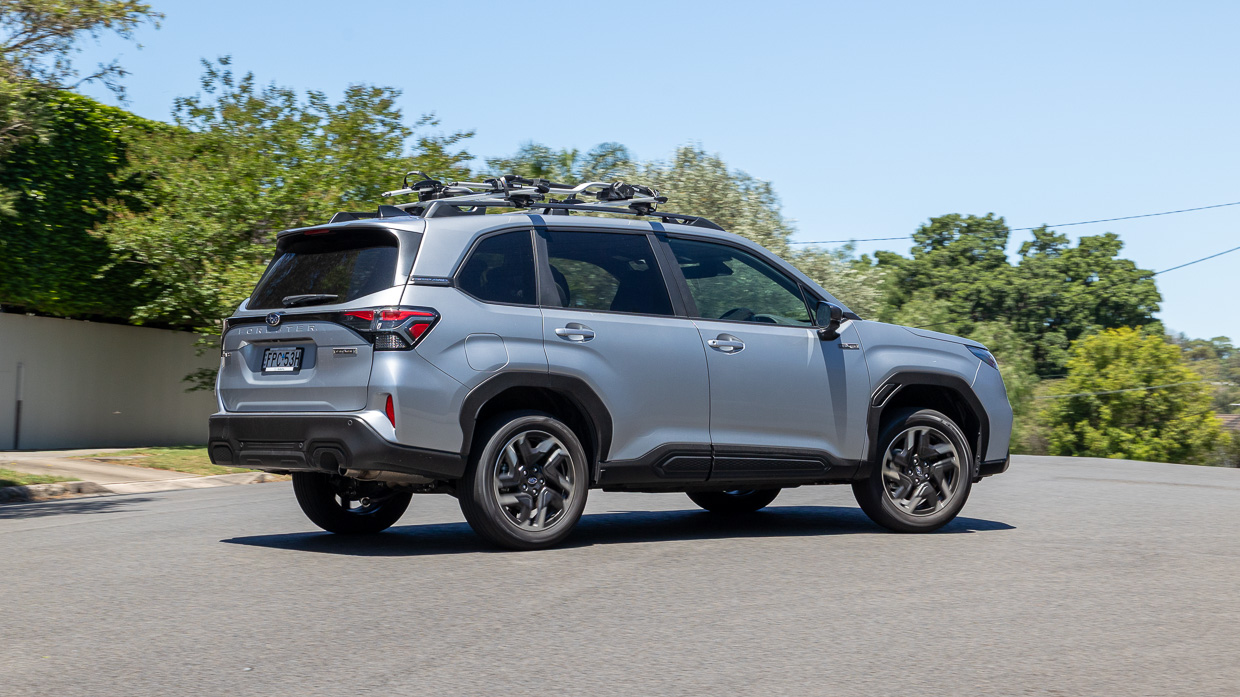
There was some relief when Curt revealed that his driving involved heavy freeway usage, for return trips from Sydney, NSW to Bendigo, Victoria. But it’s also a clear suggestion that the ‘boxer’ engine’s efficiency is improving having properly run in, now with more than 4500km on the odo.
Two subsequent urban-concentrated stints – back in my hands, I’ll add! – produced results of 6.7 and 6.6, respectively.
Overall, measuring fuel use as accurately as we could we achieved average real-world consumption of 6.95L/100km – based on 375 litres required to cover 5393km.
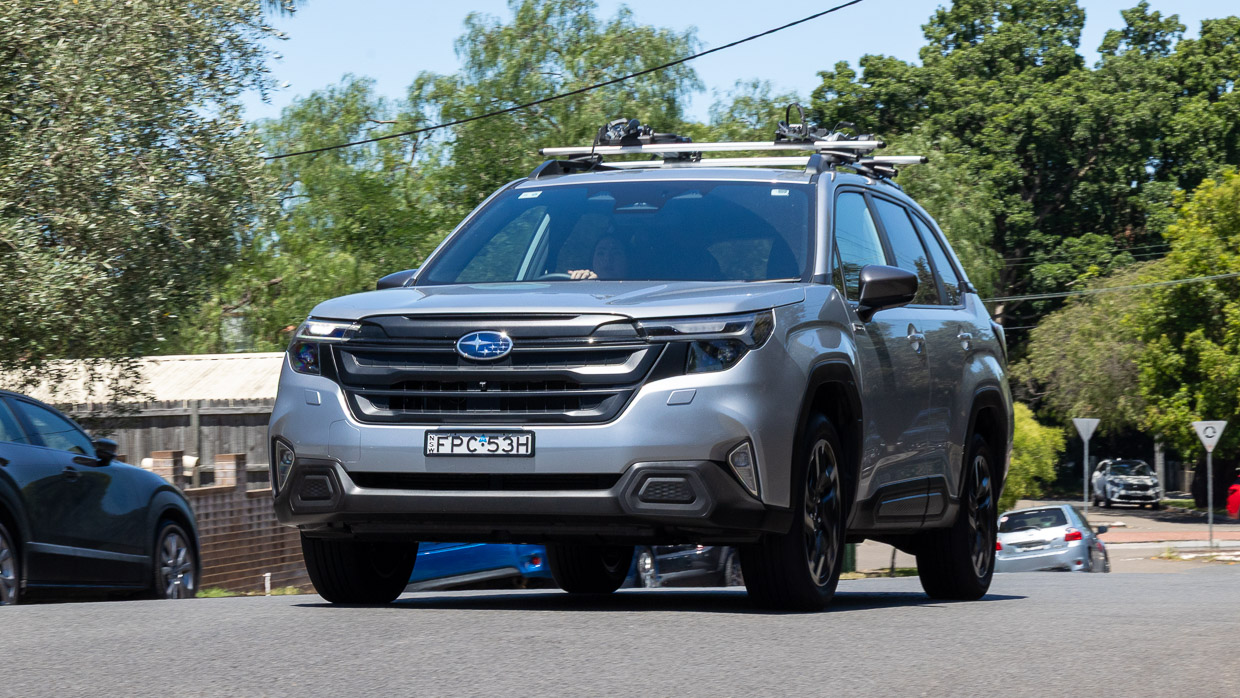
Interestingly, we didn’t find any significant differences in fuel consumption when switching between E10 and premium unleaded.
Well, it will save you money at the bowser, but overall you need to consider the key variable of vehicle cost. The premium for a hybrid Forester over the equivalent petrol model ranges from $3000 to $6500.
That determines how long it will take an owner to recoup that outlay.
Based on our testing, the petrol Forester uses about three litres more fuel per 100km – almost double the official consumption difference of 1.7 litres (7.9L/100km v 6.2L/100km).
Plotting the respective real-world figures at 10.0L/100km and 7.0L/100km with an average 91 RON cost of $1.80 per litre, it would cost petrol-Forester owners $1800 in fuel to cover annual mileage of 10,000km compared with $1260 if they drove a hybrid Forester.
Saving $540 per year, it would take Forester Hybrid Sport owners more than 12 years to make up the $6500 extra cost over a Forester Sport petrol. Eek. That period almost halves to 5.5 years when comparing base models, or it’s about nine years in the case of the top-spec Tourings.
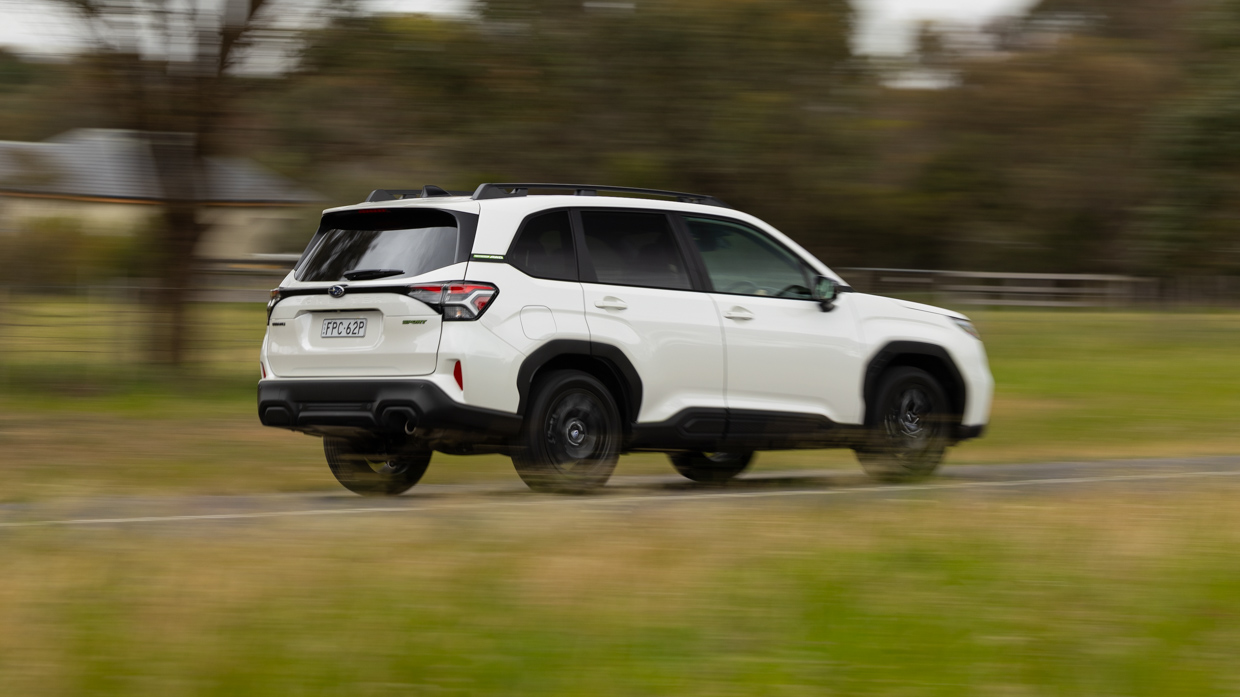
There are no differences in servicing costs between powertrains.
However, the hybrid does offer additional advantages in both driveability and refinement.
The hybrid Forester provides stronger acceleration and generally makes the midsize SUV feel more effortless on the road, despite a kerb-weight penalty of at least 95kg.
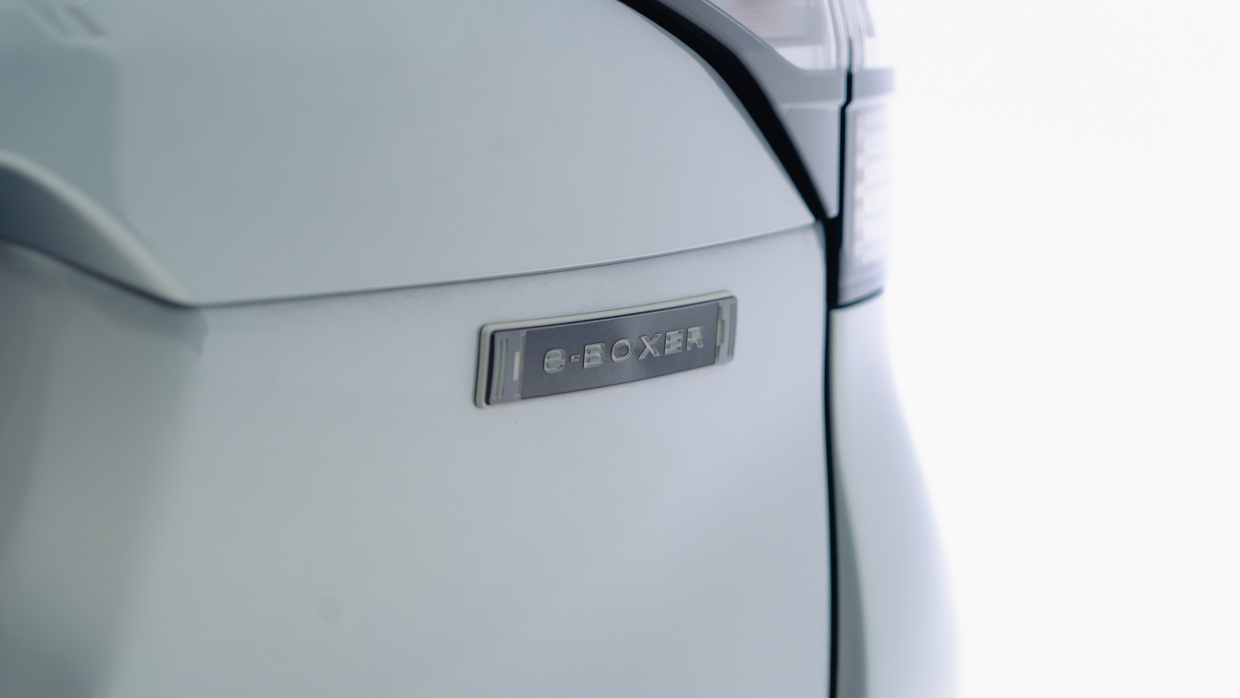
With supplementary performance from the electric motor, the Forester Hybrid’s 2.5-litre ‘e-Boxer’ engine is also quieter in comparison with the regular Forester’s 2.5L, which we described as “loud and rowdy” in our review of the Forester Sport.
The Hybrid’s petrol engine can still get vocal, though, especially when road gradients start to increase. And while performance is decent, we’re not convinced the powertrain lives up to its ‘Strong Hybrid’ tag.
So, after three months of ‘ownership’, would we consider buying a Forester Hybrid if we had about $50,000 and a bit extra to play with? We’ll start with the case against…
While it was hardly unexpected that Subaru increased prices for the latest-generation Forester – merely following the industry trend – its value equation isn’t great when compared with some key rivals.
Hyundai’s Tucson Hybrid Elite is similarly priced to our $51,990 driveaway Forester Hybrid long-termer — $50,990 driveaway in front-wheel-drive form, or $53,490 driveaway if matching the Subie’s all-wheel drive.
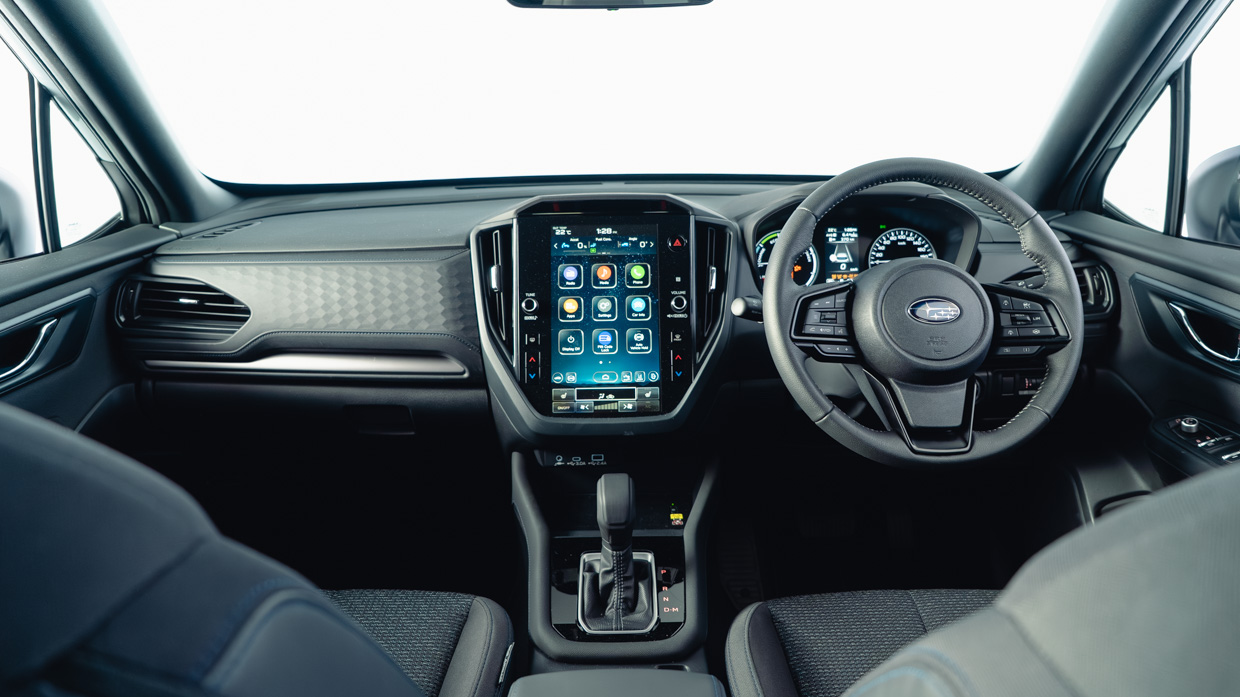
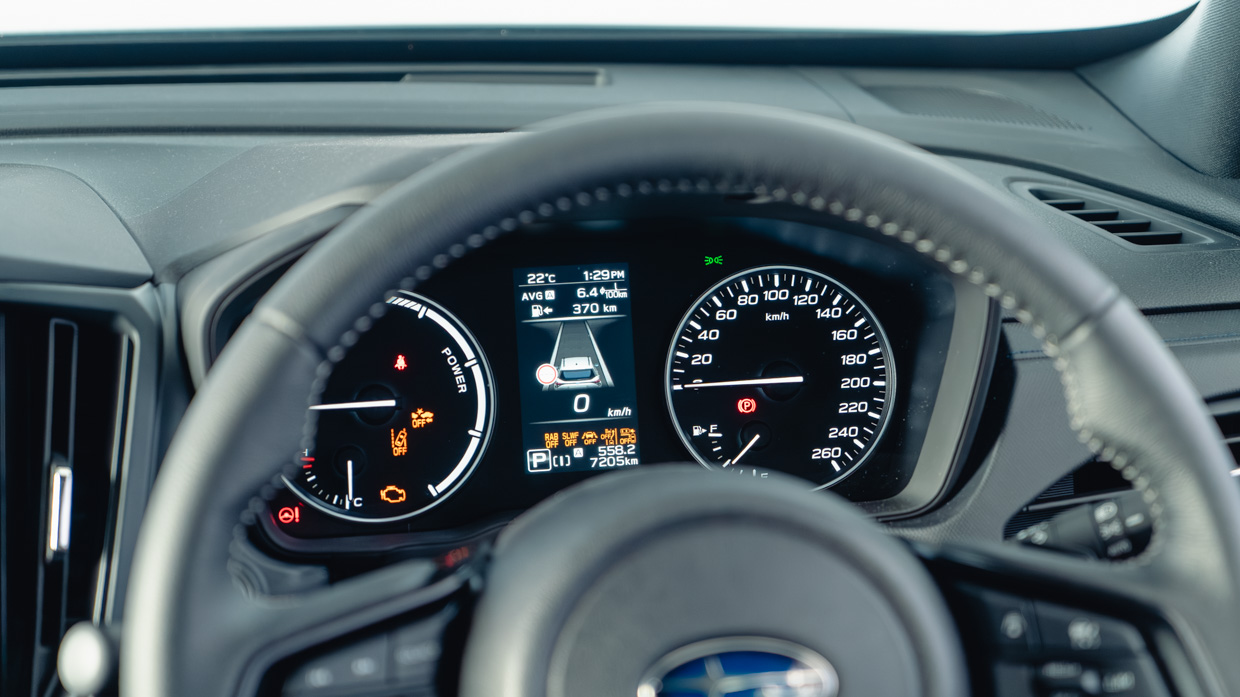
Equipment extras for the Korean, however, include power-adjust driver’s seat, leather upholstery (versus cloth), 12.3-inch digital driver’s display (versus 4.2 inches for the base hybrid Forester), factory navigation, and a power tailgate that also adds hands-free functionality.
The Tucson’s hybrid system is also more economical, with official combined consumption rated at 5.3L/100km
Or take another Japanese hybrid SUV, the Nissan X-Trail e-Power. Its $46,777 all-wheel-drive ST-L base model saves a few grand over the base Forester Hybrid yet offers additional features such as electric front seats, leather-accented upholstery, larger (7.0 inch) digital driver cluster, and front parking sensors (though the Forester has a front-view camera).
The next-up Forester Hybrid Sport brings a lot more to the equipment table, though it requires a hefty additional outlay of $9000 ($60,990 driveaway).
That doesn’t improve a central touchscreen that brings uninspired presentation, and the base Hybrid desperately needs a rubber mat for the charging tray to prevent your phone sliding around (and coming off charge).
Forester shoppers should also note that the hybrid loses out on a full-size spare, unlike the petrol version.
Finally, while the Forester Hybrid is a big improvement on its petrol-electric predecessor, fuel consumption – the most critical area for hybrids – is still relatively disappointing.
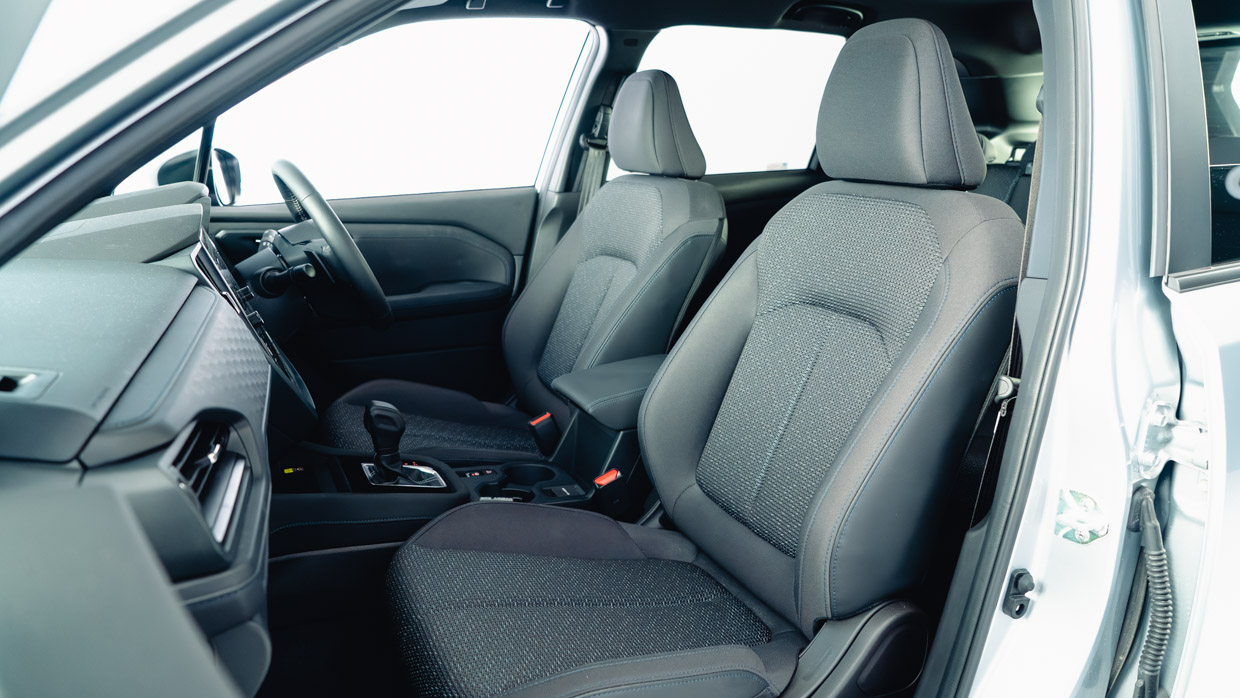
The Forester is one of the most comfortable medium SUVs to drive. This stems primarily from its suspension that copes impressively with the patchy quality of Australian roads, and this is complemented by highly comfortable front seats.
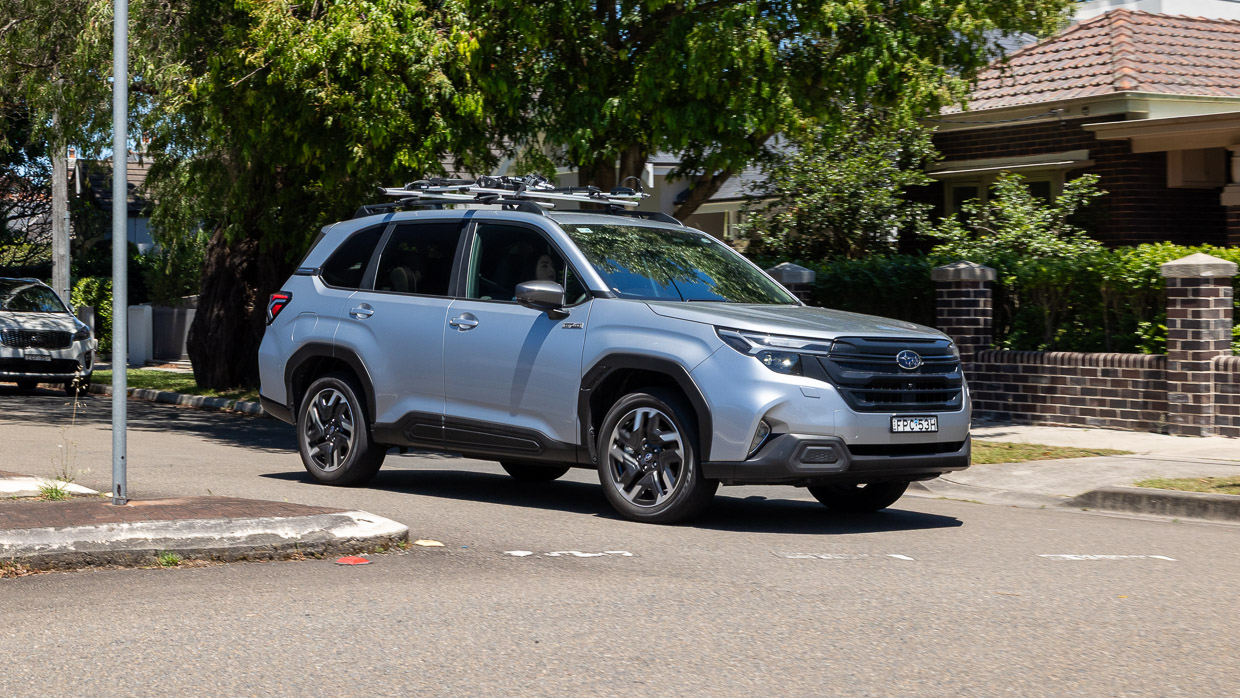
There are other qualities to the driving experience. The Forester’s steering is nicely weighted (on the lightish side), all-round vision is a segment benchmark, the supple ride doesn’t equate to poor body control in corners, and the Subaru’s all-wheel-drive system remains one of the best in the world of mainstream SUVs.
And while the driver monitoring system can occasionally get angsty, especially if you’re wearing sunglasses, most journeys can be completed largely free of annoying and unnecessary driver-aid beeps.
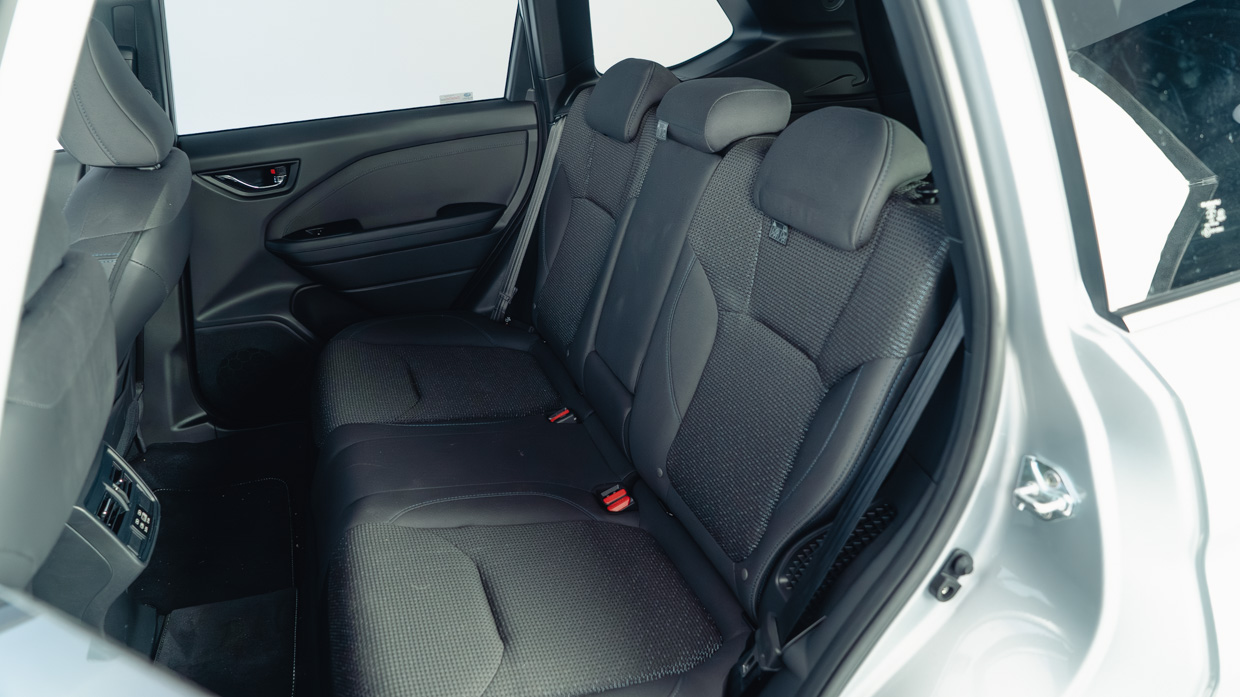
There’s a generous amount of interior space, too, with a rear seat that’s accommodating for both taller people and rear-facing child seats. Add good cabin width – and a usable centre seat – to the positives.
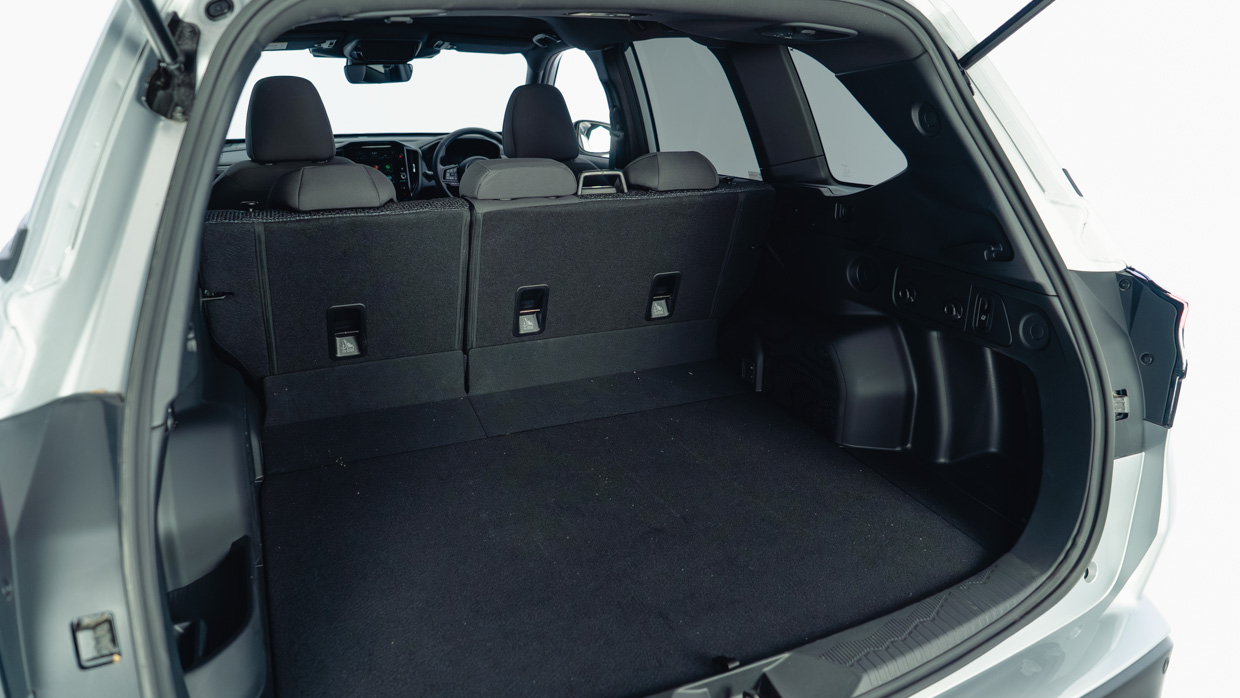
The Forester’s boot is also practical, with a good amount of space, rear seats that fold virtually flat (and via convenient release levers), plus multiple bag hooks and a 12V socket.
Subarus are ubiquitous at the snow. And this season just gone, you could have added our long-term 2025 Forester Hybrid to the heavy mix of Foresters and Outbacks of various generations, and the odd Liberty wagon, roaming around NSW’s Kosciuszco National Park.
A road trip to the Snowy Mountains set up an excellent multi-test for our Forester: to assess its long-distance comfort credentials, to measure the effectiveness (or otherwise) of its petrol-electric drivetrain for limiting fuel use, and a hope to try out its signature symmetrical all-wheel drive on the white stuff.
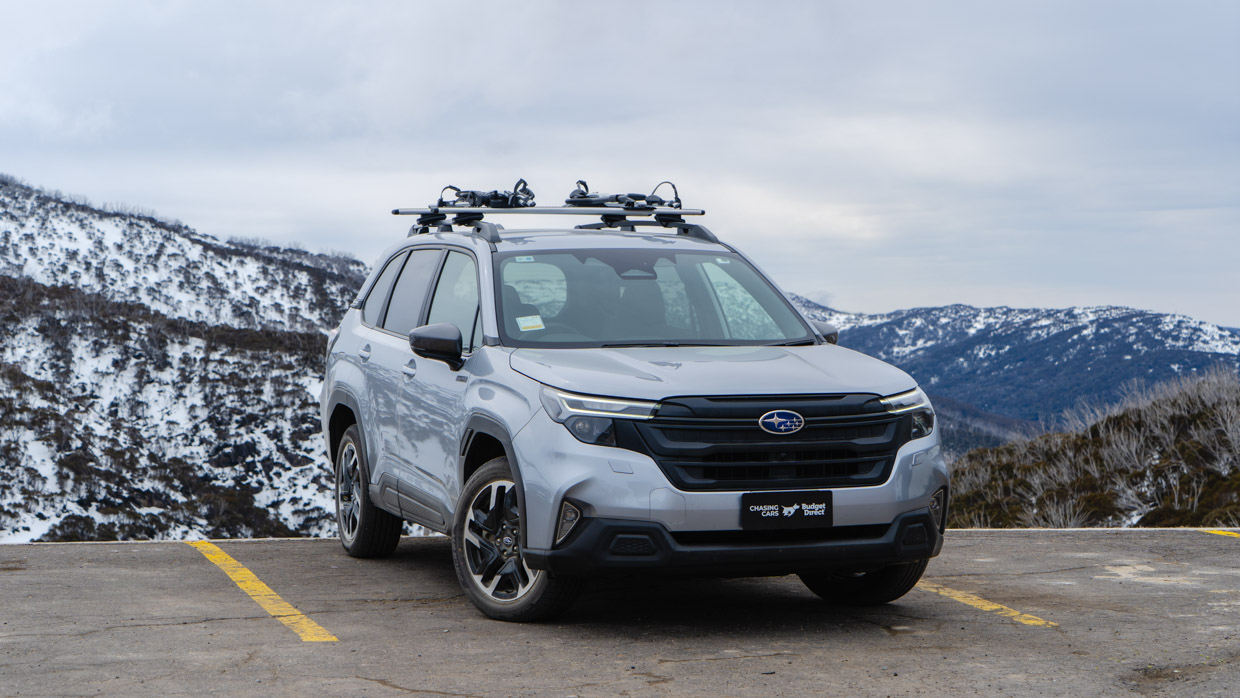
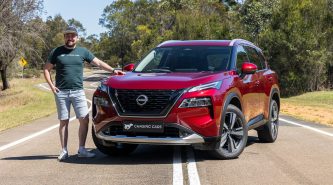
There was also a video comparison to be filmed with a rival model – the Nissan X-Trail.
No road trip can start without the packing, of course, and it’s here we encounter our first spec disappointment with the Forester – a manually operated tailgate. It’s a feature we would argue should be standard on an SUV costing above $50,000 once on-roads are factored in; an auto tailgate is standard from the next grade up, but it’s a big $8500 jump.
We’re also surprised Forester owners haven’t pushed Subaru to give its midsize SUV rear seats that split in a snow-bunny-friendly 40-20-40 rather than 60-40.
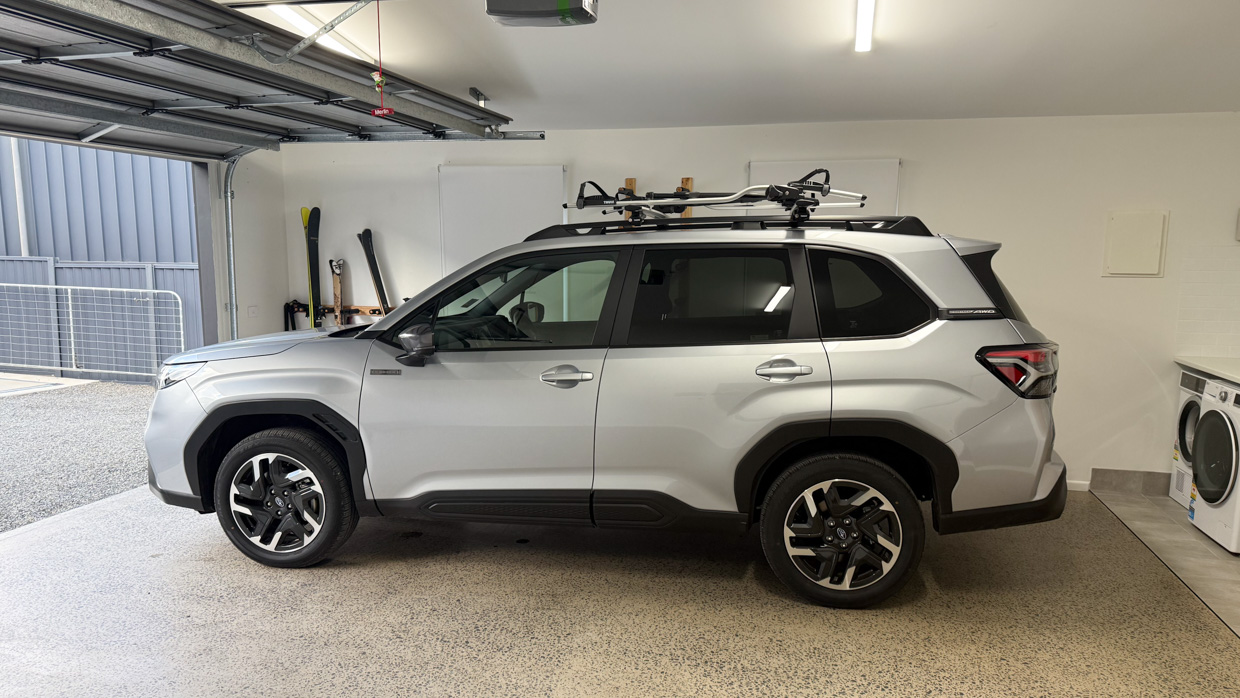
The former is more practical for people packing longer lifestyle items such as skis and snowboards, though of course many owners opt for rooftop racks.
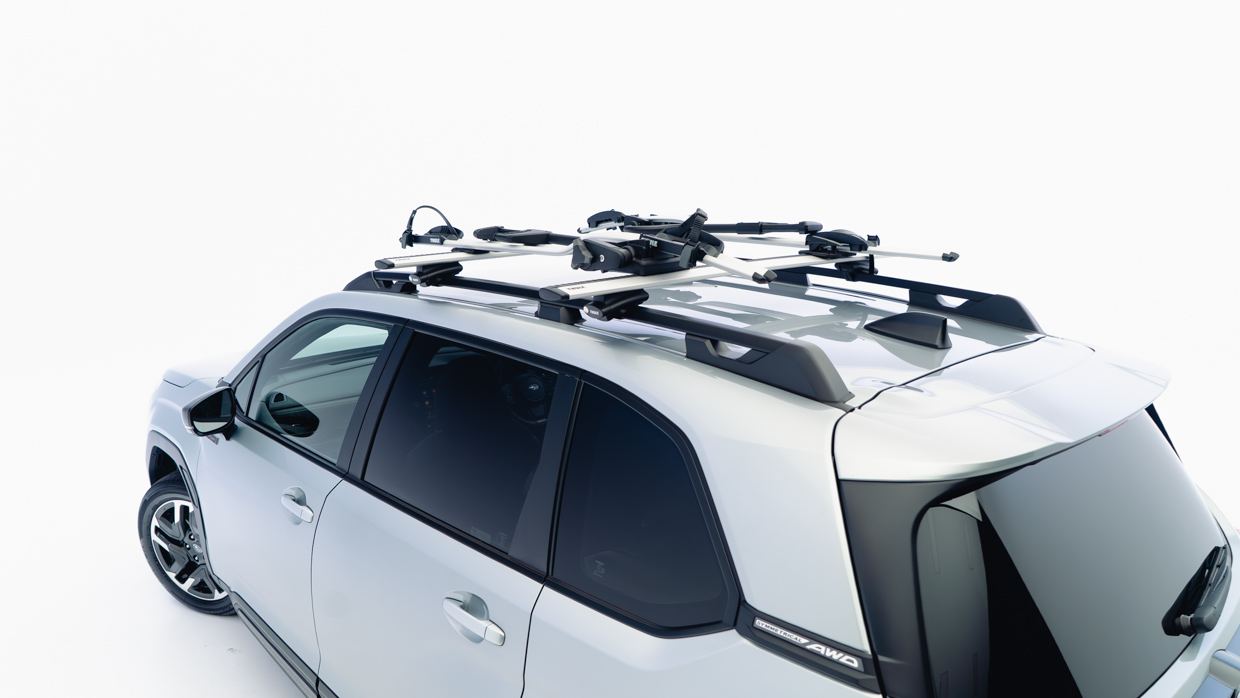
Those who read our first long-term report may recall we had accessory roof racks fitted to our Forester, though we opted for bike carriers that would be used more regularly (or at least that was the plan!).
What the Forester’s boot does offer, though, is plentiful space, as well as auto release levers for the seatbacks – a feature we wish more midsize SUVs offered.
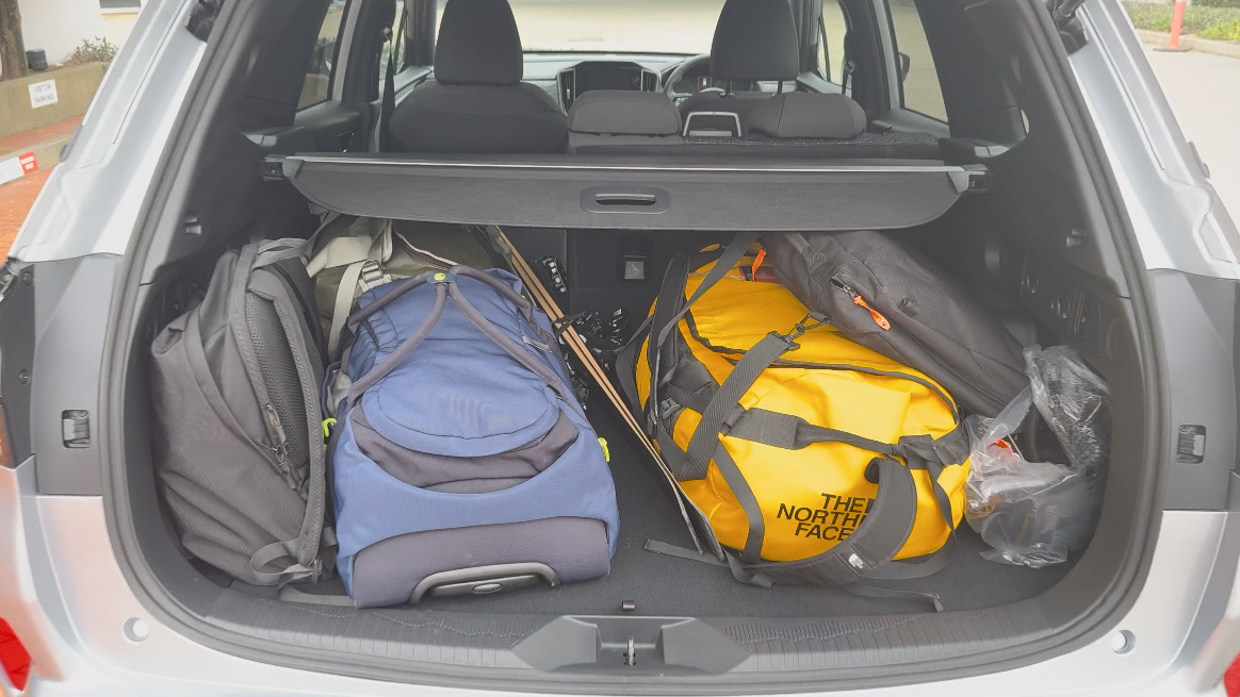
The 484-litre boot seems larger than that quoted capacity suggests, and comfortably accommodates three large bags, a work laptop bag, ski boots bag, plus ski helmet. My skis slot between two of the larger bags, angled to slide into the flattened ‘40’ part of the rear seat.
One of the larger bags carried spare ski clothing for editor-at-large Nathan Ponchard, who I’d be meeting down at the snow.
So I was Billy-no-mates for the drive down, which was largely uneventful – and utterly relaxing. This was helped by three key factors.
The biggest factor is long-distance comfort. Not only are the base Forester Hybrid’s cloth front seats almost in ‘favourite armchair’ territory such is their welcoming shape and support, but the Subaru’s cosseting ride quality is a best-in-class contender.
This view is strictly reserved for the 18-inch-wheeled base Hybrid, though; our experience of the 19-inch-wheeled Sport is that this brings a firmer and busier suspension.
Secondly, Subaru worked on improving cabin insulation for the latest Forester and both tyre roar and engine noise are well suppressed. Tyre rumble is only noticeable on the coarsest of bitumen surfaces.
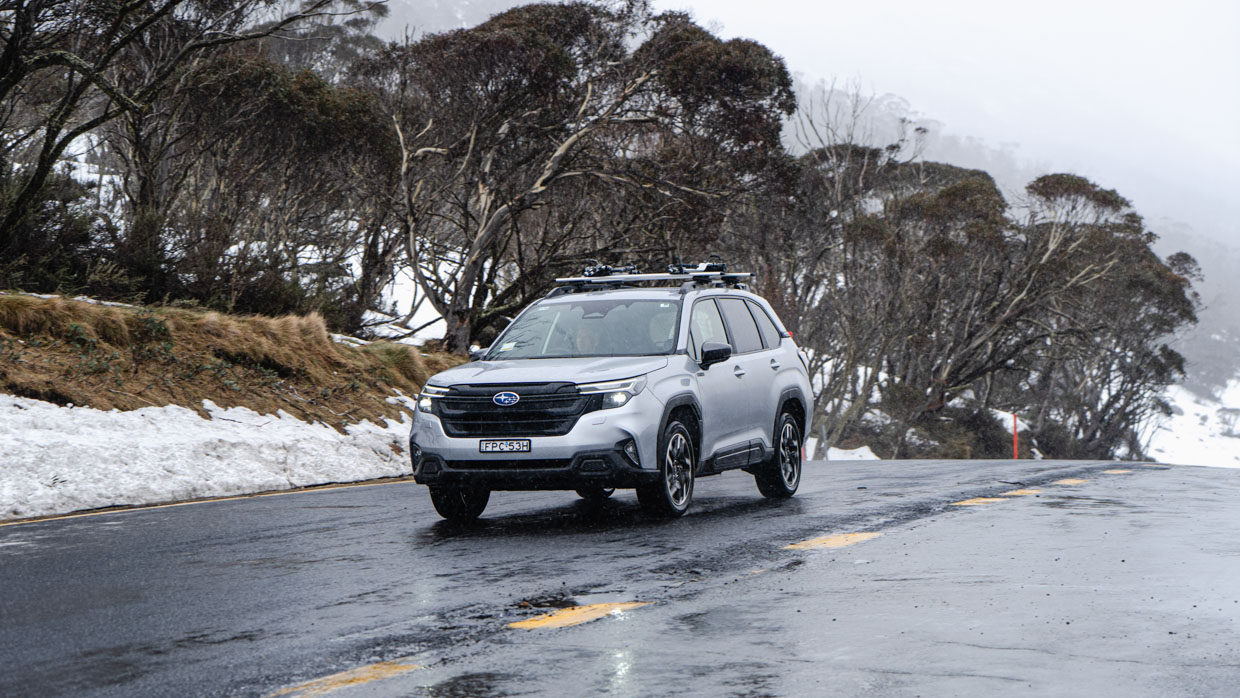
Then there’s the Forester’s driver-assistance technology that is mostly unobtrusive, something which sadly can’t be taken for granted today with the prevalence of many over-zealous systems.
It’s not quite perfect. Around town, the Forester’s Forward Collision Avoidance will sometimes auto-brake when you try to accelerate quickly out of a junction where there are cars parked across the other side of the road.
And the driver monitoring system can get confused by sunglasses, with a ‘Keep Eyes on the Road’ sign popping up on the driver display along with an audible warning even when your eyes are looking very much at the road.
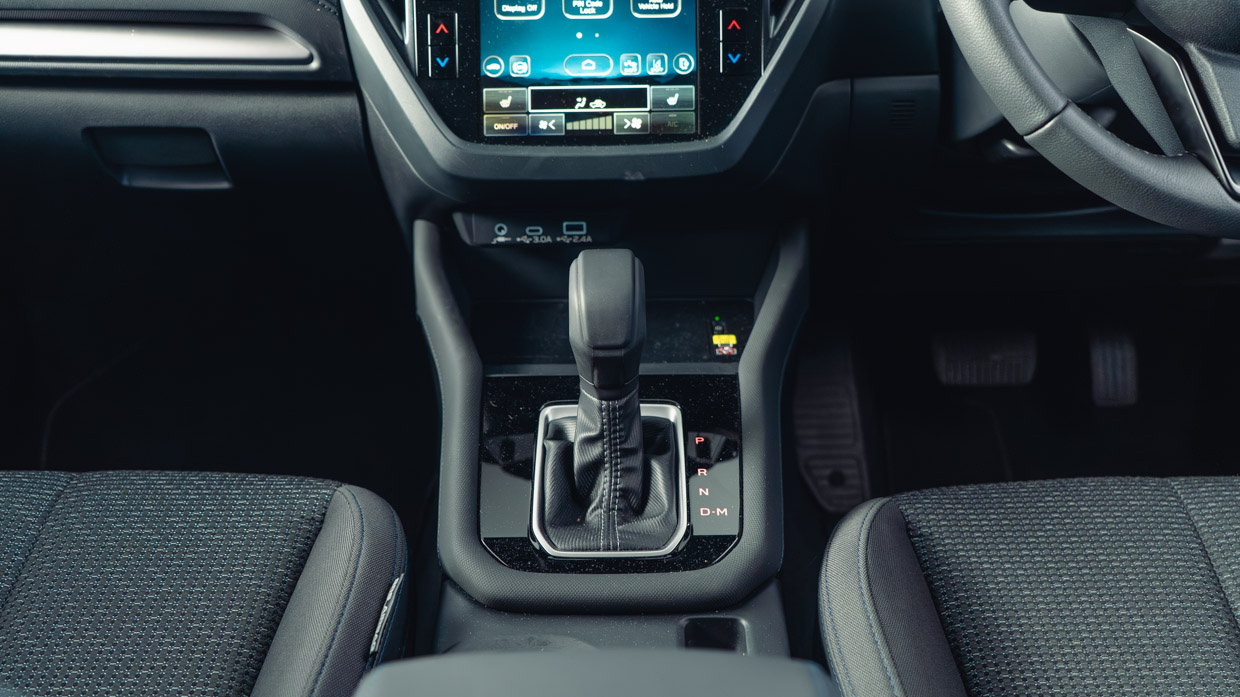
Unlike most Hyundais and Kias, and many vehicles from Chinese brands, these are occasional annoyances rather than everyday irritations.
One improvement for daily Forester life, however, would be a rubber mat for the smartphone charging tray. Phones tend to slide around while driving, often resulting in the charging process being halted.
Following an overnight stay in Cooma, the temperature continues to drop en route to Jindabyne – making the heated front seats a very welcome feature. As would a heated steering wheel, though this isn’t available on any Forester grade. Sport and Touring Hybrids do add heated rear outboard seats.
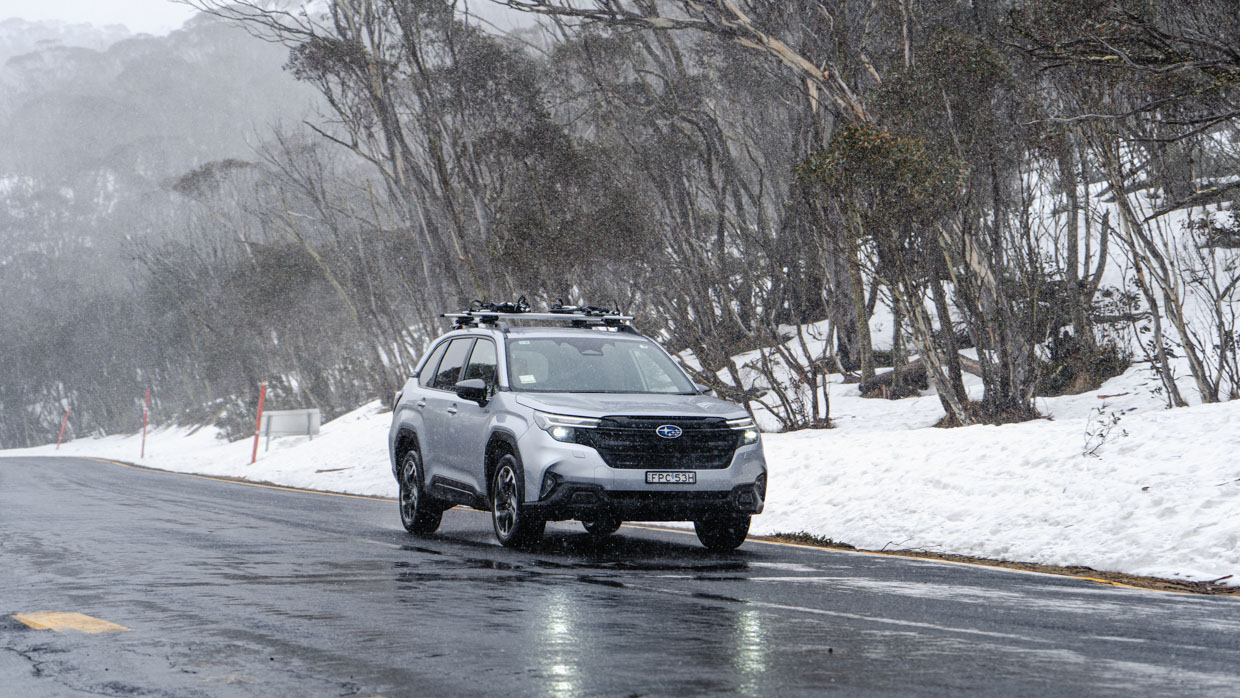
Jindabyne is essentially the gateway to the Snowy Mountains, at least for those travelling southbound, and the Forester’s signature tall glasshouse is perfect for an outward view of the increasingly majestic landscape.
A glance at the trip computer isn’t such a pleasing view. It indicates we’ve used an average of 7.9 litres per 100km for the mostly-freeway, 452km drive to Jindabyne from Sydney.
Based on that figure, it would leave the maximum range from a full tank at 797km – 203km short of Subaru’s claimed “1000km+ range”. That claim is based on the combination of the 63-litre fuel tank and official consumption of 6.2L/100km.
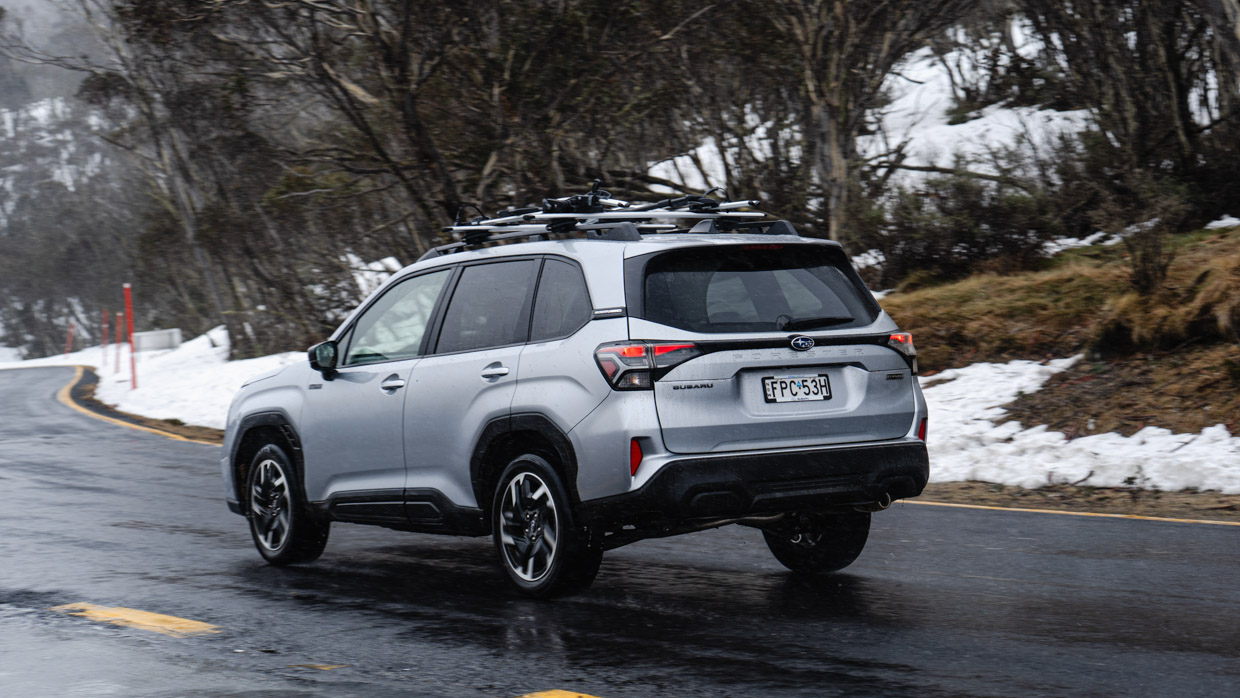
We’ll be focusing more on the Forester Hybrid’s drivetrain performance and efficiency in our next report.
Our hope for this report was to evaluate the Forester’s off-roading ability on snow, which isn’t easy as you might expect in winter. It’s not necessarily the concern about a lack of snowflake precipitation but more a lack of available/permissible driving areas.
Most resort roads, such as the Alpine Way (to Thredbo) and Kosciuszko Road (to Perisher), are regularly cleared, and most of the time 2WD vehicles will get you to the slopes without issue (though you are obliged to carry snow chains, and their fitment will be enforced if conditions turn tricky).
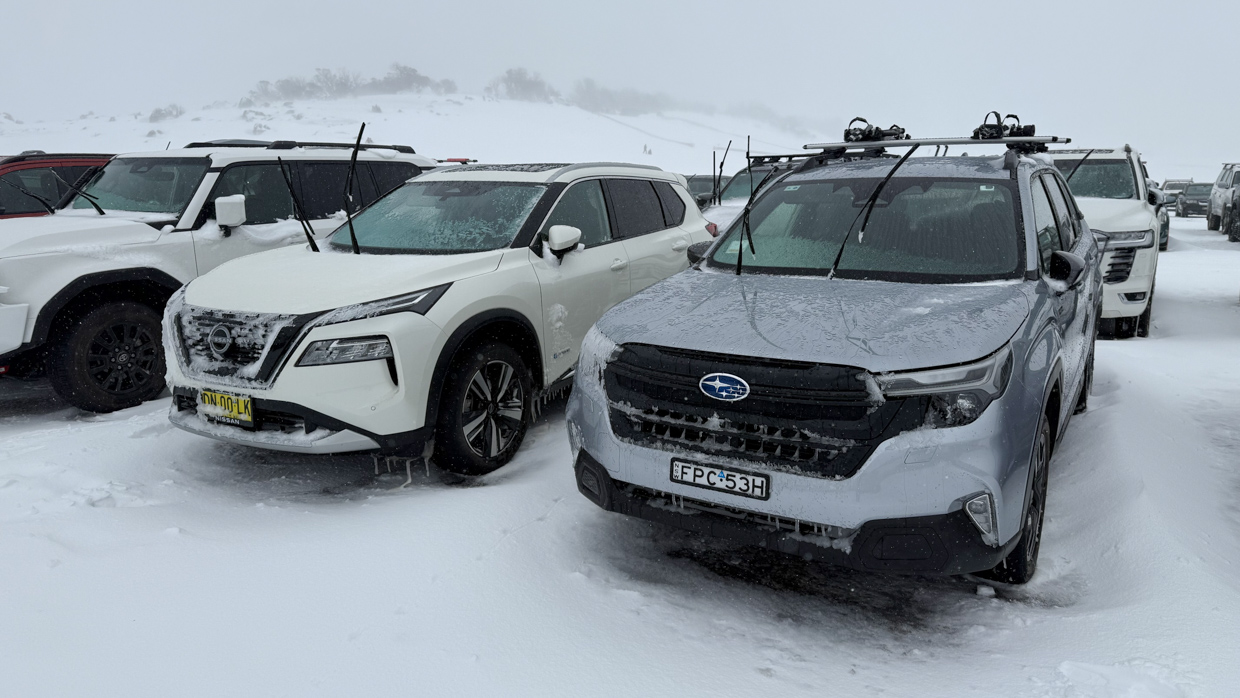
The (rear-wheel-drive) BRZ sports coupe is the only Subaru affected by this.
Our first day of driving in the Kosciuszko National Park yielded no luck for snow-driving adventures, despite some skiing action the previous day confirming excellent conditions on the slopes.
The next day, however, couldn’t have been better, with the timely arrival of a new storm front.
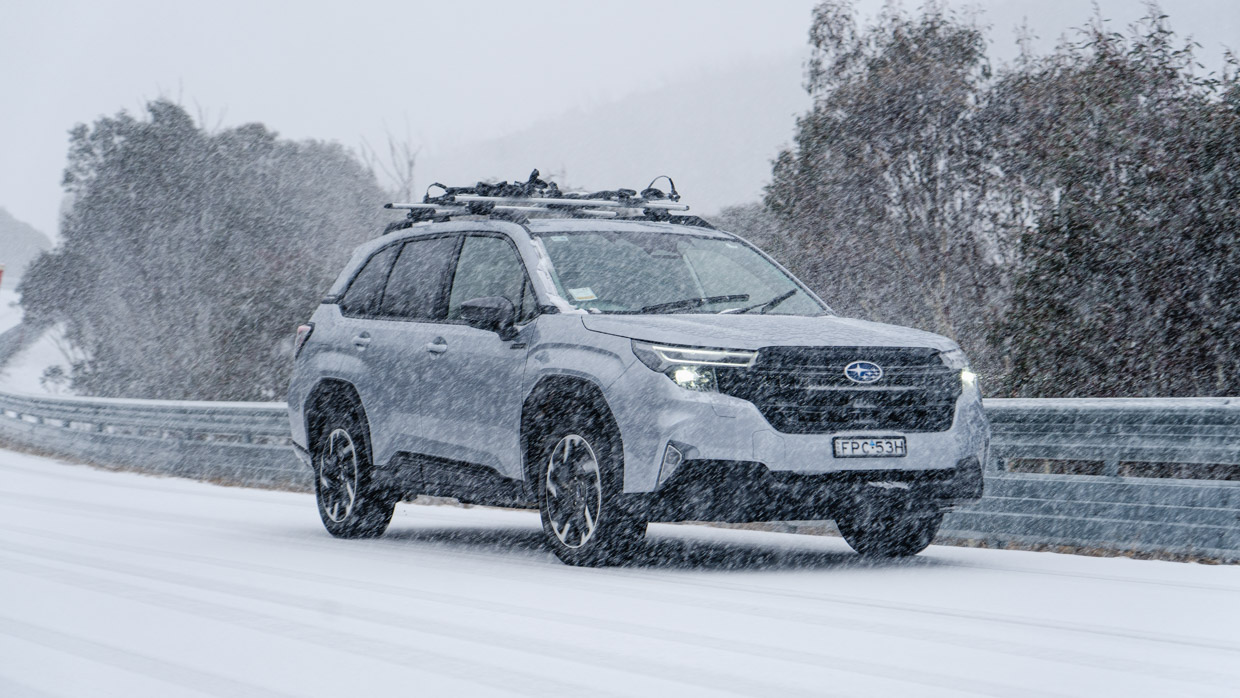
As snow transitioned from a light flurry to near-blizzard conditions, we were perfectly placed filming at Dead Horse Gap as the highest road point of the Alpine Way was quickly blanketed in white.
Taking turns in the Forester and then the X-Trail, both all-wheel-drive midsize SUVs proved to have reassuring traction and stability – though the Subaru had the edge thanks to a superior electronic stability control (ESC) and ABS calibrations.
The Forester’s ESC is quick to correct the start of a slide, yet also quick to revert full throttle control to the driver once the Subaru’s direction of travel is stabilised.
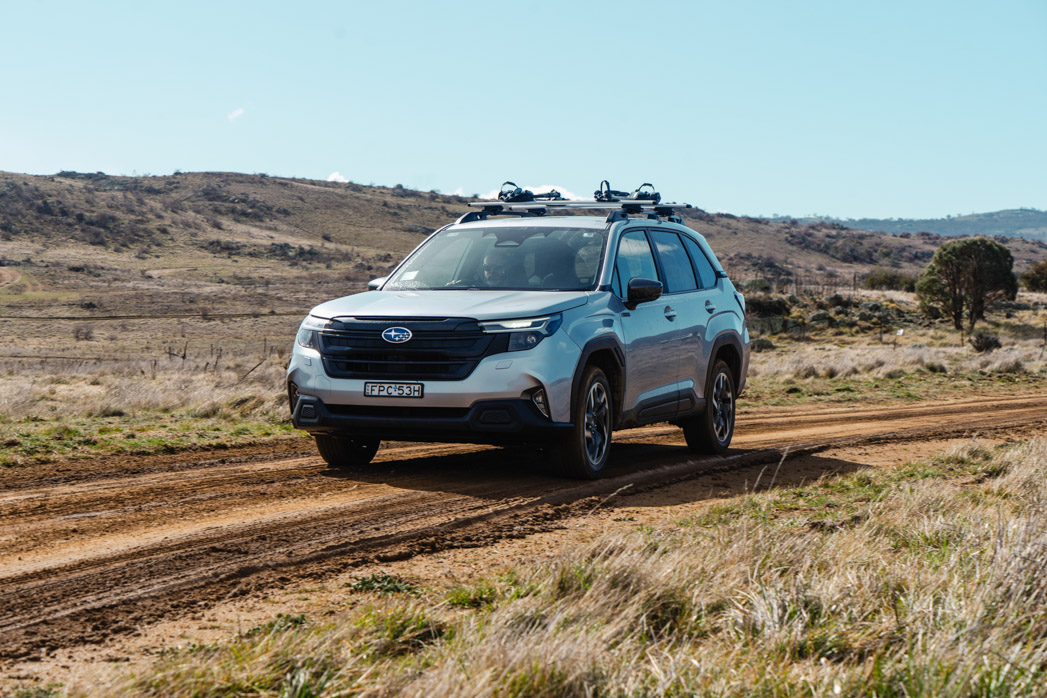
While the X-Trail’s electronics were also capable of keeping the Nissan pointing the right way, its ESC tended to take a couple of stabs at correcting a slide, seemingly lacking trust in its initial response.
There was a similar experience on some dirt/mud tracks around Lake Jindabyne, showcasing the Forester as the more fluent and confidence-inspiring SUV on slippery surfaces.
Both vehicles were on their standard-fit, all-season tyres.
On both snow and dirt, we selected the conveniently titled Snow/Dirt option from the Forester’s X-mode that modifies various electronic calibrations – including throttle and gearbox response – to suit the prevailing surface and available grip.
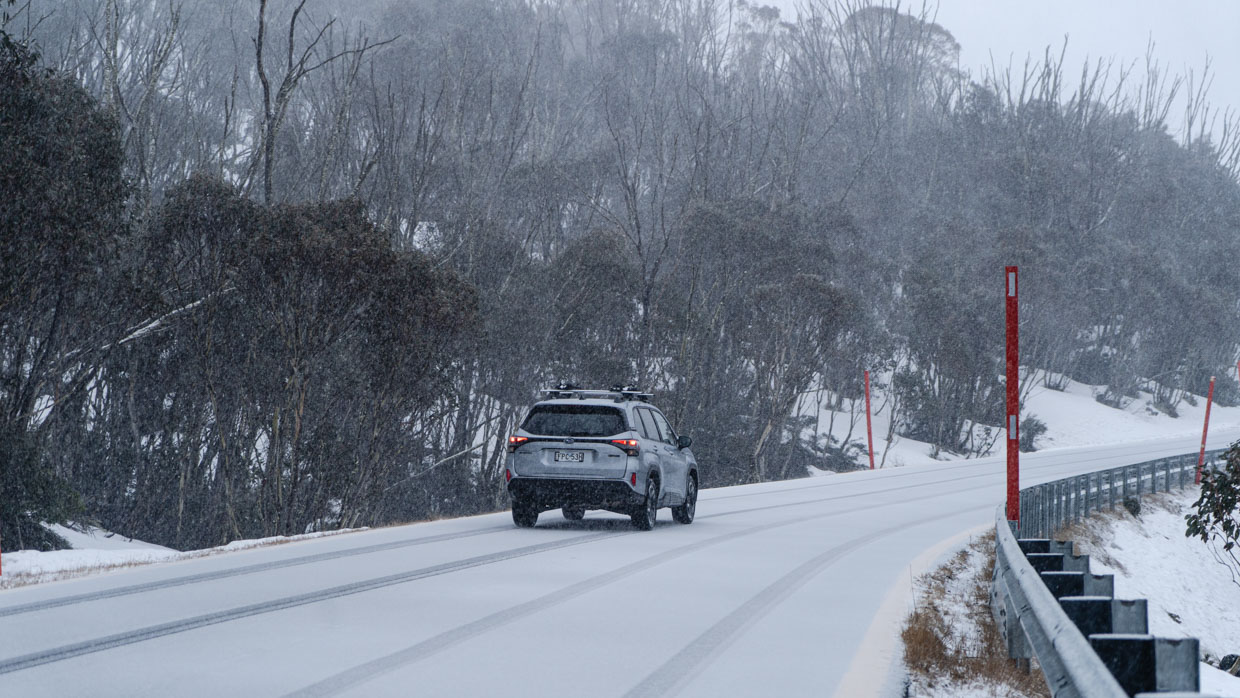
All Forester grades bar the base petrol and Premium petrol add a Deep Snow/Mud mode, if not required for our adventures on this trip. Ground clearance was never a factor, either – though the Forester’s 220mm ride height is generous for what is ostensibly a suburban-focused SUV.
An X-Mode display on the 11.6-inch portrait touchscreen provides info and graphics such as power distribution per wheel, vehicle dynamics control, and the angles for both steering wheel and front wheels.
The value of this display is debatable; keeping your vision up and outward as much as possible is the best bet for making successful progress off road.
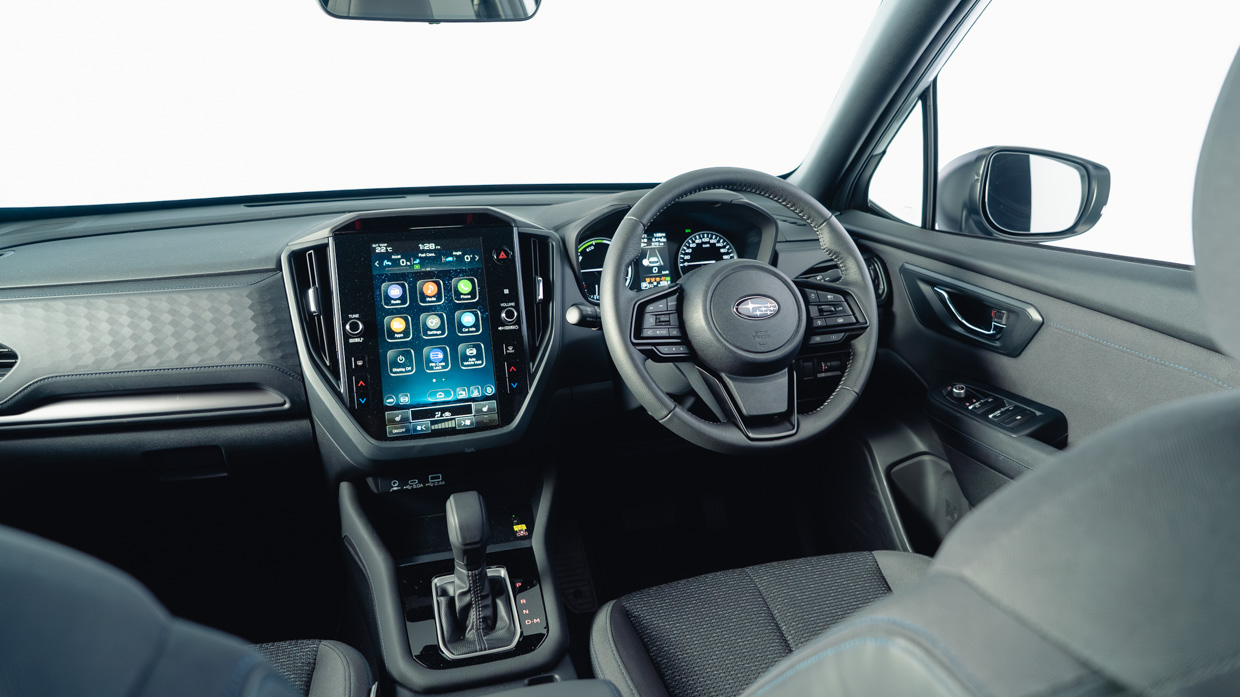
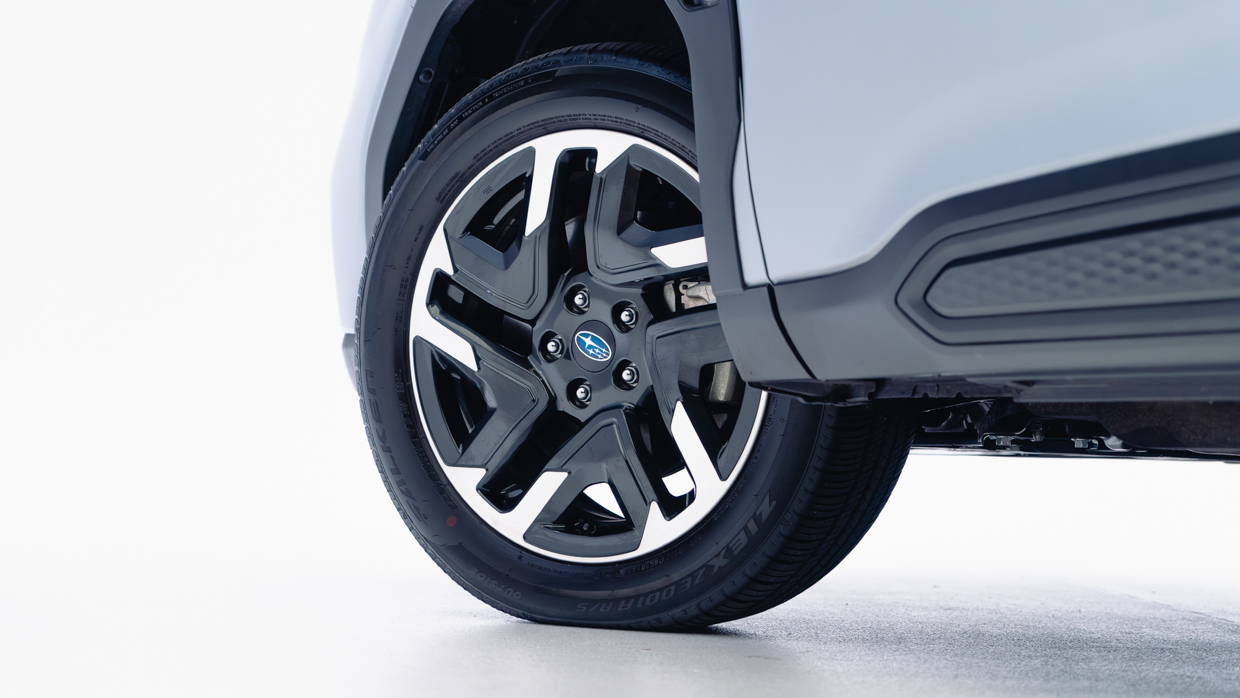
With roads and tracks that were slippery but always smooth, there was never any great concern about the potential for punctures. Although tyre-pressure monitoring is standard, the hybrid Subaru becomes the first Forester to not be offered with a full-size spare wheel.
The placement of hybrid system components under the boot floor dictated a tyre repair kit … or the awkward alternative of an accessory towbar-mounted spare wheel carrier that’s also not a cheap option ($3099 or $3199 depending on wheel size).
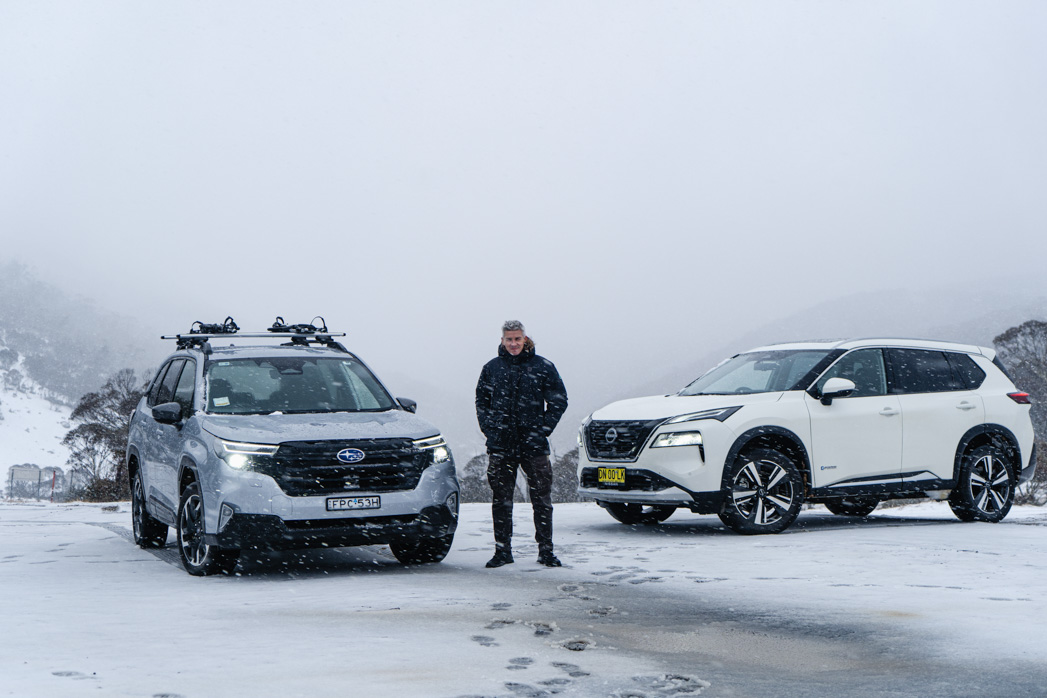
Does the Hybrid’s fuel efficiency make the compromise worthwhile?
More time and more trips for our next report will help answer that one.
But if you’re curious to know whether the Forester or X-Trail won our powder-hound comparison test, you can find out now in our in-depth comparison.
In a kind of ‘If you can’t beat them, join them’ scenario, the petrol-electric Forester borrows some components from Toyota’s hybrid system – though Subaru devotees can rest assured that the petrol engine’s pistons remain horizontally opposed.
The new set-up shaves half a litre off the official fuel consumption – improving from 6.7 litres per 100km to 6.2L/100km.
Naturally, real-world fuel consumption will be one of our key areas of focus during our extended stint with the Forester.
Can the hybrid Forester, for example, achieve more than 1000km on a tank as suggested by Subaru? For now, the first thing we know is that upon collection with a full tank, the Subaru’s trip computer was estimating an 890km driving range.
So, which variant do we have from a Forester showroom line-up that comprises four petrol models and three hybrid models?
We opted for the most affordable petrol-electric grade simply known as the Forester Hybrid AWD.
It’s priced from $46,490, before on-road costs, or $51,819 based on current Sydney driveaway pricing.
The list price is a $2400 increase over the previous entry-level Forester hybrid, reflecting a rise in costs across the board. With the base petrol Forester costing from $43,490, it means the Hybrid carries a $3000 premium.
The Hybrid’s equipment list includes the following features:
It’s not straightforward from a budget perspective if you want more features in your Forester. The next model up, the Hybrid Sport, costs from $54,990, before on-road costs.
For the extra $8500, key additional features include:
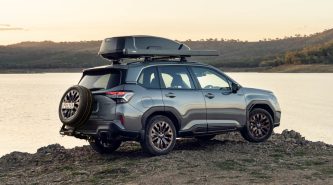
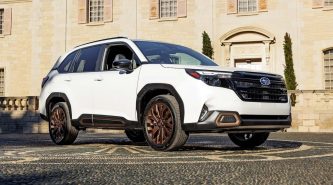
You may have noticed from our pictures that our Forester has something extra fitted.
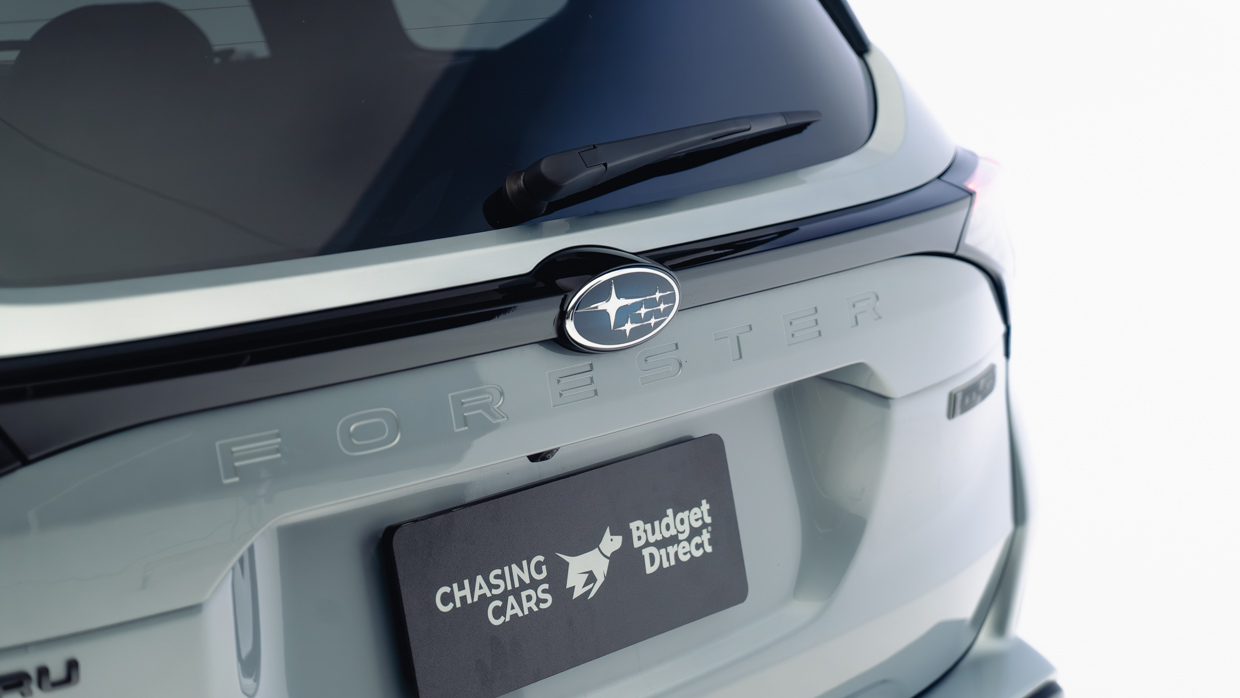
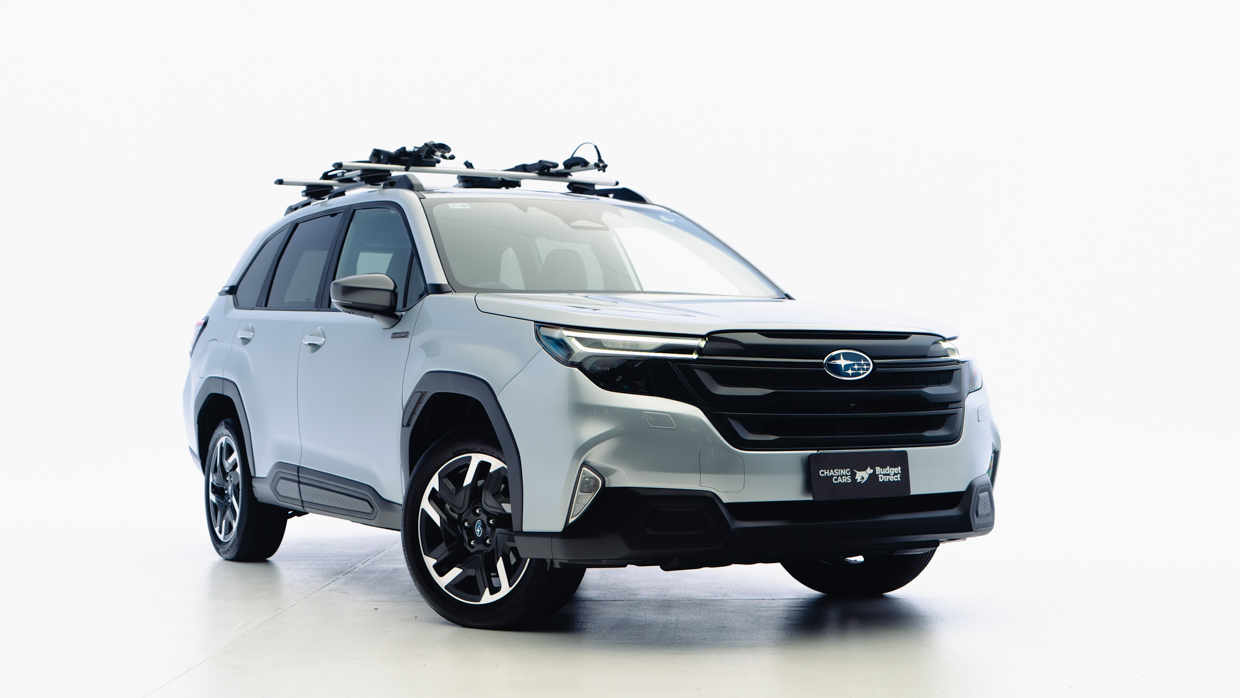
Subaru added the Roof Cross Bars – Aero Extended ($644.60 RRP fitted) and dual Thule ProRide silver bike holders ($447.65 each) accessories so we could test the long-termer like a typical Aussie family.
We could have instead opted for ski holders as we’ve already started our Forester adventures with a trip to the snow! More on that in our second report.
Key specs (as tested)
About Chasing cars
Chasing Cars reviews are 100% independent.
Because we are powered by Budget Direct Insurance, we don’t receive advertising or sales revenue from car manufacturers.
We’re truly independent – giving you Australia’s best car reviews.
The estimate provided does not take into account your personal circumstances but is intended to give a general indication of the cost of insurance, in order to obtain a complete quote, please visit www.budgetdirect.com.au. Estimate includes 15%^ online discount.
^Conditions Apply
Budget Direct Insurance arranged by Auto & General Services Pty Ltd ACN 003 617 909(AGS) AFSL 241 411, for and on behalf of the insurer, Auto & General Insurance Company Limited(ABN 42 111 586 353, AFSL 285 571).Because we don’t know your financial needs, we can’t advise you if this insurance will suit you. You should consider your needs and the Product Disclosure Statement before making a decision to buy insurance. Terms and conditions apply.
Indicative quote based on assumptions including postcode , 40 year old male with no offences, licence suspensions or claims in the last 5 years, a NCD Rating 1 and no younger drivers listed. White car, driven up to 10,000kms a year, unfinanced, with no modifications, factory options and/or non-standard accessories, private use only and garaged at night.
^Online Discounts Terms & Conditions
1. Discounts apply to the premium paid for a new Budget Direct Gold Comprehensive Car Insurance, Third Party Property Only or Third Party Property, Fire & Theft Insurance policy initiated online on or after 29 March 2017. Discounts do not apply to optional Roadside Assistance.
2. Discounts do not apply to any renewal offer of insurance.
3. Discounts only apply to the insurance portion of the premium. Discounts are applied before government charges, taxes, levies and fees, including instalment processing fees (as applicable). The full extent of discounts may therefore be impacted.
4. We reserve the right to change the offer without notice.