Powered by

-
Car Reviews
Latest reviews
- Car News
-
Car Comparisons
Latest comparisons
- Chasing Deals
Latest reviews
Latest comparisons
Struggling European auto sector to maintain petrol and diesel production into the future in the face of slow EV uptake and commercial pressures from China
Today, the European Union’s 2035 ban of internal combustion vehicles has been lifted and legislation softened after fierce campaigning by EU carmakers and stakeholders aiming at bolstering competitiveness in the face of Chinese competition and a shortfall in global EV demand.
The relaxing of EU regulations means that, from 2035, 10 percent of car sales in the EU market can comprise petrol, diesel, hybrid/PHEV and range extender electrics. Today’s change means that 90 percent of vehicles would still be required to be emissions free, though the situation is not clean cut.
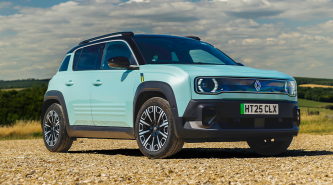
Carmakers will need to offset the emissions quota via low-carbon steel manufacturing, according to a report from the UK’s Auto Express, adding that a ‘super credit’ system for small (sub-4.3-metre long) EVs in lead up to 2035 will allow carmakers to bank credits (counted as 1.3 vehicles) to offset manufacturing quotas.
These, together with additional measures to support the EU auto industry, still require approval from EU parliament and member states.
Another factor in the ban backflip is consideration outside of car manufacturing and dependent on an expansion of e-fuels and biofuels brought to market by energy companies.
Over the past 12 months, some EU carmakers have been lobbying the European Commission hard to overturn the 2035 internal combustion ban, primarily due to increased market pressure from Chinese imports into the EU as well as lower-than-forcast adoption of EVs globally, according to a report from news outlet France 24.
The report adds that “just over 16 percent of new vehicles sold (in the EU) in the first nine months of 2025 run on batteries”.
According to the UK’s BBC, the European carmakers association (ACEA) has claimed that without the backflip carmakers would risk “multi-billion euros” of penalties based on the trajectory of European buyer trends beyond 2035.
The European auto industry employs nearly 14 million people and accounts for seven percent of Europe’s GDP, says France 24.
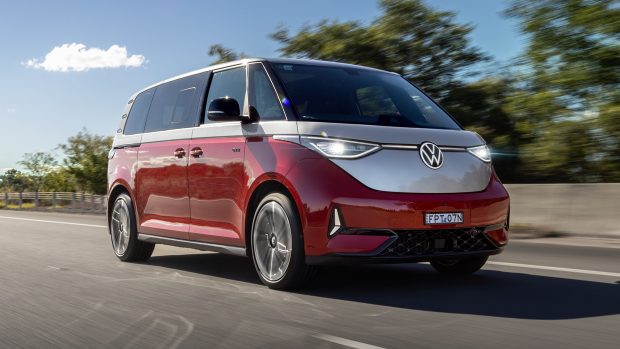
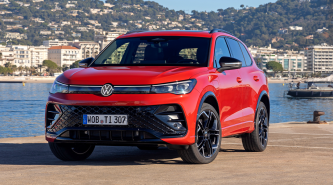
German Chancellor Friedrich Merz has hailed the change to the EU petrol/diesel ban, a sentiment mirrored by German carmakers such as Volkswagen who is quoted as calling the watering down of legislation “economically sound overall,” according to UK’s BBC.
Renault Group CEO, Francois Provost, is on record with Auto Express stating, prior to today’s announcement, that “we need flexibility (of powertrain types)” to cope with increasingly stricter EU regulations.
Ford, which relies on the likes of Renault and Volkswagen for some of its EV architecture, has announced that it will scale back on its EV plans due to “lower-than-expected demand, high cost and regulatory changes,” the report adds.
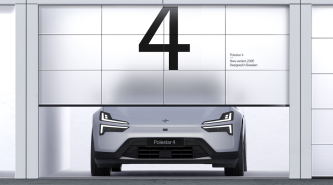
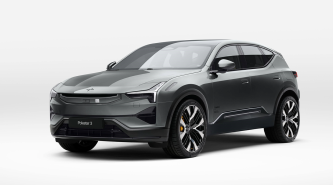
However, the governments of Spain, France and Nordic countries have slammed the backflip, while Auto Express reports that Polestar CEO, Michael Loscheller, and others are staging protests outside the European Commission HQ in Brussels, Belgium, against the legislative walkback.
It’s unclear as to whether the UK, which in a Brexit era has its own pure-petrol/diesel ban due 2030 and a zero-emissions mandate come 2035, will be pressured to follow the EU’s regulatory softening. It’s claimed that the UK’s EV uptake, YTD, is just 26 percent.
While Australia’s New Vehicle Emissions Scheme (NVES) will continue to put pressure on vehicles sold above increasingly tighter CO2 emission tiers, there have been no publicly stated plans to ban vehicles with powertrains using internal combustion.
Latest news
About Chasing cars
Chasing Cars reviews are 100% independent.
Because we are powered by Budget Direct Insurance, we don’t receive advertising or sales revenue from car manufacturers.
We’re truly independent – giving you Australia’s best car reviews.