Powered by

-
Car Reviews
Latest reviews
-
Car News
Latest news
-
Car Comparisons
Latest comparisons
- Chasing Deals
Latest reviews
Latest news
Latest comparisons
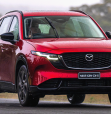
At a time when petrol pricing is soaring to $2.50 per litre, Mazda has justified its decision to cut ties with Toyota and develop its own hybrid system
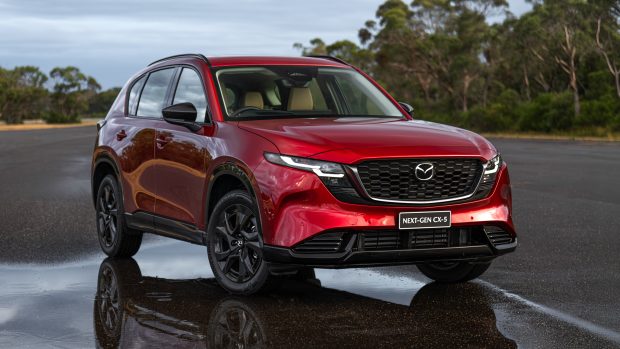
Mazda has blamed the rising cost of Toyota’s hybrid system and the pursuit of its own ‘Jinba Ittai’ philosophy as key reasons for pursuing the development of its own in-house petrol-electric system.
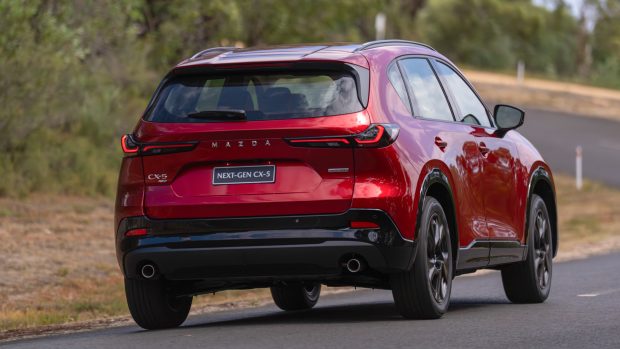
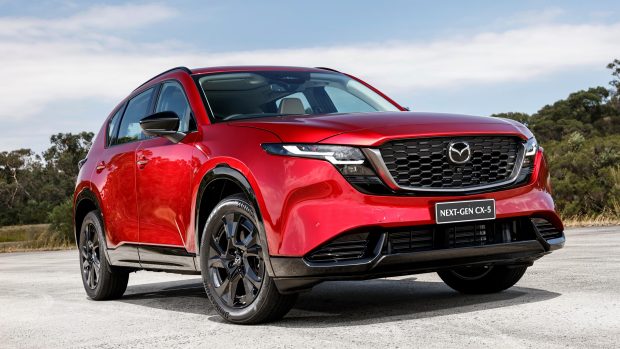
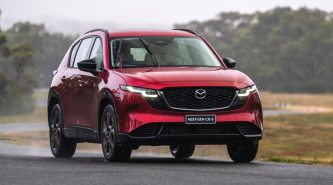
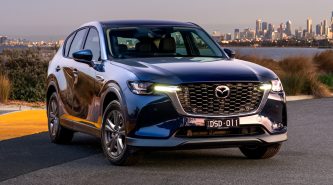
Not due to be launched in North America until 2027, it’s likely Mazda won’t offer its new hybrid system in the Australian CX-5 until 2028, at a time when hybrid power – already the most popular passenger car/SUV format sold – becomes evermore popular in an era of escalating petrol prices, due to global tensions, and as Australian household belts tighten.
In the US, the American-built CX-50 has been on sale since 2022 with the availability of a Toyota-sourced series-parallel hybrid, much like the system found in the RAV4. Due to a lack of right-hand-drive availability, the model never made its way to Australia, but it was originally anticipated that the drivetrain would make its way into the third-generation CX-5.
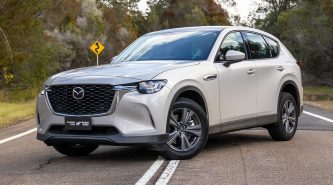
Instead, the third-generation CX-5 will be sold exclusively with a naturally aspirated 2.5-litre four-cylinder engine, with a recent detune lowering the fuel consumption from 7.5 to 7.4L/100km.
Speaking at the local launch, general manager of global sales & marketing Manabu Osuga told Chasing Cars the upfront cost to the consumer and its driving philosophy – rather than prioritising other models or drivetrains – was the key reason for Mazda’s current local hybrid strategy.
“Why are we using a different system from the Toyota is because we decided that it’s the best way to represent the Jinba Ittai feeling”, he said, adding “the Jinba Ittai feeling is the linearity, directness and dynamics.”
Jinba Ittai is a Japanese term core to the Mazda brand, said to depict the feeling of unity between a horse and its rider.
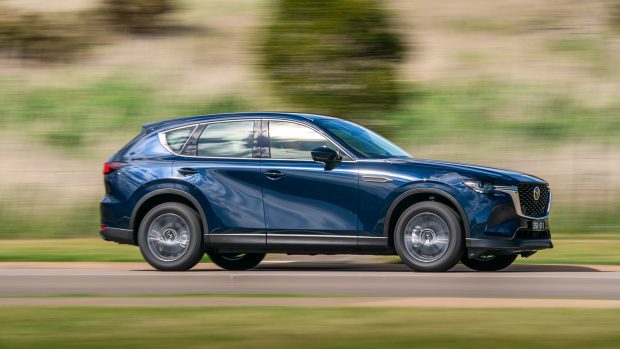
Mazda’s hybrid system will use a layout to its PHEV system found in the CX-60, where the electric motor is placed between the combustion engine and a traditional transmission.
Generally speaking, this setup (also used by Kia, Hyundai, GWM and others) has been seen by pundits as more dynamic and refined than Toyota’s integrated hybrid setup that makes use of a planetary gearset and a series of electric motors packaged into one unit.
The key downside, however, is fuel economy figures often fail to match the Toyota-style hybrid, but Mr Osuga said the focus was to create a driving experience above the base petrol engine, not just a system that saves money on fuel.
Mr Osuga said the rising cost of Toyota’s hybrid system has also become too expensive over time, and those costs would need to be passed on to the consumer.
“In the US market, Toyota made its hybrid surcharge USD $1050, then it became $1200 [and] now it’s $2000,” he said.
“But if it’s a $1000-ish number, the cost of ownership the consumer can pay over time within two years. But these days it’s a $3000, $4000 [upfront premium so] the customer cannot [offset this premium] with the money they are paying through the cost of ownership”.
For that reason, Mr Osuga said making the hybrid system an affordable upgrade was also a key goal in the development.
Latest news
About Chasing cars
Chasing Cars reviews are 100% independent.
Because we are powered by Budget Direct Insurance, we don’t receive advertising or sales revenue from car manufacturers.
We’re truly independent – giving you Australia’s best car reviews.