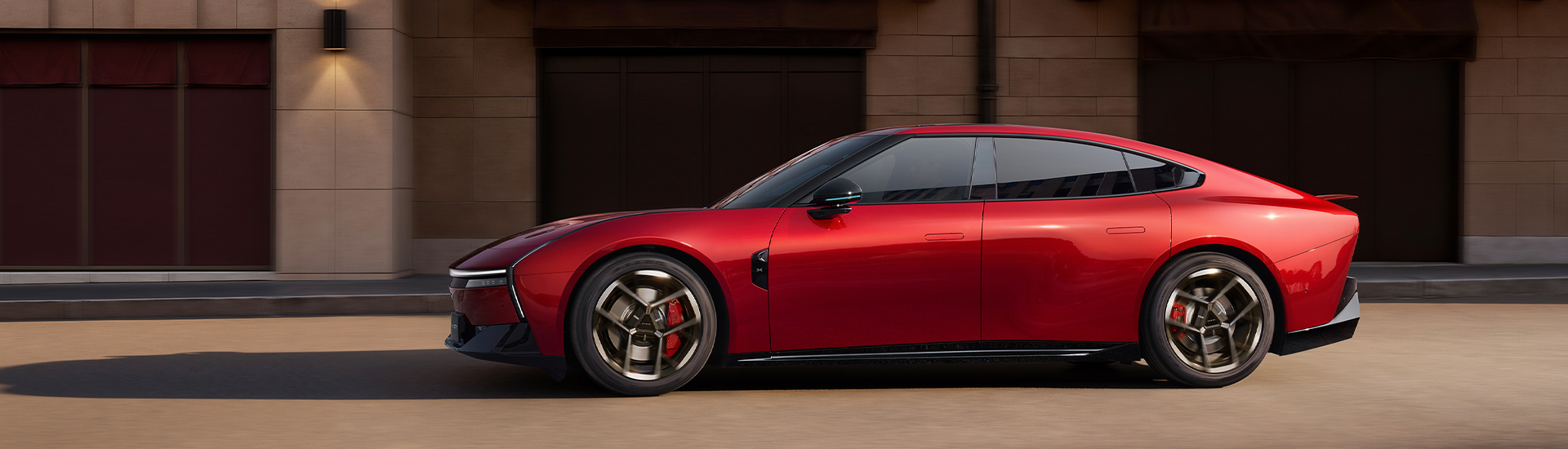
Hyundai has used today’s Guangzhou Motor Show to whip the covers off a new small electric SUV concept that could provide the Korean manufacturer with an alternative to the recently cancelled Ioniq 3 for the Australian market.
Known as the Mercury, the striking yellow-green concept previews what will become the most affordable member of Hyundai’s expanding Ioniq family in China when a production version goes on sale there in 2027.
An Australian launch has not been confirmed, but the Mercury’s reveal in China comes just weeks after Hyundai Australia identified affordable electric hatchbacks and small SUVs as gaps in its local range that could be filled by Chinese-sourced vehicles.
Hyundai intended to launch the European-developed Ioniq 3 electric hatchback in Australia but abandoned those plans after determining it could not price the Turkish-built model competitively against key rivals – including Chinese cars.
The Korean brand has already demonstrated its willingness to sell Chinese-developed vehicles in Australia with this year’s introduction of the Elexio midsize electric SUV – although the latter has been beset by a recall campaign in recent weeks.
Mercury SUV could give Hyundai the affordable EV it needs in Australia
Developed by Hyundai’s Chinese team, the Mercury concept features an aggressively raked windscreen, a prominent rear spoiler and a low-set nose incorporating lighting in the shape of Hyundai’s ‘H’ emblem.
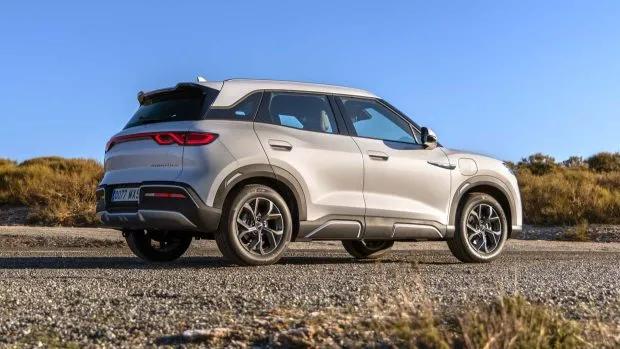
Hyundai says the production version of the Mercury would be a B-segment SUV, putting it in a similar category to the BYD Atto 2 and other relatively affordable electric crossovers.
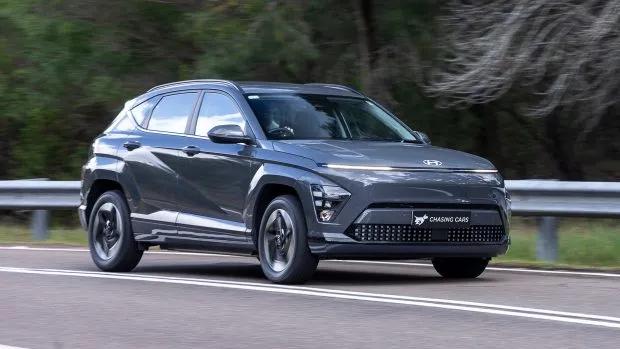
If it goes into production and comes to Australia, the Mercury could give Hyundai a more price-competitive alternative to its Kona Electric, which starts at $46,000 before on-road costs.
By comparison, BYD’s China-built Atto 2 starts at $31,990 before on-road costs.
The Mercury will draw heavily on Chinese-market technology, including an advanced driver assistance system developed by Zhuoyu and an infotainment system incorporating artificial intelligence from TikTok parent company ByteDance.
If destined for export markets including Australia, some of the software may need to be adapted for local regulations.
Hyundai is also planning a version of the Mercury with a swappable battery developed in partnership with Chinese battery manufacturing giant CATL.
Hyundai has not yet disclosed the Mercury’s battery capacity, driving range, motor outputs or indicative pricing.
Range-extender tech coming to existing Ioniq V model in China
Alongside the Mercury concept, Hyundai has confirmed that its futuristic Ioniq V sedan, which went on sale in China in September, will gain an extended-range electric vehicle (REEV) variant in 2027.
Unlike Hyundai’s conventional hybrids, range-extender vehicles typically use a petrol engine primarily to generate electricity for the battery, retaining the driving characteristics of an electric car while enabling longer journeys without stopping to recharge.
The existing BEV Ioniq V provides an indication of just how aggressively Hyundai is prepared to price its new Chinese-developed products.
Measuring 4.9 metres long, the sedan is available with 53.5kWh and 66.8kWh batteries, delivering claimed driving ranges of 540km and 650km respectively on China’s comparatively generous CLTC testing cycle (about 400km and 480km WLTP).
Chinese list prices for the Ioniq V start at 109,900 yuan (AUD$25,000), despite the availability of equipment including a 27-inch widescreen display, Dolby Atmos audio and sophisticated driver assistance technology.
Hyundai will expand its Chinese Ioniq range in 2028 with a production version of the rugged-looking Earth family SUV concept, followed by two additional electrified models in 2029.
The product offensive forms part of Hyundai’s efforts to rebuild its presence in China, where the brand recorded just 62,515 retail sales in the first nine months of 2026 amid intense competition from domestic manufacturers.
By comparison, BYD sold more than 1.7 million vehicles in China alone across the same period – a result that was itself down 33 percent.