Powered by

-
Car Reviews
Latest reviews
-
Car News
Latest news
-
Car Comparisons
Latest comparisons
- Chasing Deals
Latest reviews
Latest news
Latest comparisons
Fourth model from Chinese challenger brand is much more than a cheap electric runabout, but falls short in execution in too many areas
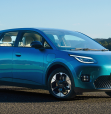
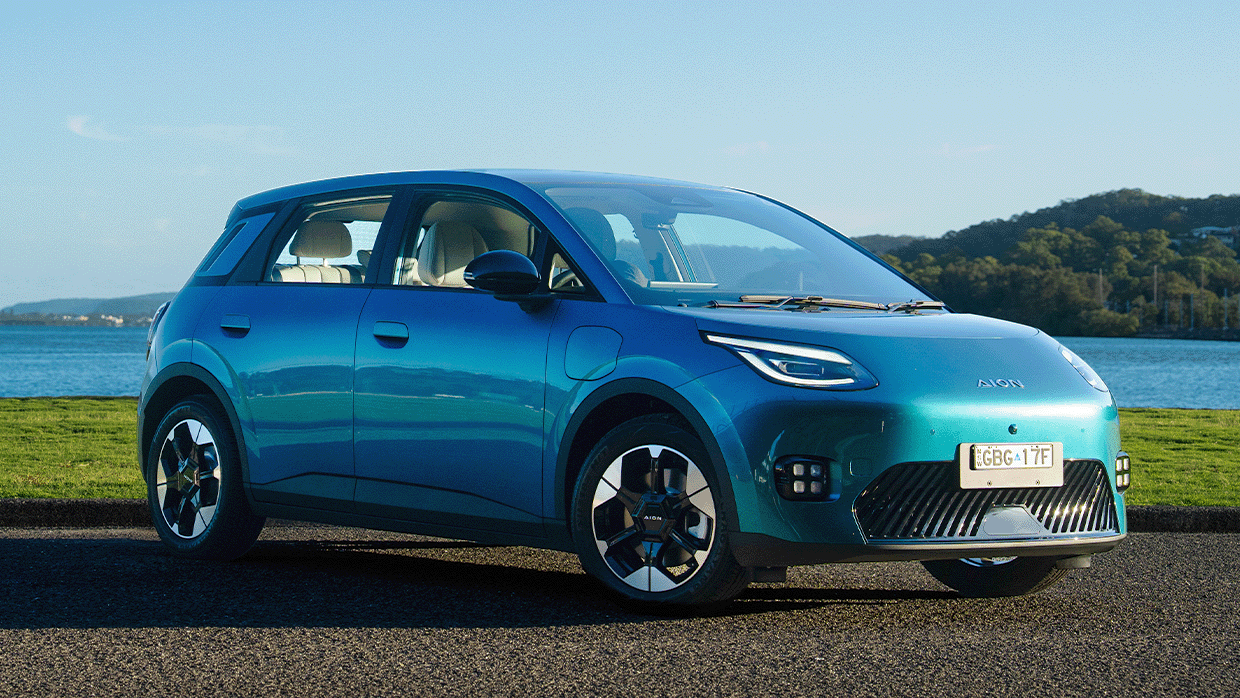
As subjects of wild mispronunciation go, the just-launched GAC Aion UT takes some beating. And because you asked (and even if you hadn’t), the compact electric hatchback here in review is formally called the ‘Gee-Aye-Cee Eye-On You Tee’.
Potential tongue-twisting avoided, perhaps numbers are a little easier to get the head around.
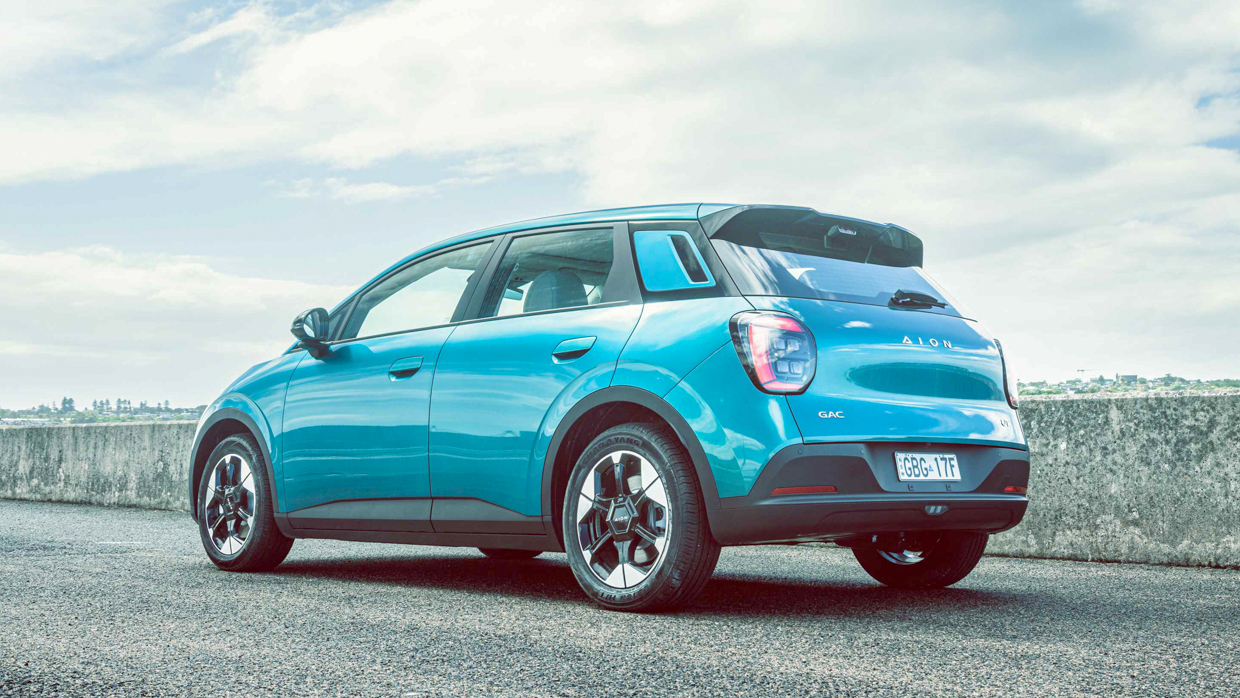
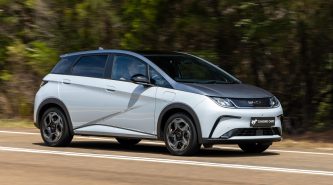
The fourth model from newcomer GAC Australia – established November 2025 locally – arrives on very limited offer from $30,990 driveaway. So it’s a hatchback that goes toe to toe against the likes of BYD Dolphin (from $29,990 list) and GWM Ora (from $33,990 D/A).
Post April 9th, days after this review’s publication and coinciding with its Melbourne Motor Show debut, the Aion UT reverts to a regular pricing of $31,990 list for the lower Premium grade. A high-spec Luxury trim, at $35,990 before on-roads – Atto 2 money – is our review subject here.
So the Aion UT is nowhere near the cheapest electric hatch entering the market (see Atto 1, from $24K), but its fulsome features list and Tardis-like packaging smarts means it’s not the craziest cross-shop with small-stature BEV crossovers. Despite what its diminutive appearance suggests.
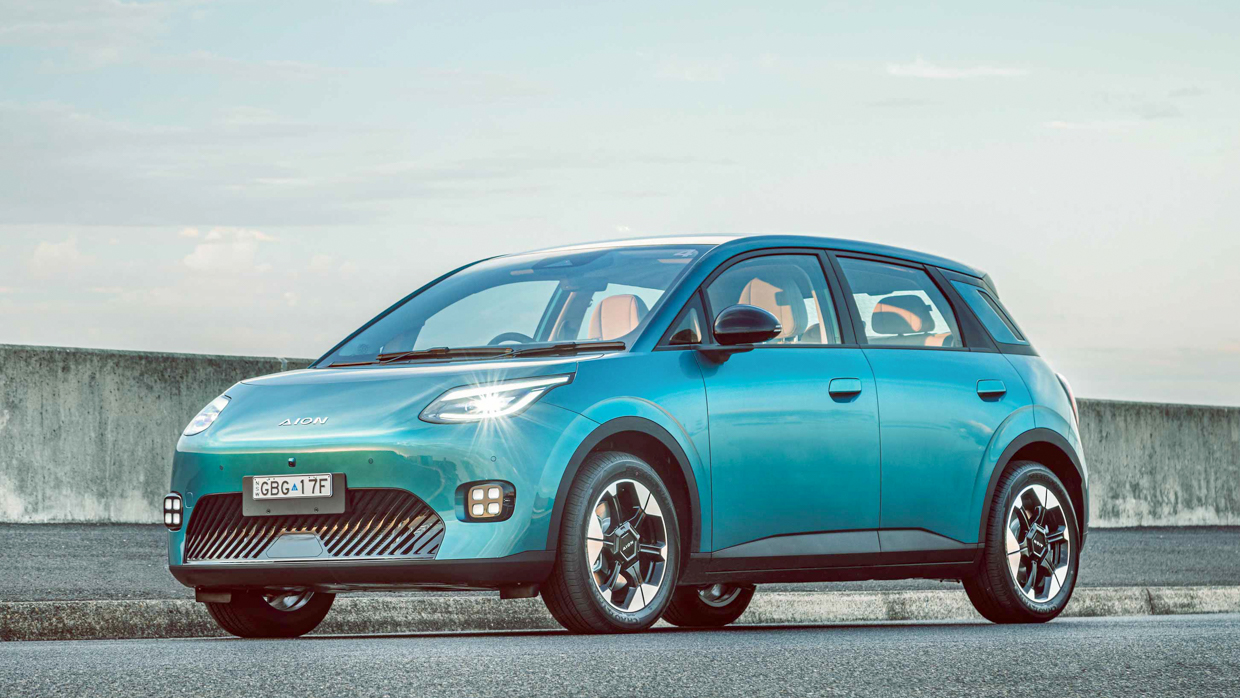
Ditto EV credentials. Both Aion UT variants feature 150kW and 210Nm front-drive electric motors drawing power from a 60kWh (gross) lithium iron phosphate (LFP) battery offering a decent 430 kilometres of WLTP combined cycle range. So far so good.
Where spec begins to look ordinary is in the 16.4kWh/100km combined consumption and tardy circa-34-minute 10-80-percent DC charging time (at an 87kW charging peak).
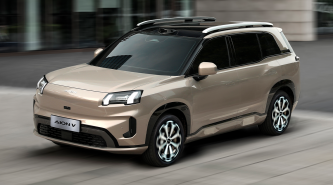
Given ‘Aion’ is GAC Motor’s mildly more upmarket sub-brand, the UT – much like its Aion V midsize SUV stablemate – gets an indulgent specifications list, if one built atop a strut and cost-conscious torsion beam suspension sat on modest 17-inch wheels with 215mm cheese-cutter tyres.
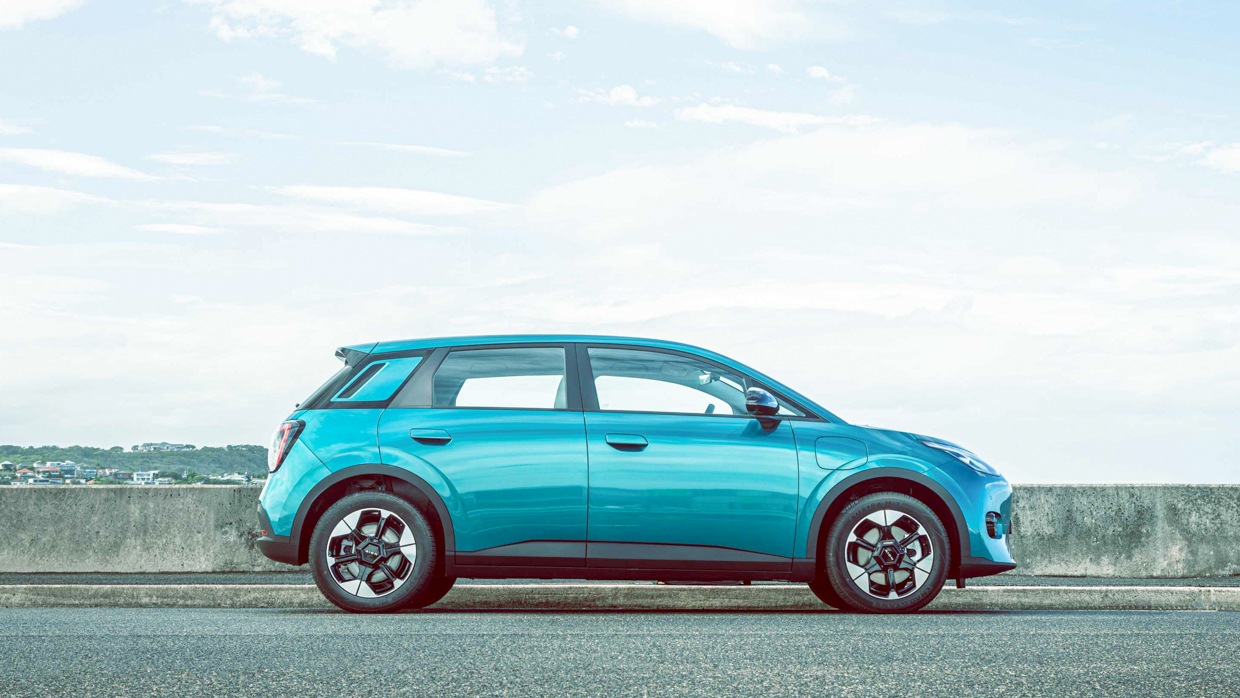
LED headlights, six- and four-way electric and heated front seats, vinyl upholstery, 14.6-inch media touchscreen, 8.8-inch driver’s screen, wireless Apple CarPlay and Android Auto, occupant camera monitor, smart phone remote control app, in-car WiFi, a three-year satnav subscription, and a 360-degree camera system are all offered on the base version.
‘PM2.5’ air purification and 3.3kW vehicle-to-load functionality, too, feature on both variants.
The walk up to Luxury grade adds a powered tailgate, panoramic glass sunroof, power-folding mirrors, inductive phone charging, a rear USB-A outlet, driver’s seat ventilation and auto anti-glare rearview mirror. Extras add 30kg to the Luxury kerb weight (to 1700kg) though both versions bring identical 0-100km/h acceleration claims of 7.3-seconds.
Safety features include adaptive cruise control, forward AEB, a trio of lane discipline assists, front and rear cross-traffic alert systems with braking intervention, driver monitoring, traffic sign recognition, and parking sensors at both ends of the vehicle.
The Aion UT is available in two standard, five premium ($600) and a pair of two-tone ($1000) colour options, with a choice of three different interior colour schemes (including pink!).
GAC motor’s global Chief Technical Officer (and ex-Toyota Australia man) Katsumata Masato, on hand at the local launch, confessed that the Aion UT had conducted a mere 3800 kilometres of local pre-release R&D assessment.
“We continue to learn,” Masato says of localising his company’s vehicles to Aussie road and traffic conditions.
Nevertheless, the Aion UT marks a pretty decent baseline for the package seemingly thrown on the local landscape despite little in the way localised prep or massaging.
High praise is reserved for the ride compliance, which initially feels so soft and cushy it could well have been calibrated by Tontine.
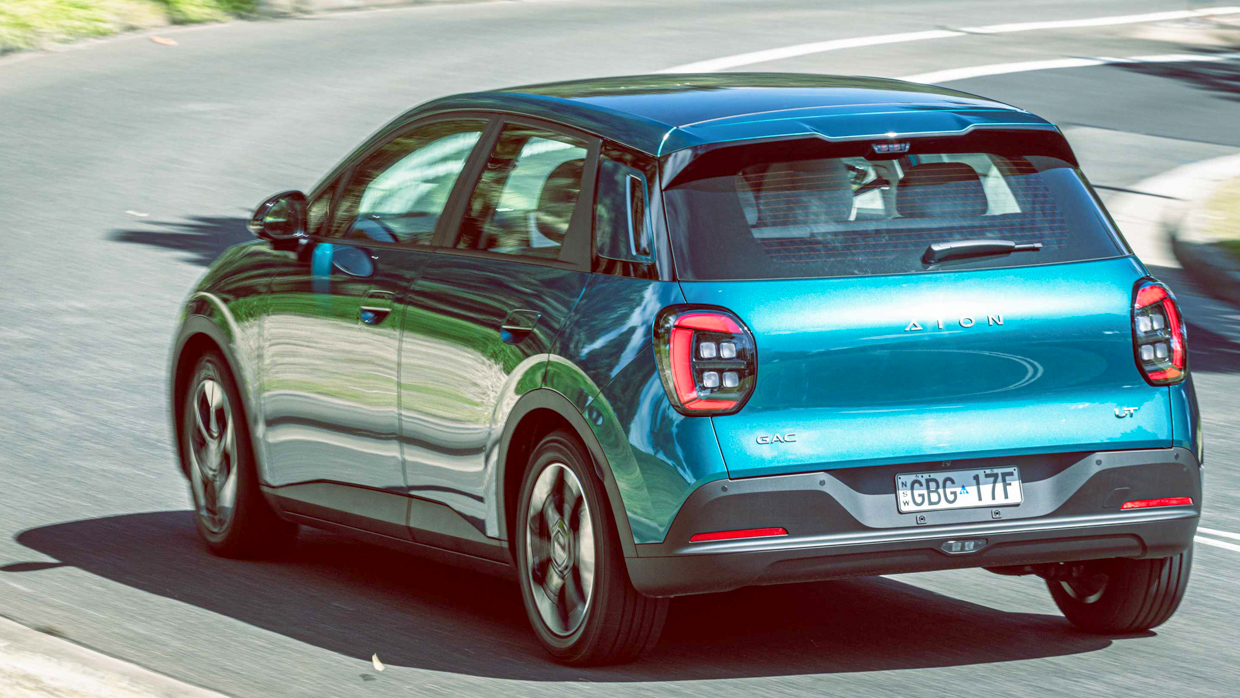
The suspension smothers all manner of road acne well, its pliant compression balanced with smartly disciplined rebound. But it’s not all plaudits. Hit a deep rut hard enough and hardware will crash through. And at times it dives and squats like a Manly ferry in a chop.
Not only is it fundamentally comfy, it’s a very quiet operator and feels solid (if a little numb), though ambient noise penetration in the cabin is quite evident driving through tunnels.
But character wise, it’s a mixed bag. On one hand, the Aion UT doesn’t translate much of a sense of connection between the driver and the road. Steering feel? Not much of it. Grip from its low-roll resistant rubber? Decent but hardly exceptional. And there’s an odd, mushy ‘by-wire’ sensation to the brake feel, though not to a degree of annoyance or mistrust.
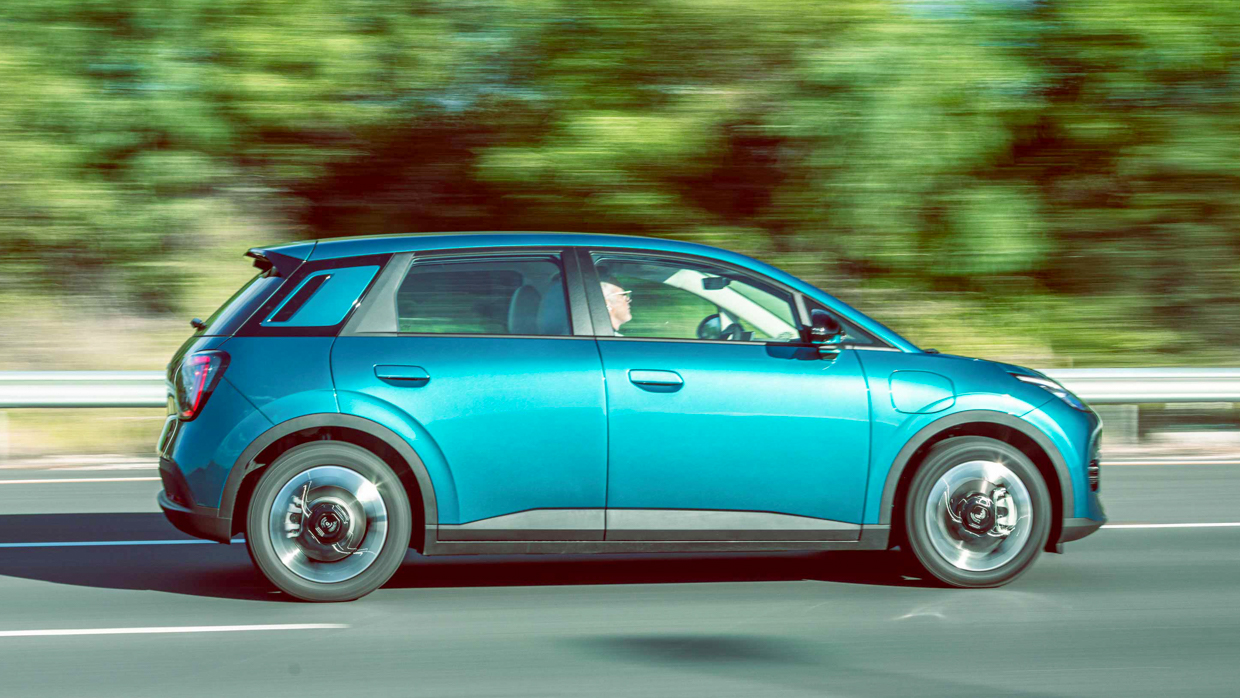
On the other hand, the hatch can feel nicely darty and wieldy, which is a big plus for urban confines. However, push harder through backroad corners and this electric fish finds itself quickly outside of confident waters.
Its front-drive and 150kW/210Nm output credentials mirror that of the larger Aion V SUV, yet the smaller hatch is around two seconds quicker to 100km/h. Thrust wanes with rising road speed – it’s hardly urgent on the motorway from a cruising pace – but at urban speeds there’s ample poke.
It’s efficient, too. Where we praised the larger Aion V for its as-tested 15.2kWh/100km figure, the little brother UT returned 13.5kWh/100km on its on-board computer…way better than its 16.4kWh/100km claim. This included spirited and extra-urban driving across hundreds of kilometres.
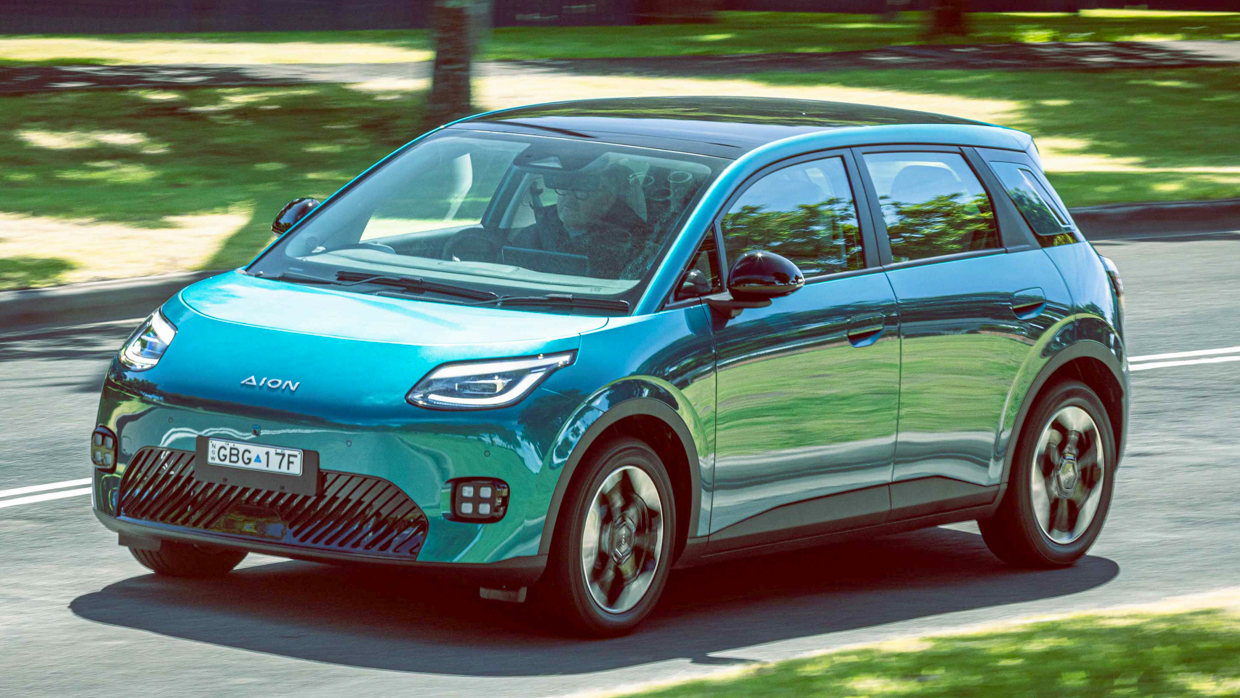
Big pluses are that it’s very approachable, benign in nature and easy to drive… Provided you go through the convoluted submenu digging to turn off a number of overbearing active safety systems. It certainly protests loudly and often in its natural environment.
This becomes a real issue in a city car where, on a typical weekend jaunt, you might restart the car a half dozen or more times during the course of a day. Even navigating exactly what to turn off and what to leave on demands investigation.
Take, for example, braking regen. There are three modes offering plenty of breadth. But why is adjustment buried deep in the touchscreen rather than easily accessible via paddle shifters (Kia) or a console switch (Skoda)?
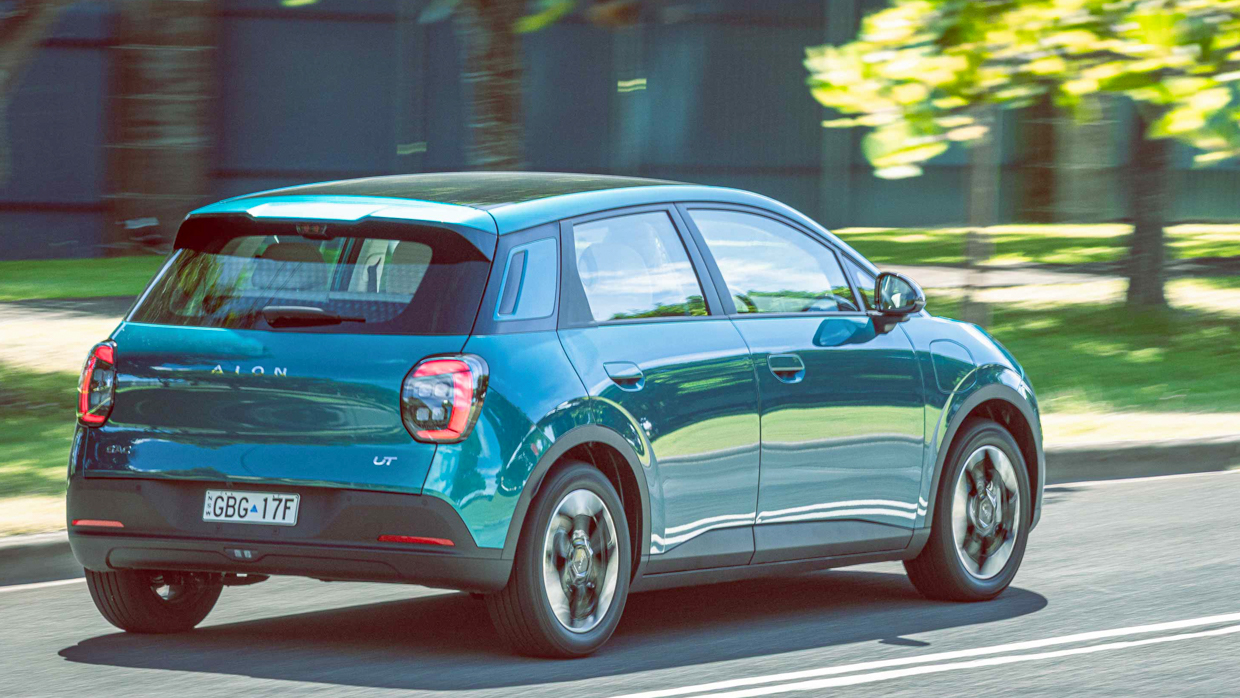
It’s hugely distracting and completely unnecessary outside of removing physical controls from the cabin space merely for appearance sake. And controls available – such as the Benz-style column-mounted direction selector that, concerningly, doubles as a cruise control interface – aren’t exactly intuitive.
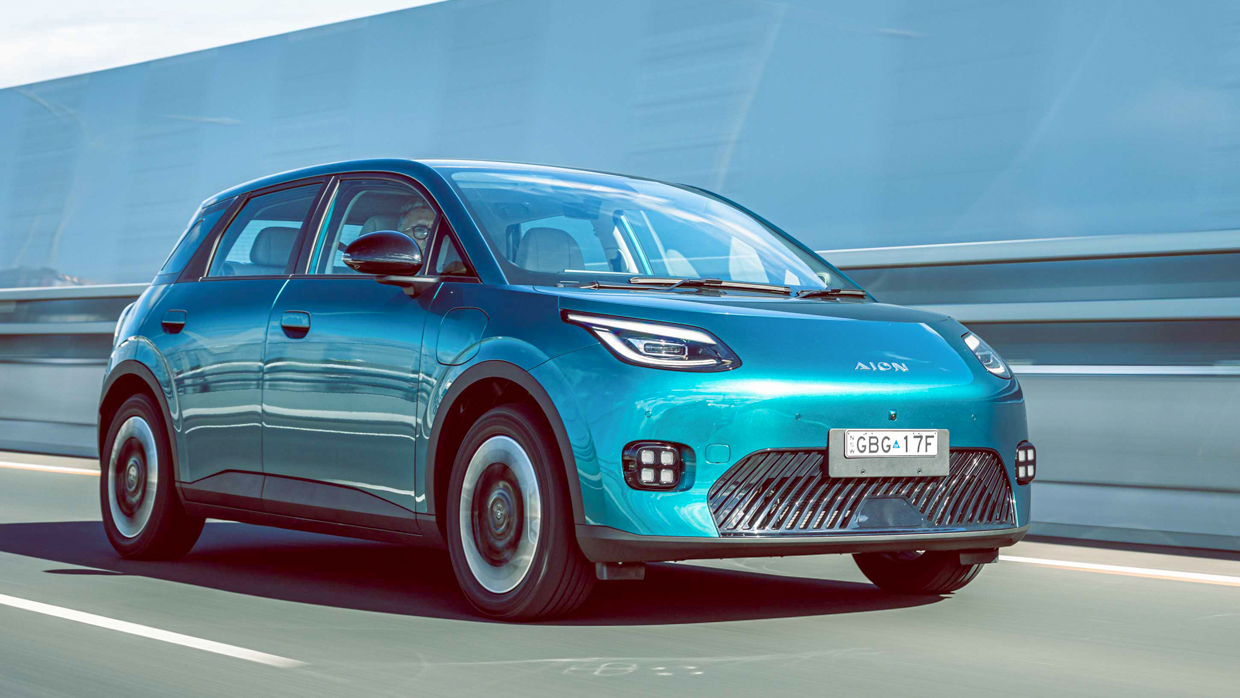
The Aion UT presents well, the cabin’s modern, minimalist and moderately upmarket design minted in a choice of two-tone colours that, with the fruity exterior hues on offer, bring funky and vibrant sense of celebration.
But it is also a cookie-cut style of sorts: a familiar look, from the two-spoke wheel down to the mismatched twin-screen affair, shared with the likes of Leapmotor B10 and soon-for-release Geely EX2, albeit with just enough originality to pick it apart from the compact Chinese pack.
Its execution is a mixed bag of hits and misses. While the absence of buttons and switchgear cleans up its look, control for nearly every conceivable feature – including the wing mirrors and sunroof screen – demands adjustments via submenu digging in the 14.6-inch touchscreen.
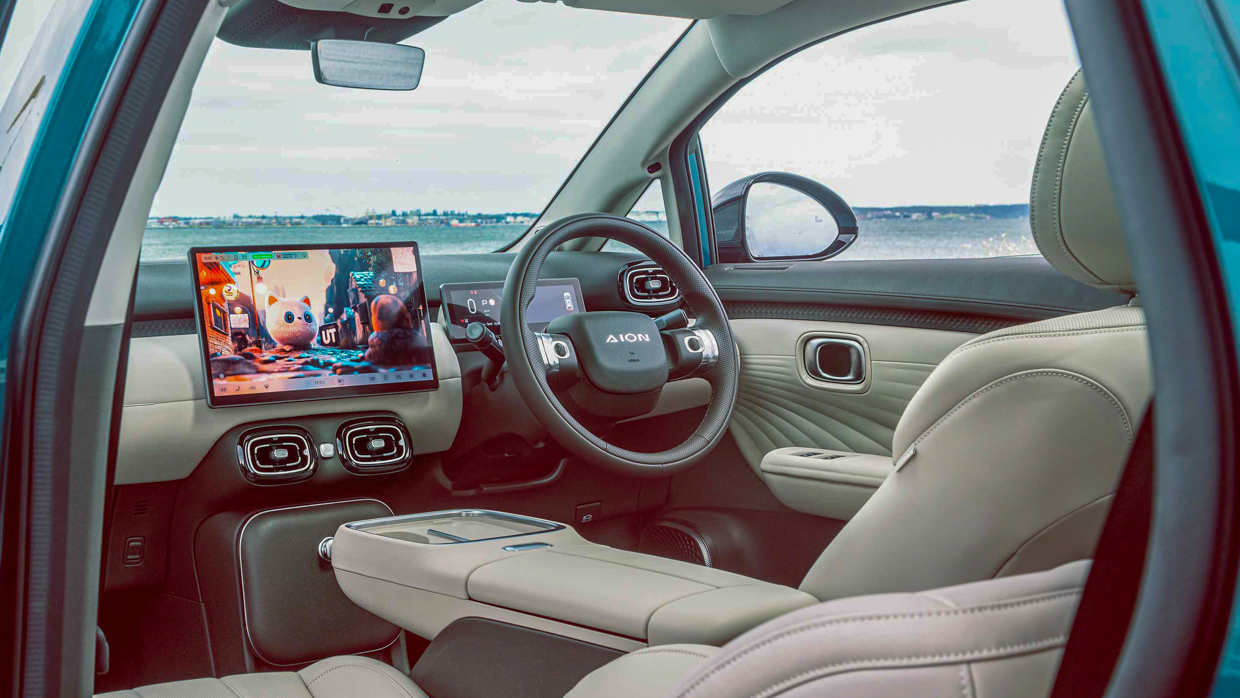
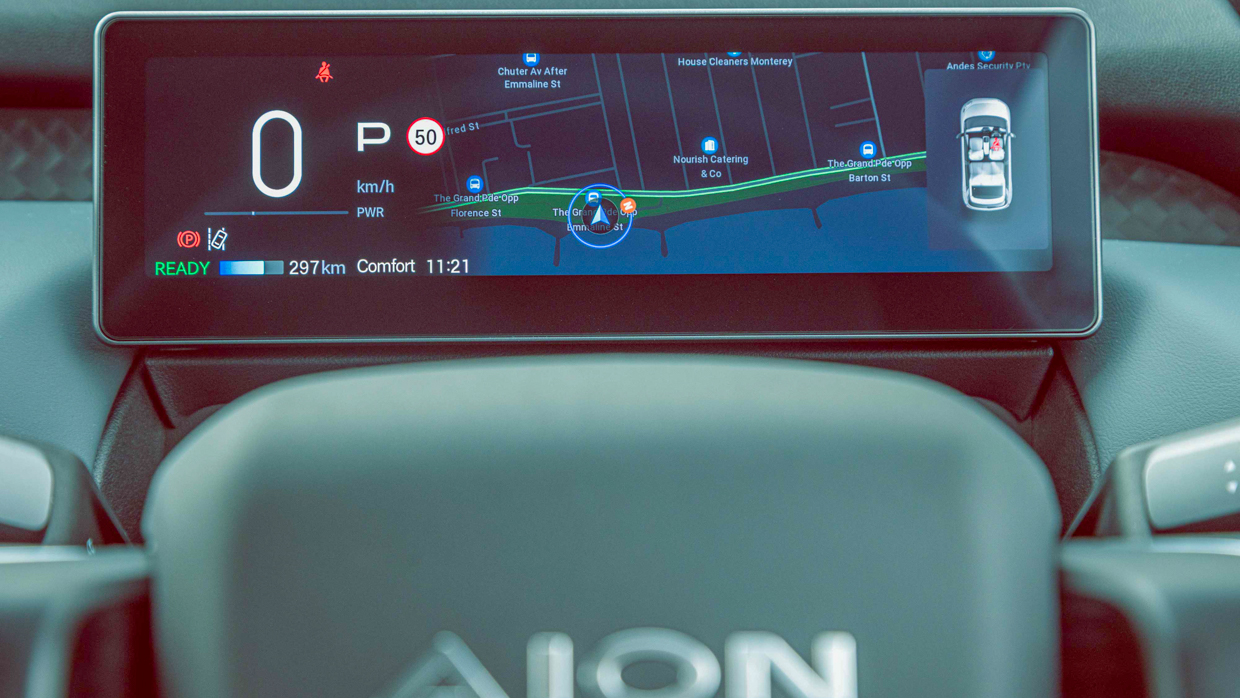
The once inspired design ethos of mirroring car feature adjustment with smartphone or tablet control is now well proven to be terribly flawed and carmakers have moved away from it. Why? Because you can’t watch the road and a screen at the same time. And steering wheel and voice control, as solutions, are merely Band-Aid fixes to a core problem.
What’s a shame is that much of the cabin space and its features and spec are welcoming and make for a nice place to spend time. That is, until you need to change or adjust anything, because the cabin design manages to drop the ball in execution in so many places.
The 14.6-inch touchscreen? It’s very sharp, bright and quick in response, with a brilliantly high-definition camera system. But while the skin designs are interesting and configurable, the default grey on white labelling is hard to see – and the screen can be blinding at nighttime and in tunnels, making settings distracting to change on the move.
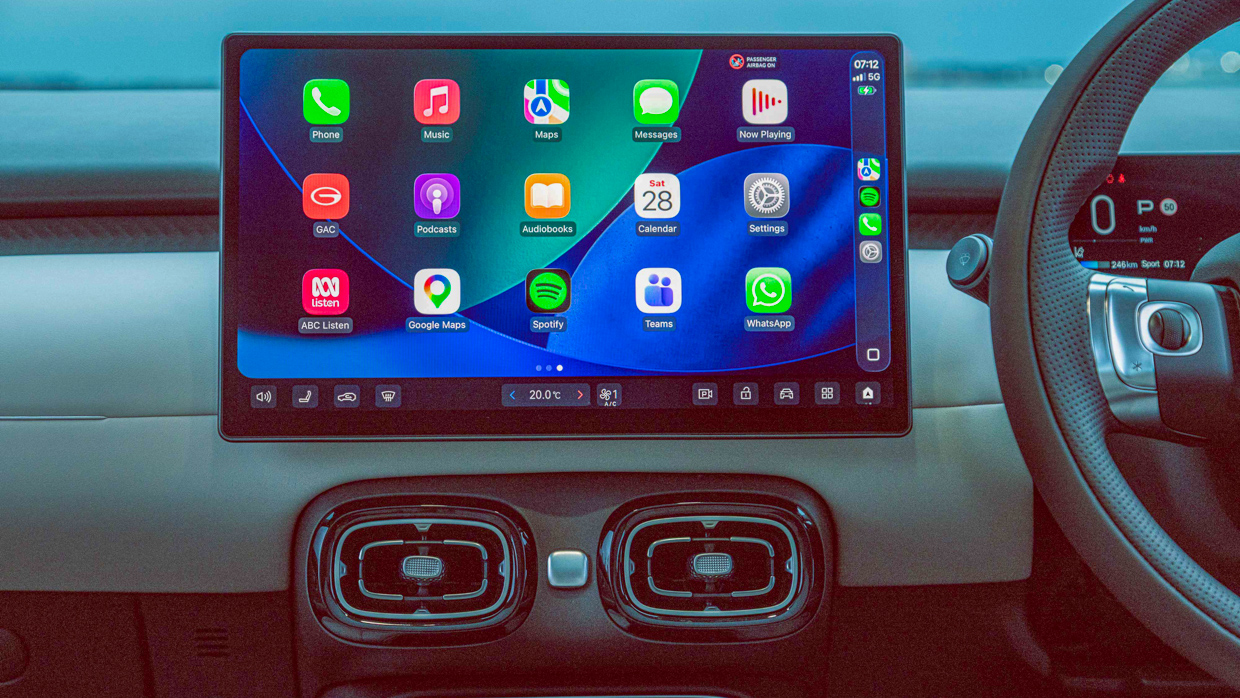
Then there are gremlins. After reducing the brightness of the blinding touchscreen one trip, it reverted to ‘full strength’ the following day, in low ambient light on the move. It caused the second pitstop of the day after, for reasons impossible to troubleshoot, wireless CarPlay refused to connect after multiple attempts (despite constant Bluetooth connectivity).
Other glitches? Two examples of the UT we drove returned constant seatbelt warnings despite occupants being belted up, and driver fatigue warnings – among other random ‘advice’ – are common just after vehicle start-up.
But there are plenty of positives. The front seats are comfy, the driver ergonomics are sound, and there’s plenty of familiar convention on the format and layout. Material choice is, on balance, very good, with a proper suppleness to the PVC seat trim and the myriad soft-touch surfaces.
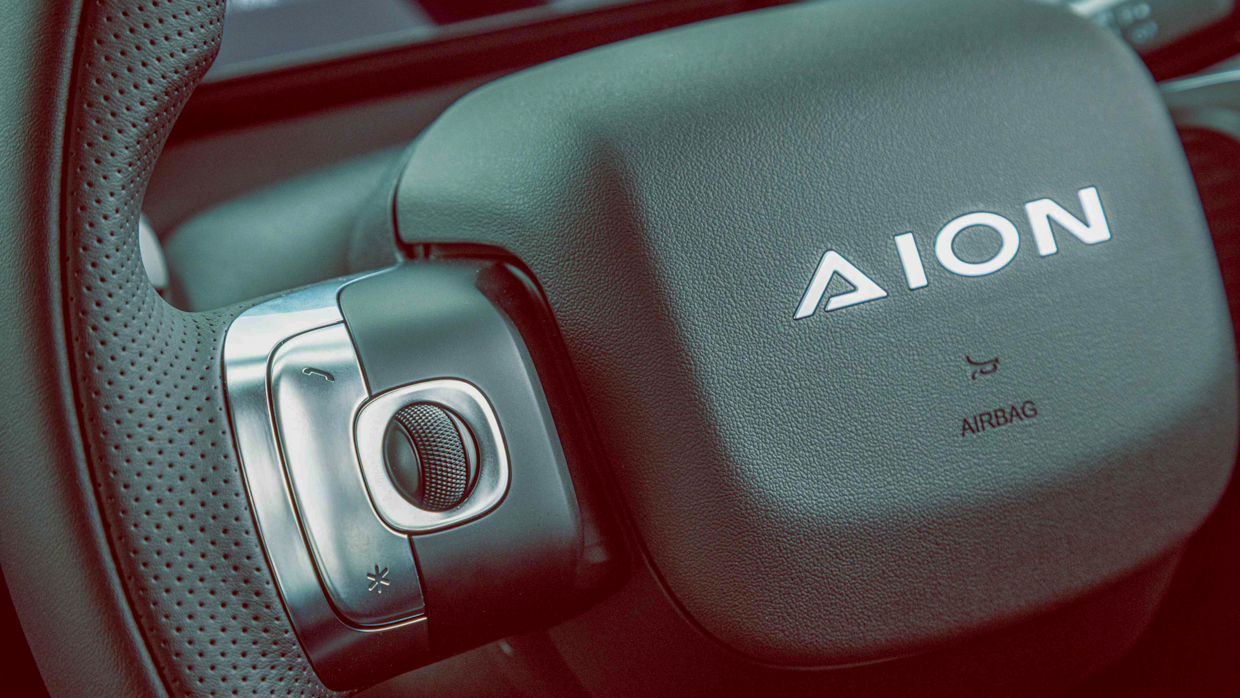
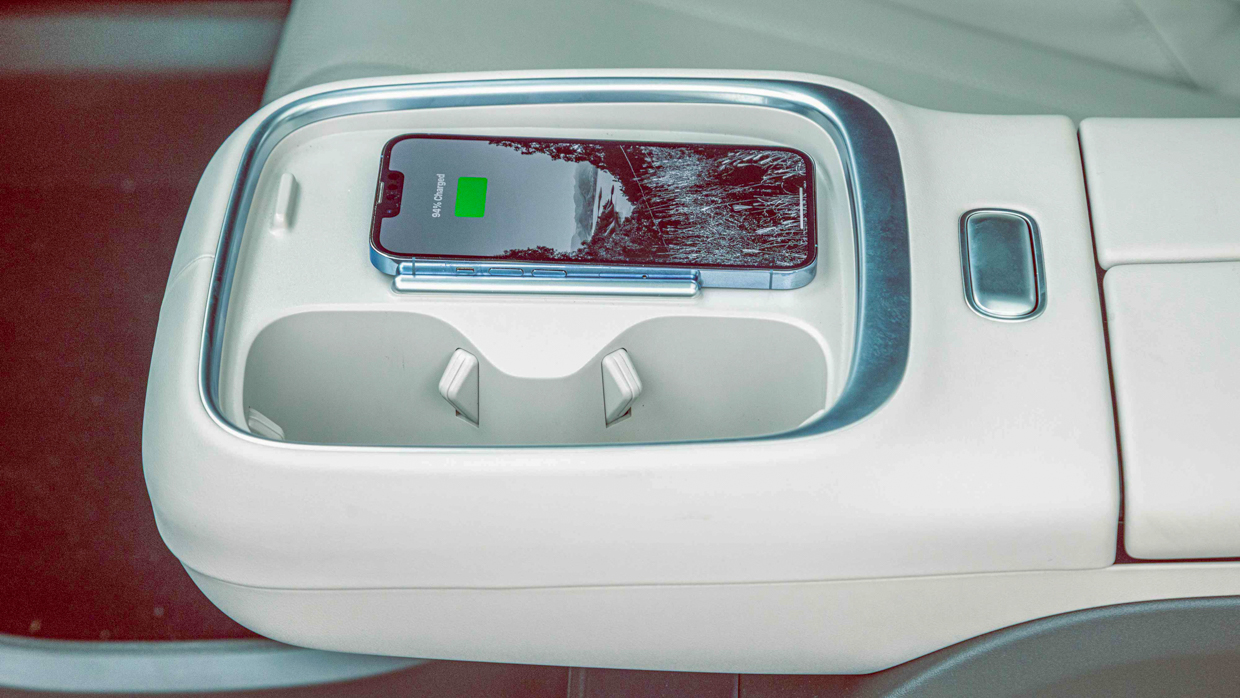
However, what’s with the HiLux-grade shiny plastic trim on the door tops and dash? And the hard plastic charging tray that leaves your phone banging about on the move?
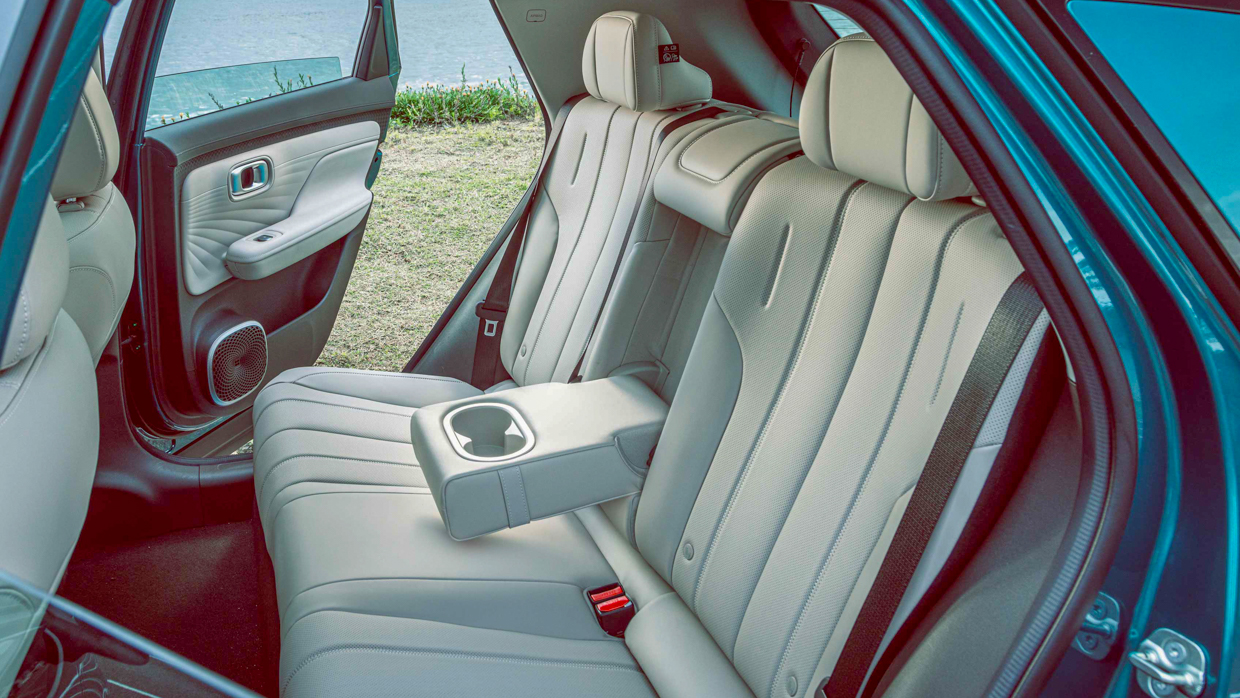
A real highlight of the cabin is the second row. GAC brass suggested Chinese taxis dictated UT’s design ethos, at least when it comes to maximising cabin room while keeping external dimensions as petite as possible. For its 4270mm length, the space the UT offers in the back is remarkable.
Better yet, the rear bench is – much like the front buckets – impressively comfortable and supportive, and the material blend up front doesn’t head downmarket as it migrates rearward. The sole USB-A port is cop-out, but the UT fits rear air vents and the supple trim extends to the front seatbacks as a premium touch.
The panoramic roof in the high-spec Luxury grade does stop short ahead of the rear occupants heads, but it adds a sense of airiness under daylight, even if the heat sink on a warm sunny day is considerable. It’s a shame UT’s air-con fans are so noisy.
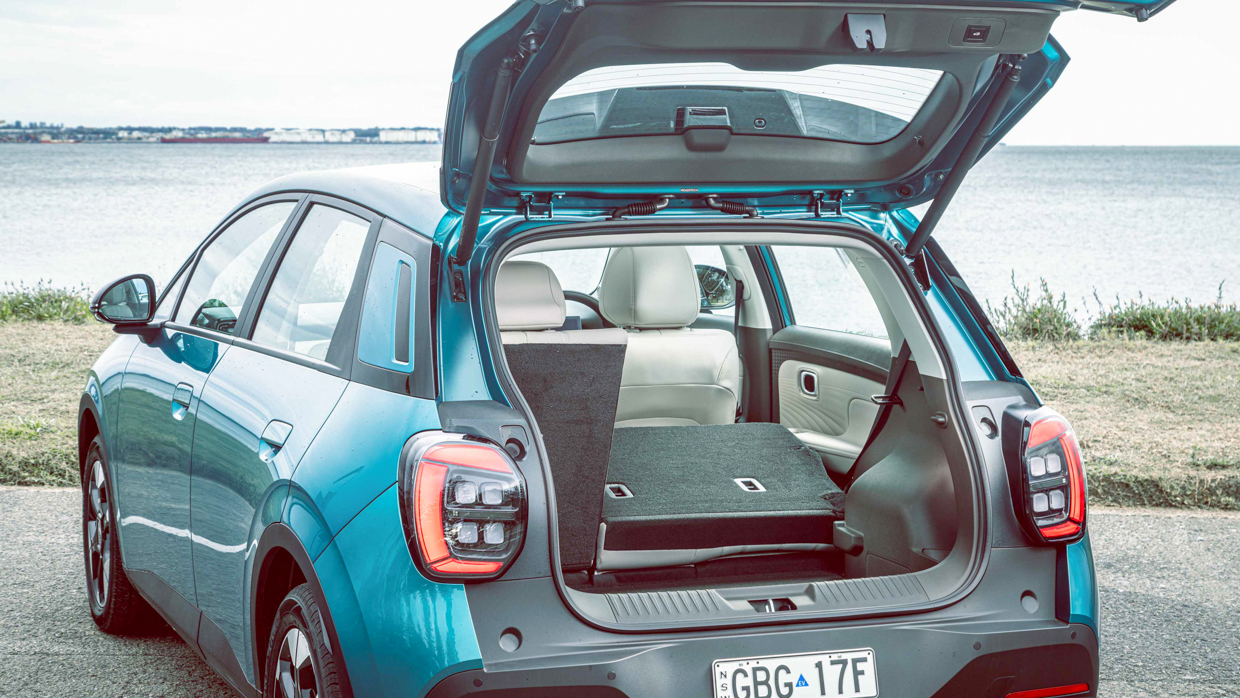
Boot space is advertised as 321 litres, which is decent enough for a compact city hatchback. No spare wheel, though – just an inflator kit under the floor, where charge cables are also housed. The UT has no frunk.
At its claim-beating 13.5kWh/100km consumption – and working on 55kWh ‘usable’ estimate of its 60kWh gross battery – the UT returned around 400 kilometres of real-world range against its 430km advertised claim.
Those figures were returned with almost half of the duration at highway speeds, punctuated by stints of hard driving. A stronger balance of urban driving for what is clearly positioned as a city car, that 430km peak is wholly feasible.
Warranty is eight years of unlimited-kilometre coverage, with eight years and 200,000km of battery coverage. That’s pretty enticing. The ‘pre-launch’ limited $30,990 D/A offer (through April 9th 2026) also includes a complimentary 22kW wallbox and 10A portable charger.
Servicing is required every 12 months or 15,000km, whichever comes first, with intervals ranging between $199 and $640, totalling $1607 over the first five years or an average of $322 per visit.
The Aion UT is a well present and nicely built electric hatchback that goes a long way to getting various elements right and pulling them together…yet fails to stick the landing in a few too many areas. It’s a good car at its core, if frustrating to use.
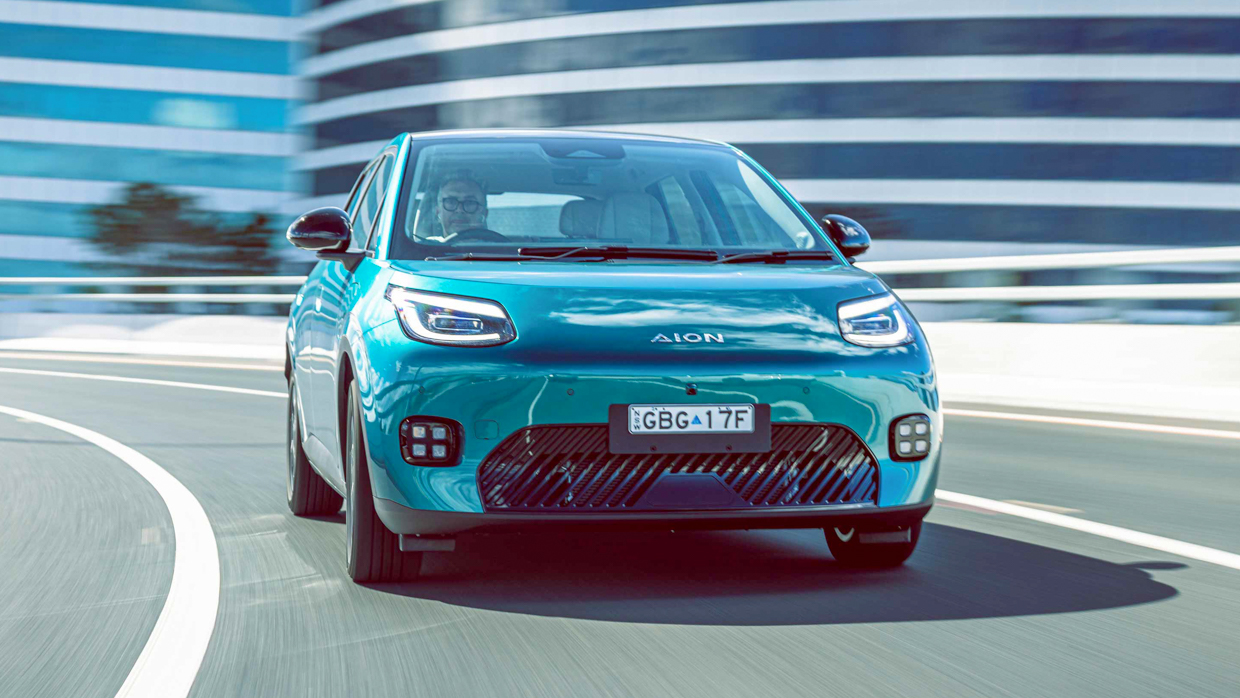
It’s possibly a mid-lifecycle update shy of being thoroughly impressive. But, more likely, its shortcomings are simply endemic of emerging motoring trends and expectations in 2026, especially the holistic system access via touchscreens (thanks, Tesla).
It’s funky enough, drives well enough, has decent enough performance, extensive tech, oodles of features and acceptable range, and in its base Premium guise – especially on pre-launch offer – value is compelling. Now it just needs to graduate from finishing school, iron out the gremlins and work on its user accessibility.
Iffy brakes, slow DC charging and the like aren’t the UT core issues: instead, it’s that it’s tiresomely finicky, fussy and irritatingly clumsy to use at the most basic disciplines, especially those such as adjusting the side mirrors or opening the sunroof scrim.
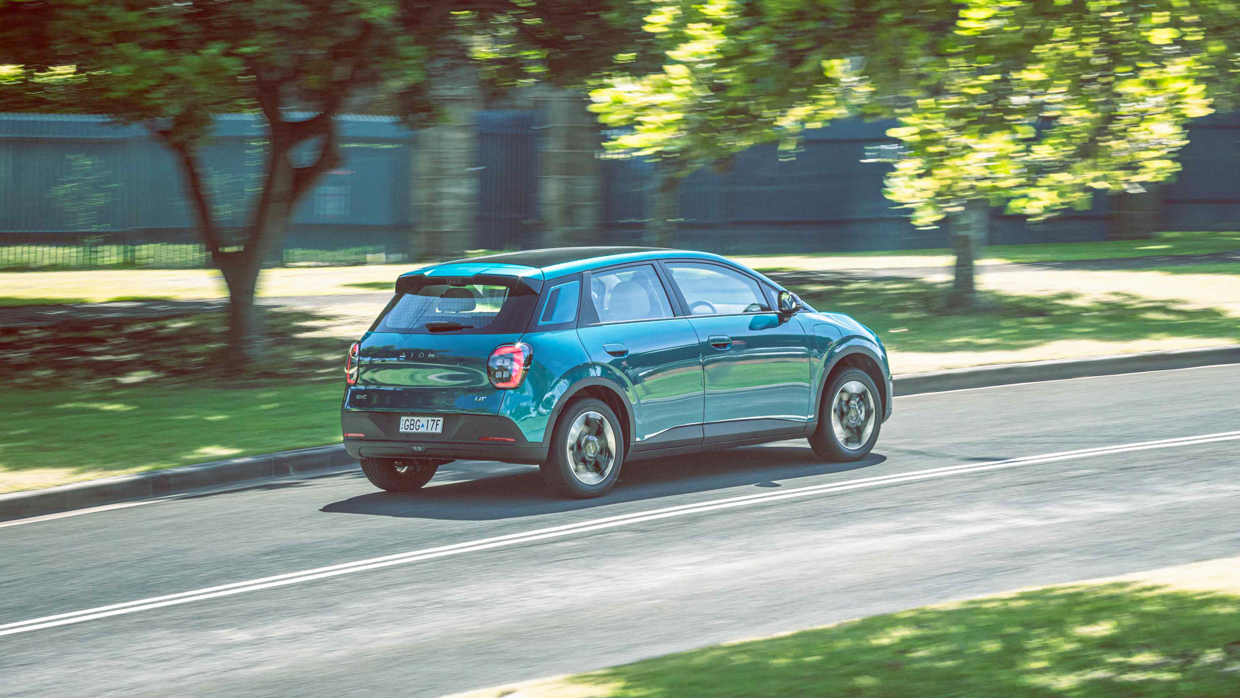
Even model branding faux pas, making its name tricky to wrap your head and mouth around, is a blockage to accessibility. Not what you want when hoping land bums in seats of an unfamiliar city EV from an unfamiliar importer.
Key specs (as tested)
About Chasing cars
Chasing Cars reviews are 100% independent.
Because we are powered by Budget Direct Insurance, we don’t receive advertising or sales revenue from car manufacturers.
We’re truly independent – giving you Australia’s best car reviews.
The estimate provided does not take into account your personal circumstances but is intended to give a general indication of the cost of insurance, in order to obtain a complete quote, please visit www.budgetdirect.com.au. Estimate includes 15%^ online discount.
^Conditions Apply
Budget Direct Insurance arranged by Auto & General Services Pty Ltd ACN 003 617 909(AGS) AFSL 241 411, for and on behalf of the insurer, Auto & General Insurance Company Limited(ABN 42 111 586 353, AFSL 285 571).Because we don’t know your financial needs, we can’t advise you if this insurance will suit you. You should consider your needs and the Product Disclosure Statement before making a decision to buy insurance. Terms and conditions apply.
Indicative quote based on assumptions including postcode , 40 year old male with no offences, licence suspensions or claims in the last 5 years, a NCD Rating 1 and no younger drivers listed. White car, driven up to 10,000kms a year, unfinanced, with no modifications, factory options and/or non-standard accessories, private use only and garaged at night.
^Online Discounts Terms & Conditions
1. Discounts apply to the premium paid for a new Budget Direct Gold Comprehensive Car Insurance, Third Party Property Only or Third Party Property, Fire & Theft Insurance policy initiated online on or after 29 March 2017. Discounts do not apply to optional Roadside Assistance.
2. Discounts do not apply to any renewal offer of insurance.
3. Discounts only apply to the insurance portion of the premium. Discounts are applied before government charges, taxes, levies and fees, including instalment processing fees (as applicable). The full extent of discounts may therefore be impacted.
4. We reserve the right to change the offer without notice.