Powered by

-
Car Reviews
Latest reviews
-
Car News
Latest news
-
Car Comparisons
Latest comparisons
- Chasing Deals
Latest reviews
Latest news
Latest comparisons
BYD’s first luxury vehicle for Australia is a Prado-baiting four-wheel drive. A first comprehensive test on and off local roads revealed some big surprises…
The modus operandi of Chinese manufacturer BYD in Australia has been to identify high-volume segments of the new car market — and then to enter and disrupt established European, Japanese and Korean brands with long spec sheets, sharp pricing, and plug-in efficiency.
Frankly, that playbook is nothing Hyundai or Toyota didn’t follow in their day, but this time around, BYD’s sheer scale in China has supercharged the approach, with shortened development cycles magnifying the threat to incumbent players.
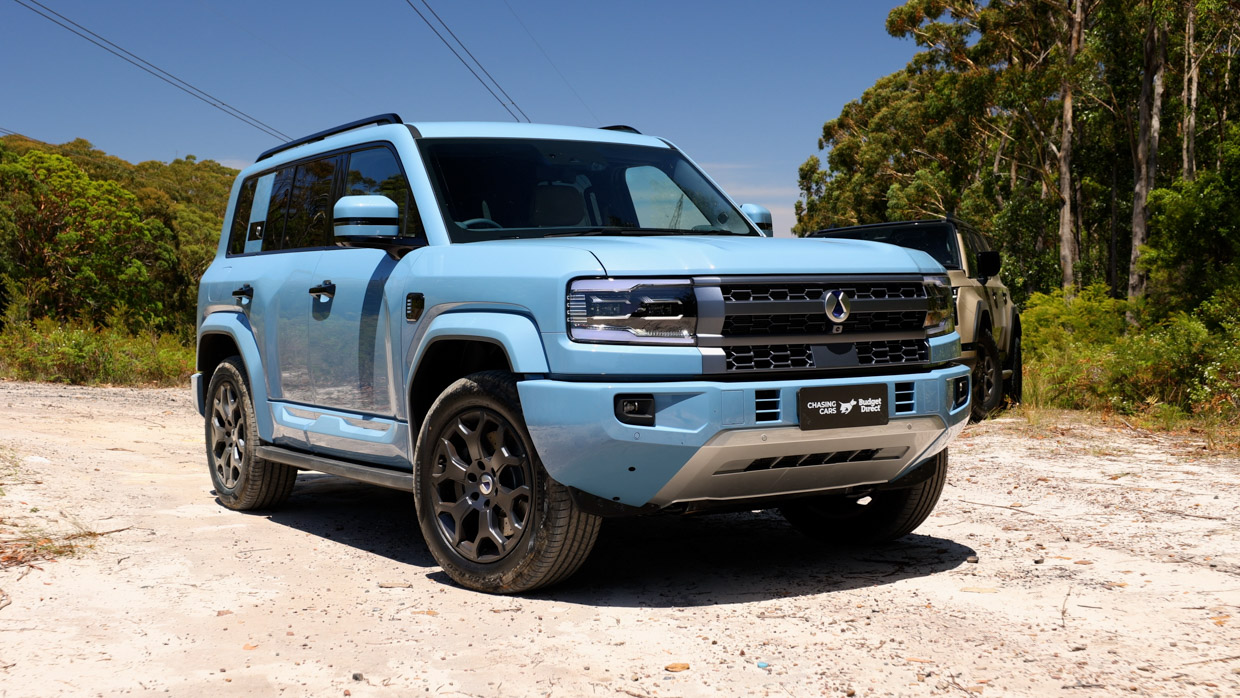
Having already built annual Australian sales to about 50,000 cars from a mix of affordable plug-in hybrid (PHEV) and full EV models, BYD will kick off 2026 with its sights set on not one, but three, new targets at once.
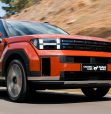
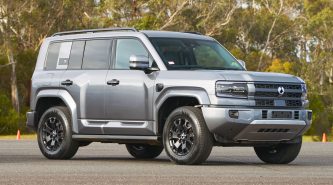
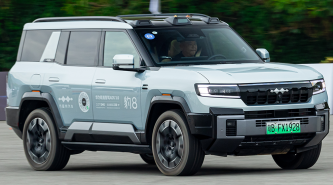
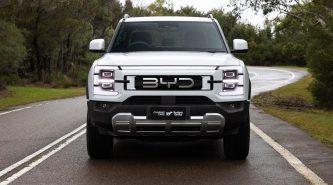
With the boxy PHEV Denza B5, BYD is audaciously turning its blowtorch first on Australia’s luxury car market, secondly on the rugged 4WD segment, and thirdly, specifically on the popular Toyota LandCruiser Prado — all in a single move.
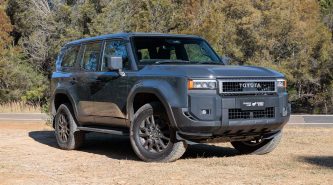
Now arriving in dealerships, the 4.9-metre-long B5 takes aim at the 250 Series Prado and its peers. In February, the B5 will be backed up by the 5.2-metre Denza B8, which brings larger dimensions and uprated towing capacity to tackle the Toyota LandCruiser 300 Series and Nissan Patrol in the upper-large 4WD class.
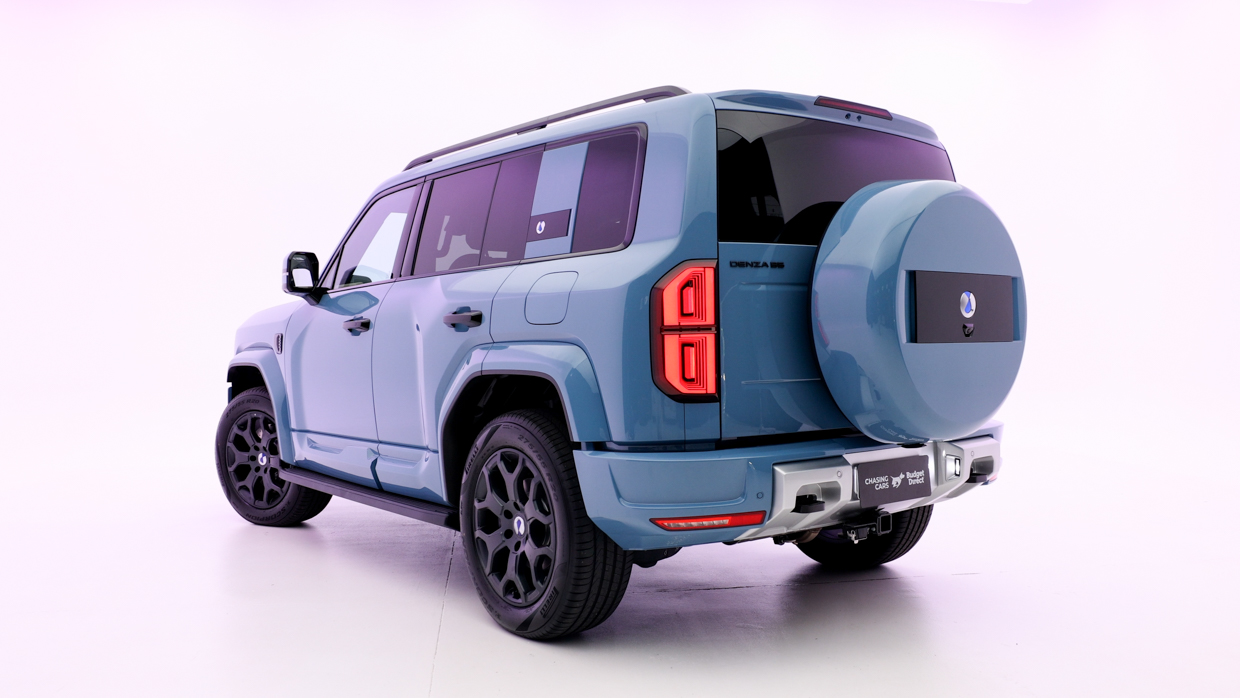
Denza is backing the B5 and B8 launch with summertime advertising aimed to familiarise Australian buyers with what is, ultimately, another Chinese brand — albeit one that serves as BYD’s luxury arm in its home market.
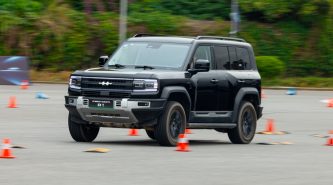
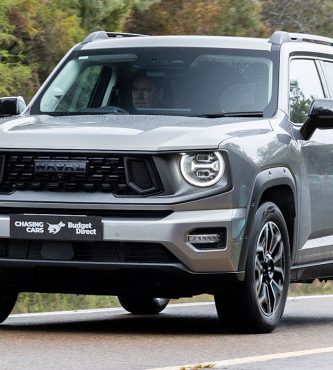
In China, Denza focusses on road-going EVs and PHEVs, some of which may be added to the Australian lineup later. But the Australian positioning of Denza will differ, with local product planners given licence to rebadge rugged models from BYD’s 4WD specialist, Fangchengbao, with that sub-brand not intended for Western export.
That explains Denza’s Australian launch strategy, which centres on the pair of rugged off roaders. Having driven both the B5 and B8 overseas and on local proving grounds, our first real-world Australian road and trail test was of the model likely to generate strong early demand: the B5 Leopard.
Priced from $74,990 plus on-road costs, the B5 opens near base Prado GX money ($74,500 + ORCs). With Chasing Cars having recently concluded a long-term test of that vehicle (which uses the same 150kW/500Nm four-cylinder diesel as all Prados), the 400kW/760Nm PHEV B5 feels considerably more lavish in every way.
The up-spec Denza B5 Leopard model ($79,990 + ORCs) asks a further $5000, pitching in as a rival to the popular Prado GXL despite having a performance and spec offer more akin to the Prado’s Lexus GX cousin (from $118,320 + ORCs). The B5 Leopard also lands in the same territory as a Ford Everest Platinum V6 ($82,990 + ORCs).
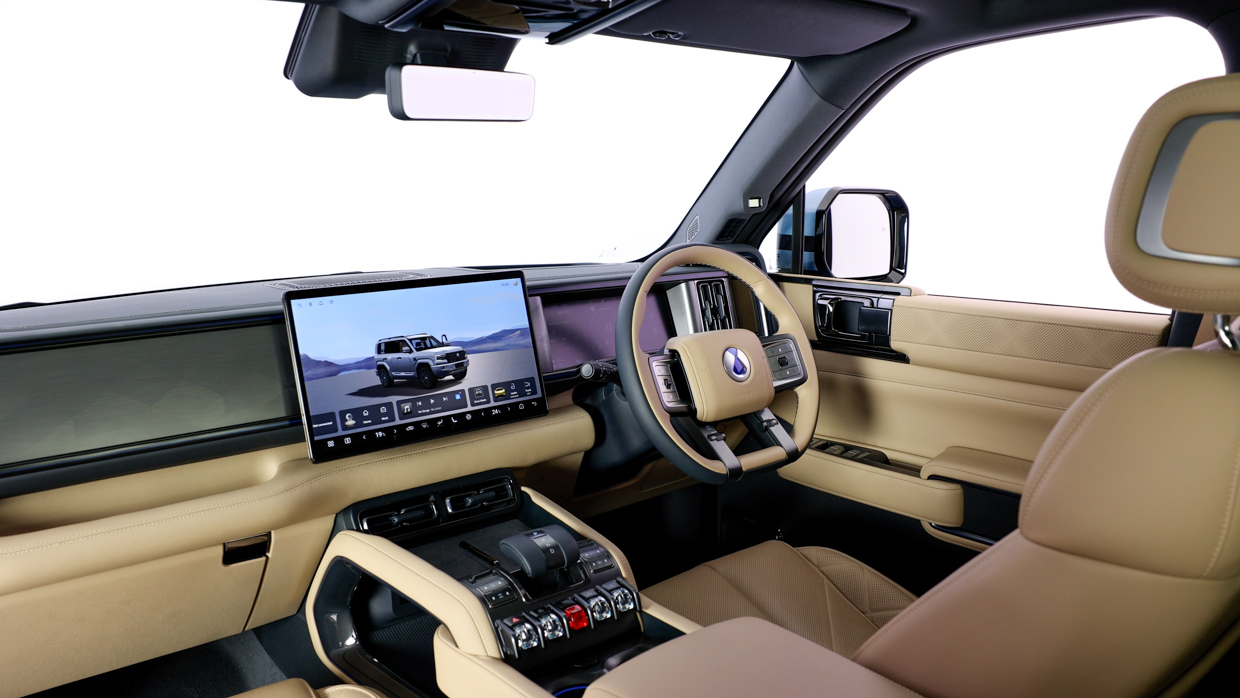
Standard on a base B5 are 18-inch wheels with full-size, tailgate-mounted spare, genuine leather, a 15.6-inch touchscreen, wireless Apple CarPlay/Android Auto, 12.3-inch digital instrument cluster, 12-way power driver’s seat with memory, heated/cooled/massaging front seats (plus heated rear seats), a fridge/hotbox, matrix LED headlights, acoustic glass, and opening sunroof with shade.
The $80K B5 Leopard adds — importantly — adaptive, hydraulic ‘DiSus-P’ suspension, plus 20-inch wheels, Nappa leather upholstery, cooled rear seats, a digital rear-view mirror, a second 50-watt wireless charger, and ultra-wideband digital key support alongside the regular B5’s NFC key and two-year Connected Services app plan.
At the time of testing, capped price servicing had been confirmed to exist, but pricing remained TBA. Warranty mirrors BYD’s offering, with six-year/150,000km vehicle cover supplemented by a separate eight-year/160,000km warranty for the B5’s 31.8kWh lithium iron phosphate (LFP) battery pack.
Like the larger B8, the Denza B5 is a body-on-frame 4WD that is offered only as a PHEV.
Beyond its bigger footprint, third-row seating and a 20kW power bump to 420kW, the B8 will be differentiated from the B5 by towing more — 3500kg braked versus the B5’s 3000kg towing capacity.
For the Australian B5 model, towing capacity and suspension tuning were the major changes made compared with the China-market Fangchengbao.
The dampers were stiffened for Australia, after the Chinese tune was judged to be too soft; local Denza executives wanted it even firmer, HQ pushed back, arguing buyers would prefer a comfort bias.
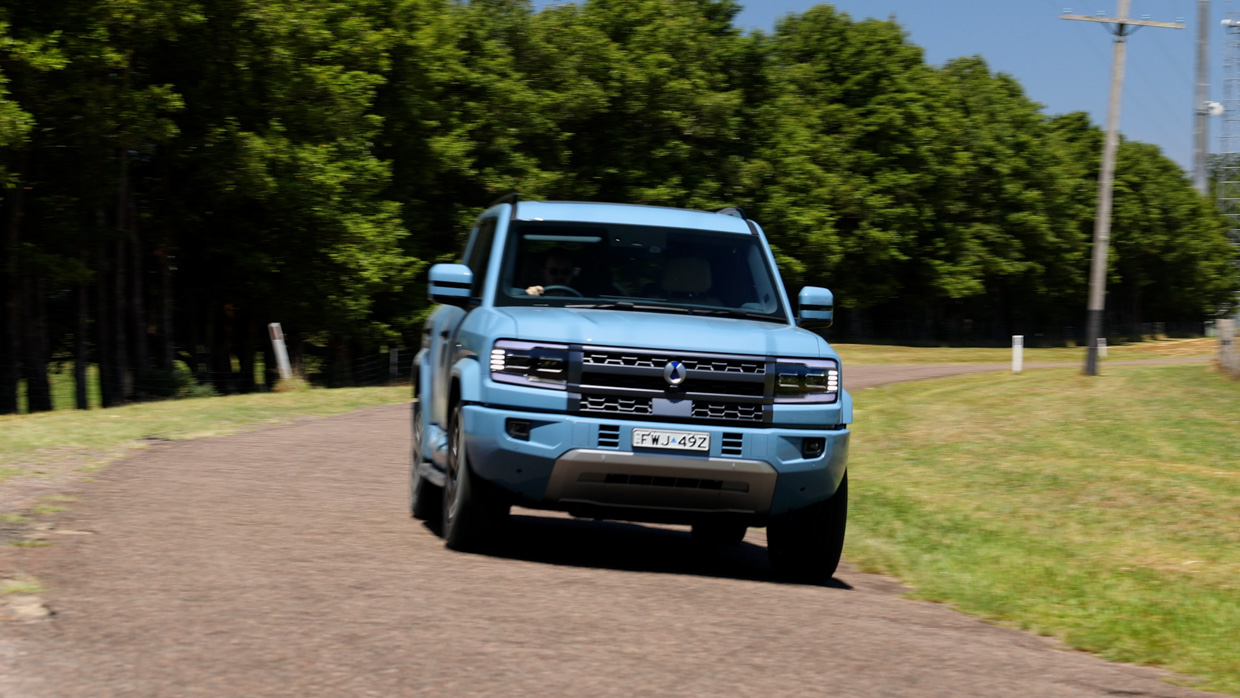
The B5 Leopard is very plush. By body-on-frame standards, ride quality on sealed roads is comfortable and refined, with minimal head toss and solid isolation from vibration. Acoustic glass and plenty of noise insulation add to the hushed ambience and on suburban and country roads, comfort levels easily surpass a Prado or even a Lexus GX.
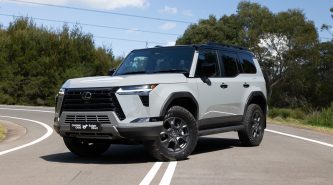
To stay grounded while assessing the rather complex Denza B5 in a limited time, we kept a Lexus GX550 Overtrail close by as a benchmark.
By comparison to the more traditionally suspended Lexus, the B5 Leopard’s ride and refinement are helped along significantly by its DiSus-P suspension, which uses adaptive, fluid-filled hydraulic dampers at each corner to manage body control while also varying damper stiffness and overall vehicle ride height.
We have not yet tested the standard B5 on Australian roads, but the flexibility and customisation introduced to the Leopard via DiSus-P — which is also standard on both B8 grades — already seems like a worthwhile upgrade.

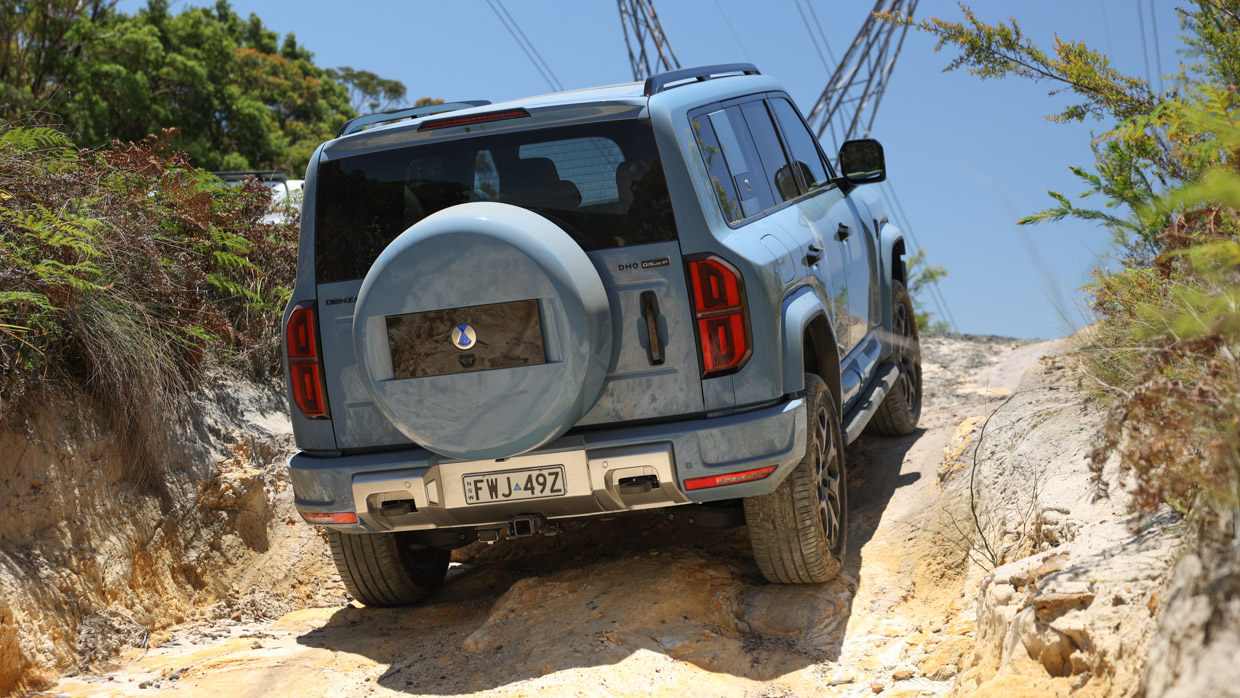
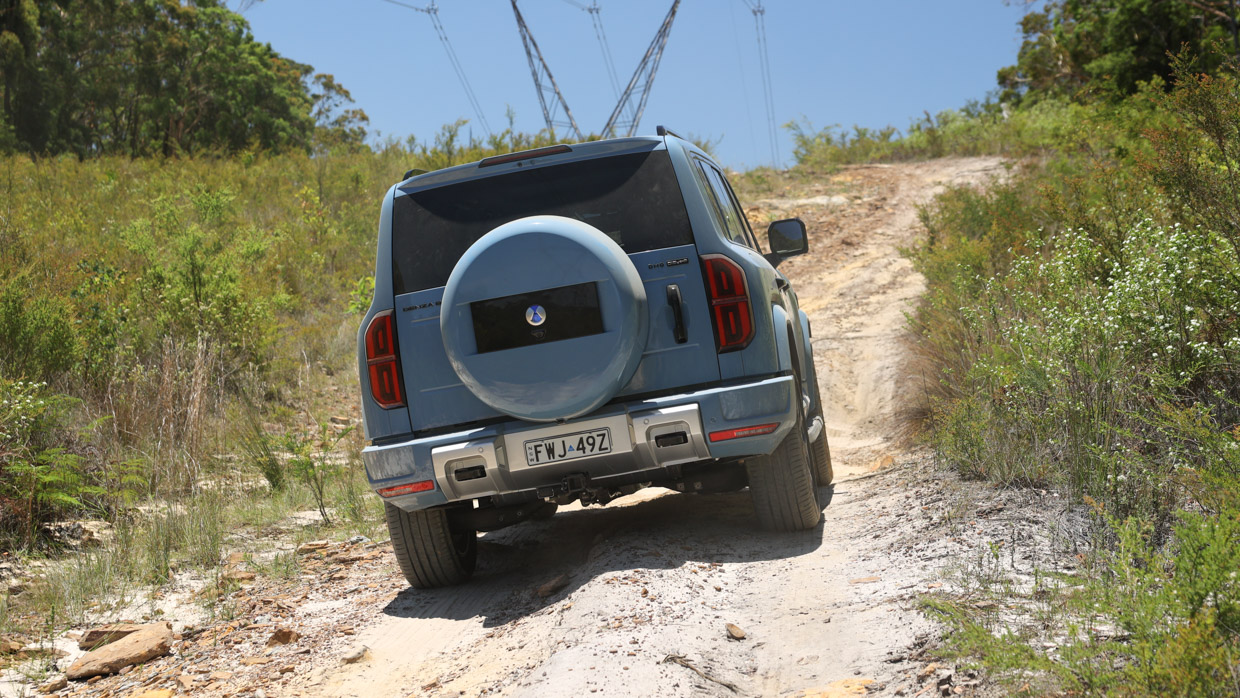
In its on-road settings (there are a frankly excessive 16 drive modes, though only a handful really matter), the B5 cruises along at just under 200mm of ground clearance. Switch into off-road modes and DiSus-P raises the body to a claimed 310mm with a wading depth of 790mm.
That extra clearance allowed the B5 to clear steps and obstacles on our moderate off-road test track more easily than the Lexus GX, which sits at 225mm of clearance with a wading depth of 700mm.
The B5 Leopard’s front and rear locking differentials — which the related BYD Shark 6 does not get — helped where wheels lifted clear of the ground, particularly as the B5’s traction control is a bit slow to react, though it is improved compared to the BYD ute.
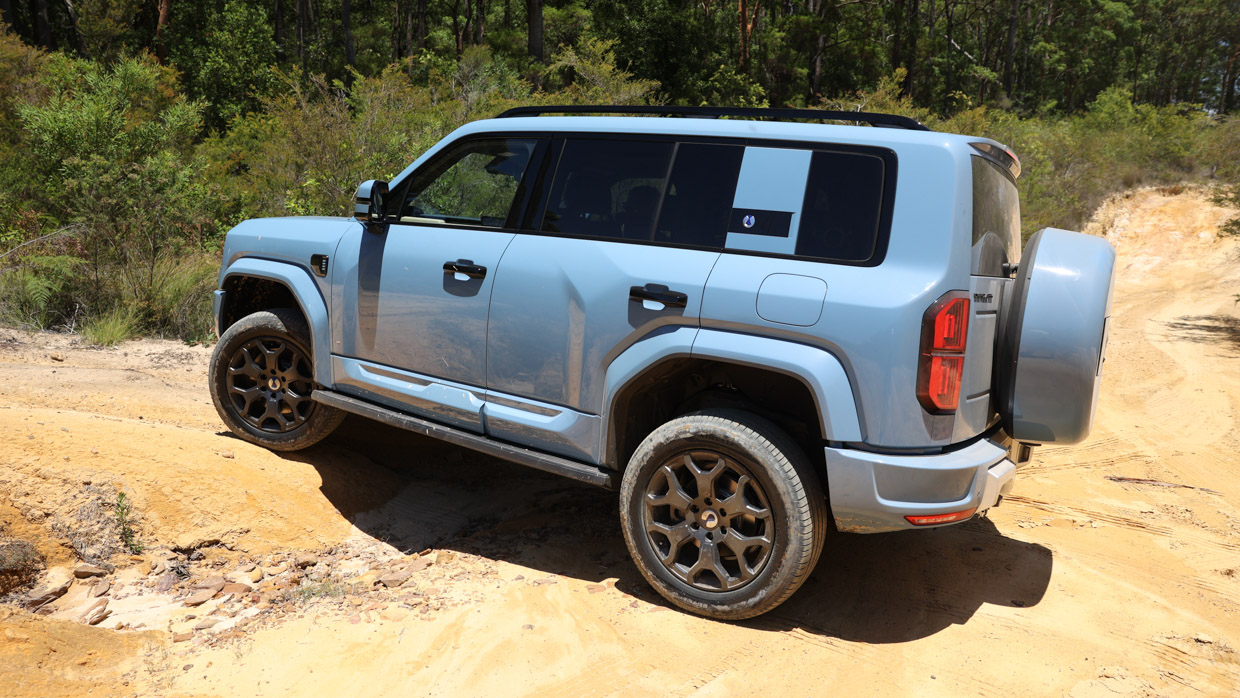
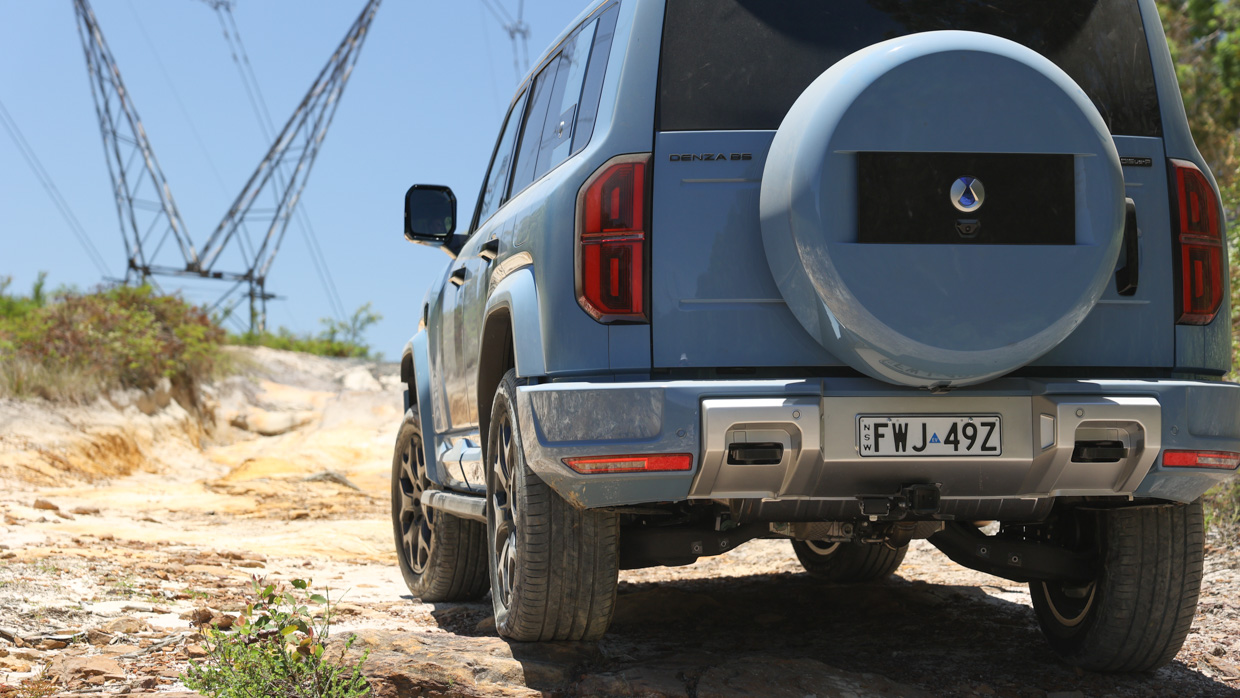
A decision that will divide buyers is the Leopard’s fitment of matte-black 20-inch alloy wheels shod in 275/55 R20 Pirelli Scorpion highway-terrain tyres. These boots are poorly suited to serious off-roading, causing slippage, though it would be an easy swap to all-terrain rubber (like the GX Overtrail).
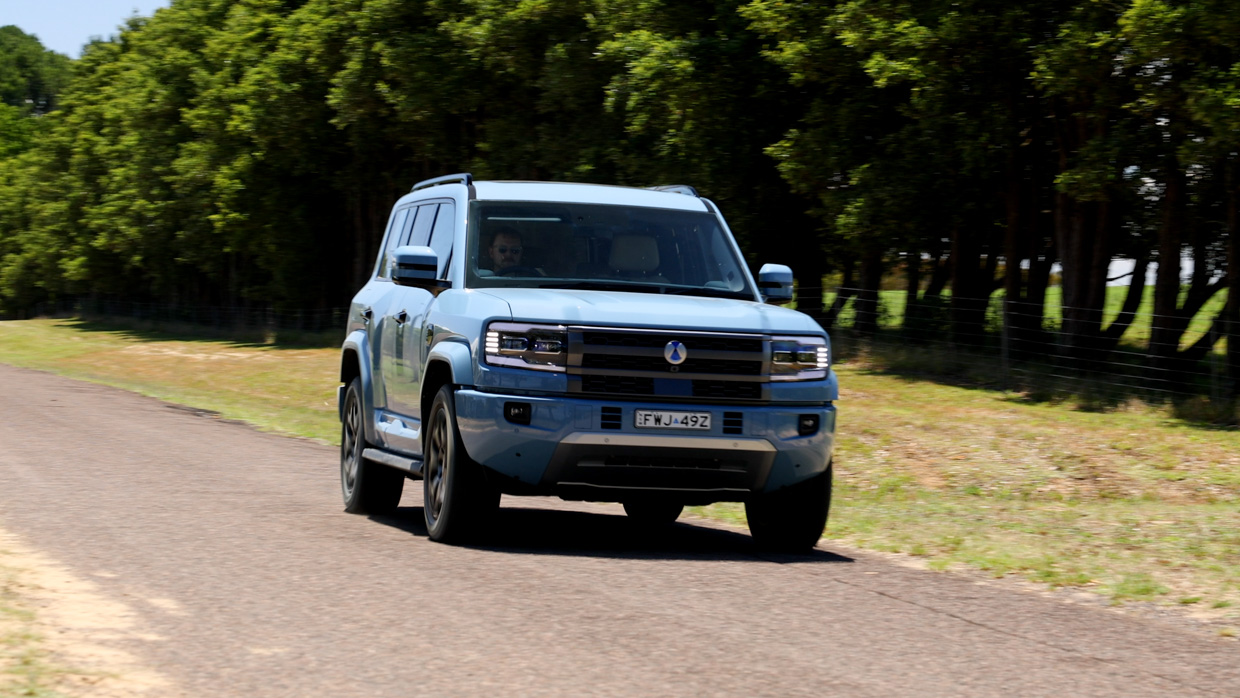
On the road, though, the Pirellis must contribute to the B5’s cornering abilities which are … only average. The Denza does not enjoy being hustled: despite being slightly smaller externally than a Prado, GX or Ford Everest, the B5 is enormously heavy, with a 3007kg kerb weight, and three tonnes of mass inevitably brings a lot of inertia.
The Leopard avoids outright wallow, however. The tyres generate decent grip, and the DiSus-P dampers work very hard to keep the body relatively flat in corners. So, instead of rolling laterally, the B5 tends to slip into understeer, leading drivers to reduce speed. The effect is enough to, wildly, make a 2500kg Lexus GX550 feel sporty by comparison.
Some of the B5’s heft comes from its LFP battery pack, which underpins a claimed 90km (WLTP) electric driving range, and in urban commuting conditions, we managed 88km in EV mode at an indicated 27.0kWh/100km. Once the battery drops below 25 percent state of charge, the system forces the 1.5-litre turbo petrol engine to fire up.
That strategy makes sense. The 135kW/260Nm petrol engine really needs the support of the battery, along with the 200kW front and 285kW rear electric motors, to move the B5 along briskly. Thanks to the software’s battery buffer, the B5’s small petrol engine is never left to toil alone.
In theory, you might be able to confuse the PHEV system if you hit the 25 percent buffer and then subjected the B5 to huge demands, but we were not able to do so. In towing mode, for example, the engine operates more aggressively as a generator to build the charge level to a 75 percent minimum to ensure plentiful assistance.
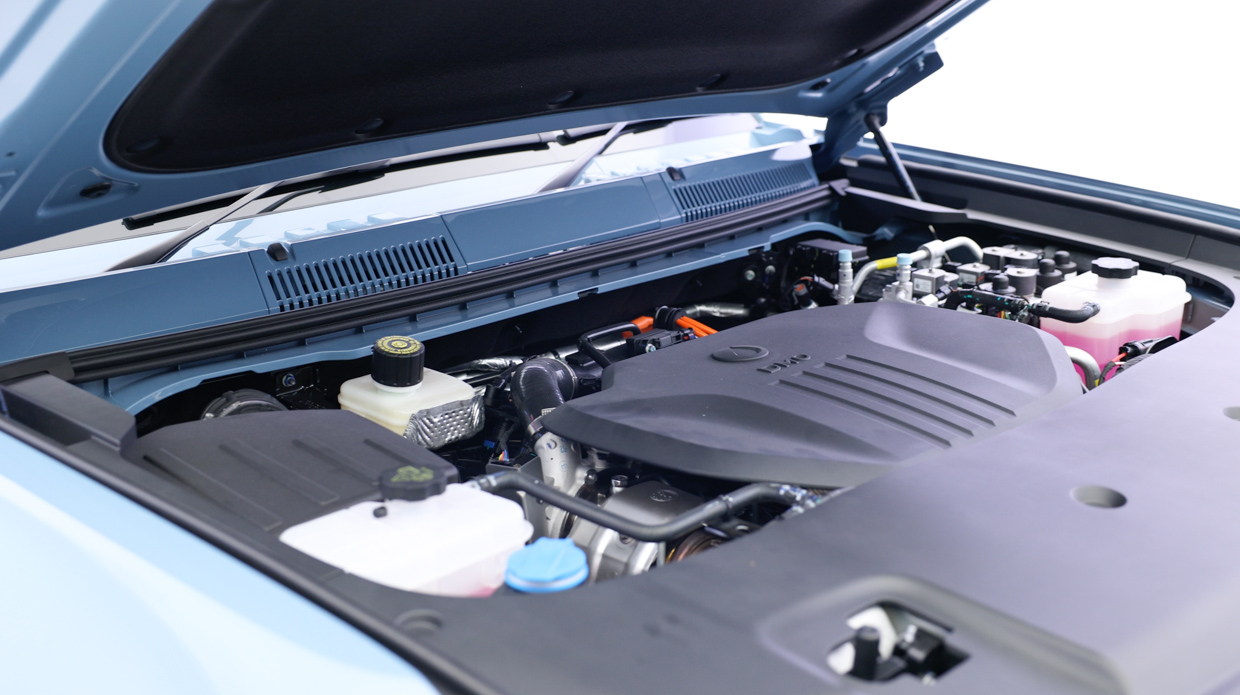
But despite claimed peak 400kW/760Nm outputs, the B5 never feels that quick. Throttle response from rest is seriously sluggish with a noticeable delay before the motors deliver full punch. Once they do (after a couple of seconds), the B5 surges forward, suggesting a software-imposed motor limitation.
Still, driven purely in EV mode, the B5 feels responsive enough (unlike many PHEVs) explained by the fact that the Denza’s twin electric motors outgun the petrol engine. There are no gears with only electric power sent to the motors.
Fuel efficiency once the petrol engine is running varies widely with conditions. On the highway, we recorded 8.2L/100km (1012km petrol range), similar to a diesel Prado, but harder driving on country roads or when off-roading saw consumption climb to 14.0L/100km (592km range), closer to the twin-turbo V6-powered Lexus GX.
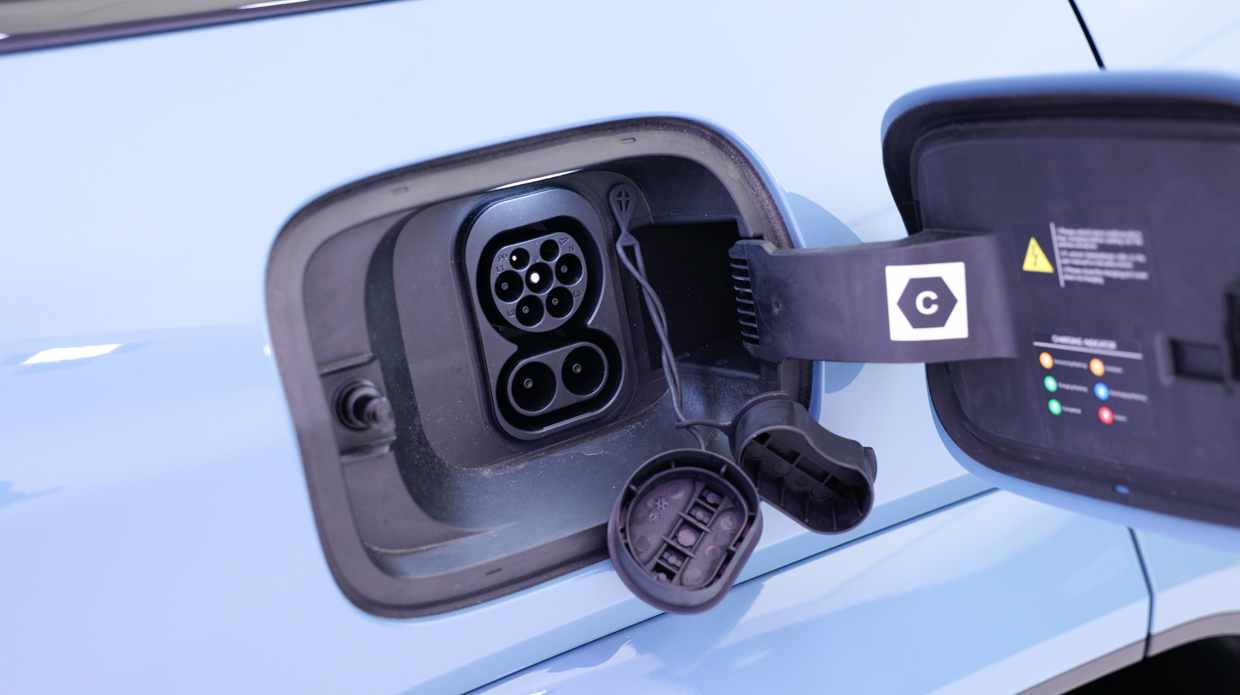
You could run the B5 purely on petrol and never plug this hybrid in, but owners that charge the Denza regularly — via AC at home/work at up to 11kW, or DC public charging at up to 100kW — will unlock meaningful running cost advantages, especially for urban driving, while enjoying stronger performance more of the time.
It is encouraging to see Denza, via BYD, responding to feedback on driver assistance technology tuning. Audible speed warnings stay off once disabled, though lane-keep assistance remains somewhat oversensitive and reactivates at restart. The 360-degree camera, though, is excellent, making parking and off-roading easier.
Size-wise, the Denza B5 occupies its own niche. At around 100mm shorter than a Prado, Denza elected to make the B5 a dedicated five-seat, two-row 4WD, leaving the 300mm-longer B8 model to cover off three-row demand.
Inevitably, the five-seat limitation can make the B5 less flexible than key rivals like the Prado or Everest, both of which can be ordered with seven seats.
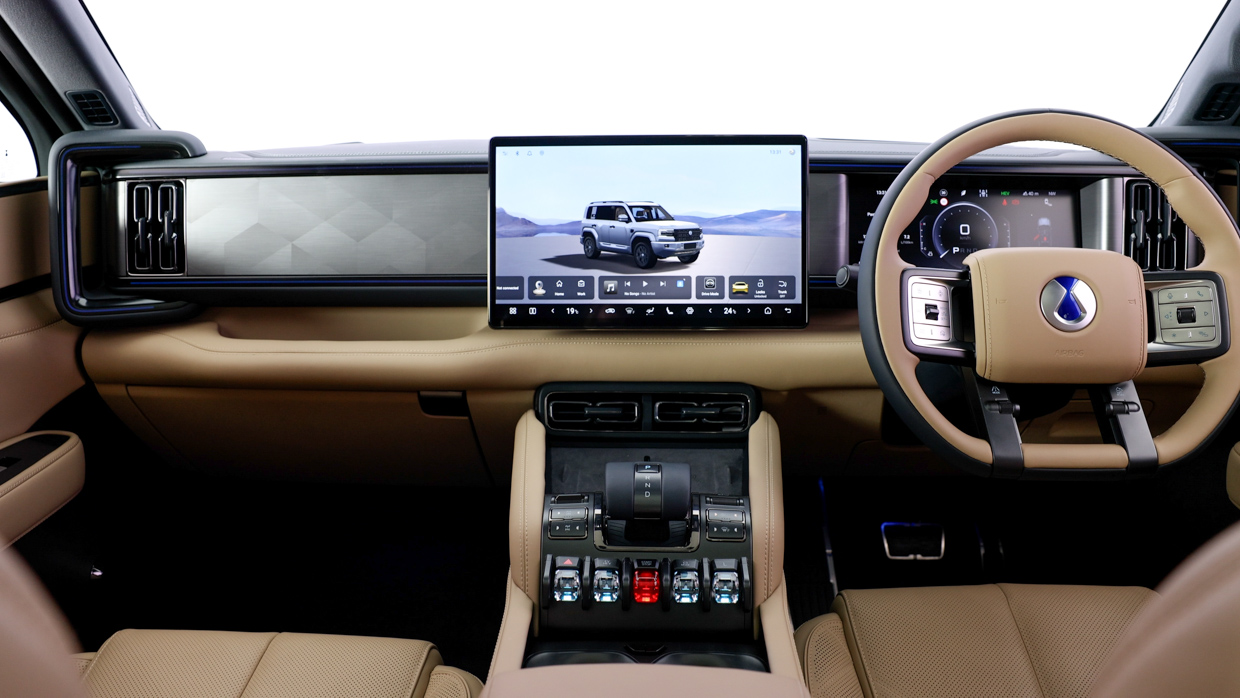
However, the B5 picks up some versatility slack via perceived interior quality that is noticeably higher than a Toyota or Ford. From the moment you step inside, it is clear that Denza has aimed for luxury-grade finishes.
Climbing into the squared-off cabin, the sheer amount of content — and room — is quite striking. Real leather with heating/cooling, two large screens up front, and dramatic switchgear create a plush and high impact ambience. For buyers stepping up from mainstream brands, the B5 immediately feels generous.
But those coming from established European or Japanese luxury brands may find the Denza aesthetic a touch shouty or even nouveau — that’s a subjective call. Taken for what it is, as an $80K-and-change 4WD, the Denza B5’s cabin is undeniably good.

Driven back-to-back over a long distance with the Lexus GX, the Denza B5 stood out for its seat comfort. The driver benefits from 12 ways of electric adjustment (10 for the front passenger), with both first-row seats featuring massage functions that do a good job of reducing fatigue over many hours.
Black leather is standard, but light green hide or our tester’s rich, sandstone caramel nappa leather are well worth considering as they lend the B5’s cabin a distinctive and premium feel.
While the seats and dash finishes feel like Denza exclusives, the brand found cost savings elsewhere by borrowing quite extensively from the BYD parts bin. The 15.6-inch touchscreen and 12.3-inch instrument cluster are barely reskinned from BYD while the wiper and indicator stalks feel far cheaper than the B5’s price.
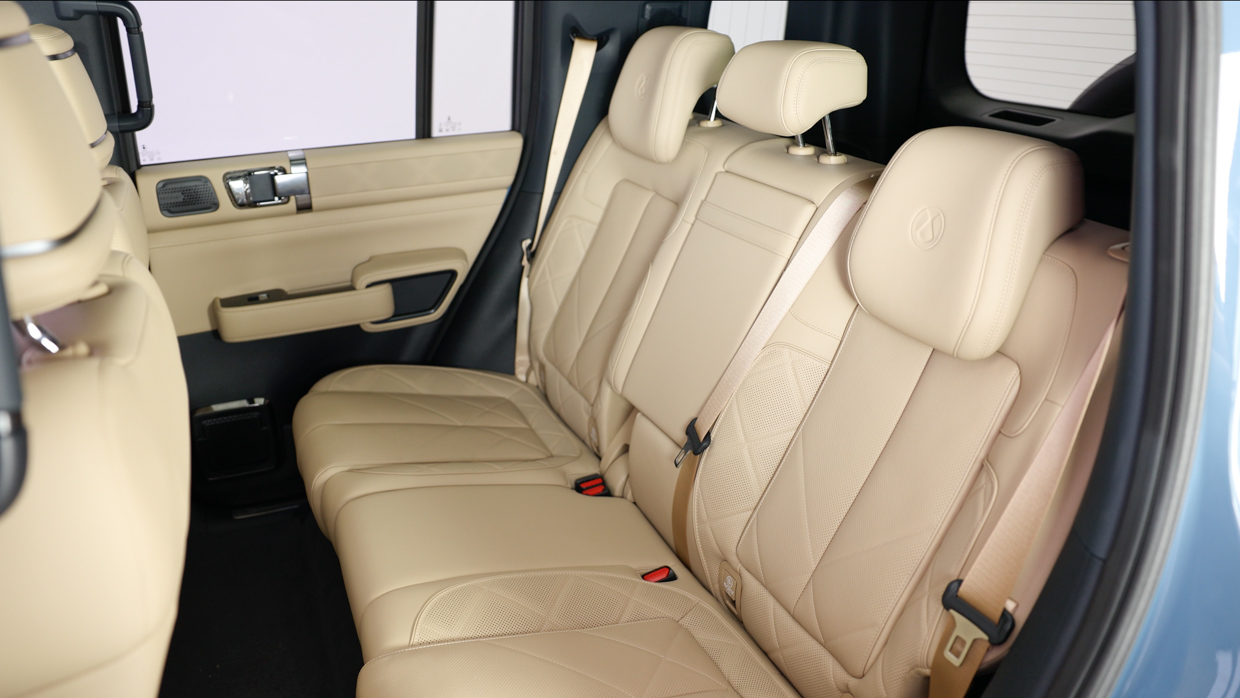
Overuse of shared components that you touch every day present an opportunity for Denza to further differentiate itself over BYD in future, as the shared fonts, colours, graphics and menu structures — not to mention physical controls — feel generic and a bit undercooked.
Denza does earn credit for retaining real keys for functions like the transmission, transfer case, differential locks and drive modes, but the real-button philosophy could be extended further as climate controls remain touchscreen only.
But rear-seat comfort is a genuine highlight. Compared to a Prado or GX, the rear bench offers excellent backrest shaping, cushion length and seat angle along with ample legroom and headroom for six-footers. Built-in rear sunshades would be a welcome addition, as would better second-row access to the fridge/hotbox.
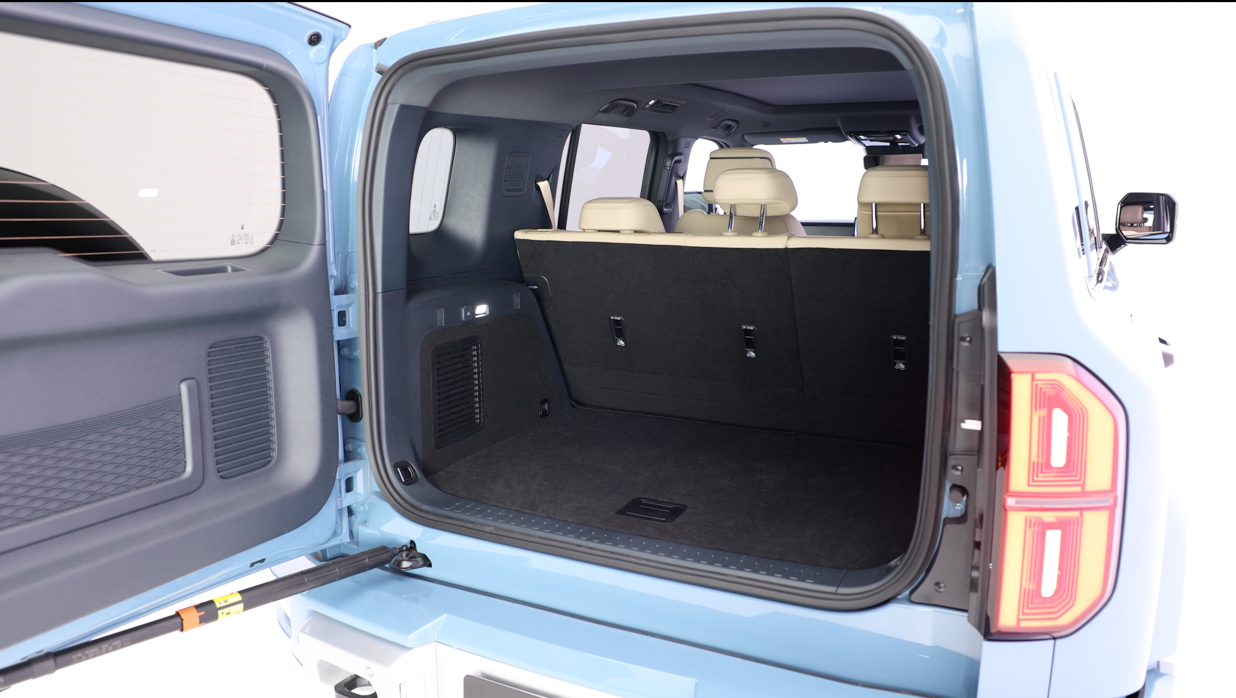
Boot space is more modest. The B5’s side-hinged tailgate is fairly heavy to open/close thanks to the big full-size spare mounted on it, and outright cargo room is not great: just 470 litres in five-seat mode, expanding to 1064L with the rear seats folded due to a relatively high load floor.
As the BYD group’s entry to both the popular Prado/Everest segment and the luxury car class, the Denza B5 is incredibly impressive. While we have only tested the Leopard at this stage, the level of value, sophistication and refinement Denza delivers at $79,990 + ORCs will shock buyers and rival carmakers.
Some commenters on our pricing reveal content noted that this eighty-grand machine isn’t exactly a ‘cheap’ Chinese car and that’s true. What we are witnessing with the B5 is China’s push out of bargain-basement territory and into the premium segment, albeit with more affordable positioning than key rivals.
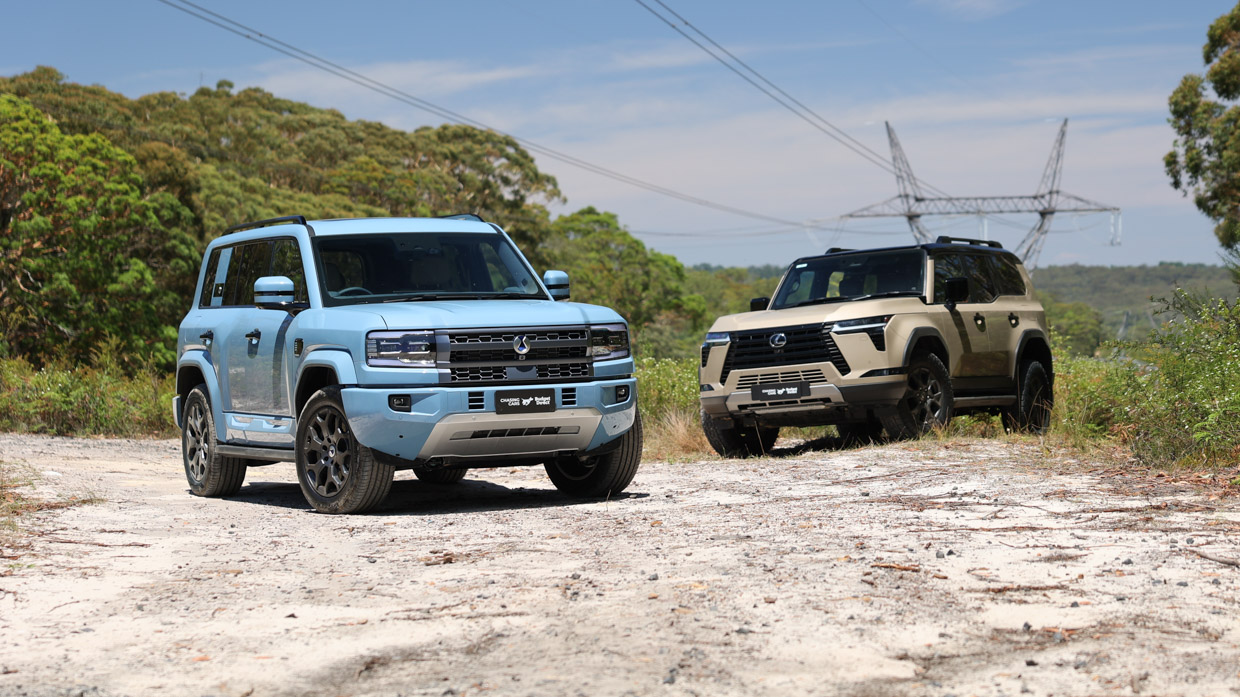
It will be interesting to track how popular the two inaugural Denza models prove in Australia. Are local buyers ready to spend the best part of $100K on a Chinese 4WD?
We think that a test drive of the B5 Leopard may well twist the arm of a cynical 4WD shopper. There’s simply too much here to ignore. The cabin is pleasant and comfortable, the hybrid system brings big power and EV-running potential, the ride quality is impressive, and it’s relatively handsome. And it’s Prado GXL coin…
Conducting our B5 Leopard test with the benchmark Lexus GX was interesting. While the GX arguably remains the more cohesive and enjoyable 4WD to drive, the circa-$50,000 delta between the two cars cannot be disregarded. The B5 Leopard has more kit, is more comfortable over bumps, and even more capable off-road.
So, what’s the catch? Clearly, the long-term durability and reliability of various Denza B5 components is not fully known. Breaking the dominance of Toyota and other established rivals that have a track record for ownership credentials will be a challenge.
A top-end Prado might be $20K dearer and a lot less powerful but it’s a known quantity. That is the kind of thinking Denza will need to commit to breaking, and that will take time.
However, for early adopters that love the lavish experience of the Denza B5, can charge at home or work to realise the PHEV system’s efficiency dividends, and who don’t mind taking a punt on an innovative brand and technology, the Leopard deserves a very close look.
Key specs (as tested)
About Chasing cars
Chasing Cars reviews are 100% independent.
Because we are powered by Budget Direct Insurance, we don’t receive advertising or sales revenue from car manufacturers.
We’re truly independent – giving you Australia’s best car reviews.
The estimate provided does not take into account your personal circumstances but is intended to give a general indication of the cost of insurance, in order to obtain a complete quote, please visit www.budgetdirect.com.au. Estimate includes 15%^ online discount.
^Conditions Apply
Budget Direct Insurance arranged by Auto & General Services Pty Ltd ACN 003 617 909(AGS) AFSL 241 411, for and on behalf of the insurer, Auto & General Insurance Company Limited(ABN 42 111 586 353, AFSL 285 571).Because we don’t know your financial needs, we can’t advise you if this insurance will suit you. You should consider your needs and the Product Disclosure Statement before making a decision to buy insurance. Terms and conditions apply.
Indicative quote based on assumptions including postcode , 40 year old male with no offences, licence suspensions or claims in the last 5 years, a NCD Rating 1 and no younger drivers listed. White car, driven up to 10,000kms a year, unfinanced, with no modifications, factory options and/or non-standard accessories, private use only and garaged at night.
^Online Discounts Terms & Conditions
1. Discounts apply to the premium paid for a new Budget Direct Gold Comprehensive Car Insurance, Third Party Property Only or Third Party Property, Fire & Theft Insurance policy initiated online on or after 29 March 2017. Discounts do not apply to optional Roadside Assistance.
2. Discounts do not apply to any renewal offer of insurance.
3. Discounts only apply to the insurance portion of the premium. Discounts are applied before government charges, taxes, levies and fees, including instalment processing fees (as applicable). The full extent of discounts may therefore be impacted.
4. We reserve the right to change the offer without notice.