Powered by
-
Car Reviews
Latest reviews
-
Car News
Latest news
-
Car Comparisons
Latest comparisons
- Chasing Deals
Latest reviews
Latest news
Latest comparisons
Does Korea’s popular and stylish small SUV stack up in all-you-can-eat hybrid spec?
It’s been two years since Hyundai launched its larger, stylistically bolder Kona revamp. And given that it’s shaping up as the hottest selling ‘small SUV under $45K’ in 2025 according to official industry data, it’s clear that Aussie buyers like the cut of a jib that’s been tweaked a bit since this generation launched.
In mid-2023, Kona could be had in base or Premium spec, with rental-rank 2.0L, 1.6 hybrid or lusty 1.6T power with all-wheel drive, the latter reserved for N-Line. Six months later, the Kona electric lobbed, while EV N-Line surfaced in mid-2024. Lots of variety to cover broad tastes, then.
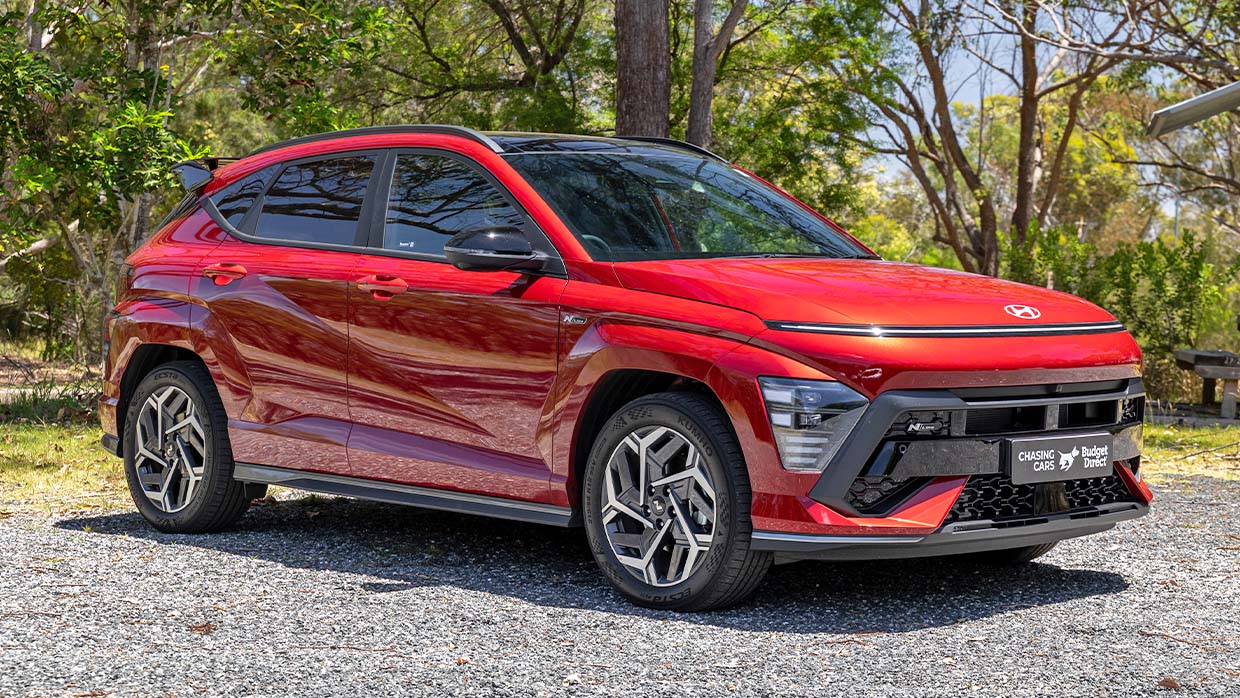
In June 2025, this hot sub-$45K segment seller – despite many variants sailing north of that price point – consolidated, adding a new middling Elite grade in two-litre and 1.6 hybrid guises. Sadly, the tasty turbo all-paw option was dropped from the menu entirely.
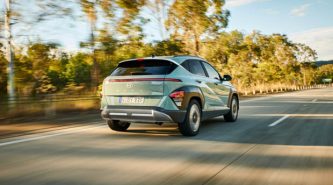
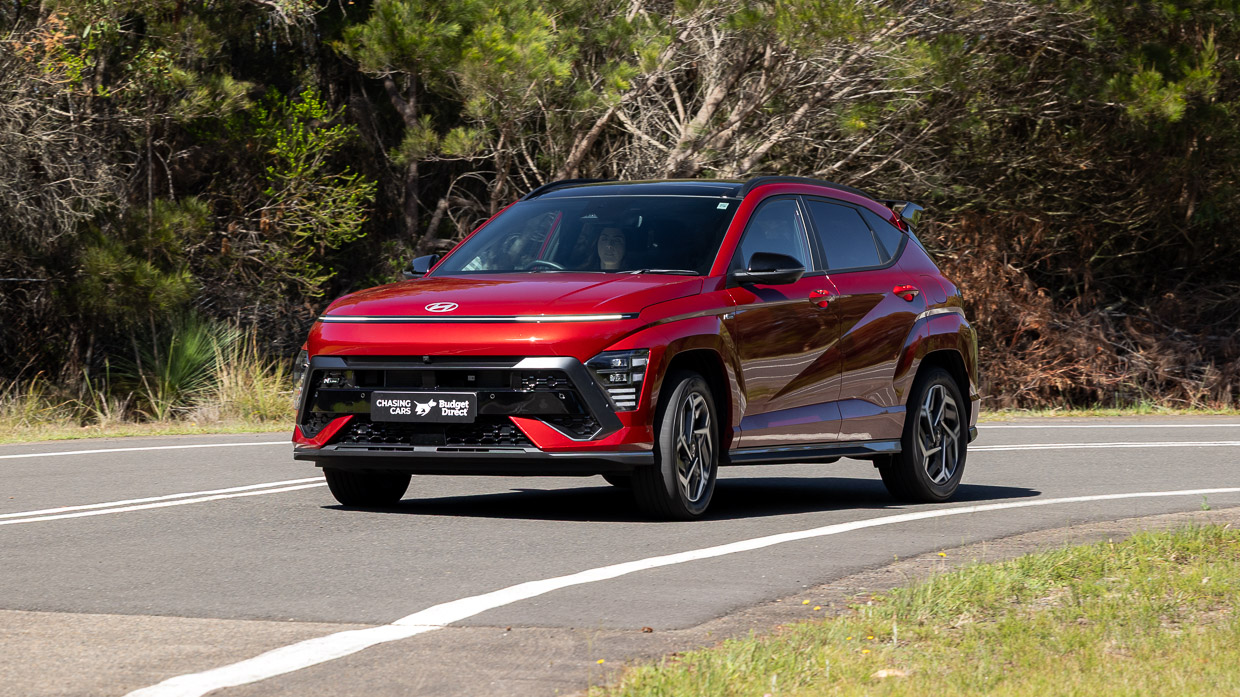
Of the pack, the nicest and priciest hybrid option is the Premium with N-Line, as sampled in this review, landing in the Chasing Cars garage at $49,545 list or around $54,260 driveaway (in NSW).
Is it nice enough to warrant the stiff price? Or less enticing than it ought to be?
How does our pricey example (literally) stack up? It starts with the base 2.0L Kona ($32,950 list) and adds 1.6 hybrid power (to $36,950) and a leap over Elite grade (to $39,950) to land at the flagship Premium (at $45,950).
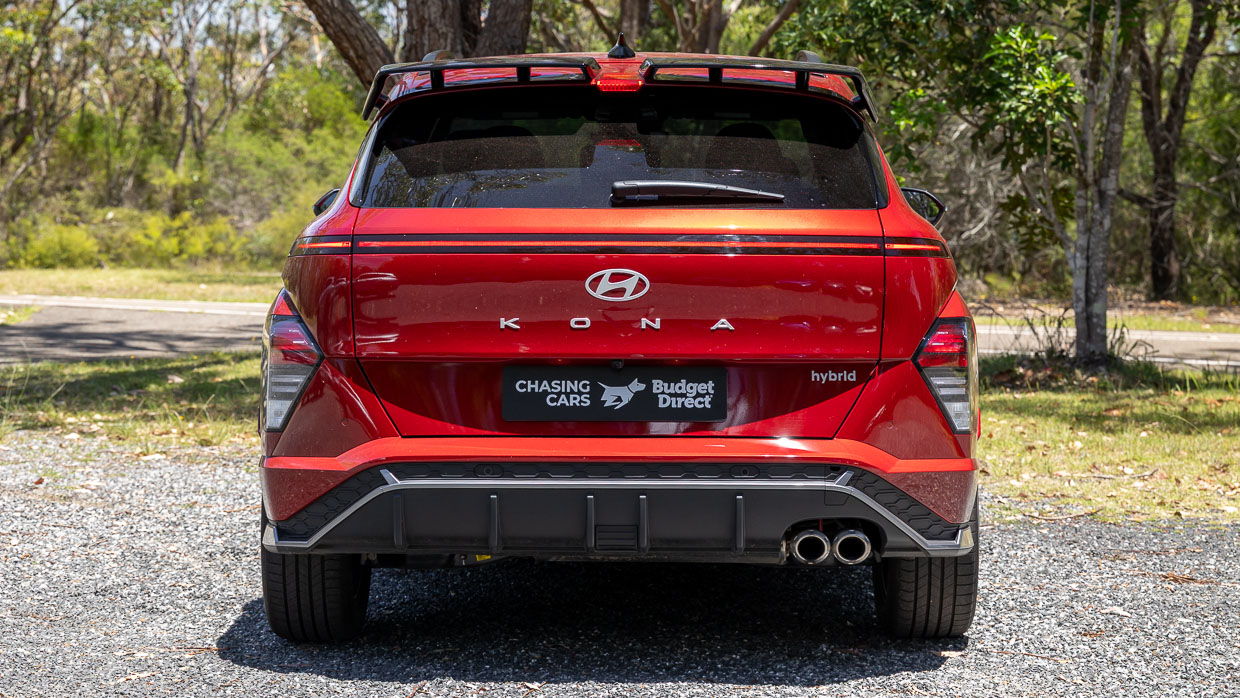
It’s another $3000 for N-Line ($48,950) plus $595 (for a $49,545 list total) for our tester’s Ultimate Red paintwork, or colours such as Abyss Black, Cyber Grey or Soultronic Orange. Atlas White and retina-burning Neotronic Yellow are no added cost (some colours are N-Line exclusives).
Standard Premium grade features include:
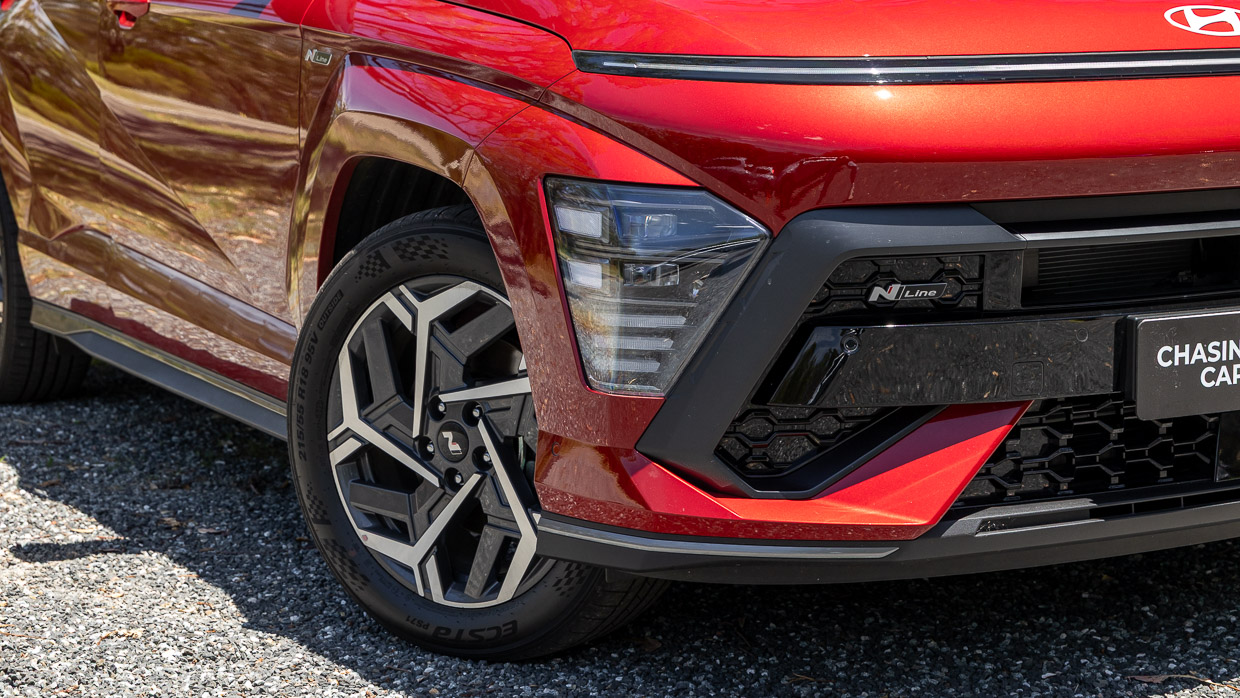
N-Line package adds or replaces features with:
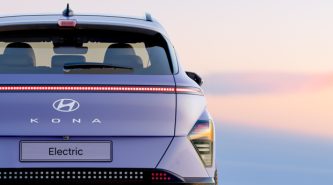
Buyers after fully electric power have a choice of Kona EV Standard Range (99kW/48.6kWh, $54,000 list), Extended Range (150kW/64.8kWh, $58,000) or Premium (150kW/64.8kWh, $68,000). N-Line is available as an upcharge on the Extended Range ($4000) and Premium ($3000) grades.
When it launched in 2023, the Kona N-Line – specifically – could be had with a lusty 146kW and 265Nm turbo 1.6L four paired with all-wheel drive and a newly introduced eight-speed auto, a fittingly lusty powertrain to match its Marvel superhero-like styling. Then, in June 2025, it was dumped.
What a shame, given that the sporty N-Line promise is now paired with the comparatively underbaked 110kW/180Nm 2.0L or 104kW/265Nm naturally aspirated 1.6L petrol/hybrid front-driver guises, the latter tested here. Neither really cuts the performance mustard, but if you want to go (the 150kW/255Nm) electric…
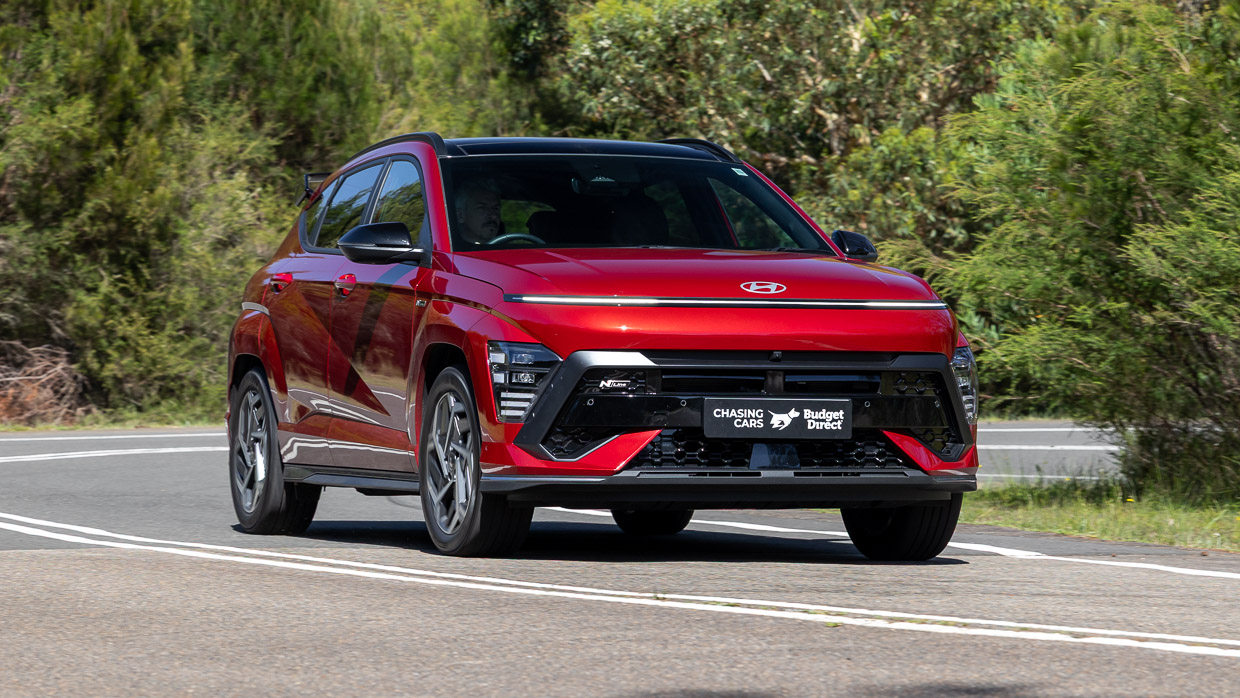
The hybrid isn’t a bad powertrain: the electric portion of drive doles out a decent 170Nm (and 32kW), filling in low-speed propulsion well most of the time, and providing enough oomph for periodic electric-only driving at motorway speeds.
Across the balance of driving it’s reasonably smooth and refined, swapping and blending petrol and electric drive in a fairly polished manner.
But at times, particularly after start, the Atkinson cycle 1.6 can get caught buzzing away – in its best Toyota-like mimicry – seeming pumping charge into the modest 1.32kWh battery.
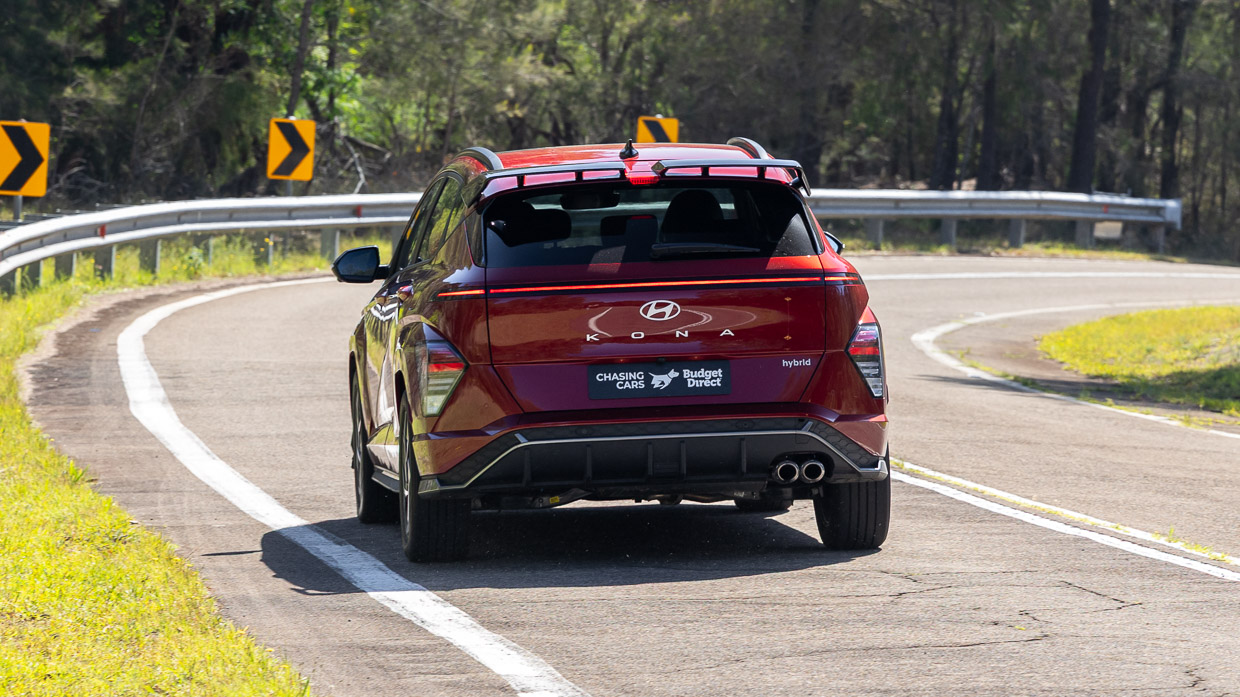
It is workmanlike, without the lusty thrust of the turbocharged 1.6 hybrid in Tucson. It can also get caught producing a faint driveline patter at the constant throttle around 80-90km/h.
And while the no-brainer benefit is circa-four-litre combined fuel consumption – half that of the old 1.6 turbo format – it lacks anything like genuine sporting mojo.
It’s a shame because the rest of the underpinning package is very good.
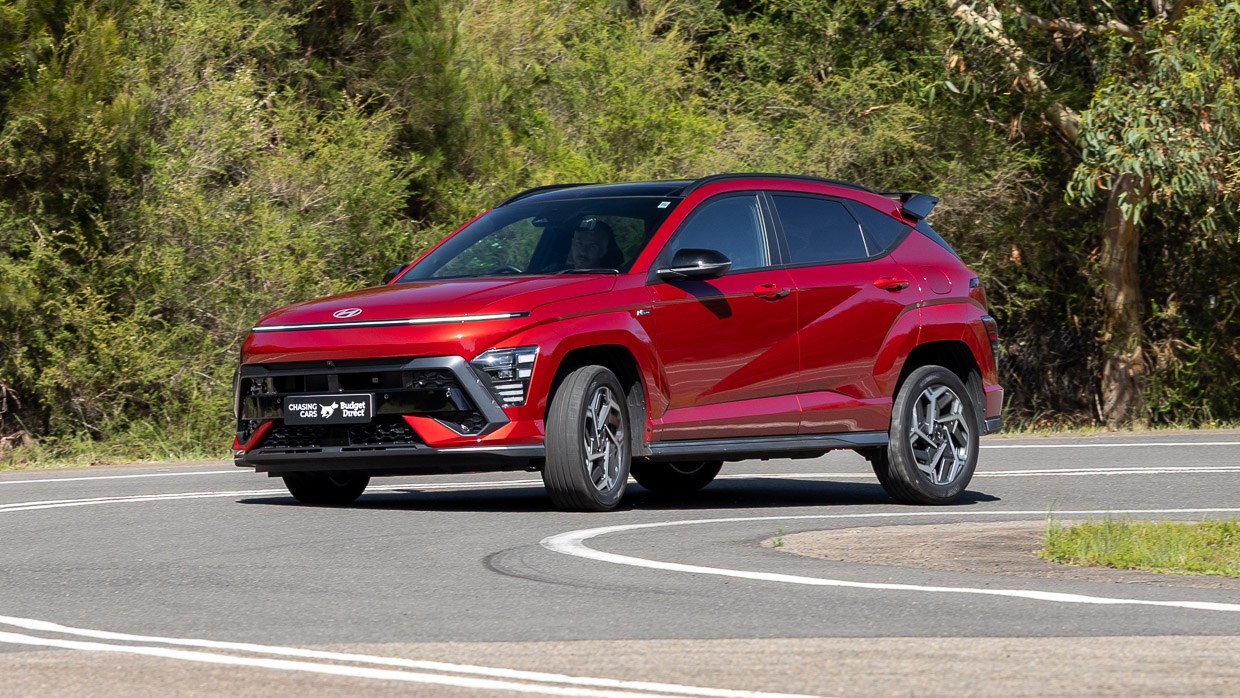
The hybrid – unlike the 2.0L – fits a multilink rear suspension design which pays dividends in the sophisticated ride and handling balance that, at once, returns excellent bump control (even on 19s). We had the good fortune to sample a regular Elite on smaller 18s and our N-Line doesn’t ride any stiffer.
The suspension tune also brings a natural crispness to the dynamics. It points well with clear and faithful steering, balances nicely in the middle of corners, and reacts keenly to driving inputs.
The small SUV can be quite a hoot on a twisty backroad, even though its talent is clearly not as gym-honed as a genuine N car.
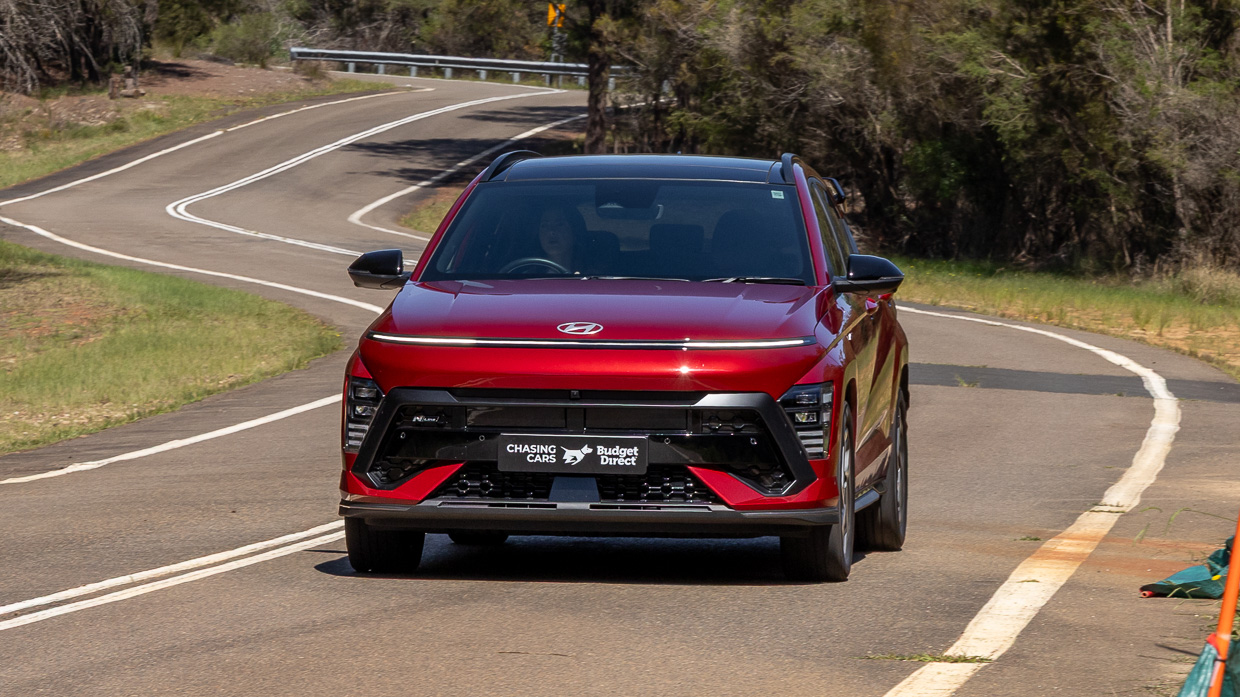
It’s a shame that Hyundai doesn’t shoehorn the 132kW and 264Nm hybrid system from the larger Tucson: one that brings turbocharging and the option of all-wheel drive. It would certainly be a neat fit for the sort of mojo the N-Line vibe promises.
But for now, it seems as if turbos and all-paw drive are firmly off the menu for the Kona small SUV breed.
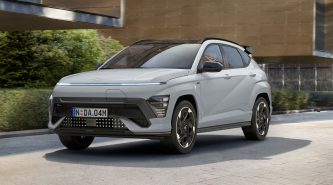
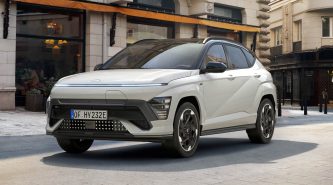
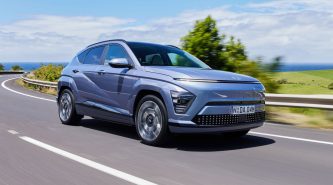
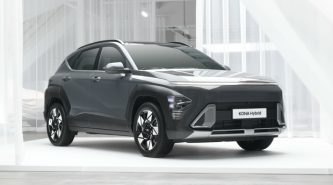
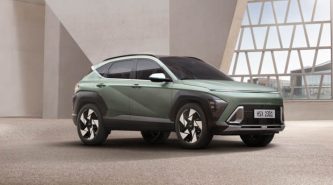
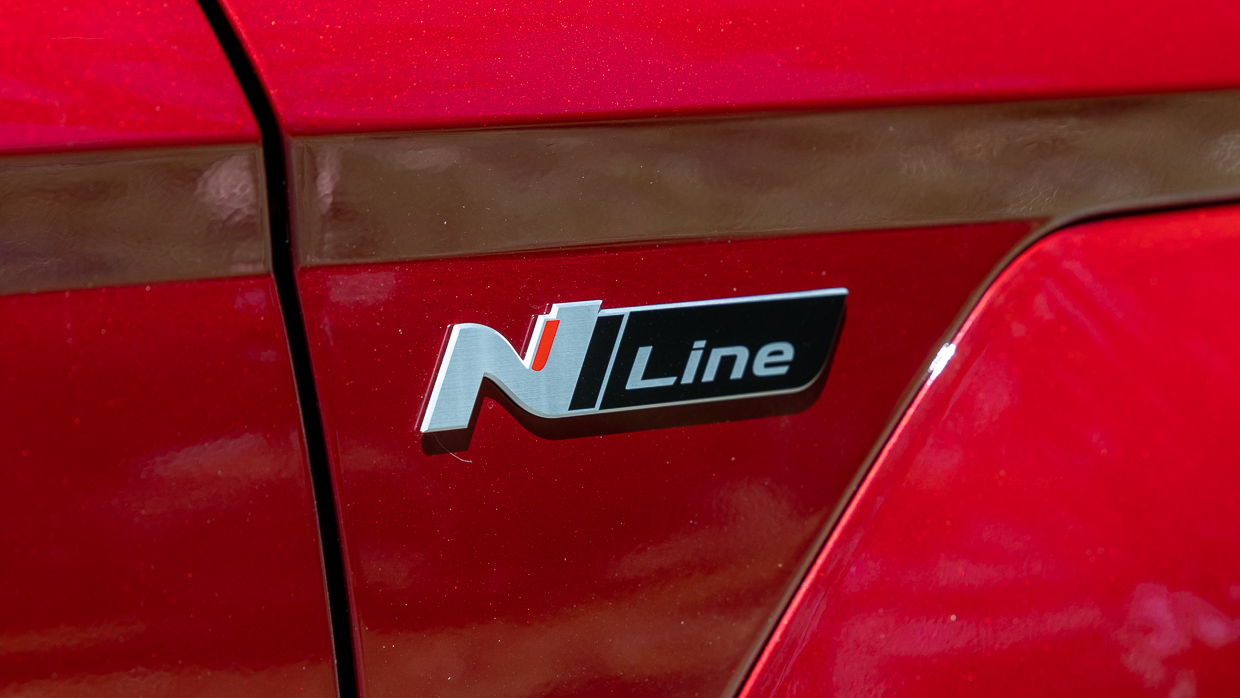
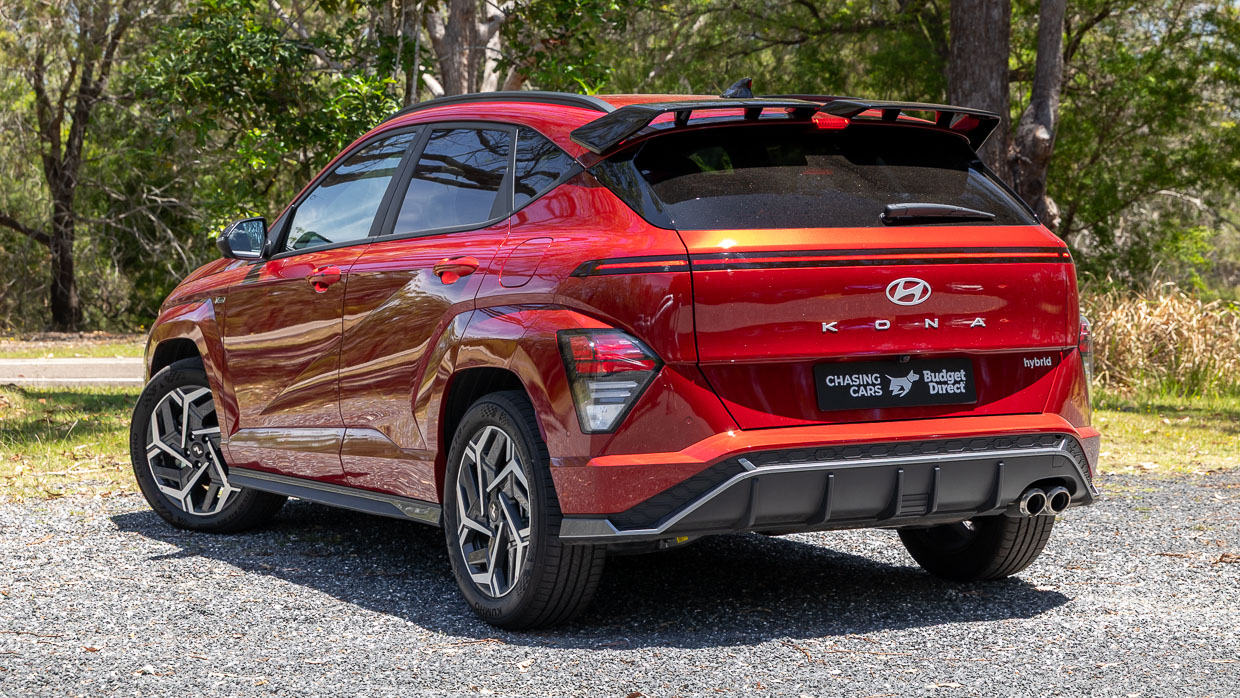
It would be remiss not to touch on N-Line’s bold, sporty exterior styling. It is, subjectively, a striking look that suits the Kona form well, and perhaps represents a larger chunk of the returns for the sports makeover’s $3000 upcharge.
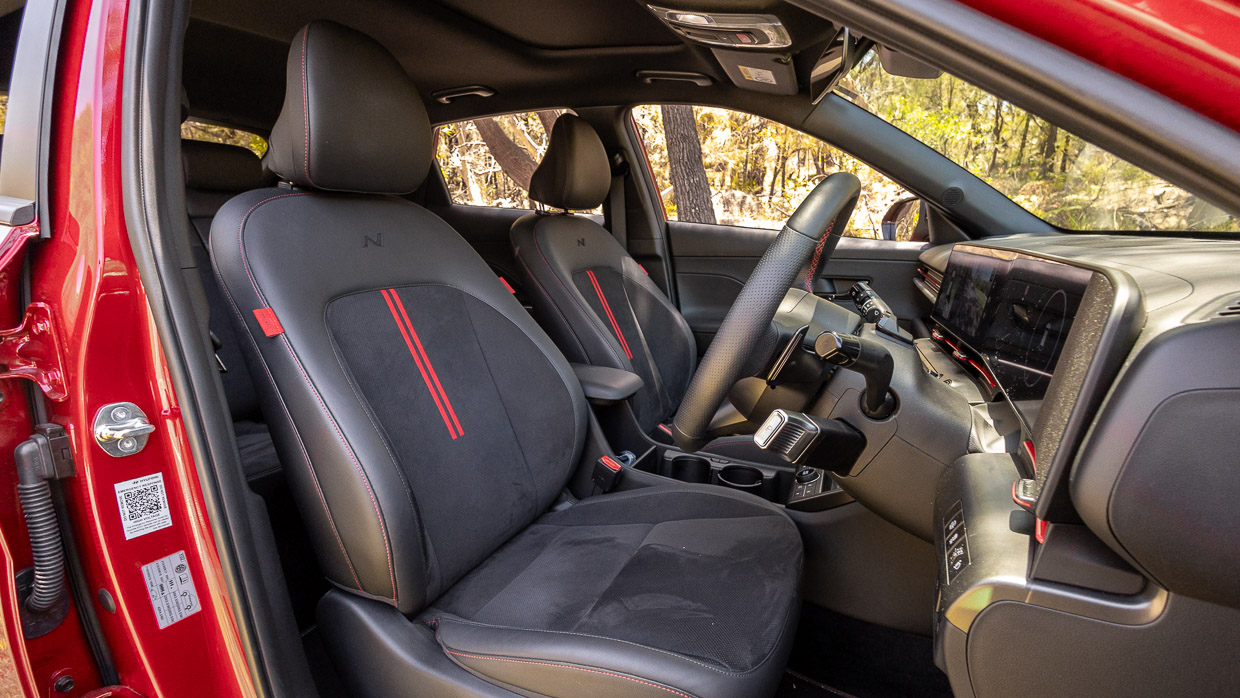
Inside, the N-Line effect is notable if less pronounced, conspicuous in the sumptuous leather-appointed and faux suede trim theme and the smattering of racier detail to what’s otherwise a straight up Premium grade fitout.
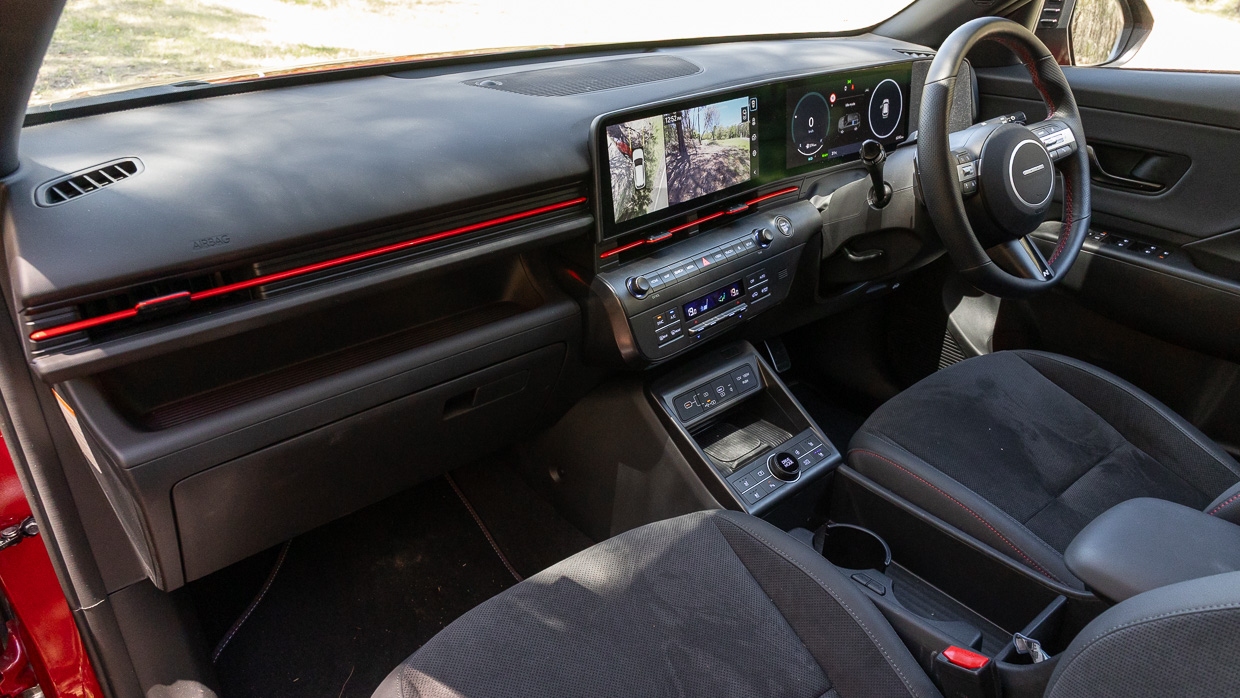
The Kona’s cabin, half a segment larger than the old generation it replaced two years ago, is airy and roomy for its segment, with just enough semi-premium execution and techno flash in the expected areas. The sportiness is quite convincing.
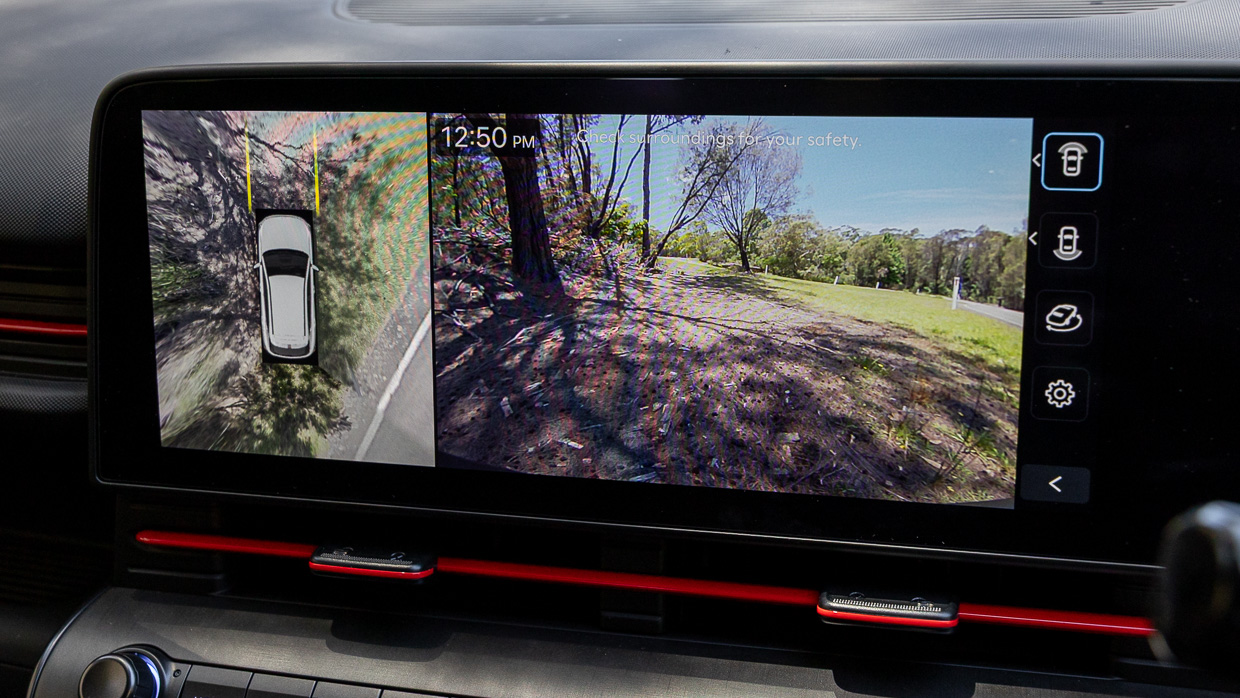
Dual-12.3-inch screens are the conspicuous cabin jewels – lower grades get a digi-look driver screen with only four-inch colour screen content – and the display quality and software is typical Korean fare: big, clear and colourful, if slow to boot up on start-up.
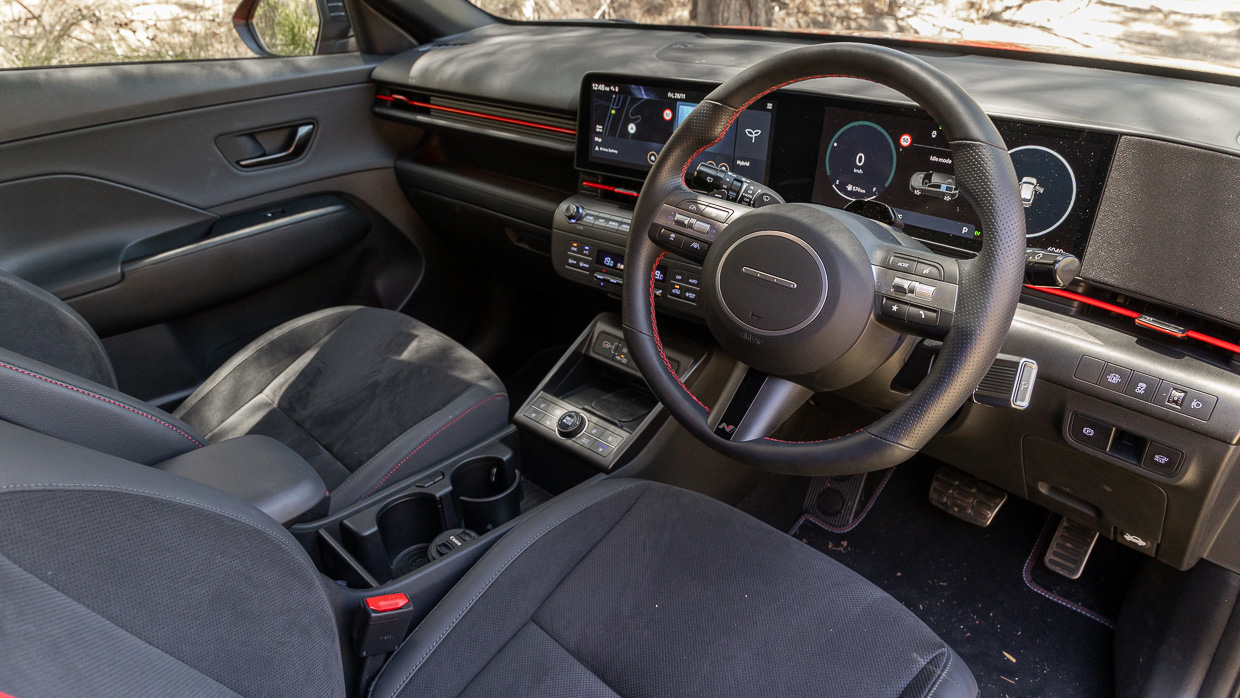
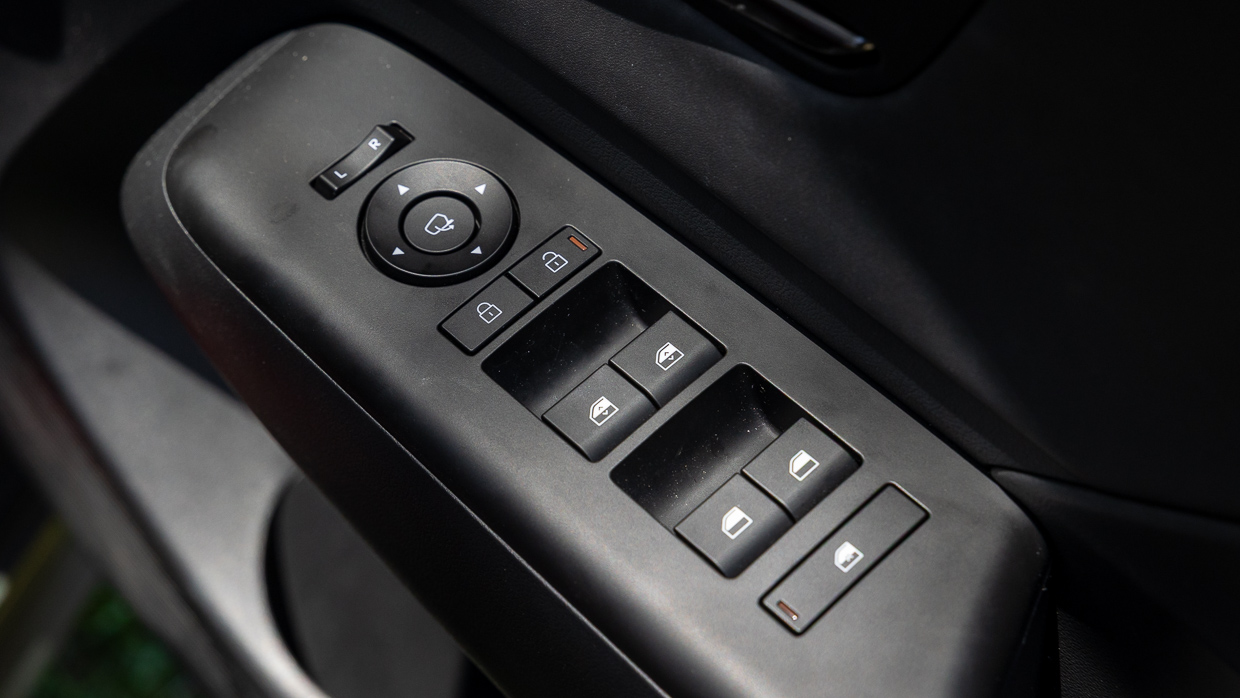
The wheel is neat, the seating excellent in blending natural comfort with subtle form-hugging lateral support, and it feels like a surrogate hot hatch, with keen driver-centric ergonomics.
The column-mounted twist-type transmission selector keeps the centre console clean and contemporary.
Material usage is okay: the door trims and much of the dash are mostly hard plastics with just enough tactile vinyl to keep Kona from feeling low rent. Premium by name, just premium enough by execution, it seems…
The user interface is quite friendly and conventional, with convenient access to the dual climate control system and unfettered access to areas such as the single inductive charging pad and the dual cupholder array in the console, which is all hard plastic and a little cheap looking. General storage is acceptable enough.
Where the Kona shines against its competitors is in the second-row accommodation. Hyundai claims an added 77mm of legroom and 11mm of headroom against this generation’s forebear with one of the widest shoulder rooms in the small SUV segment.
Whatever the semantics, it feels properly family-oriented and adult friendly in both rows.
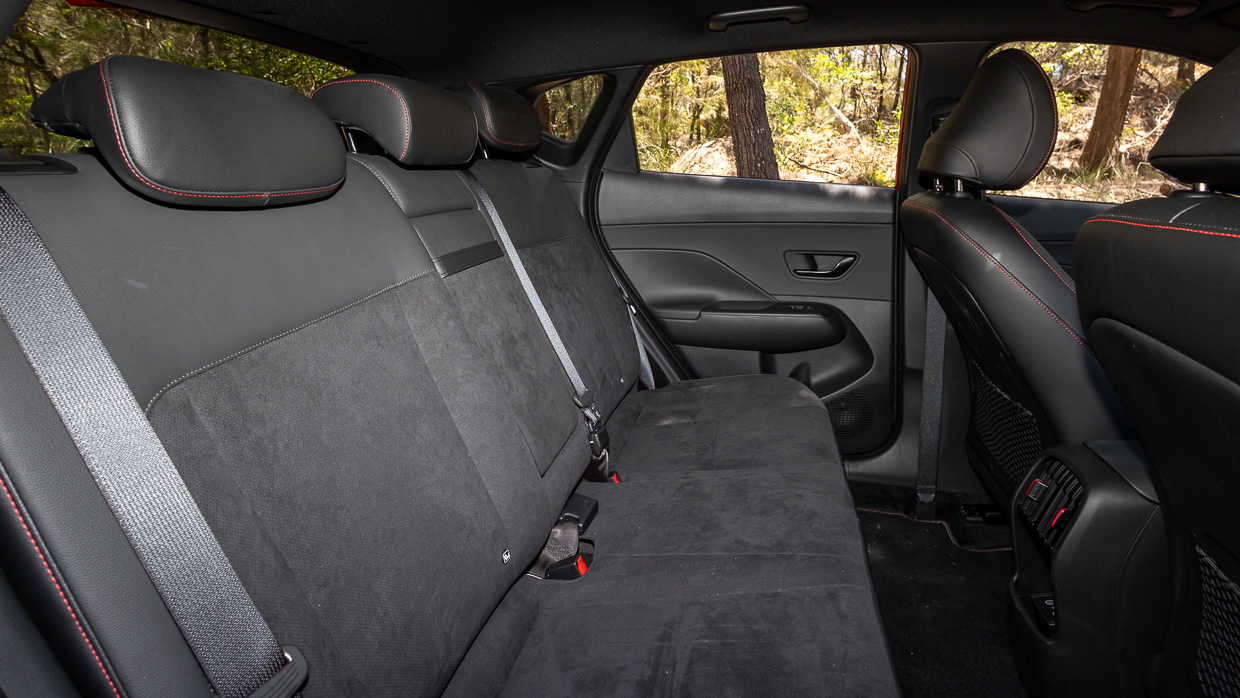
Row two also gets rear air vents and dual USB-C outlets (to match those in the first row) as well as dual cupholders in the fold down arm rest, ticking off essential rear passenger creature comforts. The bench isn’t so contoured as to afford decent middle position comfort when hauling five occupants, too.
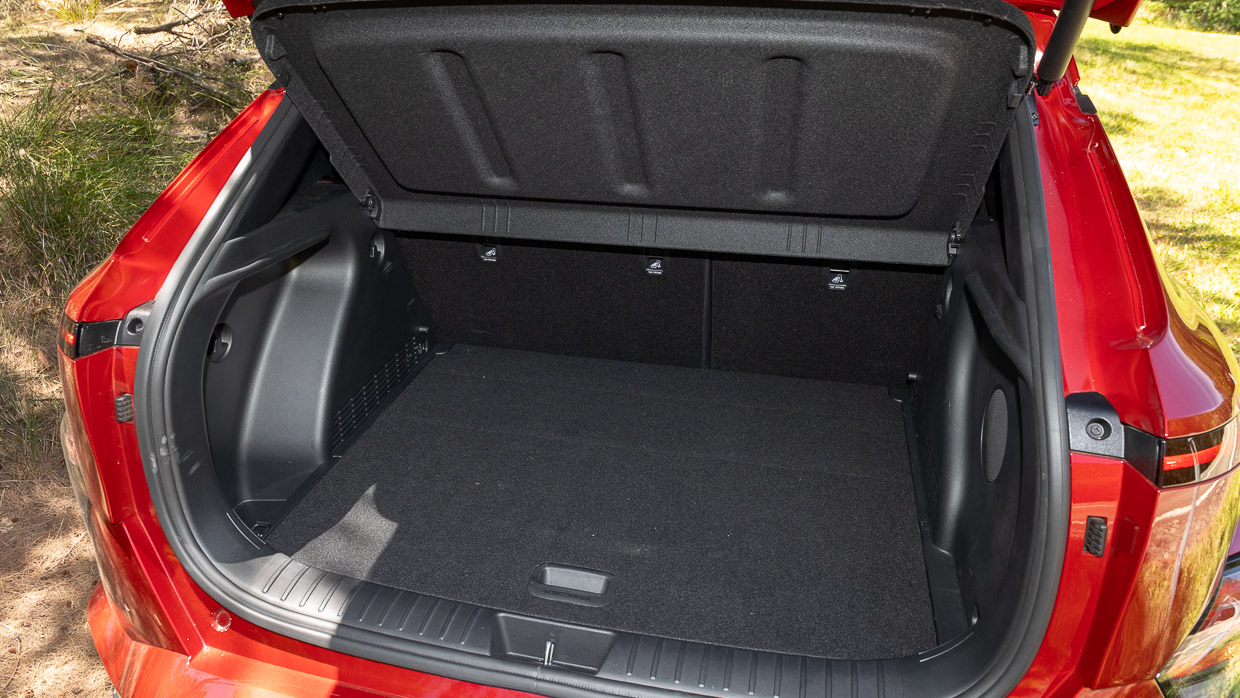
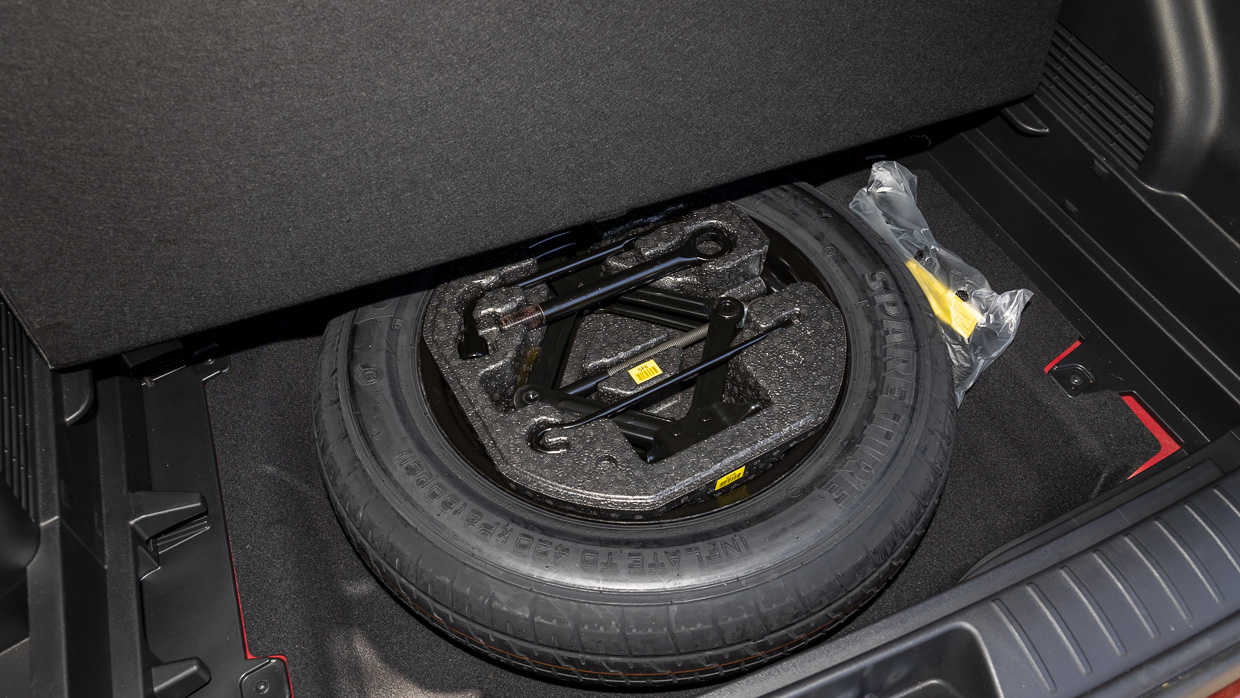
The boot is nice and deep, with an adjustable floor height that you can tune to taste. Underneath, the Kona fits a large temporary spare wheel, too, bringing a sense of surety when grand touring the countryside with the family.
Confession time. I had, in the past, given the larger Tucson a kick for its ‘smart’ tailgate, after the sensor function, which opens the tailgate automatically when standing by the tail light, sent the door crashing into a wall in a past experience.
Well, the practicable benefit came to light during a shopping trip when I approached the Kona with arms-ful of Christmas shopping.
Forgetting the Kona even fitted the system, the tailgate opened automatically while I pondered how to access the car’s keyfob with no free hands. Worked a charm when I needed it. Nice work, Hyundai!
Is N-Line worth the $3000 upcharge with interior spec? Only if you’re buying into the sporty vibe. What it replaces over Premium spec isn’t necessarily nicer or more upmarket, it’s simply a racier, fruitier effect.
While all variants of the current Kona lineup get the same five-star ANCAP rating, they’re not all equals in terms of the fitment of safety features.
The base and Elite Kona grades fit the following specifications that include:
Stepping up to the flagship Premium variants adds the following features:
As is now customary with Hyundai/Kia / Genesis vehicles, the Kona demands multi-step button and touchscreen inputs to defeat annoying ADAS systems prior to trips.
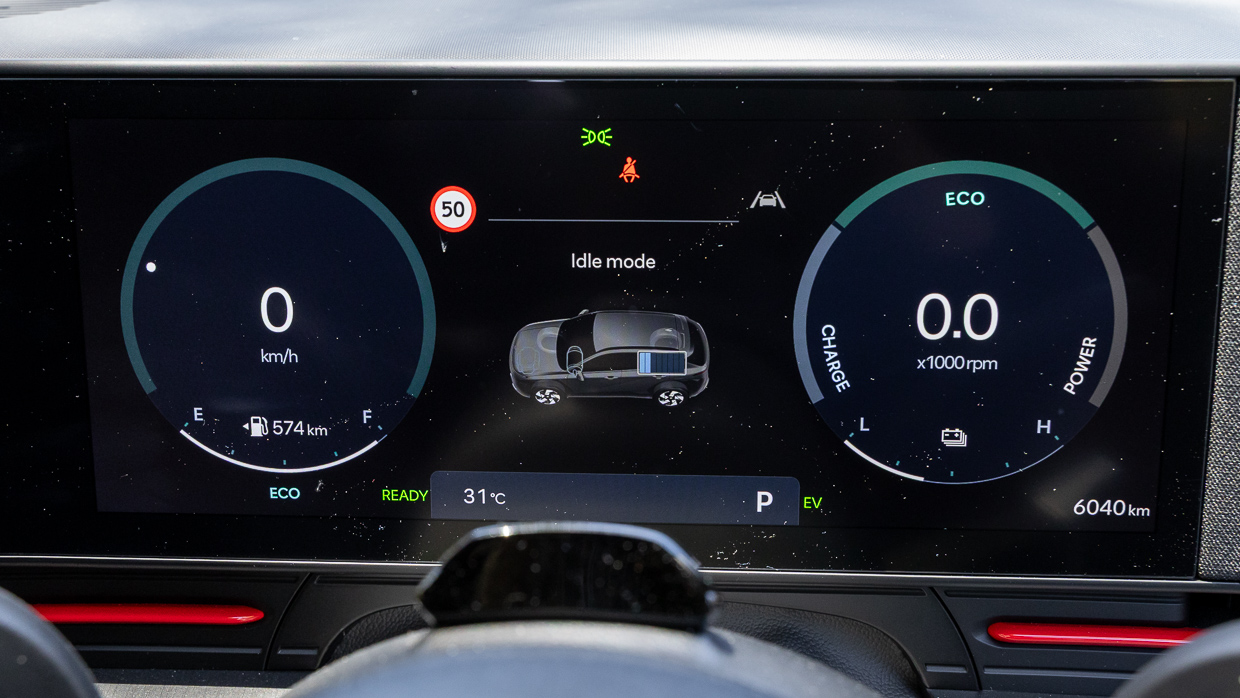
We do wish these systems were a) calibrated more sympathetically and b) quicker to deactivate on start-up, even if their automatic activation makes ‘safe sense’.
Unlike some Korean-sourced models, the Kona fits driver monitoring that, while calibrated vastly better than some systems commercially available, will trigger when the column-mounted camera is obscured (by your arm) or when viewing the mirrors attempting to change lanes. Frustrating.
A five-year service pack will cost $2977 for the Kona hybrid, which is pricier than some segment competitors such as Toyota Corolla Cross ($1275 for five years). Service intervals are a typical 12 months or 15,000kms.
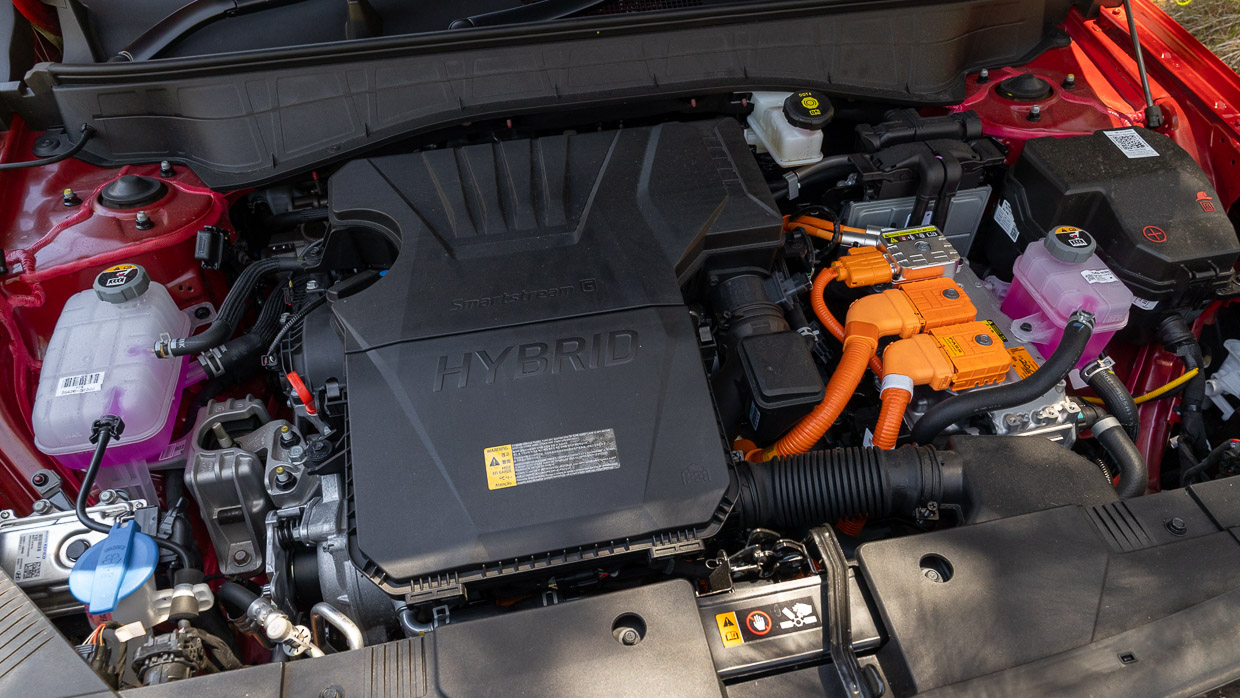
The Kona hybrid comes with a 3.9L/100km combined fuel consumption claim. During testing we saw figures in the high fours for mostly urban driving in and around Sydney, including regular motorway usage.
Warranty is Hyundai’s seven years of unlimited-kilometre coverage.
As the priciest and fanciest specification of a model that is its segment’s hottest seller, Kona Premium N-Line hybrid is a very nice small SUV indeed. At just under $55K on road, it’d want to be.
But as is the case with so many mainstream models from so many brands, fancy powertrains start to make the top ends of model lineups a bit nonsensical.
On paper, the nice if not-so-fancy mid-range Kona Elite hybrid ($39,700 list) makes a compelling case given that, without N-Line added, it’s a cool $9000 more approachable. Same powertrain, nigh on same driving experience. Nicely equipped, too.
We happened to bookend our Premium N-Line test with the Elite and, sure enough, there is very little difference in the day-to-day experience. And while our test subject’s spec is certainly want-for-little, it certainly isn’t $9000 better or nicer.
That $9000 upcharge ought to bring a premium powertrain upgrade. As it used to with the option of the turbo all-paw drive in Kona before it was removed from the menu in mid-2025.
Which leaves this range-topping hybrid certainly one for the completeists where money is of little object, if a model variant that’s tough to recommend when its stablemates offer superior value for less outlay.
Key specs (as tested)
About Chasing cars
Chasing Cars reviews are 100% independent.
Because we are powered by Budget Direct Insurance, we don’t receive advertising or sales revenue from car manufacturers.
We’re truly independent – giving you Australia’s best car reviews.
The estimate provided does not take into account your personal circumstances but is intended to give a general indication of the cost of insurance, in order to obtain a complete quote, please visit www.budgetdirect.com.au. Estimate includes 15%^ online discount.
^Conditions Apply
Budget Direct Insurance arranged by Auto & General Services Pty Ltd ACN 003 617 909(AGS) AFSL 241 411, for and on behalf of the insurer, Auto & General Insurance Company Limited(ABN 42 111 586 353, AFSL 285 571).Because we don’t know your financial needs, we can’t advise you if this insurance will suit you. You should consider your needs and the Product Disclosure Statement before making a decision to buy insurance. Terms and conditions apply.
Indicative quote based on assumptions including postcode , 40 year old male with no offences, licence suspensions or claims in the last 5 years, a NCD Rating 1 and no younger drivers listed. White car, driven up to 10,000kms a year, unfinanced, with no modifications, factory options and/or non-standard accessories, private use only and garaged at night.
^Online Discounts Terms & Conditions
1. Discounts apply to the premium paid for a new Budget Direct Gold Comprehensive Car Insurance, Third Party Property Only or Third Party Property, Fire & Theft Insurance policy initiated online on or after 29 March 2017. Discounts do not apply to optional Roadside Assistance.
2. Discounts do not apply to any renewal offer of insurance.
3. Discounts only apply to the insurance portion of the premium. Discounts are applied before government charges, taxes, levies and fees, including instalment processing fees (as applicable). The full extent of discounts may therefore be impacted.
4. We reserve the right to change the offer without notice.