Powered by

-
Car Reviews
Latest reviews
-
Car News
Latest news
-
Car Comparisons
Latest comparisons
- Chasing Deals
Latest reviews
Latest news
Latest comparisons
New hybrid-only Seltos to set precedent for future Kia models, with pure petrol and diesel engines to be killed off to comply with NVES CO2 rules
Kia is set to dump non-hybrid petrol and diesel engines in Australia as early as this year as it confronts the realities of the federal government’s New Vehicle Emissions Standard (NVES).
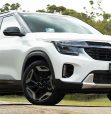
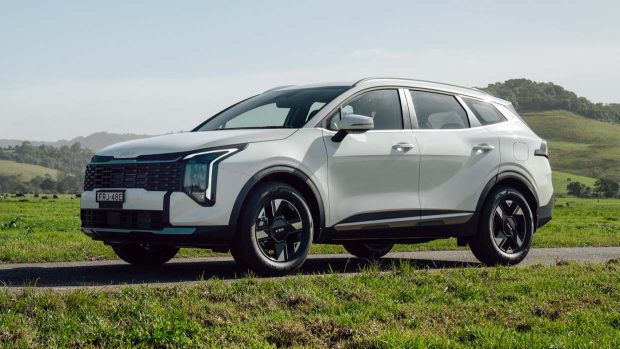
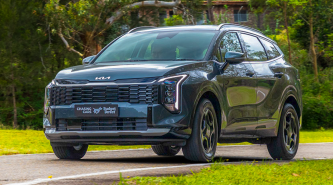
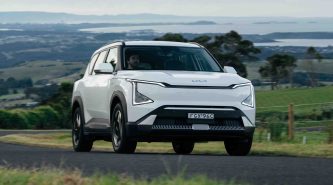
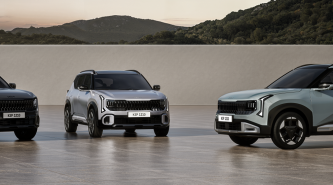
The dramatic move to an all-hybrid Kia lineup — alongside a range of EVs — starts with the second-generation Seltos which will launch later in 2026 with hybrid engines only.
Once the Seltos goes all-hybrid, Kia Australia is expected to embark on a rapid purge of pure petrol and diesel engine options as it seeks to avoid multi-million-dollar NVES fines.
Last month Kia killed off its highest-CO2 engine: a 3.5-litre petrol V6 that was the cheapest option for the Sorento large SUV and Carnival people-mover.
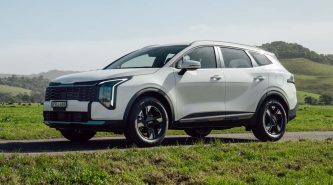
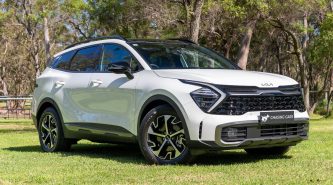
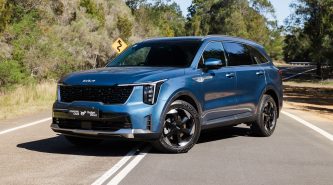
Next on the chopping block is the most affordable — but dirtiest — engine available for the Sportage midsize SUV. Buyers will be given a continuing choice of hybrid or diesel.
NVES assigns credits or penalties (fines) to car manufacturers based on the average CO2 emissions of all the cars sold each year, with CO2 limits tightening from 2025 to 2029.
Stricter 2026 limits came into force on 1st January this year and, with few exceptions, pure non-hybrid petrol and diesel cars and SUVs are now in breach of limits.
The long-term answer is to sell more EVs, but for the next few years carmakers can stay on the right side of NVES — avoiding huge fines — by selling more hybrids, too.
That is Kia’s plan: keep growing EV sales while mashing the throttle on hybrids, according to chief executive officer Damien Meredith.
“We will try to get as many hybrids into play before the deadline, [before the point] when they are of no advantage with regard to getting [NVES] credits,” he said.
Product planning general manager Roland Rivero confirmed the Seltos going all-hybrid is establishing the template moving forward for Kia’s combustion vehicle lineup.
“There will be other full-model changes [to hybrid-only engines] to follow Seltos in the coming years,” said Rivero.
“You would have to seriously consider [going all-hybrid]… It is an NVES reality.”
For 2026, NVES targets — which can bend slightly depending on vehicle weight — are just 117g/km of CO2 for cars and SUVs, and 180g/km of CO2 for utes and some heavy-duty 4WDs.
The V6 engine discontinued last month was in the red, emitting 220g/km, but even the 2.0-litre four-cylinder found in most Sportage models produces 184g/km.
Meanwhile, the Sportage hybrid produces 40 percent less CO2 (110g/km), making it NVES compliant in 2026, and viable against the 2027 limit of 92g/km.
The problem for buyers is that the Sportage hybrid is nearly $6000 more expensive than the non-hybrid petrol that is set to be discontinued.
To bridge the gap, Kia is running an aggressive driveaway price campaign on the Sportage hybrid (from $44,490 driveaway) while asking 2.0-litre buyers to pay full freight (from $43,000 driveaway).
The Sportage hybrid saves an owner doing 15,000km per year about $1000 annually in fuel.
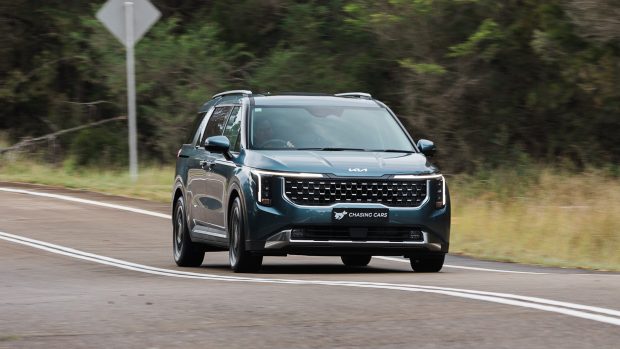
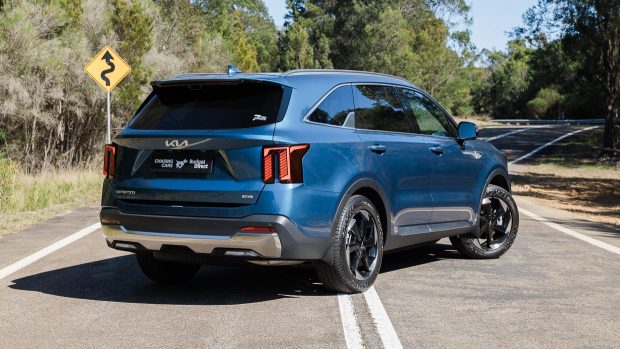
To improve its NVES position, Kia is urging fleets and families alike into hybrid versions of its crucial trio of family vehicles. The Sportage, Sorento and Carnival make up half of Kia’s sales, meaning they have a massive impact on overall emissions.
Internal sales figures from November 2025 to January 2026 show that Kia’s plan is starting to work.
Across the most recent three months nearly half of all Sportage sales were hybrid, while hybrids made up 35 percent of Carnival MPV deliveries — but only 21 percent for Sorento.
Diesel will remain an option for the Sportage, Sorento and Carnival for the time being but in future, diesel Kia cars and SUVs will need mild hybrid technology to force CO2 down.
While pure diesels can be more economical than hybrids (especially on the highway), under NVES the only numbers that matter are CO2 emissions — and hybrids come out on top.
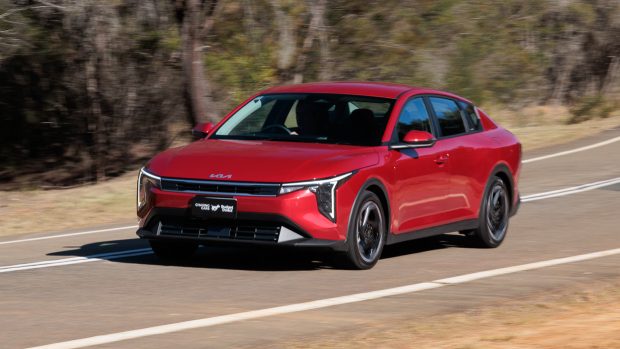
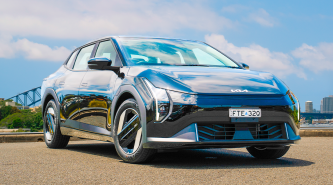
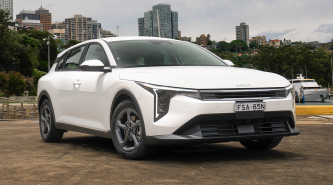
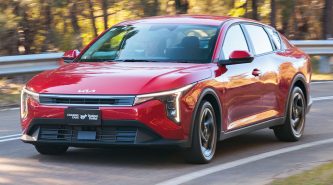
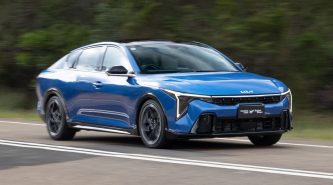
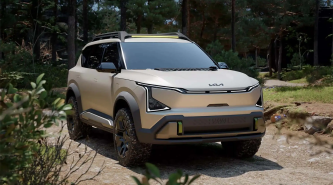
Kia is busily locking in hybrid power for other models in its lineup with the K4 small car set to drop non-hybrid engines when it is facelifted, likely in 2027.
“When you are up against a Corolla that is all-hybrid, it makes sense.
“Even though we can get 139g/km on the new [non-hybrid] powertrain, we can still better that with a hybrid — at [a penalty of] $100 per gram [over the NVES limit], it adds up,” said Rivero.
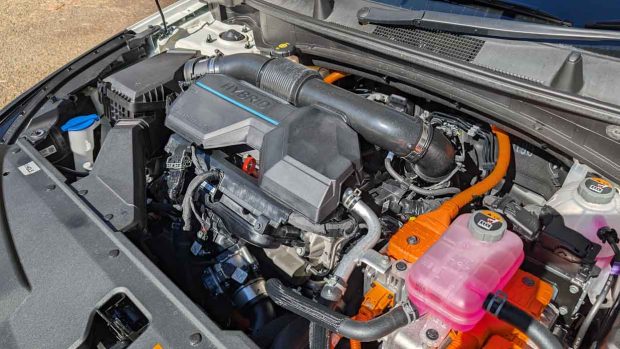
Both the Seltos and K4 hybrid are expected to use a variation of the Hyundai Kona’s 1.6-litre petrol-electric unit. The Kona hybrid consumes 3.9L/100km while emitting 88g/km CO2 — and the aerodynamic K4 could do even better.
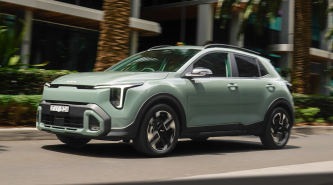
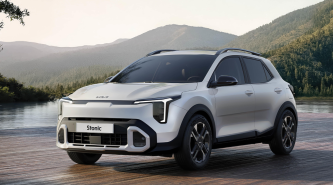
At the smaller end, Kia has already shifted the Stonic light SUV to a more frugal mild-hybrid engine, and the Picanto hatch is likely to follow in a similar direction soon.
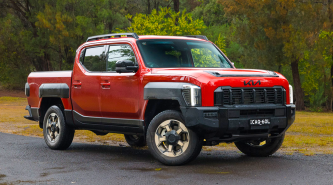
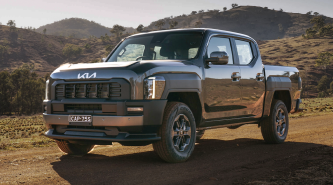
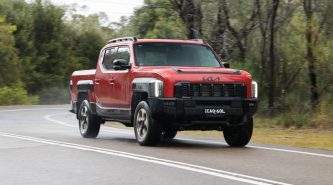
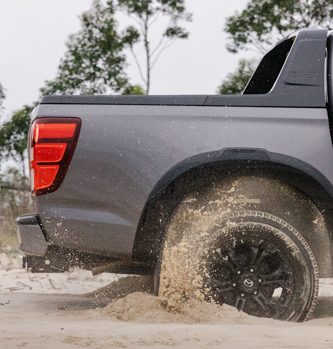
Harder to solve will be the Tasman ute, which emits around 200g/km (depending on trim grade) from its diesel engine.
Utes and 4WDs enjoy relaxed NVES targets (180g/km in 2026, 150g/km in 2027) but the numbers tighten quickly, making hybrids necessary even for light commercial vehicles.
Kia executives confirm electrification is on the agenda for Tasman — but it is expected to be a slower transition that could start with a mild-hybrid diesel.
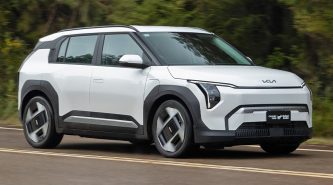
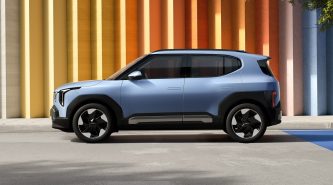
Unlike some rivals, Kia is not as burdened by the overall CO2 impact of the Tasman — both because it is not selling in enormous numbers, but also because it is selling an appreciable number of EVs (which emit a perfect 0g/km for NVES purposes).
But while hybrids are seen as a helpful option in the short term, top Kia brass acknowledge that they are an interim step that stop being useful remarkably quickly.
This kind of regular, ‘Toyota-style’ hybrids Kia plans to push this year have little friction for buyers as they don’t need to be plugged in.
But their small batteries and negligible electric-only range means the petrol part of the powertrain still plays a big role and keeps CO2 emissions broadly around the 200g/km level.
“The [NVES advantage] for hybrids runs out in 2027 — there is basically only one option after that,” said chief executive Meredith.
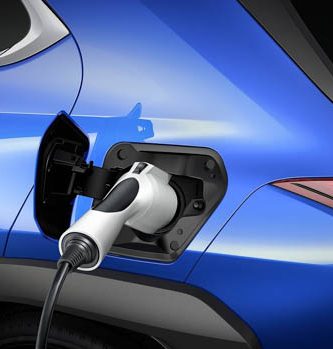
That ‘one option’ means a plug — in other words, only full EVs and plug-in hybrids, which allow for considerable electric-only running, are useful beyond 2027.
A statutory review of NVES laws is set to occur later this year. Kia is not making a submission — Meredith says it is comfortable with the regime — but rivals, including Toyota, are expected to seek more credit for hybrids.
But if NVES limits and penalty rates remain in their current form, the shift from pure ICE to hybrid could turn out to be the easy part.
With EVs making up just 10 percent of Kia sales in Australia last year — itself a decent result against the total market — the push into plug-in cars may be the more difficult campaign.
Latest news
About Chasing cars
Chasing Cars reviews are 100% independent.
Because we are powered by Budget Direct Insurance, we don’t receive advertising or sales revenue from car manufacturers.
We’re truly independent – giving you Australia’s best car reviews.