Powered by
-
Car Reviews
Latest reviews
-
Car News
Latest news
-
Car Comparisons
Latest comparisons
- Chasing Deals
Latest reviews
Latest news
Latest comparisons
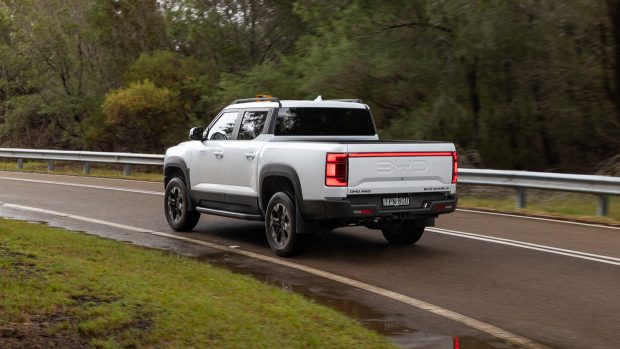
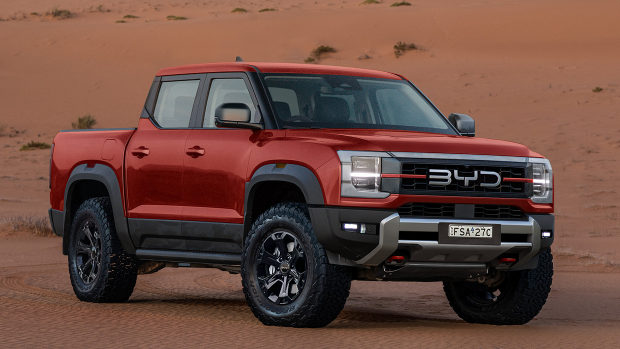
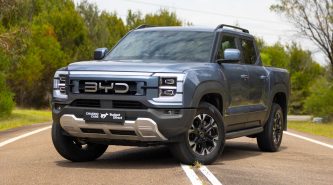
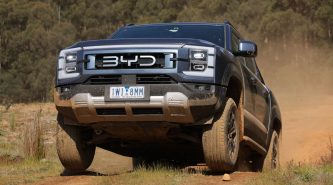
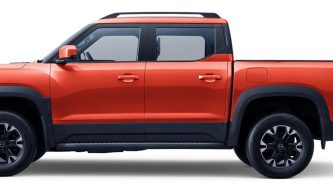
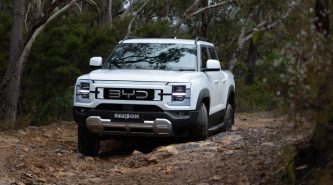
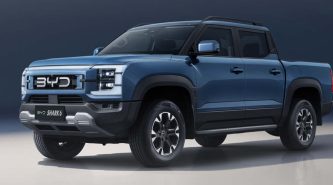
Incredible pricing and a unique twist on the dual-cab formula has made the BYD Shark 6 an incredibly popular ute – but the best could be yet to come
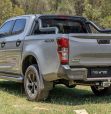
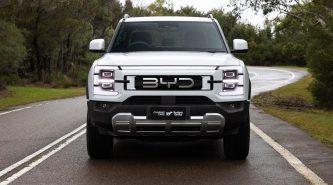
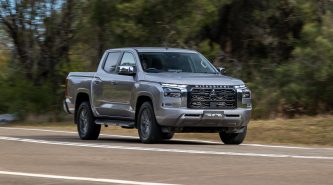
Few newly launched vehicles have quickly gained popularity quite like the BYD Shark 6, which has launched into a nigh-unpenetrable ute culture, seemingly breaking the mould and appearing to set a new one.
But the Shark 6 isn’t yet the ute that can do all things for all people. And as BYD looks to chase more sales in 2026, the Chinese marque will enhance its increasingly popular pickup to make it better suited and more appealing to a broader range of buyers.
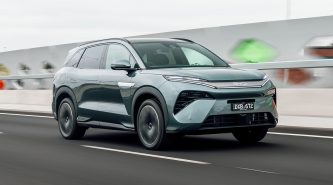
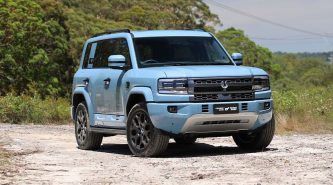
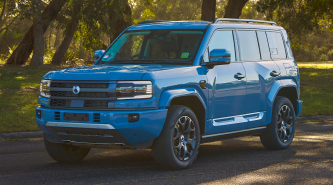
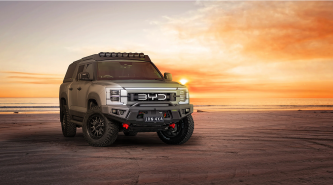
As BYD Australia expands its off-road offerings in 2026 with its Denza B5 and B8 SUVs, Chasing Cars sat down with chief operating officer, Stephen Collins, at the new models’ local launch to discuss its best-selling model.
Exact details will come in the next few months, but what Collins shared, combined with previous reports, paints an exciting picture for what’s to come for the Shark 6. Here’s everything we know about the forthcoming upgrades to the ute range.
Official details for the upgraded Shark 6 will be announced in the next few months, with the updated model expected to go on sale around mid-year, or a little later.
Yes, most definitely.
In outlining BYD Australia’s year ahead in 2026, Collins made it clear that fleet sales will be a targeted area for the importer’s sales growth. Naturally, a cab-chassis version of the Shark 6 would suit this objective.
This would give tradies and other commercial operators the ability to customise their Shark 6 for the tasks required, without running into any complications with the factory vehicle warranty.
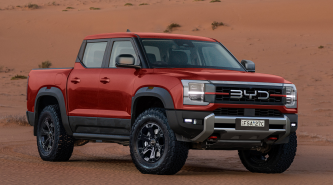
It’s possible we could see a more affordable, de-specced ‘Essential’ version of the Shark – given that the current ‘Premium’ packs a long equipment list – along with a new flagship grade with lifted off-road suspension, bigger tyres as standard and other better mechanical hardware. More on that below.
The best item on the list of potential changes for the Shark 6 is the one thing that won’t: pricing. At least that’s the suggestion according to BYD Australia.
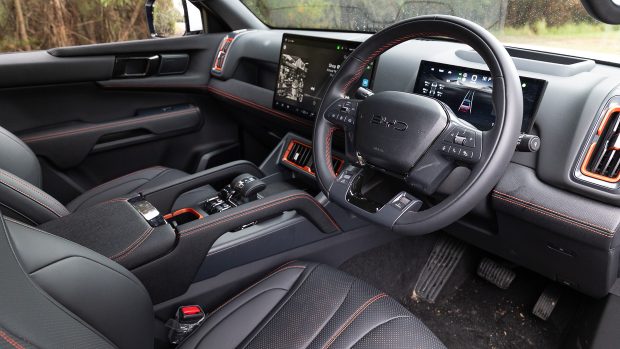
Priced at $57,900 before on-roads since launch in early 2025 (though often cheaper due to sales offers), the sole Premium grade is fiercely price-competitive in segment, considering its standard-fit plug-in hybrid drivetrain. This is a key selling point BYD is keen to maintain.
“What we want to do is maintain the value for money of Shark, we don’t want to have to reposition it in terms of price, so value for us with Shark is very important”, Collins said.
“Our strategy is to price well and price aggressively, but it’s also to maintain that integrity because we know going forward that from a residual standpoint, that’s just so, so critical. We don’t want to be adjusting prices all the time.”
That said, it’s hard to see upgrades being added for free and if new grades, which may be more expensive and/or capable, are added to the lineup. We’d expect prices to climb at least slightly, with any new grades above the Premium potentially closing in on the $70,000 range.
A move from a 2500kg towing capacity to the industry standard 3500kg has already been confirmed by BYD senior management.
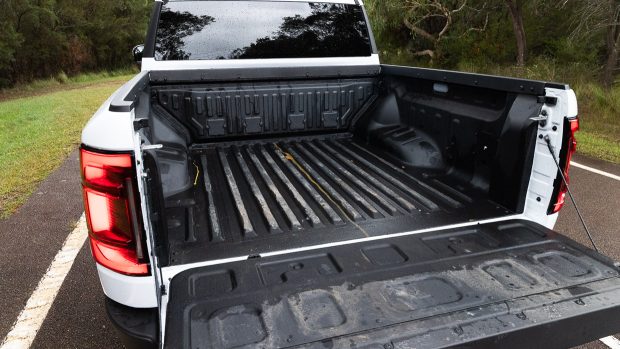
It’s expected that payload will also increase along with the added towing capacity. Currently sitting at 790kg, payload is expected to rise to a level more on par with rival dual cabs, which are typically rated between 930kg and 1050kg.
To meet these figures, the Shark will likely need stability upgrades along with potential changes to its powertrain.
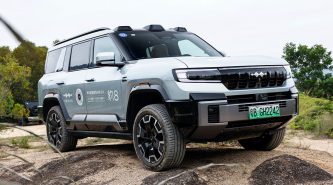
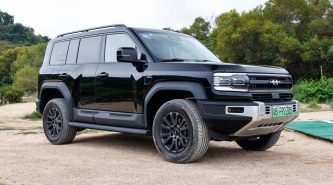
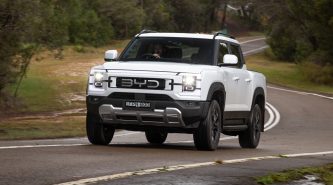
The Shark 6 sits on the same platform as the Denza B5 which has just been introduced to Australia.
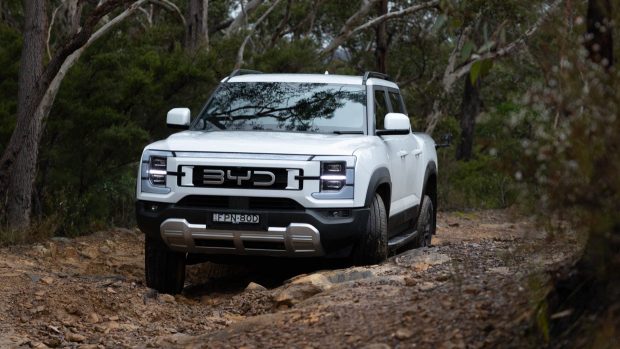
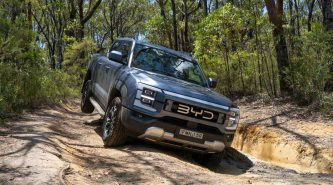
It’s important to note the Shark 6 is ‘AWD’ not ‘4×4’, offering no low-range functionality or locking differentials. At present, the Shark 6 is entirely reliant on an electronic traction control system, which has proven to be poorly calibrated for off-road duties in testing.
The future Shark 6 could adopt the B5’s DMO drivetrain, which steps up power outputs from 321kW/650Nm to 425kW/760Nm and features locking differentials front and rear, along with a two-speed rear transmission with a low-range crawl gear.
BYD now has a team of five full-time engineering staff based in Australia, working in conjunction with two dedicated teams back in China. Collectively, they could work to improve the calibration of the off-road tech, as well as sort out issues with the ride and handling that has been noted in testing by Chasing Cars and many others.
With this new drivetrain comes a potential step up in driving range, with the current B8 SUV sporting a slightly larger 36.8kWh battery (versus 29.5kWh) – but an even larger version could be on the horizon.
China’s motoring press is reporting the development of a new system known as DM-i 6.0, which features 900V architecture using a new LFP battery to achieve an electric driving range up to 300km.
Admittedly, this claim would be according to the quite lenient China Light-duty Test Cycle (CLTC), but this would still be a significant boost in driving range, and of course, power that could be utilised by the V2L system.
Latest news
About Chasing cars
Chasing Cars reviews are 100% independent.
Because we are powered by Budget Direct Insurance, we don’t receive advertising or sales revenue from car manufacturers.
We’re truly independent – giving you Australia’s best car reviews.